

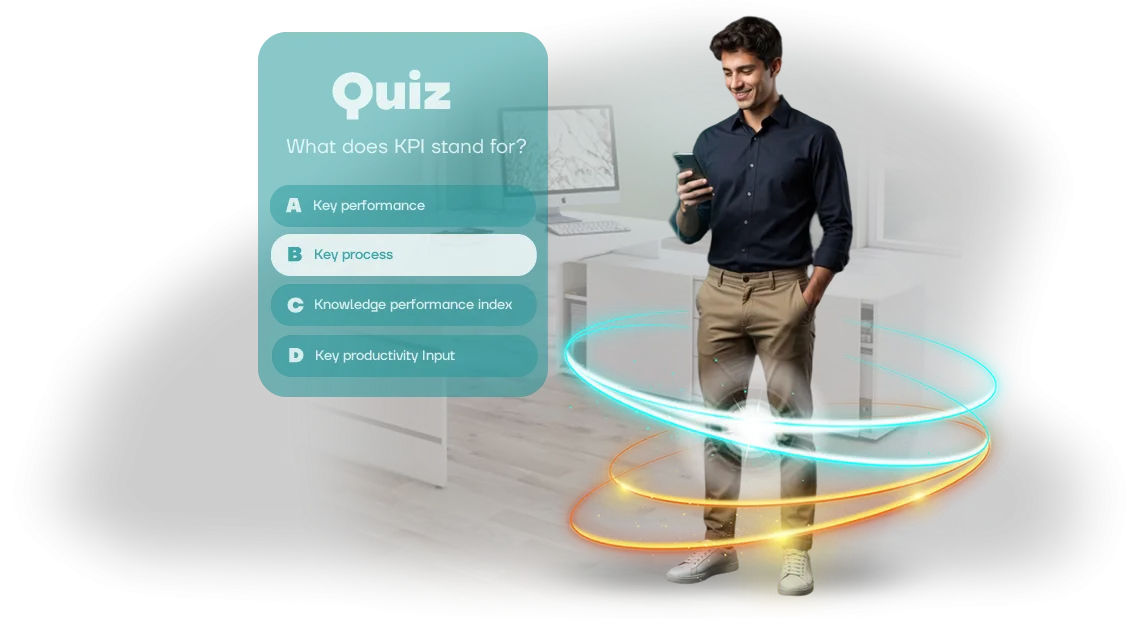
Why Workplace Safety Training Doesn’t Reduce Injuries
Occupational safety briefings often become a mere formality: an employee sits through the session, signs the logbook, and a week later forgets what was covered. Meanwhile, violations keep recurring — and each time carries the risk of injury, downtime, and investigations.
The worst part is that the company has already invested in safety training, but the outcome is measured only by the number of sessions conducted, not by a reduction in injuries.
Why does this happen? Lecture-based formats overload memory, tests with obvious answers don’t force people to think, and nobody re-reads “check-the-box” materials.
Employees don’t see the connection between abstract rules and their actual work, so the briefing remains a tedious obligation rather than a protective tool. As a result, knowledge isn’t reinforced, behavior doesn’t change, and accident statistics stay the same.
For business, this means not only human cost but financial cost: downtime, compensation payments, inspections, and reputational risks. Every injury incident hits production metrics and consumes managers’ time that could have been spent on development.
The problem is not a lack of training as such — it’s that training doesn’t create lasting safe-behavior habits.
The solution is to make workplace safety training interactive and engaging. Short quizzes with practical scenarios make employees think, apply knowledge in situations close to real life, and see the result immediately.
Such training feels like a game, not a chore, so the rules are remembered and, importantly, start working in practice. Injuries decrease — and that is exactly the metric that matters.
What Implementing Quizzes Brings to Occupational Safety and Staff Motivation
Occupational safety training often becomes a formality: employees sit through the briefing and a week later can’t remember key rules. This leads to violations, regulatory fines, equipment damage, and risk to human life.
The company pays twice: first for mandatory training, then for dealing with the consequences of incidents.
Implementing safety quizzes changes the picture. The game format engages employees, makes them make decisions in emergency scenarios, and memorize response procedures.
And the desire to score more points and compare results with colleagues turns a boring instruction into mindful practice. Staff motivation grows — training effectiveness improves without pressure or coercion.
Technically, this is simple to achieve: a professional game development platform such as Unity allows you to create quizzes with realistic production scenarios.
The system integrates quickly into the existing training process and gives managers clear analytics — who completed the material, which topics cause difficulty, and where additional review is needed.
Research confirms this. According to the European Corporate Training Survey, “interactive quizzes achieve up to 90% knowledge retention, while lectures achieve only 30%.” In practice, this means 30–40% fewer violations and lower costs for sick leave and repairs.
Implementing occupational safety quizzes quickly pays for itself and builds a safety culture in which employees themselves want to follow the rules.
Training Quiz Formats for Different Objectives
The objective of workplace safety training is not just to introduce employees to instructions, but to ensure the rules work in everyday practice. Ordinary lectures and PDF handouts are quickly forgotten, and mistakes cost too much.
Quiz formats allow you to restructure the process: from a quick knowledge check to a full interactive course that engages rather than just tests.
Gamification turns routine tests into an engaging process that holds attention and gives employees a clear result. When you know which format fits a specific objective, you get training that actually changes people’s behavior on the floor. This is exactly how we approach development: first define the goal, then choose the mechanics.
| Format | Audience | What it provides |
|---|---|---|
| Express survey after a shift | All employees | Rapid knowledge reinforcement, instant identification of weak points, minimal time away from work |
| Clearance test before a shift | High-risk employees | Readiness check, lower likelihood of violations, protection against human error |
| Gamified training course | New employees | Systematic learning of rules through scenarios and tasks, engagement from day one |
| Ranked quiz marathon | Department or team | Competitive element, team engagement, higher overall safety culture |
| Decision-making simulation | Experienced employees | Practice of actions in non-standard situations, skills reinforcement without risk to life |
By choosing the right format, you turn mandatory training into a prevention tool. Employees complete it with interest, and you get a measurable result — fewer violations, higher discipline, and safer production. We’ll help you choose and implement the option that’s right for your team.
How Quiz Development Works for Your Enterprise
Developing a workplace safety training quiz isn’t just a test — it’s a mini-project with clear stages. We’ve organized the work so you always see what stage the process is at and what result you’ll get at the end.
Transparency is the key to implementing the system on time and solving the task of improving safety culture.
- Brief and discovery. We study the specifics of your production, current regulations, and typical employee mistakes. This makes the quiz relevant to your team and your risks.
- Concept and plan. We develop the scenario, question formats, and game mechanics — from simple tests to team competitions. You receive a clear description of how the training will work.
- Approval. You approve the content, difficulty levels, design, and delivery logic. At this stage, we make all changes so the result fully matches your expectations.
- Preparation. We create content, graphics, and sound, and configure the system to work on the required devices. We provide a test version so you can verify it before launch.
- Launch. We run pilot testing with a small group of employees, gather feedback, make final refinements, and launch the quiz for everyone.
- Support. We analyze completion statistics, prepare reports, and update questions as needed. You can be confident the system will run reliably and stay relevant.
At every stage, you receive concrete deliverables — from the approved scenario to completion reports. After launch, we stay in touch and help you grow the quiz so workplace safety training delivers measurable results.
What’s Included in the Quiz System Delivery Package
For us, it’s important that you get not just a “program” but a ready working tool that can be implemented without involving external developers. That’s why the quiz system delivery package includes everything your team needs: from content to administrator training.
- Quiz scenarios tailored to your specifics. A ready-made structure of occupational health and safety questions that adapts to your company’s real risks. Not abstract tests, but situations employees encounter in the workshop, warehouse, or office.
- Question bank with explanations. Each question comes with the correct answer and a brief comment on why it’s correct. The employee doesn’t just guess — they actually remember safety rules.
- Administrator control panel. Create employee groups, assign quizzes, change completion dates, and control access yourself. Everything is intuitive; no technical background required.
- Results reporting system. The team can see who completed the training, which topics are difficult, and where systemic errors occur. Reports are generated automatically and available for export — convenient for internal control and audits.
- Instructions and procedures. Step-by-step guides for launching quizzes, setting up the control panel, and working with reports. You don’t depend on a “single specialist” who knows everything.
- Training for your administrators. We run a short webinar or record a video guide so your employees can confidently use the system from day one. We answer questions during the launch process.
After the package is delivered, you get a fully autonomous solution. Updating questions, adding new scenarios, and adjusting settings are done by your team without developer involvement. If any questions come up during launch, we stay in touch and help.
In the end, you have a clear employee training system that fits into existing processes and delivers measurable workplace safety results.
Case Study: How We Improved Safety Briefing Retention at a Factory
For a large factory with hundreds of employees, the usual safety briefing is a formality: a lecture, a signature in the logbook, and half the knowledge is gone within a week.
Violations repeat, remarks pile up, and managers don’t understand where exactly employees went wrong in understanding the rules.
We developed a training quiz built on Unity that turns the briefing into an interactive scenario: an employee enters a familiar production situation, makes decisions, and immediately sees the consequences. This format holds attention and makes people think, not just memorize text mechanically.
The results after implementation speak for themselves: the number of safety violations at the factory decreased by 40%, and repeat remarks on the same items virtually disappeared.
Knowledge retention improved — employees don’t just pass the test; they actually apply the rules at work.
For the client, it’s important that the quiz integrated into the existing training system without replacing equipment or reworking processes.
Unity as a tool ensures stable operation on any computer, fast updates, and clear analytics: managers see which topics are difficult and can strengthen training in time.
This isn’t a one-off initiative — it’s a working mechanism that continues delivering value with every new employee.
How to Choose a Safety Training Format for Your Task?
Choosing a workplace safety training format starts not with technology, but with defining the task.
There is no one-size-fits-all solution: what works for office employees won’t work for production-floor staff, and a protocol for one site won’t take into account the specifics of another.
First, it’s important to understand exactly what needs to be covered: introduce new employees to basic rules, refresh knowledge before certification, or practice actions for an emergency. The answer determines the scenario’s depth, training duration, and method of checking results.
If your enterprise has specific risks — work at height, chemicals, electrical installations — a simple multiple-choice test gives only the illusion of knowledge. An employee may answer correctly but freeze in a real situation.
In such cases, game scenarios that replicate the logic of real actions are effective: first assess the situation, choose a safe route, and decide to lock out equipment. This format of workplace safety training lets employees internalize the procedure without risk to anyone.
The enterprise context also matters: access to desktop computers, time for training, and employees’ digital readiness. For one organization, short tablet quizzes are ideal; for another, a full scenario on the shop floor.
Practical tip: start with an audit — what incidents occurred and which procedures were most often violated. This will show whether you need a light quiz for regular review or a multi-level scenario.
We’ll help you choose a format based on your real risks so training becomes a prevention tool, not a formality.
Answers to Frequently Asked Questions About Implementing Quizzes
Implementing training quizzes may seem complicated: you need to integrate the system, allocate time, and configure it for your needs. In practice, most questions are resolved at the brief stage, and we handle the entire technical part. Below are answers to the most common client concerns.
Is it difficult to integrate a quiz into current processes?
No. The quiz works as a separate module that connects to your learning portal or launches via a link. We customize everything to your structure: departments, roles, and completion scenarios. You don’t need to change existing systems — just provide access to the platform.
How long does launch take?
A typical project takes two to four weeks, from brief to final result. If you need it urgently, we speed things up with standard scenarios and online approvals. You get an accurate work plan and know the launch date from the start.
Will we need our own IT department?
No. We administer the platform, upload questions, configure access, and ensure stability. All we need from you is someone who knows which safety rules should be checked with employees. All technical changes are our job.
How often can questions be updated?
Updating is a normal part of operation. You can add new questions, change scenarios, or adjust rules at any time. We make changes upon request, or, if you prefer, we’ll teach your employee to do it themselves.
Order Development of Training Quizzes for Your Production Facility
Developing training quizzes for production is a way to turn safety briefings into a lively, memorable format. Employees go through the material in a game scenario, and you get an objective picture: who has absorbed the rules and who needs extra review.
Quizzes integrate easily into your current training system and require no special preparation from employees.
To order quizzes, you don’t need to describe the technical part in detail. Just leave a request — we’ll offer a solution for your tasks, show examples, and tell you where to start.
What you’ll get after your request:
- consultation on the quiz format: for classroom training, distance learning, or a blended option;
- a cost estimate and timeline based on your training volume — with no forced add-ons;
- a demo pilot with your test group so you can see how employees respond to the mechanics;
- a commercial proposal with stages, work scope, and control points;
- a dedicated manager who supports the project from task setting to launch;
- post-implementation support: we’ll update questions to align with new regulations or add roles.
Leave a request on the website or write to us — in return, you’ll get a cost estimate for quizzes for your production facility and a proposal on how to quickly launch employee training. We work remotely and take on projects across the country, so one message is enough to get started.