

Employees yawning during training? Hand-drawn quizzes change that
Employees yawning during training — a familiar picture for any manager. Ordinary presentations and briefings overload people with information but fail to capture attention: half of it is forgotten within an hour, almost all of it within a week.
The company spends time and money, while employees don't actually absorb the knowledge they need — and this directly hurts work quality and the speed of adopting new processes.
The Hand-drawn format changes how people perceive the material. Drawn characters, lively storylines, and soft lines evoke warm emotions, like a good cartoon. The material stops being a "boring document" — it becomes a story you want to keep watching.
Even complex rules are easier to remember in this style, because the brain processes images faster than text, and the tension of being tested gives way to curiosity and a desire to see what comes next.
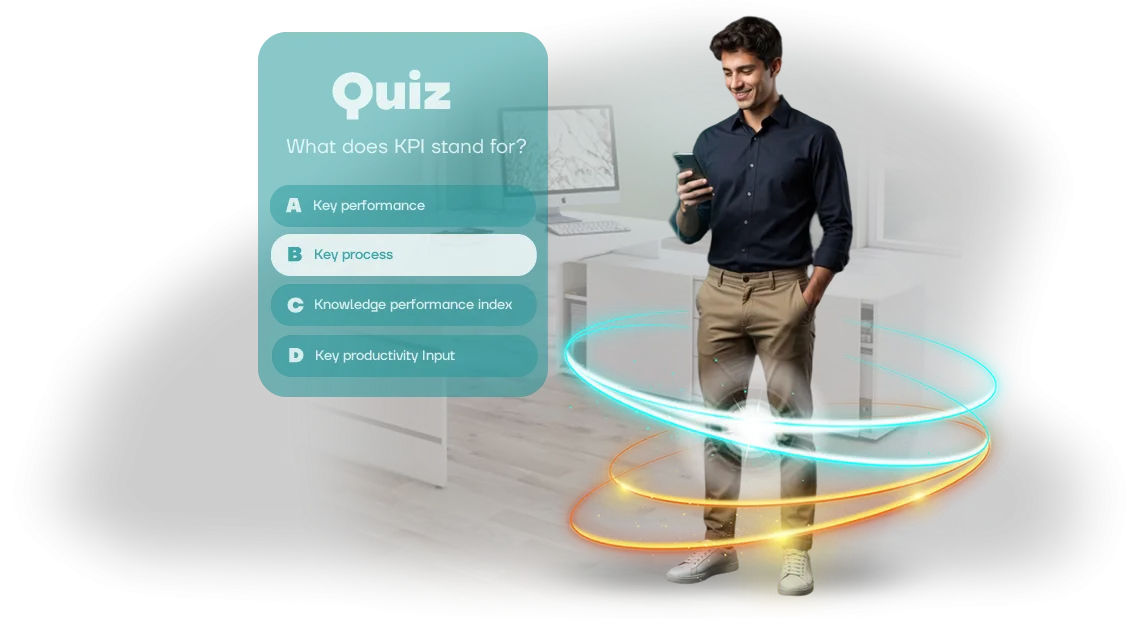
Interactive quizzes in this style add a competitive edge. Employees answer questions, receive instant feedback, see their progress, and can replay a level if they got something wrong. Gamification taps into the natural desire to win — training becomes a game rather than a chore.
Teams can compete across departments, and points and rewards for completion boost engagement in learning and create healthy excitement.
For business, this means greater training engagement without coercion. Employees return to the quiz on their own, absorb the material better, and apply it in their daily work.
The result is fewer mistakes, faster onboarding for new hires, and confidence that every employee actually understood the topic rather than just sitting through a lecture.
This is especially valuable for safety procedures, regulations, and induction training, where mistakes are costly.
These are exactly the kinds of quizzes we build for companies. Using professional tools and modern graphics, we turn your training material into a living story that employees complete with genuine interest.
You get a ready-made learning tool that fits easily into your current processes and pays for itself through faster, more effective knowledge retention.
What you get: a quiz employees will complete to the end
A typical problem in corporate training is that employees start a course and drop out halfway. Text-heavy instructions and dry presentations lose out to messengers and urgent tasks, so the knowledge stays on paper instead of being used on the job. As a result, training becomes a formality that never justifies the hours invested.
A hand-drawn quiz solves this through game mechanics: short rounds, score accumulation, progress tracking, and competition between departments.
An employee finishes the training not because they "have to," but because they want to see the next question and climb the leaderboard. This is how staff engagement grows without force or constant oversight from the manager.
The question format forces employees to recall the material rather than just read it, so knowledge is reinforced during the quiz itself. A week and a month later, employees ask fewer clarifying questions, adapt to changes faster, and make fewer mistakes that require rework.
For the business, that's concrete time savings and higher quality of work, without extra spending on mentors.
The handcrafted hand-drawn style sets the quiz apart from standard courses and makes it visually aligned with the brand. Employees happily share their results and screenshots on social media, which increases brand recognition and creates a flow of organic mentions.
For the company, this is not just an internal benefit but also an external one: followers and potential clients see a vibrant corporate culture and become interested in the product themselves.
In the end, you get not just a training tool but a growth point: a trained team works more calmly and confidently, and the viral potential of the quiz brings in new leads through brand awareness.
We build the quiz around your product and objectives so it delivers measurable results — from onboarding speed to the number of inquiries received after results are shared.
Hand-drawn quiz formats: choosing the right one for your task
The hand-drawn style turns a boring knowledge check into a game employees enjoy completing. Instead of dry tests — drawn characters, a storyline, and work situations everyone recognizes.
This format covers three key needs: introducing new hires to the company, assessing the team, and keeping skills sharp on a regular basis.
| Format | For whom | What it gives the client |
|---|---|---|
| Onboarding | New employees in their first weeks on the job | Fast immersion in company standards without exhausting lectures. A new hire learns the rules through play and immediately absorbs the brand culture |
| Certification | Current employees before an evaluation or promotion | An objective knowledge check in a light format. The team is less nervous, and you see the real skill level of each person |
| Regular training | All employees, including remote teams | Skill maintenance without taking people away from work. Short hand-drawn quizzes increase engagement and help reinforce key rules |
Each format is adapted to your specifics: we take your instructions, regulations, and scripts and turn them into a living scenario with characters and decision points.
Employees go through the quiz at their own pace — on a phone or a computer — and you get clear statistics: who has learned the material and who needs additional explanation.
Thanks to the hand-drawn style, training stops being an obligation and becomes part of the corporate culture. Employees willingly take such quizzes and discuss them among themselves, and you get a trained team without extra effort spent on control and reminders.
How we create the quiz: a transparent process without surprises
A clear five-step process — from brief to launch and support. We handle every stage of development, and you always know where the project stands and what comes next.
-
Brief and goals. We conduct a short interview: what employees need to learn, what motivates them, and which format fits. We lock in deadlines and acceptance criteria.
-
Script and questions. Together with you, we build the quiz structure: topics, questions, answer options, and explanations. The text is approved before illustration begins, so nothing needs to be redone later.
-
Hand-drawn visual style. We create characters, locations, and the interface in a warm, illustrated style. We show concepts and make revisions — the result is a look employees like and remember.
-
Build and configuration. We turn the script into a working training application: adding a scoreboard, hints, and a reward system. We test everything so it runs quickly and without glitches.
-
Launch and support. We provide access to employees and support the first month of use. If needed, we update questions and add new topics — the quiz keeps delivering value.
A transparent process without surprises: each stage ends with a clear result you can see and approve. That's how you stay in control of quality and timelines.
What's included in delivery: a complete kit for launch
The delivery package includes everything needed to launch a training quiz without hiring outside contractors. You get a finished solution, not scattered files: from the script to the assembled application.
Every element is packaged with future use in mind — you can run your first session on the day you receive it.
- Quiz script. A fully developed script: questions, answer choices, explanations, and a scoring system. You can use it as is or quickly adapt it to a specific training topic.
- 3D models and hand-drawn locations. All visual elements are done in a single brand style and already built into the game. Nothing extra to buy or look for — the visuals look cohesive and stay in employees' memory.
- Compiled game. A ready-to-run program that works on employee computers without installing special software. Just copy the folder and open the file.
- Methodology guide for the training manager. Recommendations for running the session: how to explain the rules, which questions caused difficulties, and how to use the results to assess knowledge.
- Step-by-step installation and launch instructions. A clear list of actions — any employee can follow it, even without technical training.
- Source materials. Unity project files and all resources. If you want to change questions, add locations, or integrate the quiz into your own system, you can do it without developers.
This kit removes the need to search for designers, methodologists, and programmers. You pay once and get a working tool that stays with you forever — you can run training again, change questions, and expand content for new tasks.
Case study: how a quiz increased team engagement by 40%
The company StroyDom — a federal chain of 80 stores — came to us with a pain point: new salespeople only reached full capacity after a month. Staff turnover was eating the budget, and training managers were drowning in routine: lectures, tests, more lectures.
Employees were openly bored, the material wasn't sticking, and results were checked just "for show."
We proposed not a test but a game. A training quiz in hand-drawn style: tasks are acted out as scenes from store life rather than dry questions.
Instead of a dreary questionnaire — bright characters, dialogues, and a storyline where the newcomer makes decisions and immediately sees the consequences.
Two months after launch, team engagement was up 40% — according to an internal survey, 9 out of 10 employees called the quiz "the best training of the year." The average onboarding time for a new hire dropped from 28 days to 11.
The HR department stopped spending time on checking tests: the system itself shows who learned what and flags who needs additional practice.
The case worked so well that six months later the client ordered a second quiz — for training store managers. They also rolled the game out across their entire line of retail chains to refresh the knowledge of existing employees without interrupting work.
For us, this proves a simple truth: training people enjoy works better than training they "have to complete." If your employees are also yawning through trainings — maybe the problem isn't them, but the format.
How to choose the right quiz format for your task?
Choosing a quiz format starts not with technology but with answering a simple question: what exactly should employees learn to do after the training? If the task is to introduce a newcomer to regulations and basic processes, a simple multiple-choice test is enough.
If you need to practice a complex scenario — like responding to an emergency or following a sequence of steps in negotiations — you need a quiz with immersion and branching storylines.
The second important factor is the audience. Younger employees respond faster to game mechanics and visual scenes; experienced specialists value brevity and clear structure.
That's why for one project we create short rounds with answer choices, and for another — multi-level quests with 3D hand-drawn locations, where every step brings you closer to solving a real work task. Both options achieve the learning goal, but they engage people differently.
The third criterion is measurability. If you need to quickly assess knowledge levels before and after training, choose a format with clear statistics: number of correct answers, time to complete, mistakes by topic.
If the goal is to hold attention and boost motivation, add competition and visible progress. And if you need to test skills in conditions close to practice, use simulations and interactive scenarios.
The main thing is not to chase a universal quiz "for everything," but to match the format to a specific business task. This is exactly where we start every project: we analyze goals, audience, and expected outcomes, and then propose and justify the optimal option.
This avoids unnecessary costs and guarantees that employees truly absorb the material, not just "pass" the test.
Frequently asked questions and concerns: honest answers
Every client asks the same questions before launching training: will you meet our deadline, how many revisions are included in the price, will the quiz integrate with our current system, and what happens after launch.
These doubts are natural — training should work, not create new problems. We address the main concerns honestly and to the point.
Will you meet our deadlines?
Deadlines are fixed in the contract before work starts. A basic hand-drawn quiz takes 2–3 weeks; a project with multiple scenarios and levels takes up to 6 weeks.
We build a buffer into the schedule for approvals and revisions, so missing a deadline is the exception, not the rule.
How many revisions are included in the price?
We make three rounds of revisions at each stage: after the script, after drawing the locations, and after building the game. That's enough to adapt the content to your logic and brand style. If you need more, we'll discuss it separately — but clients usually fit within the agreed scope.
Does the quiz integrate with our LMS?
Yes, we prepare courses in standard formats supported by most learning management systems. We'll set up results export so you can see each employee's progress and overall team statistics — no manual data collection required.
What happens after launch?
We don't abandon the project after handover. During the first month of support, we quickly fix any issues, and we advise on how to integrate the quiz into your onboarding or certification program.
After that, you can rely on technical support and content updates for new needs — refreshing questions and levels.
This approach removes the main risks — you get a predictable result within the agreed timeline, with clear integration and post-launch support. All that's left is to align the details of your project — and we'll begin.Ready to get a quiz that will engage your employees?
Standard presentations and tests rarely spark excitement — but it's exactly that excitement that makes employees dig into the material and apply it in practice.
A quiz with a well-thought-out storyline and Hand-drawn style turns training into a game people look forward to, not something they put off.
We've already developed dozens of such quizzes for companies across industries: from sales and service to corporate regulations. Leave a request — and you'll get not just a commercial proposal, but a ready concept tailored to your task.
Right after you reach out, we'll consult you and suggest a solution that will engage exactly your employees.
What you get after submitting a request
- A consultation: we'll break down the training goals, audience, and quiz format, and recommend engagement mechanics.
- A script concept for your product: Hand-drawn style, storyline, difficulty levels — everything to make the game feel native to your brand.
- A transparent cost estimate and timeline with no hidden fees — you'll know the cost and work stages in advance.
- Examples of similar projects in your industry, so you can evaluate the level and style of our solutions.
- Recommendations on launch and employee motivation: how to announce the quiz, how to win over even skeptics, and how to measure the results.
- A clear work plan in case you decide to order the quiz: from brief to launch, with employee feedback included.
You can order a quiz right now by filling out the form on the website or calling us. At the very first consultation, you'll understand how gamification will change training in your company and how quickly we can launch the project.