

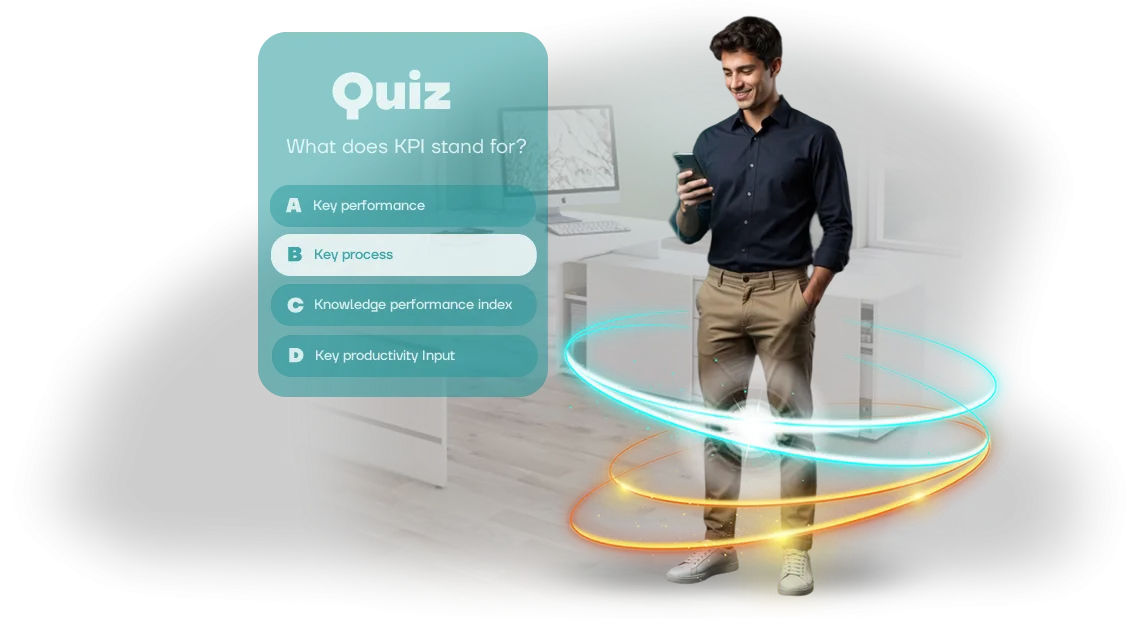
Why diversity & inclusion development stalls in teams
Every manager has faced this: the corporate diversity & inclusion training is done, everyone attended, but a week later nothing changes in the team.
Employees sit through the hour, nod, and return to their work tasks — the topic remains formal, and an inclusive culture is just a line in a report. The checkbox is formally ticked, but there are no real shifts.
Why does this happen? Because standard lectures and presentations talk about what's important but don't touch personal experience. Developing diversity requires not knowledge, but a change in habitual reactions and decisions.
Without practice and emotional engagement, the brain doesn't connect new information to real situations, and the team's problems — from unspoken biases to small communication issues — remain untouched.
As a result, business bears hidden losses: conflicts, misunderstandings between departments, attrition of talented employees who don't feel accepted.
An inclusive culture directly affects the speed of decisions and people retention, but it's hard to measure and even harder to fix with standard training. The manager sees that the topic matters but doesn't know how to turn conversations into action.
Weclose this gap. Instead of boring theory — interactive quiz-simulators that put an employee before real dilemmas and teach them to act differently.
It's not a test of terminology knowledge but behavior training that turns diversity development from an obligation into a team skill.
Each quiz is a scenario from everyday office life: team selection, task distribution, feedback. The employee lives through the situation, makes mistakes, sees the consequences, and remembers the correct behavior model. This is how an inclusive culture stops being an abstraction and becomes a working tool.
How an interactive quiz engages employees in the topic of inclusion
Regular diversity and inclusion lectures often become a formality: employees nod, and a week later they don't even remember the basic principles.
An interactive quiz changes the mechanics — instead of passive listening, people compete, discuss, and make decisions in game scenarios. This is exactly the format we use at <cite>our team</cite> to make inclusion training an event, not another "must-do."
Employee engagement grows through healthy competition and instant feedback. The participant immediately sees whether they made the right choice and why — which means they absorb the material more deeply.
Team rounds add live communication: colleagues discuss cases, argue, and come to a common opinion. As a result, the topic of inclusion stops being abstract and turns into a set of clear behavior models.
When employees start understanding each other better, the number of conflicts based on cultural, age, or gender differences decreases. People are less often offended by awkward jokes and find common ground faster in work matters.
This directly affects the team climate: less tension, more mutual support and trust. Managers notice that meetings run more calmly and turnover for emotional reasons goes down.
The interactive quiz also works as an element of corporate culture: the company shows that respect and equal opportunities matter to it. Employees perceive this as care, not pressure.
Short game sessions are easy to fit into the training plan — they take 20–30 minutes and don't require taking half a day off work. At the same time, the effect of such inclusion training lasts a long time, especially if the quiz is repeated quarterly.
Quiz formats: from short trainings to full support
The same topic of inclusivity solves different tasks: introduce a newcomer to the rules, help a team discuss complex cases, or maintain regular training. That's why we offer several quiz formats — from a short start to full support.
Choose based on your goal: a mini-quiz for employee onboarding or a multi-stage program for developing diversity & inclusion across the entire company. In any case, you get a complete package — scenario, questions, design, and analytics.
| Format | For whom | What it gives the client |
|---|---|---|
| Mini-quiz for employee onboarding | New people in their first weeks on the job | Quick immersion in company values, a safe start |
| Scenario analysis | Teams and managers | Practice with complex dialogues, unified communication norms |
| Full course for regular training | All employees | Systematic development of diversity & inclusion, clear progress |
| Short rounds | After the basic course | Knowledge maintenance and the habit of correct communication |
The mini format takes no more than 10 minutes and fits easily into onboarding. The full course is split into modules and suits regular training when you need to consistently change team behavior.
Formats can be combined: first an onboarding survey, then a full course, later — supporting rounds. This way training becomes a system and delivers lasting results in diversity & inclusion development.
Stages of turnkey corporate quiz development
To make a quiz actually change attitudes toward diversity and inclusion, you need a well-structured process. We've refined it over dozens of implementations — results without missed deadlines or unnecessary iterations.
- Brief and goals. We identify the situations to work through: onboarding, inclusive communication, stereotypes. We agree on success metrics — coverage and growth of correct answers.
- Scenario and questions. We write realistic cases from team life instead of dry theory. Each question explains why one solution is more effective than another.
- Development and design. We create an interactive quiz in your corporate style, adapted for mobile devices and the corporate portal. It can be completed at a convenient time — the completion rate is higher.
- Pilot testing. We launch it on a small group, collect feedback, and refine the wording so the quiz is clear to everyone.
- Rollout to all employees. We prepare announcements and instructions and help with implementation. Work processes don't stop.
- Support and updates. We analyze statistics and update scenarios for new tasks. The quiz remains a relevant tool.
You get a measurable tool for developing a culture of diversity and inclusion, not a one-off campaign. We accompany the project at every stage — all you have to do is monitor the results.
What's included in the training quiz delivery package
You receive not just files with questions, but a ready-made training product that can be launched as early as the day of delivery.
All elements of the package are interconnected: the scenario, visual part, technical setup, and instructions work as a single mechanism, so you don't need to hire contractors or dig into the nuances of development.
Here's what's included in the delivery package:
-
A ready quiz scenario adapted for diversity and inclusion goals: about 20–30 questions with realistic situations from everyday work life, answer options, and an explanation of why a particular choice is correct.
The scenario can be extended — we provide the source materials and explain how to quickly replace or add questions.
-
A 3D simulator with dialogue scenes: an employee enters a virtual space where they communicate with characters and make decisions.
This format is remembered better than text tests and evokes a lively response because it resembles familiar video games rather than a boring knowledge check.
-
Customization to your corporate style: logo, brand colors, internal terminology. Participants immediately feel that the quiz was created specifically for their company, not downloaded from a shared library.
-
Integration with your learning system — if needed, we connect the quiz to your corporate portal or LMS so results automatically flow into overall personnel reporting. This removes manual work for HR and eliminates calculation errors.
-
An administrator guide and an employee reference card: short instructions on how to launch the quiz, complete it, and view results. Training won't require a dedicated day — each participant completes the quiz at a convenient time in 15–20 minutes.
-
Technical support during launch and a guarantee of stable operation. We stay in touch to quickly resolve any issues and, if necessary, make content edits based on the first completions.
After launch, you get clear data: who completed the quiz, which topics caused difficulties, and where employees most often make mistakes. This helps improve the training program and show management a measurable result — growing awareness of inclusivity issues.
Case study: how a 3D quiz improved the climate in a retailer's team
Climate in retail is not a "soft factor" but a direct indicator of turnover and service quality. When employees from different departments don't understand each other, conflicts at the checkout and on the sales floor eat up to half of the working time.
Managers see this in reports but don't know how to turn conversations about mutual respect into concrete skills.
We closed this request with a 3D quiz for the Mercury store chain, a retail operator with several thousand employees.
Instead of a lecture on diversity & inclusion, the team went through interactive scenarios: a customer with a disability asks for help choosing a product, a new employee from another country doesn't understand the instructions, a colleague asks to cover their shift on a holiday.
The task isn't to guess the "right answer" but to live through the situation and see the consequences of your choices.
How it worked
Each scenario took 5–7 minutes and modeled real work dialogues. The employee saw the interlocutor's reaction to their words, emotions, and the outcome. If the decision was poor, the incident wasn't "swept under the rug" but showed how to avoid it.
This is how patterns of respectful communication were reinforced over dozens of sessions, without moralizing.
Participation was voluntary, but coverage exceeded 80% of the staff: people completed the quiz as a game rather than a mandatory course. Managers separately received a block on resolving conflicts between employees. The completion took less than a week, without time off from work.
Implementation results
Over three months, the number of conflict situations between employees dropped by 30%. This isn't a subjective assessment: the system automatically analyzed the number of HR complaints about disrespectful behavior.
At the same time, turnover in the pilot stores decreased — teams became more willing to help newcomers.
The head of HR at Mercury noted: the quiz worked where standard training didn't. Employees themselves asked when they could get access to the next scenarios, and department chats discussed "tricky" situations. After the pilot, the chain scaled the program to all regions.
This case shows: the 3D format turns diversity & inclusion from abstract values into working skills. There are fewer conflicts, the climate is freer, and service is more consistent because people start hearing each other.
Frequently asked questions about quiz development and launch
We've gathered the typical questions clients ask before launching a corporate quiz. We answer directly — about how employees will perceive the format, how to fit the game into current training, and what happens to the content afterward.
Won't the quiz be too difficult for employees with different levels of preparation?
We gradually increase the difficulty: from simple situations in everyday work routines to non-obvious cases. The interface is intuitive, completing it takes 10–15 minutes, and hints and feedback immediately explain mistakes. Before launch, we test the quiz on a small group — we make adjustments so everyone feels confident.
How will the quiz fit into our learning system?
We provide a ready link or embed the game into your corporate portal. We connect to your LMS so results are saved in a common database and appear in each employee's reporting. You don't need to change your usual processes — we adapt to your platform.
How much does development cost and will it blow the budget?
The cost depends on the number of questions, scenarios, and the degree of adaptation to your specifics.
After the brief, we provide a transparent estimate — no hidden payments or "development hours." You pay for the finished product and the right to use it for an unlimited time.
How will we update content if company values or requirements change?
You receive the rights to change questions and scenarios with your own team — it's simple. Or you order regular updates from us. We can set up changes to thematic blocks by season, new regulations, or personnel survey results — the content will stay relevant.
What happens when there are more employees or new branches appear?
The quiz is designed for an unlimited number of participants — from a small department to thousands of people at once. The server side handles peak loads, and if needed we'll add team rankings, leaderboards, and analytics by department. Scaling happens without stopping training.
Order quiz development for your team
The goal of developing diversity and inclusivity isn't about formal instructions but about live discussions and behavioral change. That's why, instead of boring lectures, we offer interactive quizzes that engage employees and help reinforce new principles in real work situations. We handle all training development — from idea to a ready scenario and results.
Leave a request on the website — and within one business day you'll receive a presentation, a work plan, and a cost estimate. No unnecessary meetings: we'll analyze your task ourselves and prepare a commercial proposal. What's inside:
- A quiz concept for your goals with example scenarios for your industry
- A detailed development plan: stages, timelines, and approval points
- A cost estimate tailored to your budget and team size
- Format recommendations: from short surveys to multi-step dialogue simulations
- An employee engagement plan and ways to measure results
- Readiness to launch a test project for one team
We've already created dozens of training quizzes for companies across various industries, so scenarios come out vivid and employees engaged. To discuss your project and get all the necessary materials, fill out the form — it will take no more than a minute. You can order a quiz right now, and we'll make sure the process is transparent and fast.
How to choose the optimal quiz format for your company's task?
There's no universal format — the right quiz is determined by the task. If you need to quickly engage employees in the topic of inclusivity, an interactive format with a choice of behavior scenarios works well.
When the goal is to reinforce knowledge after training, short rounds with error explanations are more effective. The key question: what should change after the game — the level of awareness, attitudes, or behavior in work situations?
For developing diversity & inclusion, what matters more than the fact of a correct answer is awareness of one's own biases. That's why the optimal quiz includes dilemma situations with consequences of decisions.
Dialogue scenes with feedback work stronger than abstract questions: a person puts themselves in the participant's shoes. This format suits companies that want not to test knowledge but to change the communication culture between teams.
Consider the scale. For a company of up to 50 people, one quiz with a discussion after the rounds is enough. For multiple branches or remote teams, you need a unified scenario with automated result collection — so you'll see which departments require additional work.
The more diverse the audience, the more scenarios you can build into one quiz without unnecessary complexity.
Frequency of use also affects the choice. A one-off campaign on the topic of diversity can be bright and short, while regular training requires a question bank that gets updated.
We help determine the format at the brief: we analyze the goal, the number of employees, and expected results so that you get a quiz that solves a specific task, not just entertainment.