

Conflict Resolution: Why It Is Critical for Business
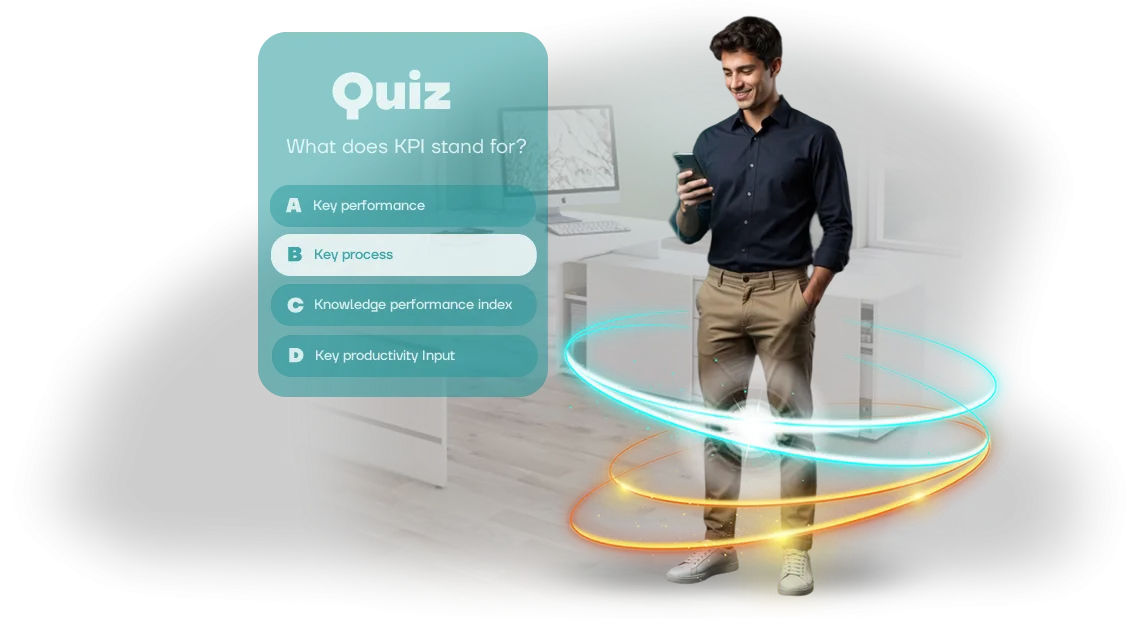
Internal conflicts in a team are a silent loss—rarely counted in reports, yet directly hitting profitability. When employees spend energy on interpersonal issues instead of tasks, work speed, decision quality, and team atmosphere all suffer.
A manager spends hours on mediation instead of strategy, and the best people start looking for another job because of constant tension.
Communication problems do not resolve themselves. Unspoken grievances turn into open confrontations, deadlines slip, clients are lost, and mistakes end up costing more than any training.
Large companies have long invested in corporate training, but classic lectures and presentations do not give employees the main thing—the skill to act in a real, emotionally charged situation.
Employee training today is not theory but practice in making decisions during difficult conversations.
This is exactly where modern formats help: interactive scenarios where the employee finds themselves at the center of a conflict and learns to respond calmly, confidently, and constructively.
Such conflict resolution skills stick faster because a person experiences the situation rather than merely reading about it.
We specialize in developing training quizzes and dialogue simulators that turn practice into an engaging experience. Instead of dry theory, your staff gets a safe environment to practice difficult conversations—with colleagues, subordinates, or clients.
This addresses the main business need: a predictable team that can resolve conflicts before they become crises.
What Training with Quizzes and 3D Scenarios Provides
When an employee takes a standard test, they answer mechanically and forget the material within a week. A quiz with 3D scenarios immerses them in a situation where they need to make decisions, see consequences, and try again. This turns training from a mandatory formality into a living experience that is remembered.
For HR, this format is an engagement tool: employees themselves ask for the next level, discuss results, and return to the material. For managers, it is a way to develop negotiation and emotional regulation skills without risking real clients. For the business, it reduces turnover because people value a company that invests in their growth.
our team builds simulators on the professional game engine Unity, so the graphics and character behavior look natural, while the controls remain simple for every employee. We handle the scenario, design, and launch—all you need to do is gather the team and get the result.
In practice, this delivers four specific effects:
- Employee engagement. A person completes the quiz because it is interesting, not because they “have to.” The average completion rate is over 80%, not the standard 20–30% of regular tests.
- Skill development. A dialogue with a virtual interlocutor lets employees try different communication styles and get immediate feedback. The skill is reinforced through repetition, not through reading slides.
- Team building. Shared leaderboards and discussions of complex cases create a common language and a reason for live interaction between departments.
- Reduced turnover. Training is perceived as care for career growth, not as control. Based on our project experience, repeat training is ordered in about 70% of cases.
Want to see how this works for your case? Let's discuss your task and show a demo tailored to your scenario.
Training Program Formats for Your Tasks
Different tasks require different training formats: sometimes a quick knowledge check is enough, and sometimes employees need to learn how to act confidently in tense negotiations.
We build quizzes to solve exactly your business task—from monitoring material comprehension to practicing conflict resolution skills. Below is a comparison of options so you can choose the one that fits your timeline and budget.
| Format | Who it is for | What it gives the client |
|---|---|---|
| Classic quiz with multiple-choice answers | Quick knowledge check after instruction or a course | A clear result: percentage of correct answers and growth areas for each employee |
| Situational cases with action choices | Companies where behavior in non-standard situations matters more than memorizing theory | Decision-making practice without risk to real clients or reputation |
| Custom scenario with a 3D simulator | Conflict resolution training, handling objections, complex negotiations | Full immersion: the employee experiences the dialogue, sees the consequences of their words, and remembers the correct behavioral model |
We combine formats within a single program: for example, a short test on knowledge of regulations first, then a 3D scenario of a conflict situation with different response options, and finally a detailed review of mistakes.
This approach increases engagement and noticeably raises the share of employees who successfully apply the skills in their work.
If you need a non-standard format—for example, a quiz with a custom scenario tailored to your specifics or a whole series of training episodes—we will develop it to meet your goals.
You get a tool that fits organically into your current training system and delivers measurable results: increased team confidence and fewer conflict situations at work.
How a Quiz Is Developed: From Brief to Launch
We have structured the process so you can control every stage without getting into technical details.
Over 10+ years of work on corporate projects, our team has refined the path from the first brief to the launch of ready-made training—it is clear, transparent, and fits within agreed timelines.
-
Brief and goals. We discuss which conflict situations matter for your company, who will take the training, and what result you want to achieve. The output is a clear technical specification that captures everyone's expectations.
-
Scenario design. Methodologists turn your real cases into dialogue situations with answer options and branching paths. You receive the scenario for approval before development begins—this is convenient for review by internal experts.
-
Prototype approval. We show an interactive model with live examples so you can evaluate the logic and style. Edits are made at this stage—this is faster and cheaper than reworking a finished product.
-
Development and content production. We assemble the quiz on a professional platform, adding graphics, texts, sound, and result calculation. You receive intermediate versions and see progress in real time.
-
Testing and launch. We check performance on different devices, fix errors, and place the quiz in your learning management system or provide a link for employee access. We also help with the announcement and team motivation.
-
Content support. We update questions, add new scenarios, and analyze completion results. You can expand the quiz for new tasks without rewriting the entire program.
This approach guarantees that you receive not a “box” but a tool that actually reduces conflict levels and improves communication within the team. Every stage is accompanied by feedback, so the final product meets your expectations, not just the technical specification.
What You Get with the Training Quiz
A training quiz is not just a game for entertainment. A properly prepared package solves a specific problem: it reduces the number of conflicts in the team and teaches employees to find common ground. Here is what you receive in the delivery.
- Quiz scenarios and content. The storylines are modeled on real workplace situations: a client, a colleague, a subordinate, a manager. The employee goes through a dialogue-based 3D level, chooses responses, and sees the consequences of their decisions.
- HR report. The system collects statistics: who completed the quiz, how many attempts they made, and where they struggled. You see the team's growth areas and can plan further training.
- Implementation guide. A document describing in detail how to launch the quiz: when to integrate it into the training plan, how much time to give employees, and how to review results in a group.
- Reinforcement learning materials. Checklists, diagrams, and short videos analyzing common mistakes. They can be distributed after completion and revisited during work.
- Final quiz and certification. A built-in knowledge check and the ability to issue a personal certificate of completion.
- Post-launch support. Adjusting the quiz to process changes, answering questions, and updating content upon your request.
Case Study: How Conflict Resolution Reduced Turnover by 20%
At the restaurant chain «Легион» (Legion), line-level staff turnover reached a third of the workforce per year: waiters and cashiers left because they did not know how to deal with dissatisfied guests.
Regular lectures and handouts did not help—knowledge was forgotten within a week. We proposed not a course but a trainer: a dialogue-based 3D simulator in which the employee encounters real conflict situations and immediately sees the consequences of their words and actions.
The training took only 15 minutes per person and was done directly during a shift. The system itself recorded where the employee got stuck and suggested which technique to practice again.
Three months later, managers noticed that new employees no longer needed manual “fine-tuning”—they understood on their own how to respond to aggression, complaints, and unusual requests.
Implementation results in numbers:
| Metric | Before implementation | After implementation |
|---|---|---|
| Staff turnover per quarter | 32% | 26% |
| Guest complaints about conflicts | 18 per month | 9 per month |
| Newcomer onboarding time | 2 intense days | 2 hours at a calm pace |
| Share of employees who completed training | — | 94% |
Six months later, the client returned for a second block of scenarios—this time for shift managers. The quiz stopped being a one-time event and became a permanent part of onboarding: it is included in the orientation of every new employee and retaken every six months. This reduced the burden on mentors and produced a measurable effect that remains to this day.
How to Choose the Right Training Format for Employees?
Choosing a training format starts not with technology but with the question: what task should the quiz solve? If you need to quickly familiarize employees with new rules or a product, a simple multiple-choice test will work.
If the goal is to practice complex skills, such as conflict resolution with clients, you need a dialogue scenario in which employees make decisions themselves and see the consequences.
The second criterion is the training budget. A linear quiz with questions and scores costs significantly less and launches faster.
A dialogue-based 3D simulator requires more development time, but it also produces a different result: the employee does not just memorize theory but experiences the situation and learns to respond in a safe environment. A mistake during training does not cost you a client or your reputation.
The third criterion is scale and reach. If you need to train five people, a simple test is enough. If you are talking about hundreds of employees in different cities, an interactive format pays off because everyone completes the scenario independently, without a trainer.
The time for immersion is the same for everyone, and the result is measurable: you see at which step most people get lost and where additional material review is needed.
For conflict resolution, a practical format is especially important. Employees must learn to listen, ask the right questions, and reduce emotional intensity—this cannot be “clicked” in a test with one correct answer.
A dialogue scenario gives them several conversation branches, shows where each response leads, and allows them to try again. After two or three attempts, the action pattern becomes a habit.
The good news: you do not have to choose one format forever. Clients often start with a short quiz, and after evaluating the results, add a dialogue block for the most critical situations.
We help you select a format that fits your task, number of employees, and budget, and, if necessary, combine different approaches in a single training course.
Frequently Asked Questions and Concerns Before Ordering
Before ordering a training quiz, almost every manager has the same concerns: “will development drag on,” “will employees treat the game as an empty formality,” “who will maintain and update the content.” This is normal—you are responsible for the result and want a working tool, not just a pretty interactive.
We have been through dozens of training and conflict resolution projects, so we address these questions in advance. Below are answers to what is most often asked before starting.
How long does quiz development take?
A standard project takes three to six weeks. The timeline depends on the number of scenarios, complexity levels, and format: a simple multiple-choice quiz is faster, while a branching dialogue simulator takes a bit longer.
Before starting, we set a clear plan and dates so you can see progress at every stage. Delays are possible only due to material approvals on your side.
Will employees see the quiz as a game—won't that reduce the seriousness of training?
Quite the opposite. Conflict situations are best practiced through a safe scenario: employees see the consequences of their decisions without risking their reputation. A quiz with dialogues is perceived as training, not as an exam.
It increases engagement and retention: in a game, people make decisions, not just listen to a lecture. In our projects, over 80% of employees complete the training.
What if we need to update questions or add new scenarios?
The content does not freeze after launch. You can change questions, add scenarios, and modify completion rules—no programmer is needed for this. We provide instructions and, if necessary, support the first updates. This is convenient when company regulations change or new cases appear.
What does technical support after launch include?
You get access to us in case of technical issues and help adapting to changes. We also monitor stability and make fixes as needed so that nothing “breaks” at the most critical moment.
Support options are discussed individually and recorded in the contract—you know what you are paying for from the very beginning.
If you still have a question we have not answered, ask us directly. We will tell you how we solved similar tasks, show examples, and suggest which configuration suits your team best.Let's Discuss Your Task and Propose a Solution
Leave a request for development, and we will contact you within one business day to discuss your task.
The initial consultation does not obligate you to order: you will learn how a dialogue quiz helps employees practice conflict resolution techniques and which metrics will improve after implementation.
We have already done such projects for companies in various industries—from retail to manufacturing. In every case, the client received a clear scenario, a convenient interface, and completion data. That is why we offer a transparent process:
- Development request: you describe your task, we ask clarifying questions.
- Initial consultation: we analyze conflict resolution scenarios in your team and define training goals.
- Cost and timeline estimate: we provide the final cost calculated after audit and the launch date, and record them in the contract.
- Methodological scenario: based on your real cases, we create dialogues and employee response options.
- Prototype assembly: you see the future quiz and make edits before launch.
- Project launch: we connect it to your training system and set up staff access.
- Support and analytics: we monitor completions and help improve scenarios based on results.
As a result, you get a tool that works for the business: employees find common ground faster, there are fewer conflicts with clients, and team loyalty is higher. Training becomes practice, not a boring lecture.
Leave a request to get a cost estimate for your task. The project can be launched in a few weeks—everything depends on scenario complexity and dialogue volume.