



Players Don't Notice Your Game? Fix It with a Comic-Book Style
Remember the last time you browsed a game catalog and stopped on a random title? Chances are, an unusual visual style caught your eye. In a massive stream of similar projects, players spend just a couple of seconds deciding — pay attention or scroll past. And if your game looks like dozens of others, it loses even interested users.
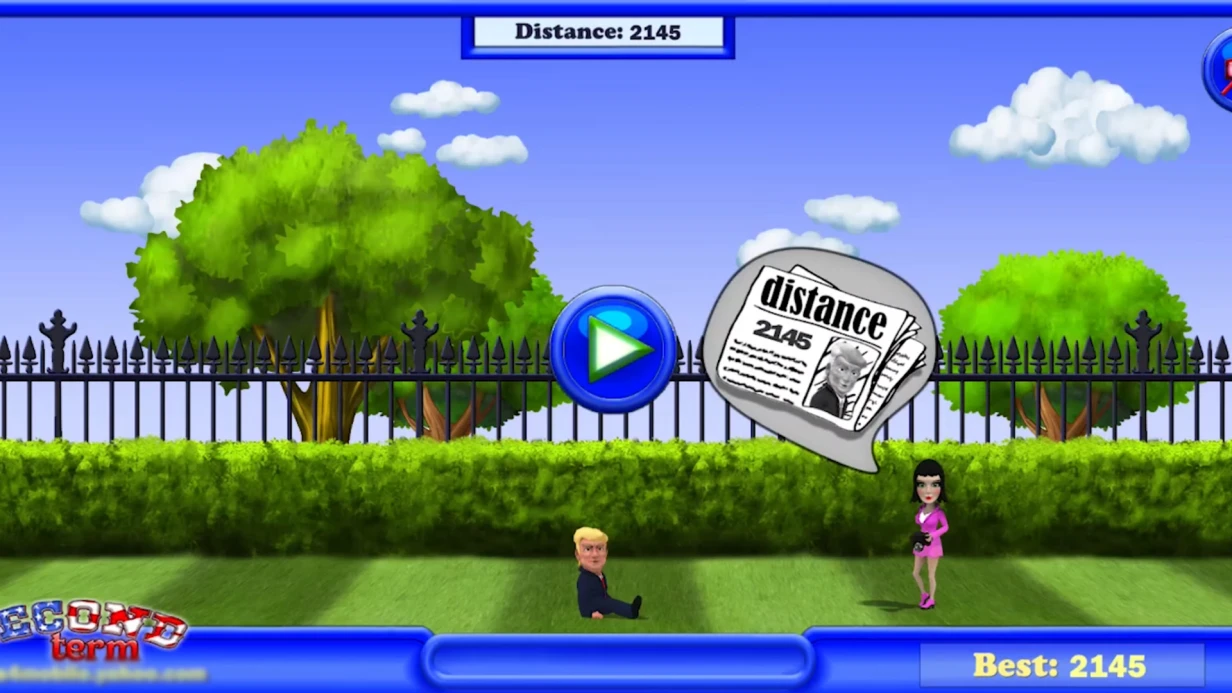
The Comic-Book style solves exactly this problem. By combining solid 3D models for games with dynamic lines, contrast shadows, and "living" character emotions, you get a recognizable look that can't be confused with competitors.
This visual language instantly evokes beloved stories and creates an emotional connection with the player before the game even starts.
We create 3D models for games in the Comic-Book style, fully adapted for the Unity engine — your project without technical integration headaches.
Our team's experience in game development allows us to combine comic-book presentation with three-dimensional depth so that characters, environments, and UI work as a unified aesthetic.
The result is a game that looks cohesive and professional, not like an experiment assembled from different angles.
The biggest bonus is the marketing component. Comic style looks great in screenshots, trailers, and social media: players feel compelled to share the visuals, which gives you free promotion.
Recognizable visuals boost brand recall, simplify ad campaign launches, and set you apart when publishing on digital storefronts. This isn't just a "pretty picture" — it's an investment in reach and organic growth.
If you want your game noticed at first glance — use a strong stylistic anchor. We'll help create characters and worlds people will remember, and integrate them into your project so all your team's efforts work toward the result.
Why Order 3D Models from Us: Key Benefits
Visual style is the first thing a player sees before they even start exploring the mechanics. That's why functional characters and locations aren't enough for a project to succeed: you need a look that sticks in memory.
We create 3D models in the Comic-Book style that immediately set your game apart from competitors and turn it into a recognizable brand.
Benefit: Unique Game Style
When a game looks like a living comic book, it can't be mistaken for a dozen similar projects. Bold outline graphics, saturated colors, and dynamic poses create a cohesive image that reads from the very first screen.
The client gets not just a set of assets, but a complete visual system that strengthens the product's positioning.
Benefit: Brand Recognition
Players share screenshots, discuss artwork, and keep returning to characters outside the game — in social media, merch, and ad campaigns. Comic graphics give a brand natural reasons to be mentioned: this style makes people want to show it off.
Over time, the game becomes the company's business card, and recognition works for you even without additional ad spend.
Benefit: Player Engagement
The light, emotional atmosphere of a comic keeps attention longer than neutral or overloaded design. Users feel comfortable in such a world: they progress through the story, return to beloved characters, and are more likely to recommend the game to friends. All of this directly affects audience retention and session length.
Benefit: Game Characters That Are Remembered
Comic-Book style characters get expressive proportions, vivid facial expressions, and signature details. They feel emotionally close to the player and are easily readable even at small sizes — on an app icon or a banner.
We craft heroes so they become the face of the project and drive brand recognition across all promotion channels.
Every model we make follows the game's unified style. This saves you from inconsistent artwork and lets you launch the product without lengthy rework. The result is a cohesive, living world that players remember and that strengthens your brand.
3D Model Development Formats for Your Task
3D model formats are matched to the specific task — from a single character to full project stylization. The key is that models for Unity are ready to use immediately: in the right quantity, with proper detail, and in a unified comic style.
Below are the typical scenarios our clients come to us with. In every case, you get not just files, but working game elements that speed up your project launch and save budget on rework.
| Format | For Whom | What the Client Gets |
|---|---|---|
| Single Character | Indie studios and authors who need a memorable hero | A ready-made model with a distinct comic style, adapted for Unity — straight into the game, no fiddling around |
| Set of Assets on One Theme | Teams building a level or scene | A cohesive environment in one style: hero, items, props. No need to search for models across different sources — everything matches |
| Stylization of Existing Models | Projects that already have assets but they look dull or inconsistent | A unified comic look that boosts game recognition and sets the mood |
| Full Development for Your Task | Studios with tight deadlines and large content volume | A complete pipeline: from concept to final Unity integration. You get all game models in one style and tailored to your requirements |
| Promo Models for Covers and Trailers | Marketing departments and producers | Eye-catching visuals for app stores and advertising — the kind that grabs attention and increases install conversion |
Task-based development is always a dialogue: we clarify where the model will be used, under what lighting, and from what angle players will see it. Detail level and polygon count depend on this — you pay only for what actually works in your project.
How a Game Model Project Works
We've structured the process so you always know where your project stands and what you'll get at the end. No "magic" and no long pauses: every step is approved, deadlines are set, and you see the result in 3D before final delivery.
- Brief and Task Definition — we discuss what game the models are needed for, which Comic-Book style suits you best, how many characters or objects are in scope, and the deadline for everything to be ready.
- Plan and Timeline Estimate — we lock in development stages with dates and clear acceptance criteria. You get a schedule that makes progress easy to track.
- Draft 3D Models — we show the first versions: silhouettes, proportions, overall style. At this stage, changes are made quickly and don't affect the final price.
- Review and Refinement — you give feedback, we polish the details: facial expression, pose character, costume elements. The model gradually becomes exactly what you envisioned.
- Final Polish and Delivery — we refine textures and colors, prepare the model for animation, test it in the Unity engine, and hand over the files with import instructions.
At every stage, you receive visual materials and can make changes before the work goes to final. This reduces the risk of "the wrong result" and speeds up the game launch — you pay for finished models, not lengthy approval cycles.
What's Included in 3D Model Delivery for Your Game
An ordinary 3D model is just a shape. A working Comic-Book style game needs a package that can go straight into the project without the production team having to "fix it up" by hand.
That's why each order includes not just a model, but a complete "upload — launch — it works" package.
Here's exactly what's included:
- A ready 3D model in the Comic-Book style. The artistic look is refined to be recognizable at first glance: crisp outlines, signature "comic" shapes, an expressive silhouette, like a page from a graphic novel.
- Textures with signature outlines and gradient fills. The style is maintained in every detail. Different texture resolutions are provided for close-ups and wide shots — the model looks equally good on a PC screen and a mobile device.
- A set of basic animations. Idle states, movement, gameplay actions. The result: the character behaves naturally and "alive" from the very first launch, and animations don't conflict with game logic.
- Project source files. Editable model, texture, and animation files. If you want to change a color, size, equipment, or pose — your artist can do it without redrawing everything from scratch. Our source files don't lock you in.
- Integration documentation. A short guide: which files to put where, what settings to apply, and what to watch out for when integrating into your Unity project. No "you can only fix this through us" situations.
- Preview renders from all angles. You can show the model to your team and investors before it's even loaded into the game — perfect for presentations and art approval on the production pipeline.
The entire model is packaged for Unity from the start — from the first frame to final import into the project. You get not an abstract "art file," but a working game element that saves your team days of work and goes straight into gameplay.
Want the same package for your character or environment? Contact us — we'll tell you how to get your task done faster and more efficiently.
Case Study: How a Non-Standard Style Boosted a Client's Sales
When a game launches into an overcrowded app store, it gets recognized by its style even before the description is read. Comic-Book is not just an unusual picture — it's a language that instantly sets a product apart from lookalike projects.
This is exactly the approach we applied to the Pixel Story project — and got a measurable business result.
A casual game developer came to us with a problem: despite good reviews, the game got lost among competitors and users didn't remember the brand. We reworked the characters and environments in a comic style while keeping the mechanics and animations intact.
One month after the update, install conversion grew by 34%, and time spent on the first level nearly doubled.
A Result You Can See in Numbers
The main change was recognition. Mentions of the game on social media and searches for its name grew 2.5 times: users shared screenshots and discussed the characters. For the studio, that meant free reach and more organic installs without increasing the ad budget.
After the successful release, the client ordered an expansion of the universe and styling for promo materials. We continue to support the project, and the client reports growth in in-game item sales — a recognizable universe encourages purchases.
On the technical side, we work in Unity with a well-tuned pipeline, so timelines and quality stay stable even with large volumes of models. What matters to you is a measurable result: conversion, reach, player retention. Want the same effect?
Let's start by reviewing your project and assessing whether Comic-Book could become your advantage.
Frequently Asked Questions About Ordering 3D Models for Games
Before ordering 3D models in the Comic-Book style, clients most often ask the same things: will deadlines slip, how many revisions are included in the price, and will the models fit their game. Below we answer these questions directly — so you can plan development without surprises.
How long does it take to create a 3D model in the Comic-Book style?
The timeline depends on the character's complexity and the number of objects. A single character usually takes 3–5 business days; a location takes from a week.
The exact schedule is fixed in the brief, with stages and checkpoints spelled out: you see progress and know the completion date in advance.
What's included in the price and how many revisions are covered?
The price includes model development in your style and two revision iterations based on your comments. That's enough to adjust proportions, colors, or detail.
If major changes are needed after that, we agree on the scope before work begins — no hidden surcharges or surprise bills.
Will the models be compatible with our Unity game?
Yes. We fine-tune models for the Unity engine your game is built on and deliver source files in a format that's convenient to use right away. If needed, we'll help with integration and advise on how to properly connect animations and configure materials.
What guarantees that the result will suit us?
We don't draw models "blind" — we work from a technical specification and approve intermediate versions at every stage. If something doesn't match your expectations during review, we make changes within the agreed revision iterations.
Over years of practice, we've made hundreds of models for games — and most clients come back to us for their next projects precisely because the result is predictable.
Order Comic-Book Style 3D Model Development — Get a Game Players Remember
Comic-Book style games stand out from the very first seconds — bold graphics, lively emotions, the feel of a hand-drawn world. But without quality 3D models, even a strong idea gets lost among competitors.
We help you achieve exactly the result players will remember: we develop characters, locations, and objects in your style, accounting for your project's specifics.
Start with a short consultation — we'll tell you which aesthetic to choose, how many models you need at launch, and how to meet your deadlines.
After the discussion, we'll prepare a transparent calculation of scope and cost of work, then handle the entire process — from sketches to delivering the finished models.
After ordering, you get:
- Style and technique consultation so your game looks cohesive.
- Accurate timeline and scope estimates before production starts.
- Ready 3D models in the Comic-Book style, adapted to your project.
- Intermediate reviews at every stage — you always see how the result is developing.
- Post-delivery support: we'll help with integration and make adjustments.
- Refined tools and professional equipment — consistent quality without delays.
Ordering Comic-Book style 3D model development is simple: submit your inquiry, get a consultation, and within days see the first sketches of your world. Contact us today — together we'll make a game players remember.
How to Choose a 3D Modeling Format for Your Game?
Choosing a 3D modeling format isn't a technology question — it's a question of matching your task. Some models look great in casual projects and load instantly; others are made to impress players with detail on large screens.
The right format saves budget and development time; the wrong one drags out the launch and eats resources on rework.
In simple terms, the format determines how much a model "weighs," how fast it renders, and how much detail you can show without losing performance.
For a Comic-Book style game, this is especially important: you need expressive "drawn" graphics that preserve the style without overloading the player's device. We choose the model type for your project so it looks premium while running stably even on mid-range devices.
For fast-paced games where speed and many on-screen objects matter, it makes more sense to use lightweight models with thoughtfully designed geometry. They load quickly, don't drop frames, and still convey the comic aesthetic through textures and lighting.
This approach is chosen when you need to build a large-scale project on a limited budget — you get maximum reach and engagement without extra spend.
If your game is a cinematic story, close-up character shots, and a unique atmosphere, we use more detailed, high-poly models. They create a sense of presence, keep players in the moment, and increase the product's overall value.
This is about a premium impression that directly affects user loyalty and their desire to come back to the game again and again.
The key is not to chase the "most complex" or "lightest" format, but to choose what solves your scenario's goals. We help clients decide at the brief stage: we analyze the game type, target audience, and budget, then propose the optimal turnkey solution.
You get models that work toward your business results, not just a "pretty picture." Submit your inquiry — and we'll choose a format that saves resources and strengthens your game.