



Why High-Poly Models Are the Key to Visual Superiority
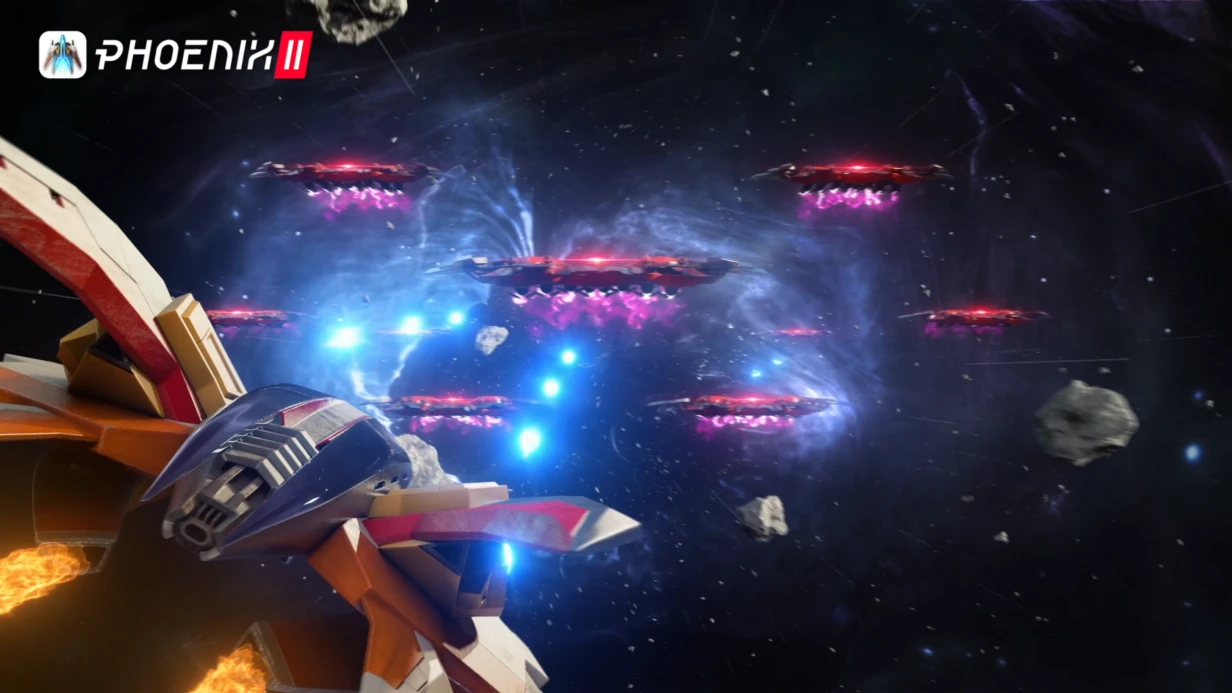
Players judge a game by its visuals: a first impression forms in seconds before anyone clicks “buy” or “download.” In an oversaturated market, graphics quality determines whether your product stands out among thousands of similar titles.
A project with carefully crafted detail immediately reads as expensive and serious, while visual “cheapness” repels players even when the gameplay is interesting — the competition for attention is too fierce.
High-Poly models solve this problem at its core. Such graphics create an effect of physical presence: you want to examine every detail, return to it again, and show it to friends.
The player does not analyze technical specifications — they feel the level of detail on an emotional level. This is that “wow” moment that turns a random page visitor into an engaged user, and then into a paying customer.
High detail directly affects commercial metrics. Games with striking visuals hold audience attention longer, receive more organic mentions on social media and streams, and users are more willing to share screenshots and videos.
The longer a person stays in a project and the more they tell others about it, the higher the lifetime value of each acquired player — brand awareness grows without additional advertising spending.
That is why we create turnkey High-Poly models: from concept to final optimization for the Unity engine. You get graphics that set your project apart from competitors and work for your commercial results from the very first screen.
This is not just a pretty picture — it's a strategic advantage that pays off across the entire game lifecycle.
What Business Benefits High-Quality 3D Graphics Bring
Players judge a project by its visuals in the first seconds: before the loading screen has even finished and the interface has been explored, the decision to stay or swipe away is already made.
High-quality High-Poly 3D graphics for games are not decoration but a tool that directly affects the project’s ROI. They make the product look visually expensive, and therefore build trust before the user even gets to know the mechanics.
Detailed models, carefully crafted lighting, and textures hold attention. Users spend more time exploring game worlds, return more often, and the average session length grows — this is the foundation for monetization and repeat visits.
The longer a person stays in the game, the higher the chance they will tell friends about it or make an in-game purchase.
The unique visual style of High-Poly sets the product apart from hundreds of similar arcade games and simulators. Such graphics are instantly recognized in app stores, social media, and streams — the brand becomes recognizable without additional advertising budgets. Users themselves share screenshots and videos, distributing your product for free.
It is graphics that convert interest into sales. Users are more willing to pay for a product that looks professional: conversion to paid versions, donations, and premium items is higher.
Positive reviews and high ratings in app stores directly depend on visual quality — this shortens the path to the “buy” decision and increases the average order value.
We work with professional equipment and create models optimized for Unity. It is important that detail does not turn into slowdowns on weaker devices: we find a balance between realism and performance so that the game remains smooth and stable.
Investment in high-quality 3D graphics pays off through increased engagement, trust, and sales — users pay for emotion, and emotion is created by the visuals.
High-Poly Model Formats for Your Game Task
High-Poly models are not needed “in general” but for a specific game task: a striking character for a trailer, a set of items for gameplay, or regular content for a live project. Each task requires a different amount of work and a different level of involvement from our team.
If you choose the format right away, you avoid overpaying for unnecessary processes and don’t miss deadlines due to misunderstandings.
We work in three formats — from one-time development to full support. They differ in scope, the level of involvement of your team, and how communication is organized. Here’s what it looks like in practice:
| Format | Who it’s for | What the client gets |
|---|---|---|
| One-time development | Need a single model: a key character, artifact, promo render | Fixed price and fast results without unnecessary approvals |
| Spec-based work | Have a brief, a list of models, but no in-house 3D team for this scope | Transparent stages, clear deadlines, turnkey models |
| Full support | A long-term project that needs High-Poly models regularly | A steady stream of models, priority queue, and savings on hiring |
You can change the format along the way: start with one model, then move to full support once you see the result and want to scale.
In every format, we deliver source files adapted to your game engine and remain available after delivery — this prevents surprises during integration.
Outsourcing is usually chosen by teams that don’t want to expand headcount but need predictable quality. We handle the entire cycle: from references to the finished model — while you get a consistent result and time for other project tasks.
Stages of Work on Your Game Project
We understand: ordering High-Poly 3D models for Unity is an investment in a game’s visual quality, which directly affects sales and player reviews.
To give you predictable results without missed deadlines and unnecessary revisions, we have built a transparent seven-stage process. You always know what stage the project is at, what happens next, and when you’ll see finished models in the game.
- Brief and technical specification. We record the tasks: what objects are needed, in what style, for which Unity scenes, and for which platforms. The output is a document that both your team and our 3D artists understand in the same way.
- Estimate and commercial proposal. We agree on timelines, cost, and scope of work. Here we also set priorities: what we do first and what can be delivered later.
- Approval of references and style. Before full model development, we show key samples. This way, you see the High-Poly detail level and art direction in advance, rather than being surprised at the end.
- 3D model creation. We develop geometry, details, and textures. The entire process takes Unity requirements into account: the models will look correct in your scenes without causing performance issues on target devices.
- Interim approvals. We show models at early stages — you make changes while changes are still inexpensive. This reduces final revisions and speeds up release.
- Final delivery and integration. We hand over source files and Unity-ready files: with correct scales, materials, and import settings. We connect the models to your project if that is part of the task.
- Post-launch support. We stay in touch: fix errors, adapt models for new mechanics, or help with updates. You launch the game instead of looking for new contractors for every little thing.
This sequence removes the typical risks of ordering 3D work: misunderstanding of the task, inflated budgets from endless revisions, and idle team time waiting for models.
Instead, you get a manageable process with clear checkpoints and a result that integrates directly into your game project.
What Is Included in the Delivery of 3D Models for a Game
You get not just “images for a game,” but a complete working package that can be used in the project right away. All files are organized so that you never wonder “what do I do with this next” — from source files to commercial usage rights.
Here is what is included in the delivery:
- Source files in an editable format. You receive working project files, not just exported models. If anything needs adjusting, you can make changes yourself or hand the task to a contractor without loss of quality.
- Full rights to the models. All created objects become your property. You can use them in a commercial game, sell, modify, and adapt them without restrictions — no hidden claims later.
- Optimized game versions. Each model is prepared for real-world workloads: detail is preserved, but without excess weight. The game stays smooth even on mass-market devices — which means comfort for your players and high ratings in app stores.
- Clear documentation. The package includes a description: what each folder contains, which formats are used, what settings are set, and how to import the model into your project. You won’t have to figure things out by trial and error.
- Materials for review. Previews and renders of the models let you quickly evaluate the result before adding it to the game. You can compare the appearance with expectations and, if necessary, clarify details before final acceptance.
- Support after delivery. If you have a question about installation or setup, we’re available and help you sort it out, so you’re never left alone with the files.
Such a package saves time and nerves: you get a predictable result that can be put to work immediately. This is not a “lucky model” but a full-fledged asset for your project — with a clear structure, clean rights, and readiness for use in a game engine.
Case Study: How Model Detail Increased Game Revenue
The owner of the mobile RPG «Легенды Подземелий» came to us with a typical pain point: players clear the first levels and leave, while competition grows. Standard character and item models didn’t catch attention — the game got lost among similar projects.
We offered to rework key elements into highly detailed (high-poly) models without changing the gameplay or style.
Detail changed perception. Weapons gained character, armor gained texture, artifacts gained depth. Players began examining items, taking screenshots, and posting them on social media. The brand received free exposure that worked as an additional promotional channel.
Results That Speak for Themselves
A month after the update, we recorded growth in key metrics:
- Average session time increased by 37% — players spent longer exploring the world.
- Average revenue per user increased by 22% due to purchases of cosmetic items.
- The share of repeat visits in the first week rose by 15% — the audience returned to see new details.
Growth occurred without changing the marketing budget and without discounts. It was driven by the product’s value itself: quality models made the game significantly more attractive to new users and brought old ones back.
That’s why, after the first results, the client returned to us to create models for a new location and expand the range of in-game items.
There was no luck in this case: we analyzed the most popular screens in the game, identified the objects players see most often, and focused our work on them. This approach pays off in any project — you just need to know where the user is looking.
How to Choose the Right Work Format for Your Task?
First, determine what matters most to you: a quick prototype for an investor presentation or a finished game with high detail.
If you only need a High-Poly model for a specific game object, there is no point in ordering full project support — a one-time specification with clear acceptance criteria is enough.
The second criterion is the degree of control over timelines and budget. Fixed pricing is convenient when the estimate has already been approved and you don’t want to exceed it.
Hourly work suits situations where scope may change: you add to the task as requirements appear, and we adapt without bureaucracy.
Each format has a reasonable threshold: for a small set of models, a fixed price is optimal; for a long process with refinements, monthly support is better.
The third point is who on your team handles model integration into the engine. If you have developers, you only need clean files with textures and object hierarchy. Then we handle only the 3D part, and you keep flexibility on the gameplay-logic side.
If you don’t have an integrator, it’s better to entrust us with the entire cycle from references to final assembly on Unity — this way you get a working result without handing technical details to third parties.
Finally, a simple tip: don’t choose a format before a preliminary task analysis. Describe your task to us — we will recommend the best option in terms of timelines, budget, and scope, and then you can make a decision with a clear understanding of the real costs and risks. This comes with no obligation.
Frequently Asked Questions About Game Model Development
Before ordering High-Poly 3D models, every project manager has the same doubts: will deadlines be met, what happens with revisions, and will everything have to be redone from scratch. We answer the four main questions — so you understand how we work and what you can count on.
What guarantees do you provide for finished High-Poly models?
We work in stages: we show intermediate results and take comments into account before moving to the next stage. If, after delivery, something does not match the agreed reference, we fix it at our expense until full acceptance. The quality of each model is protected by contract.
How long does it take to create a High-Poly model?
The timeline depends on the complexity of the object, the number of details, and texture requirements. At the start, we set exact dates for each item in the work plan.
A simple model can be ready in a few days, a complex one in two weeks, but you always know the final delivery date in advance.
Can I make revisions after the model is finished?
Yes, every project includes two rounds of revisions after delivery. If comments fall within the agreed technical specification, we make them free of charge and quickly. If the task changes along the way, we offer an optimal solution and notify you about any impact on timelines.
Is the model compatible with Unity and other engines?
Yes. We deliver models in universal formats that import correctly into Unity and most popular engines. Polygon count, UV unwrapping, and textures are optimized so that detail is preserved while project performance remains unaffected. You receive a set of files ready for integration.
If you still have questions about timelines or your task has specifics not covered above, we can discuss them and propose a solution for your project.Start Your Project With Us Today and Grow
A single page with examples is not enough — it’s important that your task is realistically assessed and set in motion. Take the first step: leave a request, and we will analyze your task of creating High-Poly 3D models for games on Unity.
What you get after contacting us:
- A personal consultation on your project — we’ll advise which models will solve the task and what you can skip without losing quality.
- A calculation of timelines and costs for your task — no hidden fees, with a transparent estimate before the start.
- Examples of our High-Poly models and game scenes — we’ll show how detail, materials, and optimization work for games.
- A work plan and team structure — which specialist will lead your project and at what stage you will see the first result.
- A clear contract and fixed agreements — so you understand the budget and timelines throughout the process.
- A guarantee that the model will work correctly in your project and will not lose quality in the game.
- A quick start — we begin the task immediately after approval, and show the first results as early as the first week.
This way, you quickly move from an idea to a working model — without long approvals and technical details. Leave a request for a consultation: we’ll discuss the task, calculate a budget, and propose a solution that will strengthen your game project.