



Why You Lose Customers Without an iOS Game
When an event ends, only emotions remain in guests' memories—and it's those emotions that decide whether people will return to you.
But traditional formats offer almost no interactivity: guests passively watch, get distracted by their phones, and by the end of the evening no longer remember where they were or what they saw. As a result, the event budget doesn't pay off in loyalty and repeat engagement.
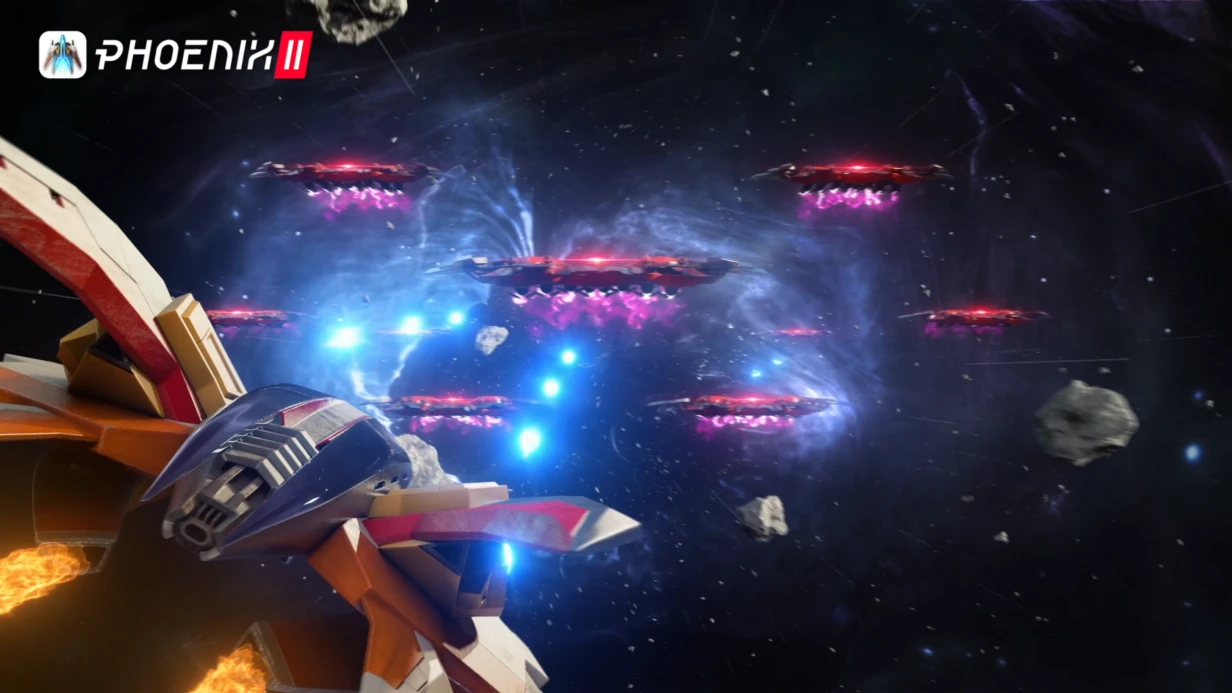
Without an iOS mobile game, you hand your competitors your most valuable resource—guest attention. Modern audiences are used to interacting with smartphones, so b2b games on iPhone and iPad become a working engagement tool. They provide interactivity that keeps working for you even after the meeting is over.
An iOS game turns a guest into an active participant: instead of passive viewing, people go through scenarios, compete, solve puzzles—and remember the brand through personal achievement.
This experience is stronger than a commercial, because participants themselves become the heroes of the story.
For business, this means more warm contacts: guests share results on social media, discuss the game among themselves, and are more willing to leave contact details for further dialogue.
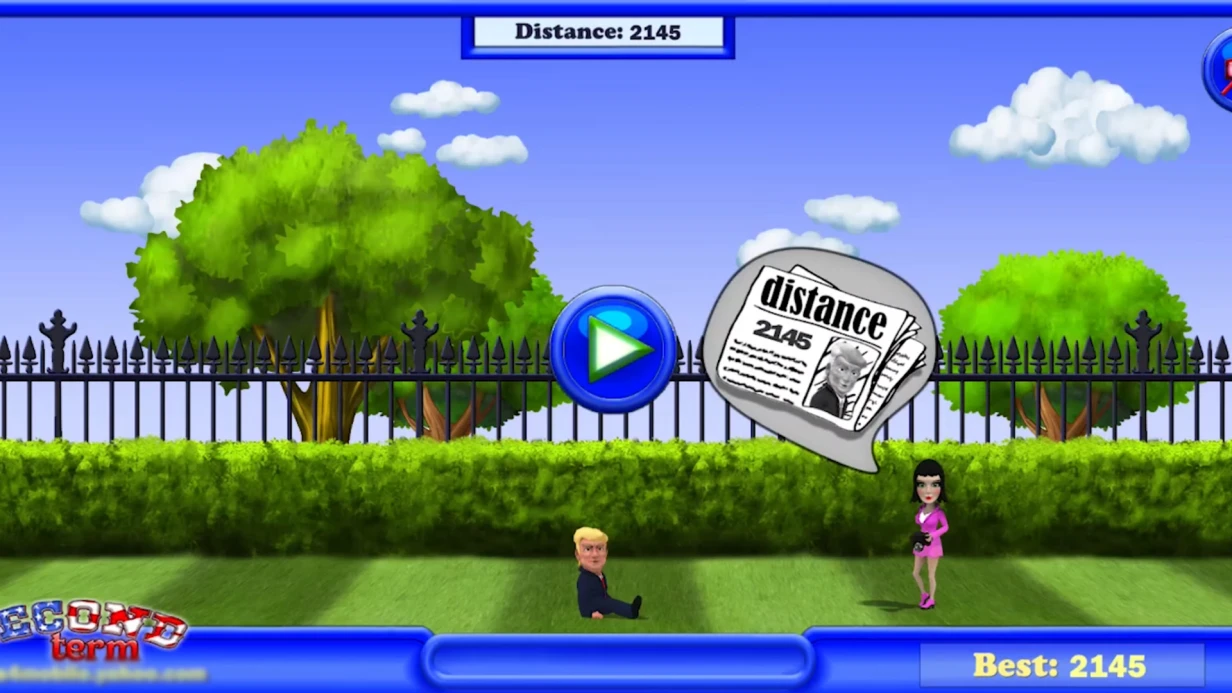
That's why we develop simulator games that fit naturally into your scenario and require no preparation from participants.
We build these solutions on professional equipment and the Unity platform—this guarantees stable performance on all iPhone and iPad models.
The team has over 10 years of experience developing b2b games, so you get not just entertainment but a tool for growing loyalty and brand awareness.
What You Get from Game Development
Developing an iOS simulator game isn't just creating entertainment; it's an investment in a marketing tool that pays off through increased engagement, brand awareness, and lead flow. You get a product that works for your brand even after the main advertising campaign has ended.
Audience engagement becomes the main advantage: users don't just scroll a feed; they spend time inside your game universe, interacting with characters and scenarios. Such deep immersion creates an emotional connection, which in turn increases loyalty and frequency of contact.
Brand awareness grows naturally. The game motivates players to share results and invite friends—each new user brings reach without additional advertising spend. And with built-in brand elements, you reinforce the association with your product in the audience's memory.
The game becomes a steady source of leads. You can integrate contact collection, questionnaires, or calls to action within the scenario—the user leaves a request on their own because they're interested. At the same time, the data collection process looks natural and doesn't cause resistance.
Marketing value is enhanced by analytics of real player behavior: you see what interests customers, which mechanics hold attention, and what needs refinement. This allows you to adjust advertising messages faster and improve your sales funnel.
In the end, you get not a game for the sake of a game, but a working tool that combines entertainment and business goals—from engagement and awareness to a regular flow of quality leads.
Game Formats for Business Goals
The game format determines how users will interact with your brand and what task the project solves. An iOS simulator game lets you show the product in action, a quiz engages the audience while generating useful analytics, and a quest turns interaction into a memorable event. We adapt each format to your specific business goals.
Each format solves brand objectives in its own way: one collects data, another educates, and a third creates experiences. Below is a quick cheat sheet to help you choose the right one.
| Format | Who It's For | What It Gives Clients |
|---|---|---|
| Quiz | Brands and event organizers who need to quickly engage the audience and collect preference data | High reach through virality, participant contacts, and clear answer analytics |
| Simulator | Companies that want to teach customers about a product or show its advantages in action | Users try the product in a safe environment, purchase confidence grows, and support load drops |
| Quest | Event organizers and marketers who need to create an emotional connection with the audience | Long-lasting engagement, series of actions, and positive associations that anchor the brand in memory |
Choosing a format isn't a technology question—it's a question of your goal. If you need to collect requests, a quiz works; if you want to show the product in action, a simulator; if you want to surprise guests, a quest.
We'll help you identify the best option for your task and adapt the game for iOS, taking into account platform specifics and user behavior. All three formats can work as standalone mini-games or as part of a larger game mechanic.
Stages of Creating a Game for Your Business
A transparent process is what sets a reliable contractor apart from a 'black box.' We've broken the simulator game development into stages, and at each step we show the result. You get a predictable timeline and the ability to control the project without unnecessary risks.
-
Brief and task definition. We discuss your business goals: why the game is needed, who will play it, and what actions users should take. We write down requirements from story to mechanics to eliminate misunderstandings before work begins.
-
Concept and plan. Based on the brief, we propose a game idea, visual style, and implementation plan. We agree on scope and timeline. You see how the game fits your promotion strategy and how it will help attract customers.
-
Prototype and initial testing. We create a working prototype—a basic version you can try. We check usability and engagement, and make adjustments. This eliminates most risks before full development starts and saves budget.
-
Development and interim approvals. We build the full game and show you intermediate versions. You can see the status at any time and provide comments. We incorporate feedback immediately so we don't have to redo everything at the end.
-
Launch preparation. We prepare the game for App Store publication: descriptions, keywords, and tests on current devices. We check stability and usability so that first-time users have a positive experience.
-
Support and growth. After release, the game continues to work for your business: we collect analytics, fix bugs, and release updates. If needed, we add new levels, modes, or gamification elements that increase retention.
What's Included in the Game Delivery
When you order a game, it's important to understand what you'll get in the end. We put together a package so you can launch the project, maintain it, and grow it without depending on a specific vendor.
The delivery includes everything needed for operation: from the ready app to documentation and training for your team.
- Ready iOS app — a built and tested game that you publish to the App Store and deliver to users.
- Source code — a complete, clear project structure with comments. You own the code and can hand it to any team or extend it yourself.
- Installation and setup guide — step-by-step instructions that allow your administrator or developer to deploy everything without our help.
- Team training — we give a demo, explain how the game works, how to change content (questions, levels, scenarios), and what to do in typical situations.
- Technical support — after the handover, we stay in touch, help with launch, answer questions, and quickly fix bugs during the warranty period.
- Development documentation — a brief description of architecture and mechanics so a new specialist can quickly get up to speed without spending weeks figuring things out.
This package eliminates the main risk: you don't end up alone with code that no one understands. You get a working product, knowledge, and control. And if you want to update the game or add new features, you can do it yourself or bring us in with an already established base.
Case Study: How an iOS Game Brought a Client 1200 Leads
The developer Severny Park faced a typical market problem: advertising for apartments under construction wasn't generating the required number of requests. People scrolled past banners and closed ad pages before reaching the form. Potential buyers didn't see the value and went to competitors.
We proposed turning apartment selection into an iOS simulator game. Instead of boring layouts, the client got the chance to 'move into' their future home: choose finishes, arrange furniture, and see how light and space change.
Each step held attention and triggered emotions—and at the end, the person wasn't just looking, but trying on life in that home.
The result over two months: 1200 direct leads, and conversion to deal doubled compared with the previous advertising campaign.
Moreover, buyers who went through the game were 'hotter' than usual: they came to the sales office with a ready picture of their apartment and made decisions faster. The game paid for itself in the first month—thanks to the growth in both quantity and quality of requests.
Why iOS specifically? It's an audience that more often makes real estate purchase decisions: it's active, solvent, and used to high-quality digital products.
Gamification on this platform worked like a magnet—people returned to the game on their own, took screenshots, and shared layout options on social media. That's extra reach that kept working after the campaign ended.
The case showed that an iOS simulator game turns fleeting interest into a formalized request. If you need more leads without inflating your advertising budget, the same mechanic can be adapted to your product. Let's discuss how that would look in your niche.
What If I Have Non-Standard Requirements?
We're often asked whether we can account for business specifics when a standard scenario doesn't fit. Our answer is direct: we don't sell a template; we build a game around your task. Non-standard requirements are a normal part of the work, not an obstacle.
Adaptation starts with the brief: we analyze exactly how you plan to use the game—for employee training, for attracting clients at an exhibition, or for launching on social media. Then we adjust the mechanics, scenario, and visual style. Your specifics become part of the product, not a compromise.
For example, if you need not a classic simulator but a training tool for building staff skills, we change the level logic and hint system. If the game must work on tablets in an event area without internet, we account for that at the development stage. Every specific requirement gets a clear technical solution.
Importantly, adaptation doesn't inflate timelines or budget. We record all specifics in the plan in advance and show how they affect the outcome. You control the process at every stage and make adjustments until the game is convenient for your audience.
So if you have special conditions, tell us about them at the first meeting. We'll propose an option that takes them into account without losing quality or timelines. Our goal is to make a game that solves your business problem, even if it doesn't look like typical projects.
Frequently Asked Questions About Game Development
Before ordering a simulator game development, every client has the same questions. We've collected the most common ones and prepared short answers—so you can understand in advance how the work is structured, what timelines to expect, and when technical support begins.
We work in Unity—a professional development environment that lets us quickly produce stable iOS versions. Over 10 years, we've taken dozens of projects from idea to release, so we answer questions honestly, based on real experience.
How long does it take to develop a simulator game?
It depends on the project's complexity and the scope of scenarios. A simple simulator with basic mechanics and one screen can be built in 4–6 weeks, while a full-fledged product with levels, characters, and online leaderboards takes 3–5 months.
We provide exact timelines after the brief, when we finalize the task list and lock it in the contract.
How much does it cost? What does the budget depend on?
The cost is determined not by the number of screens but by the complexity of the logic and the number of team hours. A simulator with unique game mechanics is always more expensive than a standard one.
After the brief, we calculate a fixed estimate—the final cost doesn't change during the process, unless you add new tasks during the development stage.
Will the game work on all iPhones and iPads?
Yes, we test the project on different generations of iOS devices and system versions. We adapt controls for the touchscreen and check stability on both low-end and high-end models. As a result, the game works correctly for most users—and therefore doesn't lose audience.
What about technical support after release?
After the App Store publication, we stay in touch. For one month, we fix bugs and help with publishing updates. If needed, we sign a contract for long-term maintenance: optimization for new iOS versions, content updates, and feature development. You don't face technical issues alone.
Can the game be changed after development has started?
Yes—any changes are added to the brief before work begins; they affect the timeline and estimate. If a new idea comes up during the process, we log it as an additional task and let you know how it will affect the deadline and cost. This way, you always control the process and budget.
If you still have questions, ask them during a consultation—we'll respond the same day. Or send us a brief, and we'll prepare an estimate of the timeline and cost for a game in your format.Order Game Development for Your Business
Game development for your business is a working tool for attracting and retaining customers. A well-packaged game increases brand awareness and provides a point of contact that stays with users for a long time. We help bring such an idea to life—from the first discussion to App Store publication.
Here's what happens after you submit a request: you leave a request, we get in touch within one business day, hold a consultation, and propose a concept based on your goals. Then we lock in the plan, timeline, and budget, and the team starts game development.
After you reach out, you get:
- A consultation: we analyze your task and propose a game format that matches your business goals.
- A transparent work plan and estimate before we start—so you understand the scope and cost in advance.
- Turnkey development: planning, design, development, testing, and publication.
- An experienced team with dozens of completed projects and on-time delivery.
- A ready iOS game and App Store publication with successful moderation.
- Post-launch support: refinements, metric improvements, and new mechanics.
Leave a request—we'll discuss your task and show how a game can work for your business. The consultation is non-binding but will give you a clear understanding of the scope and outcome. Contact us to move from idea to finished product.