



Developing Games for Meta Quest: Why Guests Remember Only Your Booth
Visitors walk past your booth in a matter of seconds — they scan it with their eyes but don't stop. Even if they take a flyer or a souvenir, an hour later they'll hardly remember whose booth it was or what company stood behind it. The brand stays unnoticed, and the budget spent on participating in the exhibition doesn't pay off.
Interactive experiences at exhibitions solve this problem: they attract visitors, stop them, and draw them into a short but powerful experience. A Meta Quest game isn't entertainment for its own sake, but a tool that weaves your brand into the guest's positive emotions.
A person tries on a role connected with your product, performs actions in a game-like format, and steps out of the virtual world with a vivid impression associated specifically with your company.
This format creates a memorable booth: after a short game round, guests themselves tell colleagues about the experience, take photos and videos, and share them on social media. That's free reach long after the exhibition ends. And for you — real contacts and increased recognition without aggressive sales.
We develop turnkey games: from concept and scenario to deployment on Meta Quest right at your booth. So you get not just a game, but a ready-made attention-grabbing tool that people talk about and keep coming back to.
What a Simulator Game Gives Your Business: Reach, Emotions, New Contacts
Guests come to an event for impressions, not promotional brochures. A Meta Quest simulator game turns the booth into a place they want to stay: visitors don't just look at the product — they immerse themselves in it.
Such an experience is remembered for a long time and significantly increases the time spent at the booth.
While a person plays, your staff member has time to strike up a conversation and collect contacts. A few minutes of a game session is a natural reason to stay longer, learn more, and leave contact details. As a result, the booth brings not only emotions but also a real database of potential clients.
Virtual emotions beg to be shared. Guests record the experience on their phones and post it on social media — video from a headset looks striking and grabs attention. Each such post serves as free reach: the brand mention spreads beyond the venue for several days after the event.
A simulator game favourably links the brand to positive feelings. Through an interactive presentation, it's easier to show the essence of the product than through a presentation or brochure.
The guest personally lives through the story — which is why the association with your company becomes stronger and builds trust.
For business, the benefit is clear: guest engagement grows, contacts are collected without intrusive surveys, and the viral effect boosts recognition. The result is growing interest in the product long after the booth has been packed up.
Game Development Formats for Meta Quest: From Arcade to VR Quest
Every project starts with a question: which game format will actually solve the business problem?
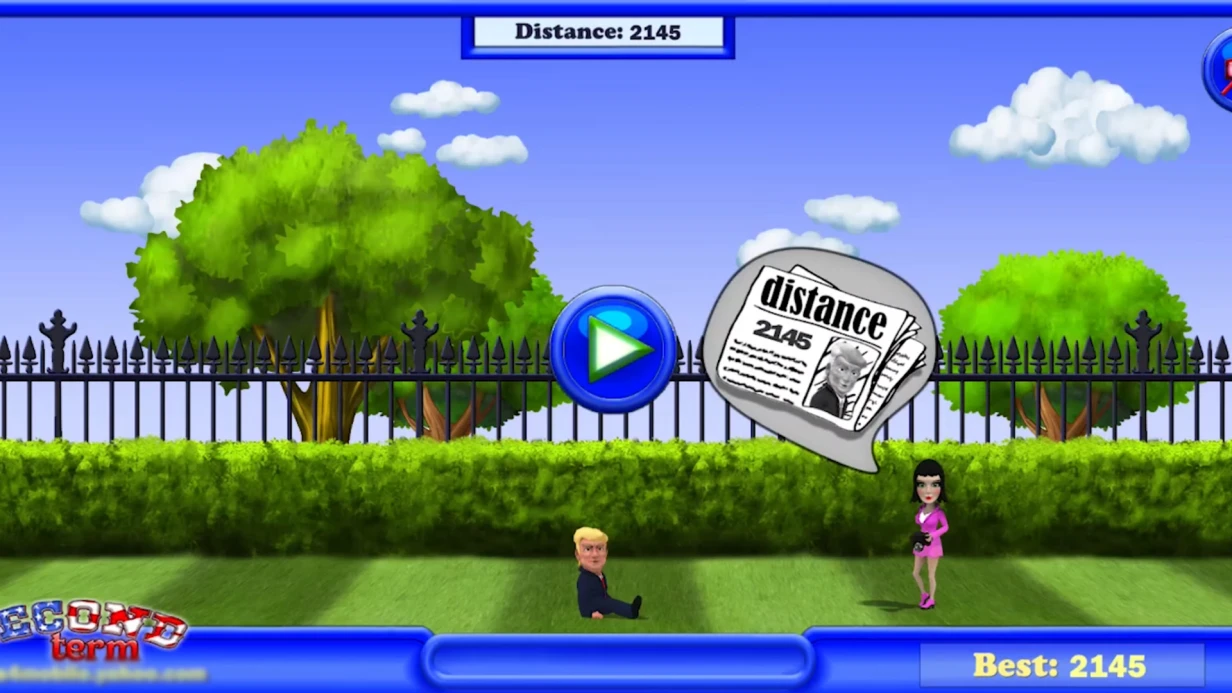
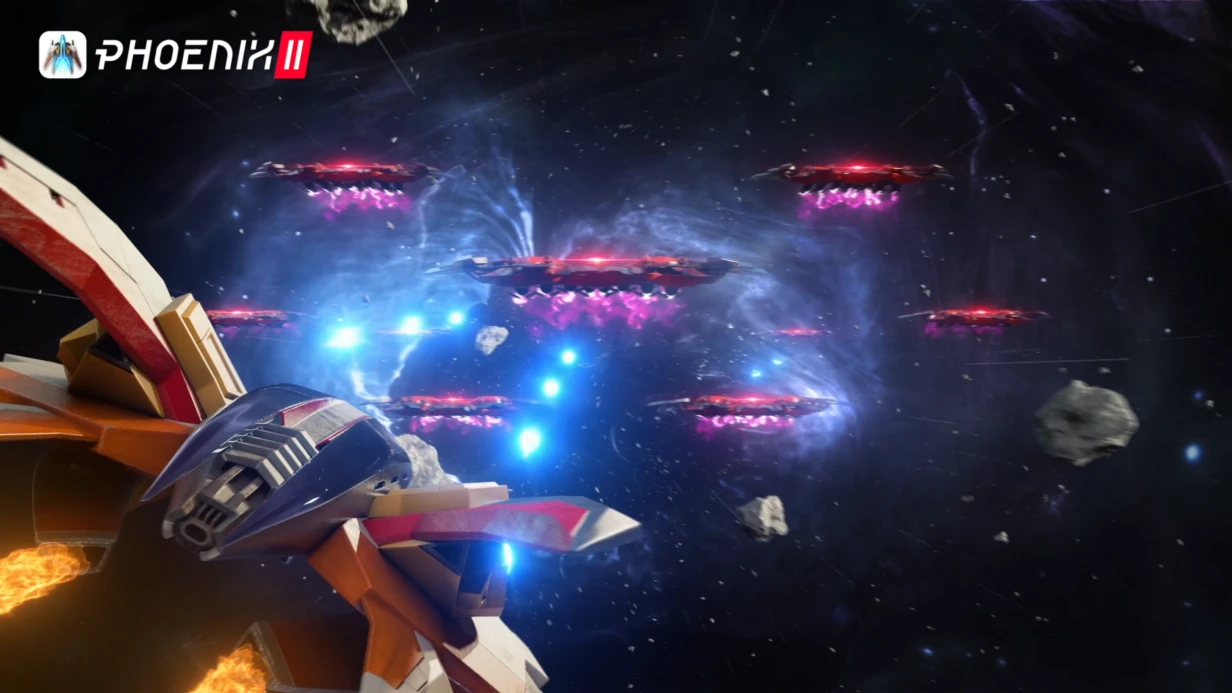
With Meta Quest, you can create an arcade game to attract attention, a VR quest for a team event, or a simulator for training and product demonstration — the key is to choose the option that delivers measurable results for your specific audience.
<our team> specializes in developing Meta Quest games on Unity — which enables us to build projects that run stably on the device and launch quickly even for unprepared users. We offer three proven formats, each serving its own purpose.
| Format | Who it's for | What it gives the client |
|---|---|---|
| Arcade | Events, exhibitions, open houses | Quick guest engagement, lines and genuine interest, natural photos and videos for social media |
| VR quest | Team building, corporate parties, team activities | Develops team interaction, creates vivid memories and a reason to come back to you again |
| Simulator | Employee training, product presentation, career guidance | Practice of skills without risks and consumable costs, clear demonstration of capabilities |
Formats can be combined: for example, a simulator with quest elements or an arcade with a training scenario. We help you choose the best option for your task, budget, and venue — from a small zone at an event to a full-fledged VR space.
All games are optimized for Meta Quest and require no complicated setup: a 2×2 meter zone and a power outlet are enough. Guests put on the headset and immediately dive into the game — no instructions or tech specialists nearby.
After launch, you get clear statistics: how many people played, how much time they spent in the game, and which scenarios were the most popular.
If you're not sure which format will work, write to us. We'll tell you how similar projects solved other companies' challenges and offer a solution for your case.
How Development Works: From Brief to Launch at Your Event
When ordering a simulator game development, it's important to understand what happens at each stage and exactly when you'll see the result. We've designed the process so you always know what's been done, what's being approved, and when the game will be ready to launch. No surprises — just clear stages, regular feedback, and a final result that works at your event.
Work Stages
- Brief and goals. We start with a short interview: you tell us about the event, audience, and task — what guests should feel, what idea to communicate. We pin down the format, number of users, and expected outcome.
- Concept and scenario. We propose a simulator idea that solves your task: mechanics, visual style, session duration. We show how the game fits into the event logic and attracts visitors' attention.
- Approval. You receive a clear description of the concept, a list of stages, and deadlines. We make revisions before the main development starts — saving you time and money.
- Development and control. We build the game with professional equipment and tools so it runs stably even under heavy load. We send intermediate versions — you see the progress and can adjust details.
- Testing on a real device. We test the simulator on Meta Quest headsets: image quality, control comfort, reliability. We fix all issues before your event, not during it.
- Launch and support. We deliver configured equipment, help with layout, and train your staff. We stay in touch on the event day — if anything goes wrong, we resolve it instantly.
As a result, you get a ready-made simulator game that welcomes guests, entertains them, and works for your business goals. All stages are transparent, and communication is free of technical details — only the essentials, in the language of your project.
What's Included in the Delivery: Ready-Made Product, Instructions, and Support
After the project is completed, you receive not just a game but a ready-to-use solution. We handle all stages — from equipment setup to staff training — so you can focus on your tasks instead of technical details.
Here's what's included in the delivery:
- Ready-made Meta Quest simulator game, adapted to your business needs. The scenario, difficulty levels, and mechanics are tailored to your audience — whether it's staff training, customer acquisition, or product presentation.
- Equipment setup and calibration. We connect and configure the headsets, verify all scenarios, so the game runs without failure on the event day.
- Staff training. We train your employees: how to start the game, help visitors, and handle typical issues. Training takes one to two hours, after which your team works independently.
- Clear instructions. You get short guides on launching, operating, and maintaining the equipment — in Russian, without technical jargon.
- Technical support. After the project is delivered, we remain available: consultations by phone and messenger, help with setup and updates. Average response time — up to 2 business hours on weekdays.
- Updates and modifications. If several months later you want to change the scenario, add new levels, or update branding, you can order modifications under a separate contract, and we'll make those changes to the game.
- Content rights transfer. You receive all rights to use the game scenario and materials within your business — protecting you from third-party claims.
Thus, you're not buying a 'box' with a game but a working tool that delivers results right after launch. All documentation, training, and support are included in the project cost — no additional payments will be required.
Case Study: How an Exhibition Game Doubled Time at the Booth
A typical exhibition is a buzz, a crowd, and dozens of identical booths that visitors pass by in seconds. Even if the product is interesting, holding attention is hard: people's eyes get tired, and they still wander off to competitors.
Our client — a B2B company — faced the same issue: the booth looked nice, but visitors didn't stay and few contacts were collected.
We proposed a solution — a VR simulator based on Meta Quest that turned a booth visit into a game. The task was simple: instead of a boring product pitch, let guests try the product in action, in a competitive format. That's how this case study came to be.
What We Did
We developed a simulator where visitors completed a product-related scenario in 3-5 minutes. Participation felt like a quest: guests put on the headset, entered a virtual space, and solved a task for speed.
Thanks to the competitive element and the immersion effect, people lined up and called their colleagues over to try it again.
Measurable Results
The first number the client noticed after the first day of the exhibition was time at the booth doubled. Before, visitors spent 1-2 minutes at the booth; with the VR game, they stayed for 10-15 minutes, including waiting and discussing the result.
Over the two working days, we collected over 500 game sessions, and most importantly — 150 qualified contacts.
I should also note: the contacts were 'warm'. Guests voluntarily left their details to receive a recording of their game or to discuss the product. In the end, the client got not just quantity but quality — after the exhibition, several deals were closed with these contacts.
The brand was remembered: recognition grew because participants themselves shared photos and videos from the VR booth on social media.
This case is a clear example: an exhibition game pays off not in money but in behavior. People spend more time near the product, investing their energy and attention into exploring it.
If you want your booth to be remembered and talked about, write to us — we'll show a scenario for your task and calculate the forecast of results.
How to Choose a Game Format for Your Task Without Overpaying?
There's no direct answer, because 'expensive' and 'cheap' are defined by the task. The same Meta Quest simulator game can be a short exhibition demo or a full-fledged training program for employees. The difference isn't in visual quality but in the result you want to achieve and over what period.
Here's what we look at first. Goal: boost recognition, train staff, collect visitor contacts, or test a prototype — each scenario has its own depth of mechanics and session length.
Audience: if the game targets a general visitor stopping by for 5 minutes, it's one format; if it's for regular specialist work, it's another. And the venue where the game will be used: a stationary zone with its own equipment or an off-site event where autonomy matters.
Budget as such is secondary. We don't start with 'how much money do you have,' but instead calculate the minimally sufficient scope: a starting version that solves the task and can be shown within a few weeks.
If expansion is needed later, we add levels, modes, and scenarios without rebuilding the foundation. That way, you don't overpay for features you don't use and don't lose money on a 'raw' product.
That's why the practical path is a short consultation. You describe the task, audience, and expected result, and we suggest a format: from a demo for a single event to a corporate simulator with training and statistics.
Usually, by the first meeting it becomes clear which option will deliver maximum value with a reasonable investment. It saves you weeks of deliberation.
We Answer Questions About Development: Timelines, Pricing, Guarantees
Clients always need to understand what they get for their money and when they'll see the result. We structure the work so you don't have to guess: before we start, we fix timelines, scope of work, and support terms in the contract. This approach removes the main risks — project delays, hidden surcharges, and a 'raw' product.
Typically, developing a Meta Quest simulator takes 6 to 12 weeks — the exact timeline depends on the number of scenarios and the level of detail.
The price is based on tasks, not on 'hours of work': we discuss what should happen in the simulation and evaluate it as a finished result. The cost includes project setup for the hardware, testing, and revisions, so the final number doesn't change during the process.
What if the project takes longer than you planned?
We build a time buffer into the planning stage and show intermediate versions twice a week. If new tasks arise from your side, they are handled separately and don't break the overall schedule. The risk of missing the deadline due to our fault is practically eliminated.
How is the price set, and can it be reduced?
The price depends on the number of scenes, the level of interactivity, and the need for integrations. To reduce the budget, you can simplify the graphics or reduce the number of scenarios — at the start, we'll show where this won't affect guests' impression. We work with a stage-based advance payment tied to results.
What about warranty and technical support after launch?
We provide a warranty on the work — 3 months from release, during which we fix bugs and adapt the product to hardware changes for free. After that, you can sign up for a support plan — we'll stay in touch to keep the simulation running reliably at your events.
How safe is it to share your idea and internal data with us?
We sign an NDA before any discussions and store all materials on secure servers. Without your written consent, we do not use any ideas, documentation, or project screenshots — this is stated in the contract.
If you still have questions, send them through the form, and we'll tell you about timelines and budget for your specific task.Order Game Development with Format Selection and Cost Estimate
Taking the first step is simple: leave a consultation request, and we'll choose the game format for your task, show you an implementation plan, and calculate an estimated cost.
Tell us what event and audience the game is for, and we'll offer the optimal solution: from a compact zone for 2 hours to a full-fledged VR activity lasting several days.
After your request, you'll receive:
- Game format selection based on guest count, venue, and brand goals — with an explanation of why it will work.
- Implementation plan with stages and timelines — you always know what's happening and when the result will be ready.
- Preliminary cost estimate without hidden fees — transparent pricing for the chosen format.
- Consultation on event integration — how to build the game into the overall program and boost social media reach.
- Assessment of technical risks and guarantees — what reliable performance at the event is based on.
- Pre-event promotion recommendations — so visitors look forward to the game and plan their visit in advance.
The request takes a couple of minutes. After a short consultation, we'll prepare an estimate and plan, and you decide whether to move forward or not — this is non-binding. Many clients receive their quote the same day and launch the game at their event just a week later.
Leave a request to get a workable idea for your event and precise budget figures. We'll talk about your task and show you how a VR game on Meta Quest forms a line and creates emotions people keep talking about after.