



Why Your Brand Loses Customers Without an Android Game
Your customers spend hours in mobile games—but that time passes without your brand. While they complete levels in other apps, you lose their attention, loyalty, and repeat sales.
Competitors are already using Android games as a quiet channel to communicate with their audience, while you remain behind the screen.
The problem is not that people have stopped loving your product. It's simply that between purchases, they lack a reason to remember you.
Standard notifications and newsletters annoy them, while a game engages them willingly—it gives emotions, challenge, and reward that become associated with your company.
An Android game for business solves the retention problem: users return to it again and again—and along with that, they return to your brand.
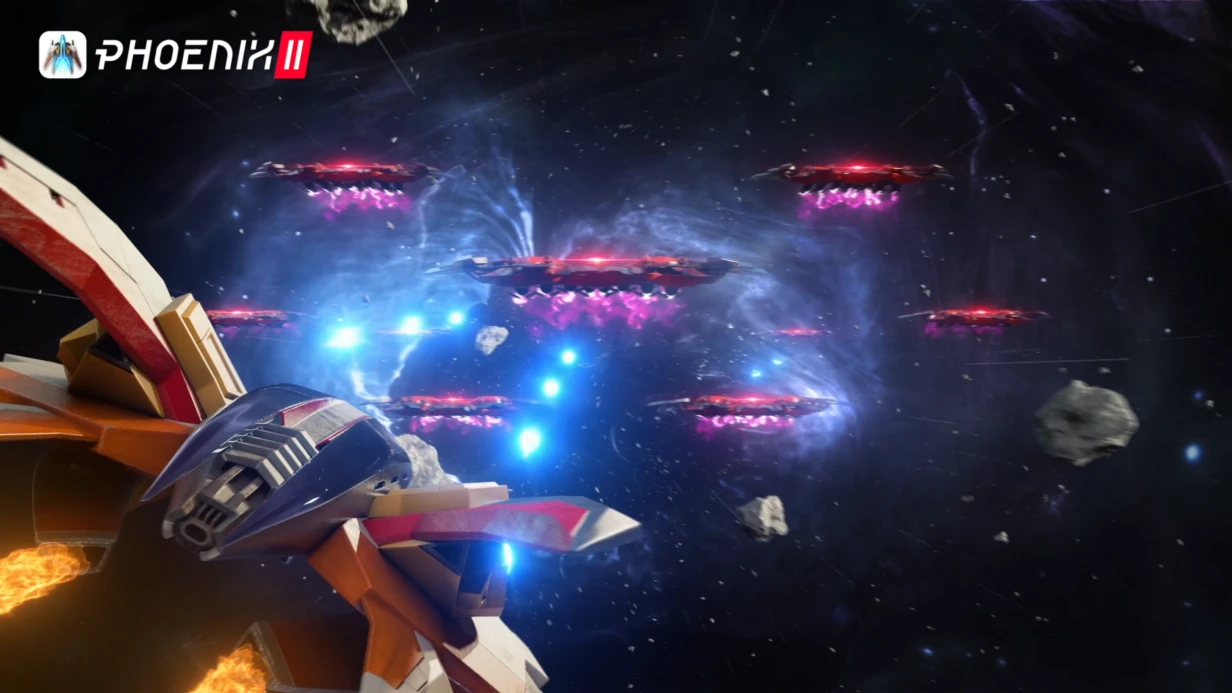
A shooter is one of the most engaging formats: it creates excitement and the desire to complete levels, and every achievement can be linked to your products or promotions.
Shooter development on Unity allows us to create a turnkey mobile game tailored to your tasks: from idea to publication in app stores. We handle the entire process, and you get a tool that works on customer retention around the clock.
Don't let your audience drift to other games. Order an Android game that turns screen time into brand growth.
What a Mobile Game Can Give Your Business
Potential customers already live in their smartphones, and a mobile game lets the brand be present during their leisure time. Ordinary advertising interrupts attention; a game engages.
According to mobile market research, gaming apps retain users longer than all other categories: in a single session, people spend dozens of minutes in a game instead of just a few seconds.
This turns the game into an audience engagement tool. People don't just watch a video; they interact with the brand: they complete levels, earn rewards, and share results.
Every player becomes a carrier of your message—reach grows through word of mouth and social media posts without additional advertising spend.
A game shapes the brand image through emotions. Gameplay, style, and story are remembered better than a standard banner, so brand recognition improves and attitudes toward the company become warmer.
For the client, this means the budget works not for a one-off campaign but for long-term loyalty: customers return to the game again and again, each time reinforcing their connection to your product.
A mobile game is also a source of leads. You can offer a prize or content unlock in exchange for contact details, and then remind users about yourself through promotions and new features.
This turns the game into an ongoing communication channel with an interested audience—one that generates real contacts and repeat sales.
We build such games for business needs—from simple mechanics to full-featured Unity shooters for Android. Together we'll choose the format that solves your specific challenge: boost engagement, expand reach, or start collecting leads from the first days of launch.
Android Game Formats for Your Task
Each Android game solves a specific business problem: one draws attention to a booth, another trains employees, a third retains customers for months.
Instead of an abstract "we need a game," we discuss a concrete scenario—and offer a format that delivers measurable results.
Below are three typical options that our clients most often order. This isn't a complete list, but a reference point to help you understand the possible scope of the project and its effect.
| Format | Who it's for | What it gives the client |
|---|---|---|
| Promo game for events | Companies participating in exhibitions, conferences, public campaigns | Keeps visitors at the booth, increases traffic to social media and the contact base, creates a rich photo opportunity |
| Training game | Businesses that need to quickly and easily introduce employees or partners to a product, rules, or a new system | Increases training engagement, reduces onboarding time, and is remembered better than a presentation |
| Game for ongoing engagement | Brands and services that want to retain customers between purchases | Gives a reason to return to the app, builds regular communication with the audience, increases loyalty |
Understanding your scenario, we select the mechanics, complexity, and development timeline. For promo campaigns, a simple game that can be launched in a few weeks is often enough. For ongoing engagement, we design a reward and update system so users don't lose interest.
Whatever you choose, the client gets a finished Android game: with a clear interface, stable performance across different devices, and a simple launch guide.
We'll also advise on how to measure the effect—number of installs, time in game, number of visits to your website or account.
How Your Game Development Works: 7 Stages
Turnkey game creation is not a "black box." We've broken the process into 7 clear stages: you always know what's happening, what the development timeline is, and what result you'll get at each stage.
Project approval happens in a convenient format—changes are made at the stage where they don't yet require significant costs.
-
Brief and task analysis — we lock in the game's goals, target audience, Android platform, and monetization model. We align on the technical specification so that both sides have a clear understanding of the final product.
-
Gameplay prototype — we create a playable version with the core mechanic. You test it, feel the dynamics of the future shooter, and suggest changes before the main resources are invested.
-
Concept approval — we finalize the visual style, characters, levels, and sound design. This is where you make key decisions that won't need to be redone later.
-
Core content development — we program the mechanics, create graphics and sounds, and build the game into a single product. We work in short iterations and show you a working version after each one—no hidden surprises.
-
Testing and polishing — we test the game on different Android models, from budget to flagship, fix bugs, and optimize response speed. We pay attention to the small details that set a quality product apart from a hack job.
-
Google Play launch — we prepare the game's store page: screenshots, description, and search keywords. We pass moderation and publish the app—you get a game that's available for download in the store.
-
Post-release support — we monitor reviews, release updates, add content, and improve metrics. The game evolves and keeps delivering value.
This approach helps avoid rework and stick to the development timeline. You control each stage while we handle all the technical work. As a result, you get a finished game that meets expectations and Android store requirements.
What You Get in the Finished Product
You don't just get "source files in your inbox"—you get a complete package that lets the game keep living and delivering value after launch. We hand over the entire project: code, resources, settings, documents—everything needed to develop the product independently.
Here's what's included in the game delivery:
- Full Unity project source files — code, scenes, prefabs, and art resources. You're not tied to our studio: you can develop the game with any team or in-house developers.
- Product rights and licenses — all intellectual property transfers to you. No legal risks or disputes with the contractor.
- Configured in-game analytics — you can see where players come from, how long they spend in a session, and at which level they drop off. This is the basis for informed improvements and monetization.
- Android device adaptation — the game runs stably on both low-end and new models, and displays correctly across different screens and OS versions.
- Training for your team — we share knowledge so your employees can make edits, adjust balance, and add content without constantly contacting us. We conduct several sessions and record video tutorials.
- Technical documentation and admin tools — architecture descriptions, update instructions, and a content management panel. A new employee can get up to speed in a day.
- Publishing and moderation support — we help you pass Google Play review, design the app page and storefront so the game gets more installs.
After the project is handed over, we don't disappear. All work is covered by a warranty—during the warranty period we fix bugs free of charge and help with updates. Support doesn't end there: we stay in touch and advise when to add new content or rebalance the game.
Case Study: How We Tripled Leads for a Restaurant Chain
Restaurant owners fight for guest attention, and the usual "subscribe to our newsletter and get a discount" promotion works worse and worse. Guests want entertainment, and businesses need a contact base.
We found a solution that solved both tasks at once: an arcade machine in the dining area where guests knock down menu dishes and win real discounts.
Result for the restaurant: 3,000 new leads in the first month—these are contacts from guests who have already tried the food and came for an experience.
The case proves that the game works not just as entertainment, but as a tool for building a contact base without pushy requests.
What This Gave the Business
In addition to the 3,000 contacts, the owner got a steady stream of repeat visits—guests came back to "finish the game" and brought friends.
Each guest spent 3-4 minutes at the screen, which is several times longer than standard order wait time and gave the brand exclusive contact time.
The cost per contact turned out to be several times lower than with advertising campaigns. Instead of media reach—live interaction with the product at the point of contact. The mechanics were so simple that they required no staff training or guest explanation.
Client Feedback
"We were looking for a way to stand out, but we didn't want to launch another boring loyalty program. The game raised the average check and brought us more contacts than all our advertising channels combined. We plan to roll it out to all locations of the chain," — owner of the restaurant chain.
Why It Worked
The key to success was deep brand integration. We didn't offer a "shooter for the sake of a shooter": the game contains real dishes from the menu, and the prizes are tied to what the guest would have wanted to order anyway. When game mechanics reflect a business objective, the results exceed expectations.
The approach can be replicated across other industries—from retail stores to fitness centers. If your goal is affordable leads and customer engagement, tell us about your product—we'll come up with mechanics that deliver results.
Frequently Asked Questions About Game Development
When starting an Android shooter development project, clients often ask the same questions. Here are the answers to the main ones, so you know in advance how we work and what you get at each stage.
What if your audience doesn't like the game?
We don't hand over a finished project blindly. Before launch, we test it with a real audience, collect feedback, and make adjustments. Thanks to the iterative approach, you see the result at every stage—the risk of ending up with an unviable product is minimal.
How does game support work after release?
After launching on Android, you're not left alone with the product. We handle technical support: we monitor stability, release updates, and respond quickly to requests. If new functionality or seasonal content is needed, we'll join in the development.
Can we make changes during development?
Yes, and this is normal practice. We work in short iterations, so you can adjust the game mechanics, interface, or story as new data emerges. We record all changes in briefs—you always know what is changing and why.
This approach lets us launch a shooter that will definitely find its audience and remain in demand after release. If you still have a question—just write to us, and we'll tell you more about the process.Submit a Request—and Get a Game That Works
Submit a request—and get an Android game that actually works, not one that stalls at the idea stage. The mobile game market is crowded, and every mistake at the start costs time and money. We'll help you go from briefing to publication without surprises.
The first step takes two minutes. Within a couple of hours, you'll get answers to the key questions: how much the project costs, when the prototype will be ready, and what profit the game will bring. Here's what's included in the materials provided after your request:
- Request a cost calculation. You'll know the exact budget and timeline before work begins. No hidden payments—you know what you're paying for.
- Game prototype. In a few weeks, you'll have a playable version you can show to investors, partners, or potential clients. Feel right away how the game handles.
- Product consultation. We'll help you choose mechanics and a monetization model for your audience. This improves ROI at the planning stage, not after launch.
- Technical plan and estimate. You'll get a stage-by-stage development plan with timelines and checkpoints. You'll always know what's happening and when results will arrive.
- Post-launch support. A game can't just be released—it needs to be developed. We stay in touch after publication to quickly fix bugs and release updates.
Fill out the form, and we'll get back to you within one business day. The first consultation comes with no obligation: you'll find out whether our approach fits your project and make a decision without any pressure.
How to Choose a Game Format for Your Task?
The choice of game format directly affects reach, engagement, and the result you get from launch.
Roughly speaking, all Android projects can be divided into three groups: short sessions for a mass audience, medium-length projects with progression, and deep games with constant retention.
The first bring installs faster, the second build a loyal audience, and the third produce steady revenue.
Here's how the formats line up with typical business objectives:
| Game format | Who it's for | What it gives the client |
|---|---|---|
| Hyper-casual mechanics | Brands that need mass reach | Quick influx of new users, viral potential, low entry barrier |
| Casual project with progression | Services that need retention | Repeat visits, longer brand contact, ability to embed rewards and bonuses |
| Strategy or shooter for Android | Products with a strong audience | Deep engagement, strong brand association, long-term interest in updates |
Igor Melnik, leading producer at our team, emphasizes: "The client's mistake is choosing mechanics that they personally like rather than what their audience likes. If a user is sitting on the subway with a phone in one hand, a complex strategy won't work.
First determine how much time and attention a player is willing to give, and only then choose the genre."
Practical advice: for a first launch, pick one format and focus on a couple of core mechanics. Comparing game mechanics against each other only makes sense through the lens of your goal: installs, returns, or brand awareness.
If your budget is limited—a hyper-casual project will give quick metrics and collect data on user behavior. If depth of contact matters—a well-designed shooter with progression will bring more value in the long run.
The best way to make a decision is to discuss your task with a developer who has already gone from idea to publication. Describe the reaction you want from users, and we'll recommend the format, mechanics, and timeline for your project.