



Customers Are Leaving for Competitors — How Pico 4 Brings Them Back to You
Mall visitors are people who are already ready to spend time and money on experiences. If your entertainment space has nothing new, they choose a neighboring attraction or leave for another mall entirely.
The problem is not a bad location — it's that familiar formats have stopped surprising, and customers see no reason to stay.
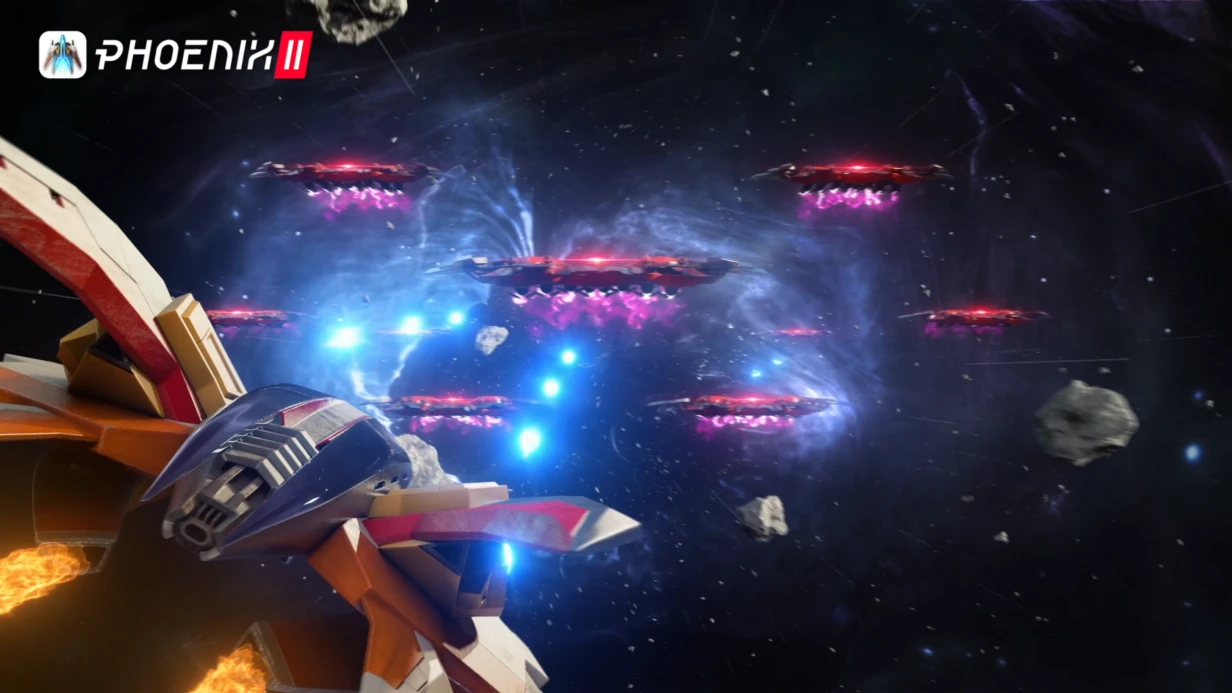
A VR attraction powered by Pico 4 is entertainment for shopping centers that breaks this pattern. Instead of passive observation, a person steps inside the game: moving, shooting, saving the team.
The emotions from this experience are so powerful that visitors don't just stay longer — they come back with friends and family.
For business owners, this means higher foot traffic and a larger average check.
The VR zone takes up little space, requires no complex maintenance, and quickly pays for itself through the stream of visitors eager to "try that thing." Guests see it as a destination in its own right, not just another headphone kiosk.
We help close this gap: we design a shooter tailored to a specific mall's needs, configure the equipment, and launch an attraction that brings in new customers and brings back old ones.
Key Benefits of a VR Shooter for Your Business
A VR shooter on Pico 4 is not just entertainment — it's a tool that turns visitors into regular customers. The virtual reality format delivers exactly the kind of impressions people tell their friends about and are willing to pay for again.
The first benefit is higher foot traffic. The shooter becomes a focal point: guests come specifically for the new experience, arrange to meet at your venue, and spend more time here. A lively queue and group formats create an atmosphere that keeps guests around.
The second benefit is a larger average check. Paid sessions, room rentals, extra rounds, and packages for groups are added on top of the base ticket. The game format tempts players into "just one more round," so each visitor spends more than they planned.
The third benefit is brand recognition. The shooter looks impressive in photos and videos: guests share their experiences on social media and tag your venue — reach grows without ad spend. This format sets you apart from competitors and builds the image of a modern venue.
The fourth benefit is lead generation. When booking sessions and discussing additional services, you collect guests' contact details and have a reason to reach out with promotions. Every player is a potential regular customer, and group bookings open the door to corporate events.
All together, the shooter pays for itself through higher revenue and returning guests. You attract new visitors, increase the check, strengthen your brand, and build a base for repeat sales — one solution serves multiple business goals.
Shooter Formats on Pico 4 for Any Task
The same goal — delivering vivid emotions to guests — can be served by different scenarios.
A Pico 4 shooter for a mall shooting gallery needs to take up minimal space and handle a fast flow of visitors, while at a corporate event it should bring teams together and keep the excitement going for hours.
We adapt one proven format to your venue: the client gets a ready-to-run attraction without the risks of raw, unstable development.
Three Formats — One Battle-Tested Shooter
At the core of every option is a polished VR shooter running on professional Pico 4 hardware. Only the configuration changes: a stationary point, a mobile case, or a competitive mode. What to choose depends on your goal — the table below helps you decide in a minute.
| Format | Who it's for | What the client gets |
|---|---|---|
| Stationary shooting gallery | Shopping malls, amusement parks, permanent zones | Revenue per square meter: a compact point, fast visitor flow, minimal staffing costs |
| Mobile kit | Holidays, store openings, off-site events | Autonomy: set up in an hour, runs from a standard outlet, creates a lively queue and buzz |
| Competitive (multiplayer) | Corporate events, team-building, tournaments | Team format: participants compete against each other, photos and results go to social media and extend event reach |
How to Choose a Format
If you have a permanent venue and want to earn every day — go with the stationary shooting gallery. For a one-off event with maximum reach — choose the mobile kit: it can be placed in a lobby, near the entrance, or in the food court.
If employee or guest engagement matters most — the competitive mode will make them stay longer and come back with colleagues.
During a consultation, we'll recommend the format that fits your goals and combine kits if needed. In the end, you get a turnkey Pico 4 shooter: with setup, staff training, and support for the rental period.
How Development Works: 5 Steps from Brief to Launch
Every stage is coordinated with you — you see how the future attraction takes shape and control the key milestones. No black boxes: you know the timeline, intermediate results, and the cost of each step in advance.
This approach to game development eliminates surprises and guarantees that the final product solves your specific challenge.
- Brief and project immersion. We study your venue, target audience, and business goal. We define the desired outcome: boosting recognition, entertaining guests, attracting a new audience.
- Concept and scenario. We propose the shooter's concept, mechanics, and storyline. We align how the game fits your format — from a wedding banquet to a corporate event for 500 people.
- Project approval. We present a detailed work plan, visual references, and architecture. You approve the final vision, and then we lock in the estimate and timeline.
- Development and assembly. We build the game in Unity for Pico 4, fine-tuning controls, physics, and special effects. Throughout development, we share intermediate builds — you watch the project come to life.
- Testing and launch. We set up the equipment at your venue, run test sessions with real players, and resolve any issues. We train your staff and hand over the game turnkey.
Turnkey Development — Without the Headache
You receive not just game files but a fully operational VR attraction. We handle everything: from selecting use scenarios to post-launch technical support. If you need to update mechanics or add a new level — you know exactly who to call.
What's Included in the Game Solution Delivery Package
We've put together a complete delivery package — the client doesn't need to buy anything extra or deal with technical details. You get a game solution ready for launch: the game, equipment, installation, training, and support. A project manager guides you from contract signing to the first gaming session.
Here's exactly what's included:
- Ready-to-run game solution on Pico 4 — a shooter configured for your venue: the scenarios you need, player counts, difficulty levels, and branded elements.
- VR equipment kit — Pico 4 headsets with spares, controllers, and charging stations. Everything is sized to your visitor numbers and event format.
- Software — pre-installed, licensed game versions, automatic updates, and settings backup. No additional fees or hidden activations.
- Installation and commissioning — a specialist arrives at your venue, connects the equipment, and verifies game performance and area safety. We complete this before your event opens.
- Staff training — we train your team in 1–2 hours: how to start the game, assist players, switch scenarios quickly, and handle unexpected situations.
- Ongoing support — a dedicated communication channel for technical questions, consultations, and on-site visits when needed. Extending or expanding the package is covered by a separate agreement.
This package covers every aspect of launching a VR attraction. All you have to do is invite guests and collect revenue — we handle the rest. To get a package quotation for your venue, send us your visitor numbers and space size — we'll prepare a proposal within one day.
Case Study: How We Increased Guest Time Spent at the Venue 3x
The KinoSfera cinema chain faced a typical problem: guests arrived right before their screening and went straight to the theater, leaving the lobby idle.
We proposed an unconventional solution — install a VR attraction powered by Pico 4 headsets in the lobby and build a custom shooter for it. That's how this game development case study, which changed the venue's economics, came to be.
In two weeks, we built and launched the virtual reality zone. Guests could play a quick 5–7 minute session before their movie, while the cinema gained a lively space that keeps visitors engaged.
The results exceeded expectations: time spent in the lobby grew 3x, and so did revenue from popcorn and drinks.
| Metric | Before launch | After launch |
|---|---|---|
| Average time in lobby | 4 minutes | 12 minutes |
| Repeat visits | one-time guests | over 70% return for the game |
| Average check per person | baseline | growth of up to 30% |
The project became a benchmark implementation that paid for itself within the first month.
The network's manager shared feedback: «We expected just entertainment, but got a tool that boosts sales and draws a queue every evening.» Guests often arrive 40 minutes before their screening to squeeze in a game — for the cinema, that means additional revenue and loyalty.
Importantly, this isn't a one-off campaign: the shooter is adapted for different formats — from single-player runs to team tournaments. That's why the attraction never gets old and keeps attracting new players.
These are exactly the results we replicate across other projects: every game is built around a specific business's goals, not just "for the sake of it."
How to Choose the Right Format for Your Venue?
The main question when choosing a format isn't "which technology is cooler" but what goal your venue needs to achieve.
If you need a steady stream of visitors and long-term returns, a VR attraction for malls is often the optimal solution — a permanent zone that operates every day and keeps a line going.
If it's a one-off event, product presentation, or employee training, a mobile format makes more sense — it can be set up in a couple of hours and doesn't require a fixed location.
Choosing a solution starts with three questions. How many people need to go through the scenario per day, how long each guest will spend in the game, and what emotion you want to deliver.
The answers directly determine the development budget: a shorter session is cheaper to produce and lets you serve more people, while a deep story-driven game holds attention longer and does more for brand recognition.
We don't push "the most expensive option" — we calculate which format delivers maximum value for your traffic and marketing goals.
It's important to understand: the development budget isn't just the cost of the game — it's an investment in repeat visits.
For example, if you're building a VR attraction for a mall, guests need to want to come back and bring friends — so you need variety: multiple difficulty levels, swappable modes, leaderboards.
For an off-site event, on the other hand, the key metrics are sessions per hour and how quickly new players can jump in without training.
That's why we don't start with code. First, we run a quick audit of your venue and audience. Based on that data, we propose 2–3 scenarios with different scopes of work and ROI projections.
You compare which format fits your goals best and make a data-driven decision rather than a guess. We develop on current hardware, including Pico 4, so the final result runs stably at your venue from day one.
If you're unsure which format is right for you — send us a few words about your task. We'll help you choose a solution that fits your budget and goals, without pushing unnecessary options.
Frequently Asked Questions About VR Attraction Development
Before launching a VR attraction, clients always ask the same questions: how much does it cost, how quickly will the investment pay off, will guests get tired of it, what happens to the equipment after dozens of sessions. We answer honestly — without technical jargon or hidden terms.
Below are the most common concerns. If your question isn't listed — just write to us and we'll answer personally.
How much does VR game development cost?
The cost is based on the scope of the scenario, the number of locations, and the level of detail. We always give an exact figure after the brief and show you what you're paying for.
The estimate includes not just the game itself but also equipment setup, testing with real guests, and staff training.
How quickly can the attraction be launched?
A typical project takes 4–6 weeks: from brief to a ready-to-run version. If you need a simple "walk up — put on a headset — play" format, timelines are shorter. We lock in milestones and dates in advance, so you always know when you'll get the result.
Is it safe for guests?
Yes. We use professional Pico 4 equipment and specially designed scenarios that account for the space and the player's skill level.
Each stage includes protection from sudden movements, and the interface guides the player through every step — even a beginner can figure it out easily.
Who will support the game after launch?
We don't disappear after project delivery. We warranty the work and train your team to launch and manage sessions. If something goes wrong, you always get help quickly.
Ready to Amaze Your Guests? Let's Discuss Your Project
You already know how much emotion an unusual format can bring. Tell us what event you need the game for — and we'll advise on how to build it into the scenario so guests can't pull themselves away from the screens.
You can order game development through a short application form: we'll get back to you within one business day and ask only the essential questions.
From there, we follow a clear timeline. First, a call and consultation, then an analysis of your venue and audience, followed by the concept, implementation plan, and estimate. Once you approve the outcome, we lock in the schedule and start building.
What You Get After Submitting Your Request
- consultation on the game format and event scenario;
- a solution tailored to your guest count and venue specifics;
- timeline and budget estimates with no hidden fees;
- examples of similar projects and client testimonials;
- a ready-made work plan with stages and milestones;
- on-site support from our team on launch day.
You can submit your request on the website or by phone — discussing the project is much easier than it seems. We'll send you a solution that will amaze your guests and bring them back again.