



Why Guests Leave for Competitors Without Valve Index
Guests don't forgive boredom.
At an event with waiting minutes and monotonous entertainment, visitors remember not the content or the speakers, but their own impression — “it was boring.” While some drift into corners waiting for the main action, others are already choosing where they’ll go next time.
A regular photo booth or an outdated kiosk no longer holds attention — they don’t deliver that vivid emotion people come to events for.
Your VR space is the main stage for emotions. A high-quality virtual experience where a guest puts on a headset and enters another world turns a casual visitor into an active participant.
A line forms around the Valve Index shooter, people discuss their results and share videos — the event gets live promotion and strong social media reach.
If there’s no such zone, guests leave for those who have one. Competitors with an engaging VR spot take not only attention but also audience loyalty: returning to an event, visitors will remember exactly their experience.
We close this gap: we bring a fully configured VR zone where each guest simply puts on a headset and starts the game, and you don’t have to worry about setup, support, or technical complications.
What Benefits a Virtual Game Brings to an Event
Guests are tired of standard entertainment programs — photo booths and hosts hold attention for no more than a couple of minutes. A virtual game turns an event into something people talk about long after.
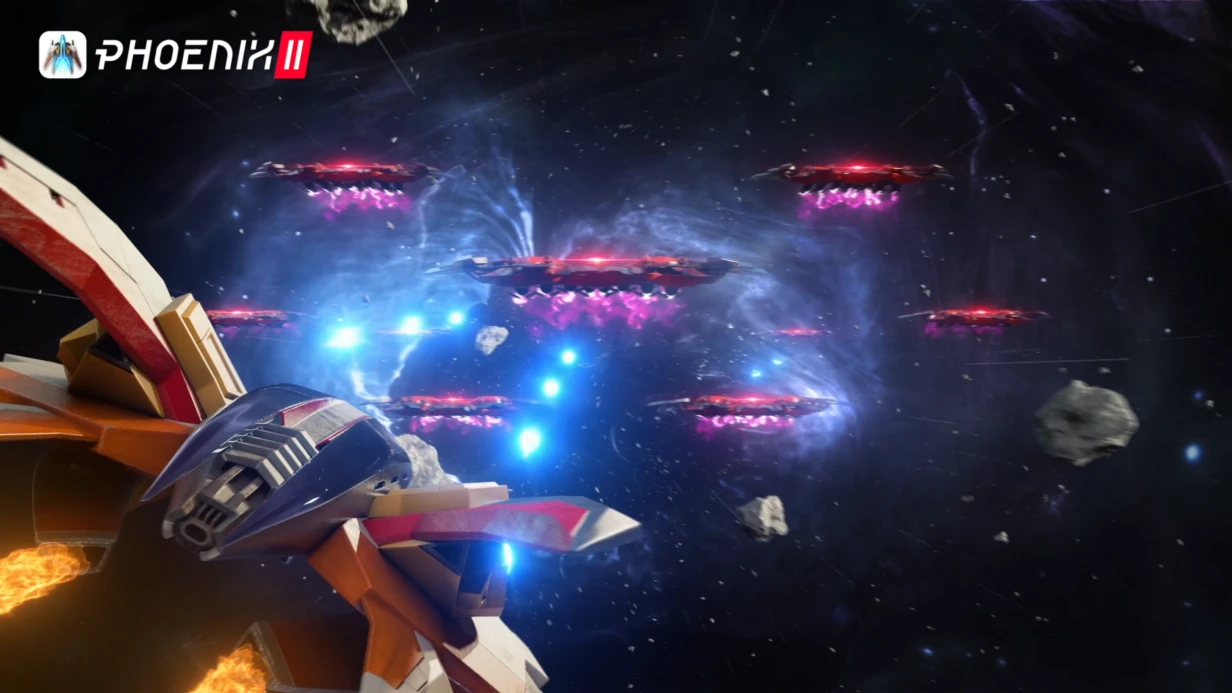
We develop a Unity shooter for the Valve Index — professional equipment that guarantees stable operation even with a large flow of participants.
The main benefit for the organizer is full guest engagement. Each participant is immersed in the game for a few minutes, forgetting about their phone and the time.
This is not just entertainment: it’s in these moments that an emotional connection with the brand is born and a vivid aftertaste of the event remains.
The second effect is organic social media reach. Guests film the process on their phones, post stories and updates, tag the location or the brand. Every playthrough turns into multiple social media mentions, so you get free advertising among your audience and their followers.
A virtual game also becomes a lead capture point. You can build in a registration form or ask participants to leave their contacts to receive results and photos — giving you a ready-made database of potential clients. This works better than the usual business cards and souvenirs.
Thus, a virtual reality game solves three tasks: it boosts guest engagement, increases brand awareness, and generates leads. This format pays off not only in emotions but also in concrete business metrics for your event — from reach to new contacts.
Development Formats for Your Event’s Goals
The same VR application can’t serve an exhibition, a corporate event, and a product presentation equally well — each format has its own guests and expectations.
That’s why we develop a VR shooter for a specific event using the professional Valve Index headset, so every participant enjoys the experience without delays or technical glitches.
Below are the main formats we offer for different goals. You don’t need to understand the technology: we’ll select the option that works best for your audience.
| Format | Intended for | What the client gets |
|---|---|---|
| 5–7 minute quick VR sessions | For exhibitions and conferences with high foot traffic | Attracts attention to the booth, creates a line, every guest gets a chance to shoot and leave with vivid impressions associated with your brand |
| Presentation scenario | For product launches, press events, and partner meetings | Guests explore your product in a game-like format, remember its advantages better, and share impressions with colleagues |
| Team battles | For corporate events and team building | Employees compete, support each other, and get a rush of excitement that transfers positivity into the work atmosphere |
| Record challenge | For shows and events with bloggers and influencers | Creates viral content: participants strive to beat the record, and posts about it bring extra social media reach |
We don’t just write the game — we embed it into the event’s logic. We plan how guests enter sessions, how quickly they switch places, how statistics are collected, and how everything fits into the event program. You get a turnkey solution and handle your own tasks while your guests have fun.
Which format suits your goal best? Tell us a few words about your event — we’ll suggest the optimal option and show how it fits into the event scenario.
How Game Development Works: Steps and Timelines
We’ve structured the process so you always know what stage the project is at and when you’ll get the result. Here’s the client’s journey from request to launch, using the Valve Index shooter as an example.
- Brief and task definition. We find out who the game is for, what emotions and business results are needed, and what equipment it will run on. We propose a concept and genre.
- Project plan and approval. We set stages, timelines, and checkpoints. You know what will be ready at each stage and can adjust priorities.
- Concept and prototype. We create a playable version of the core mechanics for the Valve Index. We show how the game looks and feels before full development begins.
- Development and intermediate builds. We build levels, characters, interface, and sound. We regularly show working builds so you can see progress and influence details.
- Testing and polishing. We test the game with new users, find weak scenarios, and fix them. We tune controls and performance for stable operation on the Valve Index.
- Launch and support. We install the final version, train your team, and hand over instructions. We stay in touch for quick refinements and further development.
Development time is 6 to 10 weeks depending on scope. You stay in control: you approve key stages and get a game that solves your task.
What You Get After Development
After the project is completed, you get not just assembled files, but a complete package for launching and growing the game. Everything needed for operation, updates, and protection of your rights — in one set.
We hand over the result so you’re independent of us as a contractor and can manage the project with your own team.
- Full source code and assets — you own the entire game, with no hidden restrictions or “backdoors” from the contractor.
- Technical documentation — a description of the architecture, key settings, and launch procedure: any of your specialists can understand the project without our help.
- Instructions for administrators and operators — how to manage sessions, launch updates, and handle typical situations during operation.
- Exclusive rights to the game and all its elements — formalized by contract so you can freely use, sell, and develop the product.
- Content editing tools — edit levels, weapon parameters, and logic without involving developers.
- Post-production and guarantees — fixed support after release, a refinement plan, and consultations on Valve Index updates.
You get a transparent delivery set: files, documents, and rights are held by you, so you can continue work with any team. Warranty support is secured by contract — we stay in touch after launch and help with updates so the game runs stably on new firmware and devices.
Case Study: A Valve Index Shooter for a Brand Promotion
For brand promotions, the main problem is that guests quickly lose interest in the booth. Ordinary banners and videos don’t hold attention, so reach and memorability drop.
We solved this with a VR shooter: an interactive game on the Valve Index turned the booth into a magnet with a line forming.
How It Went
The client was an energy drink manufacturer running a summer promotion at a shopping mall. The goal was to attract an audience to the booth and engage them with the brand.
We developed a short VR shooter: the participant put on a headset and completed a track in 5–7 minutes, collecting bonuses and dodging obstacles.
The game worked as a timed challenge: results appeared on a shared screen and leaderboard. This created healthy competition — people came back to improve their results and brought friends. In one day, the site hosted over 400 sessions, with an average engagement time of 6 minutes.
Numbers That Speak for Themselves
92% of participants reached the end of the game, and every second participant shared a video or photo on social media. Organic reach of posts from the booth tripled compared to the client’s regular promotions.
A survey showed brand awareness after the game was 40% higher than among those who didn’t participate.
This confirmed that the game works not as entertainment, but as a marketing tool. For the client, the key was measurable audience contact, growth in interest, and the ability to repeat the success.
That’s why they ordered two more similar projects for other cities — the game adapts easily to a new venue and mechanics.
How to Choose the Right Game Format for Your Goal?
There’s no single answer like “here’s the best format” — it all depends on your event’s goal. You need to understand what you want: a flow of guests at the booth, deep product immersion, a vivid team experience, or maximum social media reach. The game genre, duration, and number of concurrently active players depend on this.
Simple VR formats with short rounds (2–3 minutes) are ideal for large visitor flows: up to 15–20 people can pass through the zone in an hour, and no one has to wait in line.
This format solves the task of mass attraction: guests get an impression, take photos, and leave with positive feelings about the brand.
If your goal is to hold the audience longer and show the depth of your product, a narrative shooter with missions is a better fit.
The player goes through several stages, chooses their own weapons and route — this engages them for 10–15 minutes and provides full immersion in the atmosphere.
This format works for memorability: the guest will talk about the experience they had, not just “waved their hands inside a headset.”
Team competitive formats deserve special attention. When guests split into two teams and battle each other, competition kicks in and spectators gather around.
From experience, such an event generates lively interest and natural lines — but it requires more space and precise session timing.
A universal tip: start with the event’s goal and audience. At TureTech, we analyze your task, visitor count, and expected outcome, then choose a suitable genre and adapt the scenario to your venue and technical capabilities. That way you get a game that solves a business problem, not just a tech demo.
Frequently Asked Questions and Client Concerns
Before ordering a VR shooter for the Valve Index, concerns naturally arise: will we make it in time for the event, will the hardware handle the load, who is responsible for the result.
That’s normal — the cost of a mistake is high, because guest impressions and your brand’s reputation depend on game stability.
Let’s address the common questions. If your concern isn’t on the list, just write to us — we respond on the same day.
What if the shooter isn’t ready by the event date?
We follow a phased plan: every week you see progress, rather than getting “everything at the end.” We build in buffer time and test the build on real Valve Index headsets long before the event. By the date, you get a polished version, not a “raw” build.
How stable is the game on the day of the event?
We run tests during extended sessions and under high load, simulating visitor flow. A few days before the event we do a full rehearsal: we check the lighting, placement of tracking stations, and one-action launch.
If something goes wrong, technical support is on call — but after this preparation, failures are unlikely.
Who is responsible for the VR equipment?
We help you select and configure equipment for your scenario and provide a backup set. We give your team a short instruction and advise how many sets you need to avoid lines.
If necessary, we take full technical support on ourselves, including space organization: zone layout, safe boundaries, and placement of tracking stations.
What guarantees do we have that the result will match expectations?
We document requirements and milestones in the contract, and you accept the work gradually. If something doesn’t match the agreed criteria, we refine it at no extra cost. Payments are split across milestones, so you don’t risk the entire amount at once.
In parallel, we develop a backup launch scenario — insurance against force majeure on the day of the event.
Tell Us About Your Task — We’ll Find a Solution
You already know that a Valve Index shooter makes a powerful impression on players and a noticeable opportunity for a brand. But to get results, you don’t need to dive into technical details: just tell us about your task, and we’ll handle finding the solution.
Cooperation follows a clear scenario — from the first message to the game’s launch. Here’s what our process looks like:
- You leave a request on the website, and we contact you on the next business day.
- We hold a consultation: we clarify goals, audience, venue, and preferences for story and style.
- We analyze the task and select the optimal option — turnkey, considering your timeline and budget.
- We prepare a personalized proposal: scope of work, stages, timelines, and cooperation format.
- We clarify the details, sign the contract, and start game development.
- We support you at every stage, test on real hardware, and stay in touch after launch.
This approach eliminates misunderstandings and unnecessary revisions. You get a predictable process, transparent terms, and a game that solves your task — from prototype to final version.
Submit a consultation request today — it’s completely non-binding. We’ll analyze your task, honestly assess the prospects, and send you a personalized proposal. Then the decision is yours.