




Why Your Brand Loses Its Audience Without Browser Games
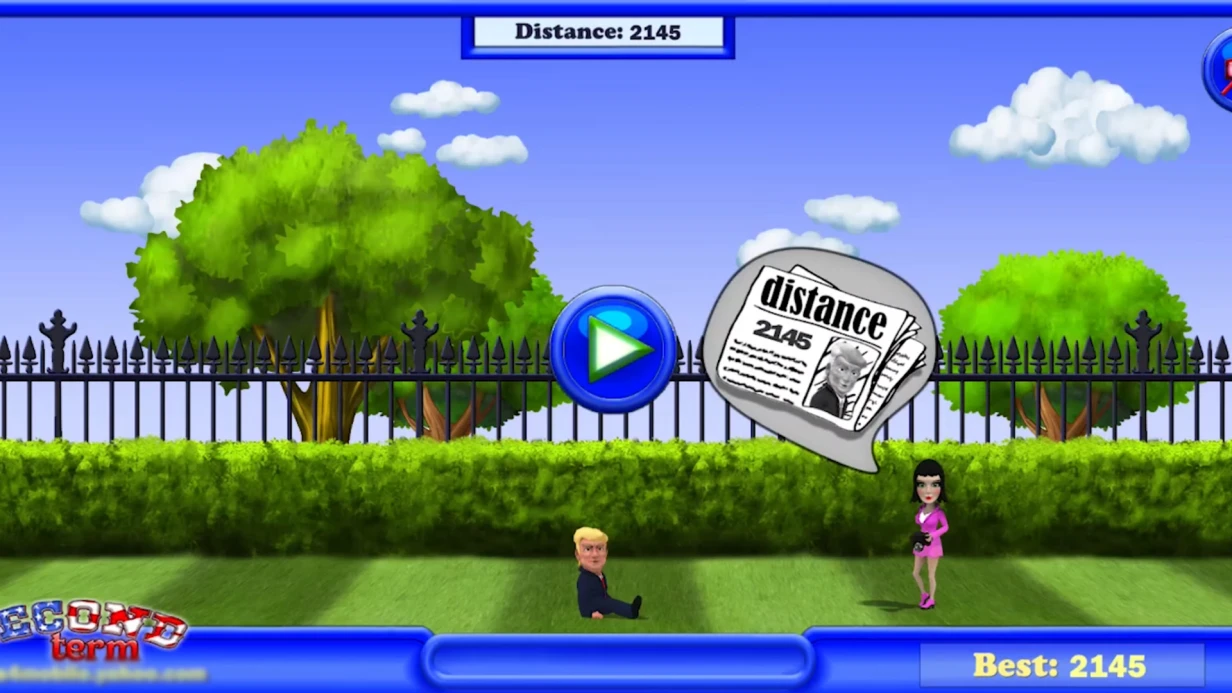
Browser games are the lowest entry point for your audience: users don't need to download anything, register, or figure out a complex interface. They open a link—and within 10 seconds they're playing, getting an emotional experience, and remembering your brand.
Without that touchpoint, a potential customer goes to those who already use game marketing to grab attention.
While a user scrolls through social media and websites, a competitor offers them a quick interactive experience with a participation bonus. This format gathers a first batch of contacts, warms up interest in the product, and builds trust through play.
A brand without a browser game stays out of this conversation—it simply goes unnoticed amid the noise.
A browser game solves two tasks at once: it expands reach through virality and retains existing customers through regular promotions and rewards. This isn't entertainment for its own sake, but a tool that attracts new audiences and brings back old ones.
Game mechanics with bonuses for repeat visits are a natural way to increase loyalty without aggressive email campaigns.
We address this need: we design your browser game strategy around your business goals, make it intuitive for everyday users, and integrate it with your marketing channels.
You get a tool that drives acquisition, engagement, and retention—without major investments in mobile app development.
What Browser Strategy Development Brings to Your Business
A browser strategy gives you access to an audience that's hard to engage through classic channels.
The game launches via a link—no installation or powerful device required—so random visitors, busy executives, and users hearing about your company for the first time all get involved.
The lower the entry threshold, the wider the reach: this isn't buying an ad for a single impression, but voluntary participation that sticks in memory.
Engagement in such a game is an order of magnitude higher than in a typical banner or text page. Strategy mechanics—planning, resource management, competition—keep attention for several minutes, and players return to improve their results.
Each session is time spent with your brand and an emotional connection that standard informational content doesn't create.
Browser game development also boosts brand awareness: players share results with colleagues and on social media, discuss levels, and invite friends. This gives the brand organic mentions, and a single launch turns into a wave of referrals.
Game mechanics let you subtly weave your products or services into the storyline—a soft approach that traditional advertising messages lack.
Finally, the game collects hot leads: to save their progress or reach the top of the leaderboard, participants leave their contact details. You get a database of interested people ready for further conversation, not just view statistics.
Because of the engagement, the rate of completed forms is higher than on promo pages—making this a direct channel for repeat touches and sales.
Browser Development Formats for Different Objectives
Each business objective requires its own browser game format. A short arcade game solves one task; a deep online strategy solves quite another.
So choosing a browser game format is really about choosing a goal: fast traffic, audience education, long-term retention, or community building.
Below are the typical formats and game genres we develop. They differ in the depth of mechanics and the results they deliver for the client.
| Format | For Which Tasks | What It Gives the Client |
|---|---|---|
| Simple arcade | Quick engagement, promotional mechanics, audience warm-up | Reach and virality, short 2–3 minute session |
| Casual turn-based strategy | Product education, demonstrating logic | Clear mechanics, lasting interest in the brand |
| Browser strategy with progression | User retention, regular return visits | Daily sessions, accumulation of in-game experience |
| Online multiplayer strategy | Community building, competitive spirit | High engagement, repeat visits, social effect |
The choice of format directly affects the project's economics. A simple arcade launches faster and requires less investment. A deep browser strategy pays off through its long lifecycle and monetization potential without aggressive advertising.
We develop on Unity—this lets us quickly build a prototype and then scale the game to your needs, from a light arcade to a full online strategy with a server side. At the start, we help you identify the right format and calculate timelines and budget for your scenario.
In the end, you get not just a "game for game's sake" but a tool that solves a business problem: it gathers an audience, keeps it engaged, and delivers measurable results. Let's discuss the format for your task—we'll send you a proposal within a day.
How We Build Your Strategy Project: 6 Steps
Before you get your game, we walk the entire path with you—from idea to a working browser strategy. We've broken the process into six steps so that at each stage you understand what's happening, control the outcome, and don't face surprises at the end.
-
Brief and immersion. First, we study your task: game goals, target audience, usage scenario. You tell us about your idea, we ask clarifying questions, and we put together a technical specification—so you get a clear understanding of the scope of work and timelines.
-
Concept and prototype. Based on the brief, we propose game mechanics, story, and economy. We show an early prototype so you can see how the game looks and works and make changes before full-scale development begins.
-
Documentation approval. We lock in the game design, visual style, and project architecture. You approve all details in advance, so no hidden modifications or extra costs appear along the way.
-
Development on Unity. We build the game itself: interface, controls, game scenes, balance. Along the way, we hold intermediate demos so you can track progress rather than only receiving a final build at the end of the timeline.
-
Browser launch. Once the game is ready, we set up hosting, upload the build, and run final testing. You get a working link—the strategy opens for any user without installation or complicated setup.
-
Support and updates. We don't leave after launch. We monitor the service, fix bugs, and add changes as you request. You can be confident that the game will remain stable and players won't run into problems at the most critical moment.
This development workflow lets you always know what stage the project is at and influence the outcome at every step. You pay for a concrete result, not for a "process in a dark room."
What's Included in the Browser Game Delivery
After project delivery, you get not just a working browser game but a complete package that covers everything—from launch to independent product development. The delivery includes everything your team needs to use and manage the game without constantly contacting the contractor.
- Ready-to-use browser game — fully matches the approved technical specification, works in any modern browser and on any device, from desktop computers to tablets.
- Admin panel — a convenient interface for managing game content: change tasks, promotions, reference materials, user data, and other elements without involving developers.
- Project source files — all code, data structures, and materials used become your property. You're not tied to us and can develop the game with your own team or another contractor.
- Documentation package — technical description of the architecture, all modules, and operating logic. This is the foundation for any future development, even if it's handled by a new specialist.
- Operating manual — a step-by-step guide for the administrator: how to launch the game, add new content, export statistics, and set up integrations with your services.
- Warranty period — free fixes of bugs and discrepancies found during pilot operation. You launch the project with peace of mind, knowing that during the warranty period we fix any bugs at our expense.
- Post-launch support — we stay in touch: answer your team's questions, help with server configuration, and quickly jump in if something goes wrong.
Such a package turns the project from a "one-off service" into a full-fledged business asset. You get control, transparency, and the ability to adapt the game to new tasks—without vendor lock-in or hidden conditions.
The entire handover is formalized officially, with the scope of work and support timelines fixed in the contract.
Case Study: How a Browser Strategy Doubled Active Audience
When the client—a chain of fitness clubs Impulse—needed to retain regular customers, standard email campaigns and promotions were no longer driving growth.
We proposed a browser strategy with a competitive mode: participants train in real life, and points from their workouts convert into in-game currency and the club's rating.
From Task to Launch
Instead of a static app, we built a game scenario that fit into the visitor's usual rhythm. At the start, we ran a short audience survey, then assembled a mechanic prototype and launched the first version within two weeks. The game worked from any device—no installation, equally fast on a phone and on a computer browser.
What the Metrics Showed
The result was noticeable within the first month: the club's active audience doubled, and the share of repeat visits increased by a third.
The average game session lasted 12 minutes—guests returned to the rating, compared results, and invited friends, generating additional reach without advertising costs.
Three months later, the client saw revenue growth from additional personal training sales—the players at the top of the rating were ready for them. The case showed that a browser strategy drives retention and engagement rather than merely entertaining.
Today we offer this format as a standard solution for businesses that need to turn visitors into regular customers.
How to Choose a Game Format for Your Task?
Choosing a format starts not with technology but with your business objective. Attracting visitors to a booth is one thing; training employees or launching a viral social media campaign is another.
A browser game works when you need to engage an audience quickly without installing apps: a person opens a link and immediately starts playing. This removes the main entry barrier and increases reach.
When selecting a solution, we consider your project's specific requirements: audience profile, expected session length, data collection needs, and integration with your services.
For instance, a simple mechanic is better for a short touchpoint at an event, while a multi-level quest with prizes suits a product launch. This approach avoids situations where you pay for unnecessary functionality or end up with a format that doesn't solve your stated problem.
We don't sell a "game for game's sake." During the pre-start consultation, we ask guiding questions, suggest two or three formats, and show how each option works toward your result.
If you're torn between a browser game and another solution, we'll help you make a well-considered decision based on experience from dozens of projects for events, promotions, and internal programs.
The bottom line is simple: you come with a task and leave with a clear plan and a precise game format.
Even if you have no gaming experience, we guide you from idea to launch, and we fix the format choice in the technical specification—this is the basis for the cost estimate and timelines. You get a tool that measurably increases engagement and hits your metrics.
Common Doubts Before Starting a Project
Before launching a browser strategy, clients usually have the same doubts: what if the game doesn't work on someone's device, deadlines slip, or the developer disappears after delivery.
These are normal questions, and we've decided to address them in advance, even at the project discussion stage.
Below are answers to the most common concerns. If your situation is unusual, we'll discuss it separately during a consultation.
What if the game doesn't run for some users?
We build the game for all popular browsers and device types before delivery. During the testing stage, we check different scenarios: slow internet, older browser versions, different screen resolutions. If something breaks, we fix it before launch, not after client complaints. As a safety net, we provide a fallback operating mode so users never lose access to the game.
How do you guarantee deadlines?
Deadlines are fixed in the contract, and we're responsible for meeting them. The project is broken into short stages with intermediate demos—you see results every 1–2 weeks and can tell we're on schedule. If any stage is delayed, you'll know in advance, not on the last day.
What about post-launch support?
After release, we stay in touch: fix minor issues, add new content, and monitor the server side. Support is included in the contract, so the game isn't left unattended the day after launch. If needed, we deploy urgent updates—visitors and users won't notice any downtime.
How does the game integrate into your infrastructure?
We handle the integration ourselves: we connect the game to your website or client portal, set up data collection, and configure administrator access. You don't need a separate specialist on your team—we handle all technical matters, and you get a user-friendly control panel.
We also train your employees if they need to change content or run promotions through the game on their own.
Get a Turnkey Browser Strategy
Ordering turnkey browser strategy development means getting a finished product that brings players enjoyment and you steady income. The browser format requires no installation and easily runs on any device, so it reaches the widest possible audience.
We handle the entire cycle: from idea to launch and further project growth. Just leave a request, and you'll get a consultation, a project estimate, and a clear action plan.
What you get after contacting us:
- Consultation with our specialist: we'll discuss your task, audience, and project goals.
- Project estimate: transparent cost estimate covering timeline, budget, and scope of work.
- Development plan: a breakdown into stages with clear results.
- Dedicated project team: producer, game designers, developers, artists.
- Turnkey browser strategy development: from prototype to release.
- Post-launch support: technical maintenance, updates, and game evolution.
Each stage is coordinated with you, so you always know what's happening with the project. No hidden payments or unexpected deadlines—only clear agreements. We work remotely and have been creating profitable games for over 10 years.
We use Unity—it lets us quickly adapt the strategy to different browsers and devices without losing quality. Submit a request on the website—let's discuss your project and offer the best solution.