



Players Quit Games on the First Levels: Construct 3 Fixes This
Players leave within the first five minutes — this is the most common reason a project fails. A user sees no reason to continue if the first levels don't explain the mechanics, don't provide quick wins, and don't build up the excitement.
Each such departure means lost money on user acquisition, server load, and negative reviews that scare away new players.
The problem is not the game's idea but how it is presented. Weak level design turns even an interesting mechanic into a boring sequence of screen transitions.
The player needs a clear path from the very start: learning through action, increasing difficulty, and a reason to come back tomorrow. This is exactly what level design is — it directly determines player retention and, therefore, the revenue from every install.
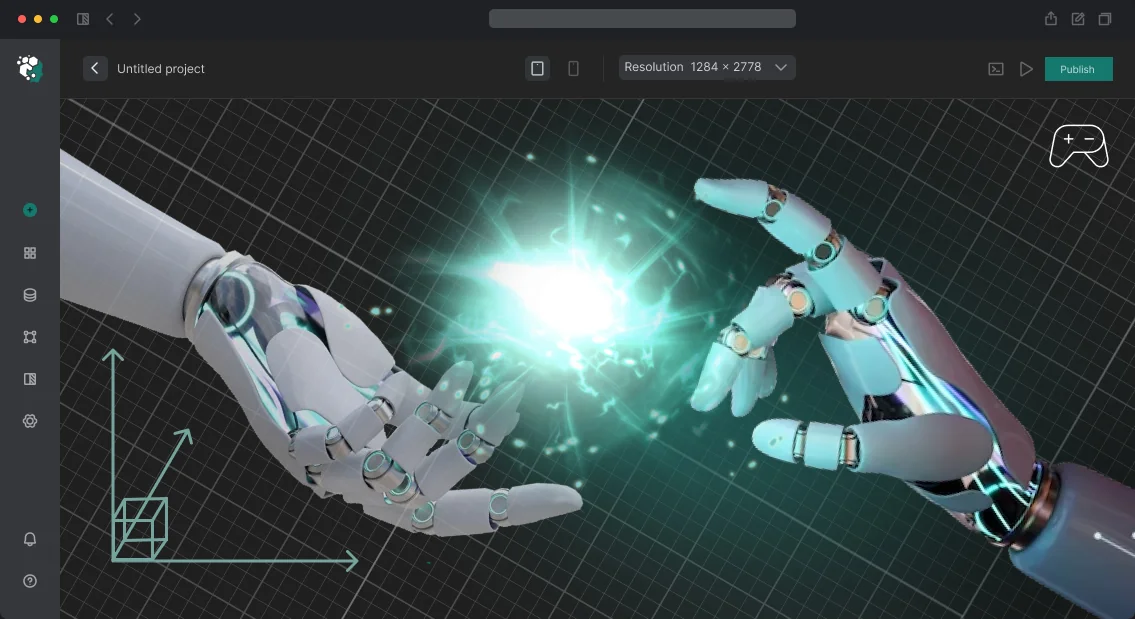
We solve this problem with Construct 3 — a platform that lets us quickly build and rework levels without rewriting the game from scratch.
The client gets a working prototype at an early stage, while we test each scene against real playthrough scenarios, adjust the pacing, place hints, and make sure the player keeps moving forward. Instead of guesswork — data on where users get stuck and targeted fixes.
As a result, the game holds attention, users reach the key mechanics, and get drawn into the experience. For the client, this means more active players, higher conversion to in-game purchases, and recommendations — without spending on additional marketing.
We take on the entire level design cycle so that the final product delivers results, not disappointment.
Why Construct 3 Is a Stable Foundation for Your Business Games
When a game becomes part of a business, stability matters more than any special effects. A visitor clicks the link — and it must work immediately: on a computer, tablet, or phone, without installs or extra steps. If the game lags or crashes, interest is lost in seconds, and the invested budget never pays off.
Construct 3 solves this problem. Games run directly in the browser — users don't need to download anything, and you don't need to worry about device compatibility.
This means both reliability and reach: any client is only a few clicks away from your game world, whether it's an ad campaign, employee training, or an entertainment portal.
For business projects, it's especially important that the game keeps working for a long time. According to the platform's official documentation, it is built for long-term support and is regularly updated.
This means that after launch you don't get a "one-off" game — you get an asset that keeps delivering reach and engagement without constant rework.
That's why Construct 3 is the choice for browser projects where predictability matters: corporate quizzes, training simulators, promo games on websites. You pay for results — for stable operation at any moment a client decides to play. And we handle the technical side so you can focus on your business instead of compatibility issues.
Level Design Formats: Which Game Does Your Business Need
Guests and clients get tired of monotonous ads and boring instructions. A game built on solid level design solves several problems at once: it holds attention, gently teaches, and guides the user toward the desired action — whether it's a purchase, registration, or brand recall.
Level design isn't just "pretty levels" — it's the progression logic, difficulty, and pacing that work toward your business goal. Take a look at the typical game formats we design: you'll easily find an option for your task.
| Format | For whom | What it gives the client |
|---|---|---|
| Promo game | Marketing, brand managers | High reach on social media, brand awareness, viral effect without an ad budget |
| Training simulator | HR, team leads | Faster staff onboarding, knowledge checks in game form, fewer mistakes on the job |
| Mini-game for events | Event managers | An extra touchpoint with guests, positive emotions, photos and social media mentions |
| Quiz game | Sales teams, customer service | Product reminders, lead capture, a reason to return to the site or store |
| Game with progress and rewards | CRM, loyalty programs | Growth in repeat orders, long-term customer retention |
The key advantage of working with Construct 3 is the speed of making changes. If a format doesn't work or a new task appears, a level can be refined in a short time and an updated version launched — without lengthy rework.
Not sure which format fits you? We'll review your task, show examples of similar solutions, and suggest an option for your budget and timeline. The goal is for the game to deliver measurable results, not just be entertainment.
How We Develop Level Design: Stages for the Client
Level design development doesn't tolerate chaos — a clear plan determines how quickly the game reaches the market and how players receive it. We've organized the process so you always know what stage the project is at and what you'll get at the end. Below are the main stages of level design work.
- Brief and level goals — we discuss the scenario, genre, and player objectives. We lock in expectations and success criteria to avoid rework.
- Structure and progression flow — we map out routes, points of interest, and movement logic. You receive a level layout for approval.
- Prototype and review — we build a working draft of the level to test the game feel. At this stage, changes don't blow the budget.
- Full refinement — we fill the level with details, place obstacles and interactive elements. Every level is polished to a consistent style.
- Testing and balancing — we play through the level from the player's perspective, remove "dead spots," and adjust difficulty. We make sure the playthrough stays engaging.
- Final approval — we present the result, collect feedback, and refine if needed. You receive the project file for launch.
- Launch and support — we support the integration, help with setup, and provide recommendations. We stay in touch even after release.
This sequence helps avoid unexpected changes and makes the collaboration transparent. We run level design on Construct 3 from idea to launch, and you stay in control at every stage.
How Long Does Level Design Development Take
Clients often ask: "When will the level design be ready?" The answer depends not on the developer's preference, but on the number of levels and the complexity of the mechanics. We provide realistic estimates at the brief stage so you can plan your release without surprises.
Below are typical timelines for Construct 3 projects. This is a baseline that we refine after learning about your task.
| Number of levels | Development time | What's included |
|---|---|---|
| 1–3 levels | 2–4 weeks | Prototype, balancing, polish, final build |
| 5–10 levels | 1–2 months | Design document, all levels, testing, revisions |
| 15+ levels | from 2 months | Full pipeline, unique mechanics, optimization |
Other factors also affect the timeline: whether art is needed, how many unique objects there are, and whether integration with your platform is required. We put together a project plan with stages and checkpoints — you see progress every week and can adjust priorities.
If a fast launch matters, we'll build a minimum viable set of levels and release, then add new locations in iterations. This way you get the product sooner and start collecting player feedback.
We develop on Construct 3 — a proven tool that lets us make changes quickly without inflating the budget. No "someday": you get concrete dates and an understanding of what will be done by each deadline.
Send us your project description — we'll assess the scope and give you an accurate timeline within a couple of days.
What's Included in the Level Design Deliverable
When you order level design, you get not abstract ideas but a ready set of working materials that can be integrated into the game right away. Below is the full delivery checklist: every item can be verified before you hand the project over to development.
- Working Construct 3 levels — ready-made locations built in your engine. The levels are fully playable and functional; the team can start testing immediately.
- Level design documentation — a description of each level's logic: goals, mechanics, difficulty, and the gameplay decisions behind them. This is the foundation for future game development.
- Graphic assets — level layouts, the assets used, and source files. Everything is organized in folders so developers can quickly find what they need.
- Handover guide — step-by-step instructions on how to integrate the finished levels into your build without errors or wasted time.
- Testing results — playthrough reports, difficulty balance data, and tester feedback. You'll see in advance where a player might get stuck and how to fix it.
- Final project map — the complete relationship between all levels so the team has a full picture of the game.
This package covers every level design concern — from the first level to final polish. You get transparency and control: every artifact is specified in the contract, and after the handover all that's left is to put the material to use.
Case Study: How Level Design Increased Level Completion by 40%
For an indie studio that released a platformer on Construct 3, the main problem was player retention: the audience quickly lost interest and abandoned the game at the third level.
At the same time, analytics showed that users liked the mechanics themselves — the issue was purely in the level structure, not the project's concept.
We reworked the level design of the first three levels: simplified the tutorial, added clear visual cues, and structured the pacing so the player received a reward after each completed segment.
The result — completion of the key level increased by 40%, and the average session time grew by a quarter. Players started reaching the ending and leaving positive reviews.
What Changed for the Business
Higher completion directly boosted conversion to full-version purchases: it rose by 35% within the first month after the update. In addition, the studio gained more repeat requests and recommendations — satisfied players were more willing to share the game on social media.
This case isn't about magic; it's about a systematic approach to game design: we analyze player behavior, find weak spots, and rebuild levels so retention grows. For us, this isn't a one-off action but a method we apply to every project.
If your level is losing players — the problem is likely in its structure, not the idea, and we're ready to fix it.
Addressing the Main Doubts Before Ordering Level Design
When ordering level design, your concern isn't about the visuals — it's about the game breaking, missed deadlines, or endless rework. That's normal; we hear these concerns every day. Below, we break down the most common fears and show how we address them.
Will level design break the current game?
We work in separate Construct 3 project files and never touch the core logic. Before delivery, we check all levels for compatibility, and after handover we provide a guarantee on the changes made. If anything breaks — we fix it at our own expense.
What if I want changes after reviewing the levels?
Revisions are part of the normal process. We discuss the scope of changes in advance and spell it out in the plan, so you know how many iterations are included in the price. After delivery we continue supporting the project: you can return and add new levels or adjust difficulty.
What requirements do I need to get started?
A basic version of the game in Construct 3 and a description of the mechanics are enough — we'll handle the rest. If the game doesn't exist yet, we'll help you decide on the genre and level structure so you don't have to rework them after launch.
Will we make the deadline?
We lock in the timeline at the start and break the project into short stages. You see interim results every few days and know right away whether everything is on schedule. If needed, we identify which levels matter most and deliver them first.
How to Choose a Game Format for a Specific Task?
Choosing a game format usually depends not on technical capabilities but on the business task: whether you need to keep a visitor at a booth, train employees in a game form, or collect leads. This determines the genre, mechanics, and session length.
Level design plays a key role here — it's what turns an idea into a scenario that guides the player toward the desired action.
We help clients navigate the formats at the brief stage. We ask who the audience is and which outcome matters more — reach, recall, or skill practice.
Based on the answers, we suggest 2-3 suitable formats: a short arcade game for an event, a simulator for training, a quest for a product presentation. This saves time and budget because you immediately get a solution for your task, not an abstract game.
Framing the request itself is also part of our job. Often a client says "we need a game" but can't explain what should happen to the user afterward. We break this down during a consultation: define the core mechanic, number of levels, difficulty, and playtime. Then the level designers build a structure where every stage works toward your goal.
As a result, you get not just a game but a tool with clear metrics: how many people completed a level, how long they held attention, and what actions they took afterward. From the start, you know the chosen format fits your task. And if doubts remain — you can always start with a small prototype and test it on a focus group.
Start Your Level Design Project Today
Level design determines whether a player reaches the end and returns to the game again. Poor obstacle placement or off pacing — and the user leaves within the first minutes, even if the gameplay is strong.
That's why ordering level design is best done at the planning stage of game development: you avoid expensive rework and get a level structure that works for retention.
We know how to turn an idea into clear levels in Construct 3 and are ready to start today. After your request, you'll receive a concrete project roadmap.
- Game review — send us a description or gameplay footage, and we'll assess your level design needs and suggest solutions.
- Clear answer on timeline and cost — we provide the cost estimate within one business day, with no hidden conditions.
- First level plan — we'll show the structure, pacing, and key points of interest before full payment.
- Recommendations for your tech stack — if your game is built on Construct 3, we'll advise on how the levels will fit the mechanics.
- A dedicated level designer — we assign a specialist who manages the project from brief to final polish.
- Start without prepayment — you see the first drafts and make a decision based on actual work, not promises.
Leave a request now — and in just a day you'll know how to start your level design project, what the project kickoff includes, and when the first results will appear.