

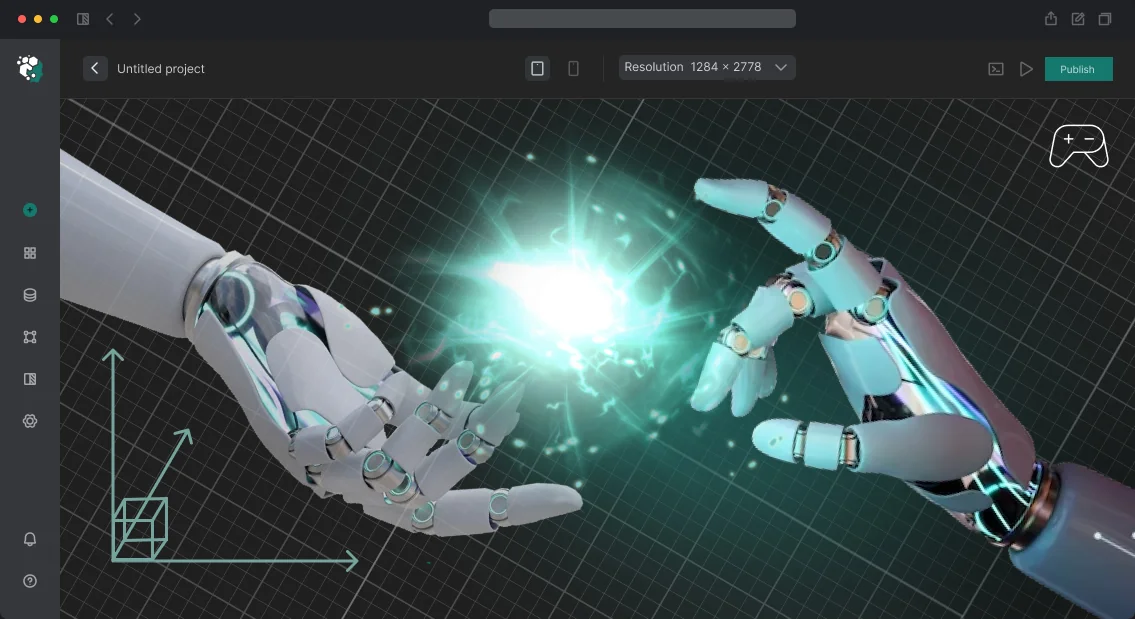
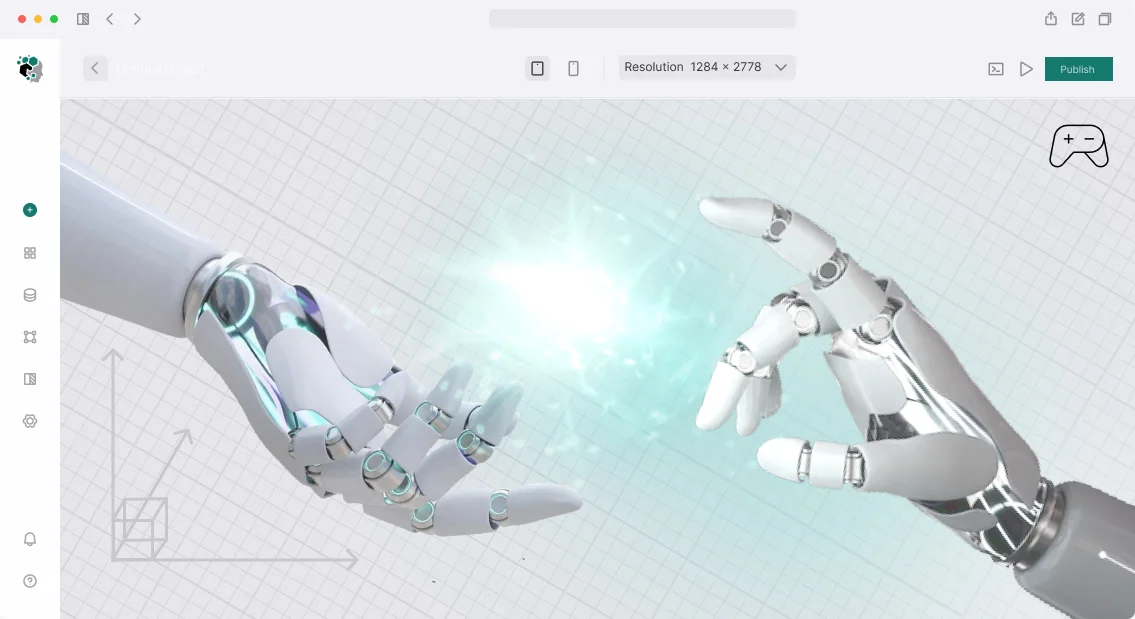


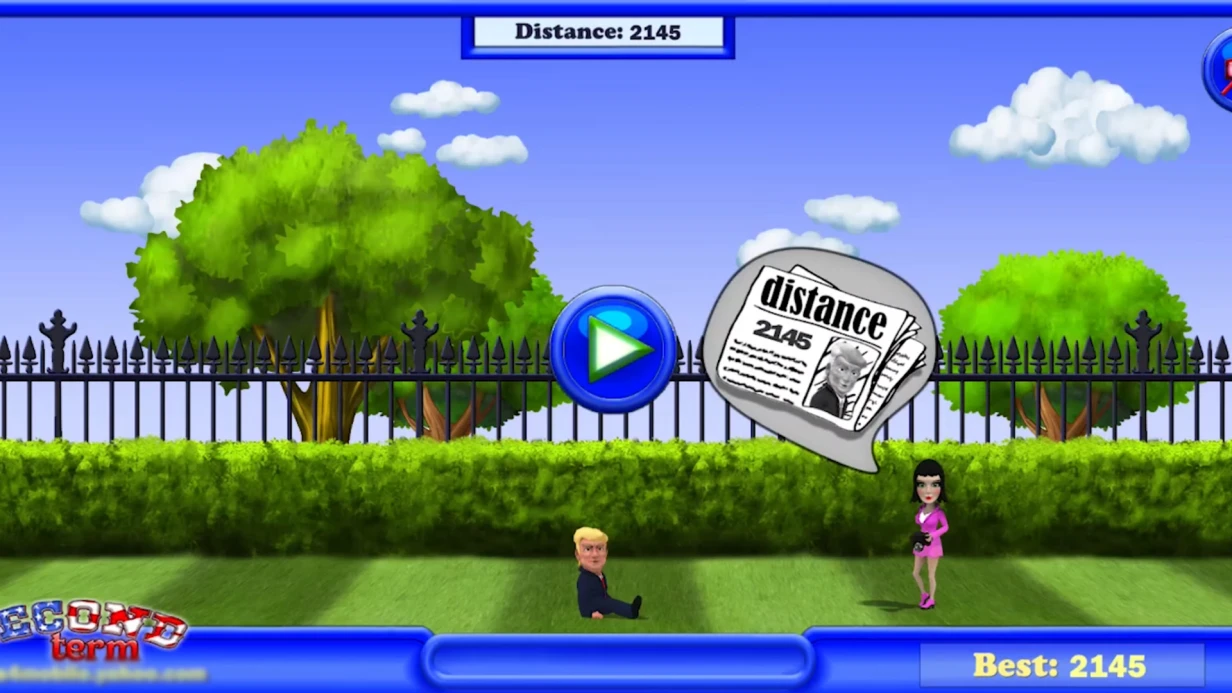
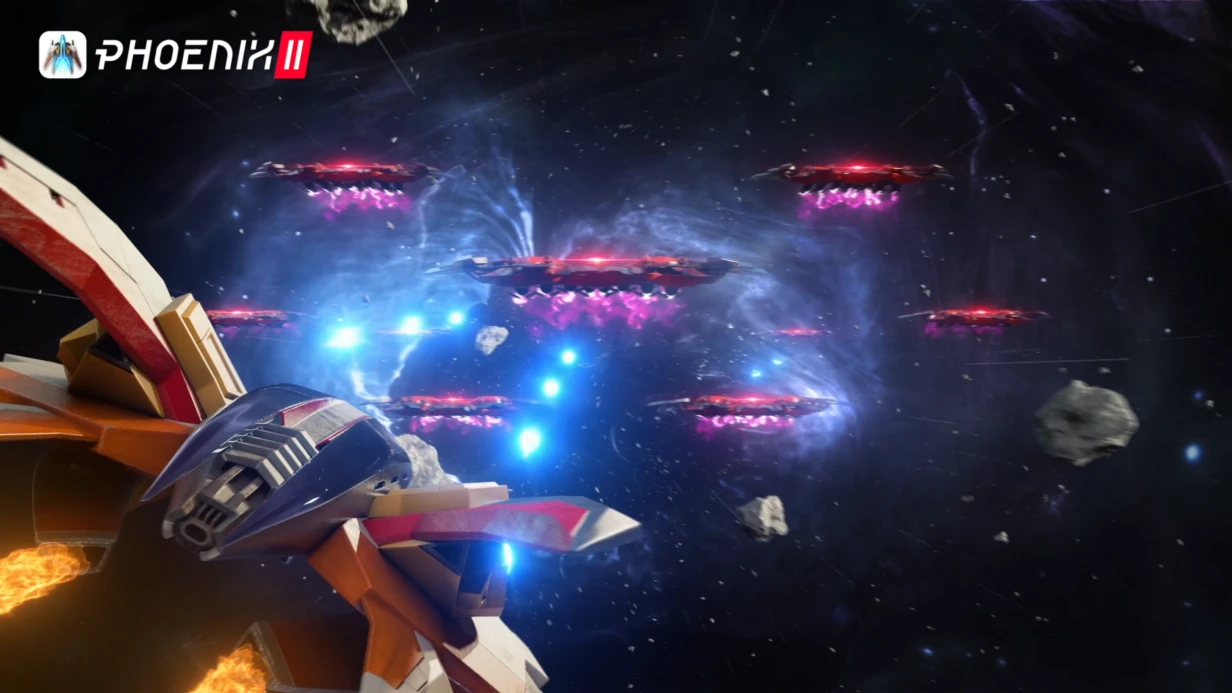
Screenshot rendering: why materials don't sell the game
The audience chooses a game with their eyes. The storefront in an app store is a few frames and a short video, and from them a player decides in a couple of seconds whether to open the page further at all.
If materials are shot "as it happened" — random angle, cluttered interface, dim light — even a strong project looks mediocre. Player response drops, and the team looks for the reason in gameplay, although the problem is in the storefront.
Screenshot rendering addresses exactly this: we rebuild the scene — light, angle, composition, accents — and show the game as it was intended. Weak spots don't make it into the frame, while strengths come to the fore. The player sees scale, atmosphere, and graphics quality and is ready to tap "Install."
We make game marketing materials as a separate product, not as a byproduct of the build. Key scenes, characters, and mechanics are arranged to hold attention in the first seconds and lead to install.
We prepare series of frames for different platforms and formats so the storefront looks cohesive both in the store and in ad selections.
What the client gets: increased conversion of the game page, stronger player response at launch and during promotions, recognizable images that work across all campaigns.
Materials are updated for new events and seasons, so the storefront doesn't "burn out" and continues to bring installs.
What a studio and publisher get from a quality storefront
The catalog is a shelf where a player chooses in seconds: dozens of projects stand side by side, and attention goes to the one whose storefront looks more convincing.
A weak image doesn't explain how your game differs from its neighbors, and the visitor moves on without even opening the description.
Screenshot and video rendering closes this gap. We assemble game promo materials that show gameplay, atmosphere, and key mechanics as the player themselves will see them.
This provides visibility in the catalog: the page stands out in the feed instead of blending in with lookalike previews, and the first touch with the audience works for you.
Then project recognition kicks in. When frames, videos, and banners are held to a single visual image, the player recognizes the game both on the store page, in ad campaigns, and in community posts — trust in the project grows, and with it the readiness to tap "Buy."
For player acquisition, this is a direct benefit: materials don't need to be redone for every channel; they are immediately suitable for an announcement, release trailer, update, and advertising.
The publisher gets a package that saves weeks of approvals, and the studio gets a storefront that speaks for the game without unnecessary words. We provide such rendering for studios and publishers and help present the project more strongly in the catalog.
Screenshot rendering for the task: material formats
The material format is chosen not for beauty but for the task: where the team will show it and what the viewer should do — notice the game, install it, or return for an update.
That's why we prepare the same frame differently for the store page, ad placement, and press kit, rather than stretching one file across all platforms.
Below are the formats clients most often come to us with. If your scenario isn't in the table, describe the task — we'll propose an option for it.
| Material format | Who it suits | What the team gets |
|---|---|---|
| Key game frames | Store page, press kit, outdoor advertising | Static images in a unified style, ready for publication |
| Animated previews | Social media, store card, announcements | Short videos that show the game in motion in a couple of seconds |
| Campaign materials | Ad placements and partner platforms | A set in the required proportions for each channel, with no manual resizing |
| Release set | Announcement, launch day, first weeks of sales | Full package: frames, previews, covers, press images |
| Update materials | DLC, seasonal events, promotions | New materials for each event in the same visual style |
We deliver the package ready to use: files for each platform, clear names, and folder structure — marketing doesn't need to finish anything manually.
And if the game lives and updates, we maintain a unified style and add materials for new events so the storefront doesn't look abandoned.
How the project runs: from brief to finished gallery
The project is structured so that at any moment you understand what stage the work is at and what you'll get as a result. Below is a typical path: from the first conversation to a finished gallery of screenshots and videos that can go straight to marketing.
- Task analysis. We discuss what the rendering is for: the game page, app store, advertising materials, or a presentation for partners. We lock in the scenes and angles that are most important to show.
- Production plan and timeline. You receive a list of materials, the order of work, and a calendar with dates — you can immediately see when to plan publication.
- Visual approval. We select light and composition for your brand and show test frames. Revisions at this stage go faster and without rework at the final stage.
- Production. We render the main batch and keep you informed on interim results.
- Material acceptance. You receive finished files in formats for each channel; together we check completeness and make targeted revisions if needed.
- Post-release support. Need a new angle or a seasonal version of a scene — we return to the project without rebuilding from scratch.
Each stage ends with a clear result, so the work doesn't drag on or accumulate surprises. At any step you know what's already done and what comes next — and after release, the materials continue to work in your campaigns.
What will be included in the delivery and what will remain with you
We deliver not a "folder with pictures" but a finished package that immediately goes into work: for marketing — for campaigns, for the catalog — for cards and product pages, for the press — for publications and partner materials.
Everything is organized by purpose and format, so your team doesn't need to figure out the file structure or draw anything extra.
The delivery includes:
- Ready-made material sets — selections for campaign launch, catalog update, and press publication, each with its own set of angles and narratives.
- Source materials — files in working form so you can assemble new combinations and adaptations on your own, without contacting us for every revision.
- Versions for different channels — horizontal and vertical frames, short and full video clips, static images for cards and banners.
- File transfer — in the way most convenient for you, with a clear folder structure and names that let you find anything in seconds.
- Usage rights — materials can be used in advertising, on the website, in social media, and in partner communications without time limits.
- Short support — we'll advise your team on how to assemble new versions from source files so that you can work independently going forward.
Each item is closed out according to an acceptance checklist: you see exactly what you received and confirm readiness. If along the way you need to add a set for a new channel or seasonal campaign — we'll discuss the task separately.
Case study: how updated materials increased player response
When a studio comes to us with the task of relaunching a game page, we first look at how materials influence player decisions.
That was the case with the Nordlight Games team as well: the game had built a loyal audience, but the store page didn't convince newcomers — the old screenshots showed the world but not its character.
What it was like before
The first screens greeted visitors with empty landscapes, and the video began with a long prologue. People didn't understand what awaited them in the first minutes of the game and left before finishing.
Audience response on the page stayed below the genre average, and acquiring new players cost more than for competitors.
What we did and what changed
We rebuilt the visuals: rendered key scenes with an emphasis on combat and rare rewards, assembled a short video with dynamics in the first seconds, and prepared separate materials for each channel — the store page, social media, and advertising. Rendering ran on professional equipment, so the image remained equally high-quality in all formats.
The campaign produced measurable dynamics: the install rate grew by a third, full video views nearly doubled, and time on page increased 1.8 times. Players began sharing materials more often, and the studio returned to us for the next batch — this time for a seasonal update.
What if we have a non-standard visual style?
A template approach really does kill an original style — but we don't work from a template. For each project, we first understand what makes up your visual language: palette, character animation, character of light, rhythm of movement, surface texture. These very details make a project recognizable, and we take them as our foundation.
We lock in individual requirements before the start rather than adjusting along the way.
Your team sends materials, illustrations, and sketches — we compare them with what appears in the frame and show discrepancies in advance, while it's still a conversation rather than a redo of the entire series. A non-standard visual style is not a risk for us but a clear set of conditions.
Next is selecting the format for the task. For a hand-drawn, pixel, stylized, or fully original style, we select a suitable presentation: angles, shot sizes, video duration, camera behavior.
In some cases a static frame works better; in others, a short animation with an emphasis on movement. We don't "smooth over" the project to a common standard or force it into a pipeline convenient for us.
We configure lighting, materials, and final processing manually for your style — professional equipment here is only a means, not an end in itself.
If you doubt that your original style will survive rendering, we'll show it on a single frame: you'll see the result before the entire series is ordered.
Describe the task and send materials — we'll come back with an estimate and a plan for preserving the project's recognizability in marketing screenshots and videos.
Questions asked before the project starts
Before the start, clients want to understand the rules: how many revisions, in what timeframe, who owns the materials, and what happens if the result doesn't work. We answer in advance — so the decision is made without surprises in the middle of the project.
How many revisions are included and what counts as additional work?
At each stage there is approval and a round of revisions: first we agree on angles and scenes, then light and composition, then the final presentation.
We make refinements within the approved concept at no extra charge, while changing the concept after approval is a separate task with an open estimate.
How quickly will we receive the finished materials?
We fix the timeline in the plan before the start: you see the date of the first version and the date of the final package. If the campaign launch or app store card update is tied to a specific day, tell us right away — we'll build the schedule from it.
Who owns the rights to the materials?
We transfer finished files and source files with full rights: advertising, app stores, website, social media — without restrictions by territory or term. We don't show your materials in case studies without written consent.
What if the finished result doesn't work?
We show interim versions rather than a blind final — the course can be corrected at any step. If the approved result doesn't match what was delivered, we redo it at our own expense and include that time in the schedule in advance.
The remaining terms — scope, delivery format, package composition — we fix in writing together with the estimate, so that you have a document to rely on.Let's discuss the task and come back with a plan and estimate
The conversation starts not with a presentation but with your task: how many games and scenes need rendering, where the materials will be shown, and by what deadline you need the result.
The more specific the input, the more accurate the estimate — so we immediately ask for what you already have: models, textures, rough builds, references for lighting and angles.
Based on the discussion, you receive a clear collaboration process, without surprises along the way:
- Task estimate — how many scenes can realistically be completed, what affects the timeline, and where you can save time without losing image quality.
- Work plan — stages, approval points, and the moment when you see the first result, not just a progress report.
- Material request — a short list of what is needed from your team so the project start doesn't stall on approvals.
- Delivery scheme — in what formats and resolutions screenshots and videos will come for each channel: app stores, social media, landing page, investor presentations.
- Collaboration process — who on your side approves the frames, how revisions are made, and how many revision rounds are included in the work.
- Coverage options — key frames only or a full set of marketing materials for launch.
Then comes a short preparatory stage: we assemble the scenes, show a test frame, and only after your "yes" do we output the full package. This way you see the style and quality before the work goes into production.
Describe the task in two or three sentences — we'll come back with a plan, timeline, and scope of work. If it's more convenient, attach the materials you have right away: this will shorten the path to the first frame.