



Guests bored at your event? A Unity shooter will bring back the emotion
When an event is boring, guests drift away — first into their phones, then off the floor after the first part. The organizer sees filled seats, but not real engagement: attendees aren’t taking photos, aren’t discussing, and aren’t eager to stay until the finale.
That result is familiar to everyone: the event isn’t talked about on social media, collected contacts are quickly forgotten, and an invitation to the next event gets a polite “we’ll see.” We close that gap with event interactivity that turns passive spectators into active players.
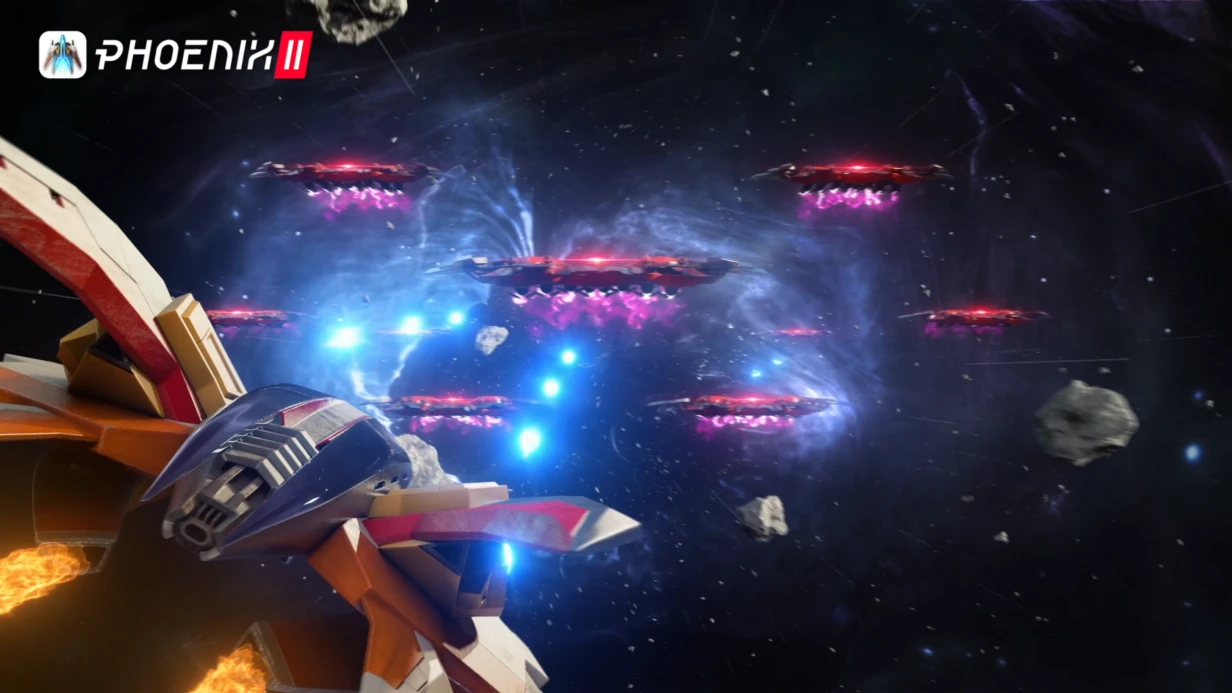
A shooter for an event is a team game on a big screen or interactive panels. Guests split into teams, compete in accuracy and reaction, tease their opponents, and celebrate victories.
In moments like these, a live connection happens between participants, and your brand is remembered — through emotion, not through a logo on a badge.
The excitement makes the game the center of the event: spectators gather around the screen, a queue forms, and the atmosphere sustains itself without a host or a script. People stay longer, come back for another round, and take home a story they want to share.
We handle the technical side: the game is built on Unity — stable performance on any hardware and quick adaptation to your venue.
The format is tailored to your event’s goals: short sessions of a few minutes, a tournament between teams, or a free mode — whatever works best for you and your guests.
Key benefits for your event and brand
Emotions that are remembered
Guests are tired of passive presentations and long speeches. The game format engages everyone: the thrill of competition, the joy of winning, and team interaction create vivid impressions.
These emotions become firmly associated with your brand. After the event, attendees remember not the giveaways, but their own gameplay moments — and they keep coming back to them.
Social media reach without an ad budget
Participants themselves photograph the gameplay and share the shots on social networks. Each guest becomes a free promotional channel for your news hook.
If you set up a photo zone or a screen with live gameplay, the desire to film and post multiplies. You get organic reach that is hard to achieve with standard advertising.
Brand recognition through game mechanics
When a logo, brand colors, and the names of game zones are woven into the story, they feel natural rather than like intrusive advertising. The participant doesn’t just see the brand — they interact with it throughout the game.
A victory linked to your product creates a positive association. The next time, the logo will evoke warm memories and trust — the brand is remembered on an emotional level.
Lead generation in game form
To take part in the tournament, guests need to register, and that is a natural way to collect contacts. The “play and win a prize” mechanic makes filling out the form a desirable step, not a formality.
After the event, you keep a database of interested participants with data on their activity. This database is useful for targeted invitations and follow-up offers that amplify the event’s results.
Shooter formats for your event goals
For an event, a shooter is not one template but several different mechanics, each solving its own task. Some need to unite a team, others need exciting competition, and still others want a striking show that gathers a crowd.
We build games turnkey and select a format for the specific event. Below are the most common scenarios ordered for corporate events, conferences, and outdoor venues.
| Format | For whom | What it gives the client |
|---|---|---|
| Team battle 5×5 | Corporate events, team building | Team bonding, negotiation skills, competitive energy for 10–50 participants |
| Every man for himself | Conferences, festivals, outdoor venues | Fast guest engagement and excitement, no need to form teams — works with any number of people |
| Cooperative “boss battle” | Large events, shows for audiences | Spectacle: everyone follows a common goal, excitement around one screen, great photos and videos |
| Interactive shooting range on a big screen | Exhibitions, presentations, waiting areas | Low entry barrier — both kids and adults can play, creates a queue, keeps guests near the booth |
This is not just a “shooter” but an event tool. You get a calculated format for the number of guests and duration, and we handle everything: from equipment setup to the tournament bracket and prizes for winners. All you need to do is choose a date, invite guests, and get real emotions.
How we create your game: 6 steps from brief to launch
Ordering a game from a studio doesn’t mean handing the project to a “black box” and waiting to see what happens. We have built the creative process so that at every step you understand: what is happening, who is responsible for the result, and what exactly you receive.
Below are the six development stages that every project goes through, including your future shooter.
- Brief and task analysis. We define the target audience, platform, style, and key mechanics of the future game. You receive a cost estimate and realistic deadlines — no “we’ll tell you later.”
- Concept and prototype. We create a game design document, visual style, and a working prototype. You see how the game will look and feel before full development begins.
- Main version development. We build the game: graphics, sound, controls, level balance. Every 1–2 weeks we show an intermediate build so you can control the progress.
- Testing and polishing. We try the game through a player’s eyes: fix bugs, refine controls and difficulty. The result is a stable version with no rough edges.
- Launch and publication. We help with release on target platforms: we prepare descriptions, keywords, and store materials so the game looks professional from day one.
- Support and updates. We stay in touch after launch: collect feedback, release updates, add content, and ensure the audience keeps growing.
Thanks to this process, you know exactly how to order a game and not get lost along the way. Each stage ends with a concrete result that you can review and approve — this is how we prevent surprises and rework in the final phase.
What is included in the delivery: game, training, support
When ordering game development, people often think only about the software. The success of a project depends on a whole package: the game itself, equipment, staff training, and support. We assemble this package and hand it over to the client fully ready.
- A complete shooter game with a custom scenario. The project adapts to your venue and goals — from a corporate party to an entertainment center.
- Professional gaming equipment. We select and set up game stations, controllers, and screens, and test everything before delivery to ensure smooth operation.
- Training for your team. We train operators and administrators: how to welcome guests, launch sessions, manage the queue, and handle typical situations.
- A set of instructions and procedures. Simple descriptions of all processes — from startup to daily maintenance — so staff can work independently.
- Technical support and maintenance. Available during working hours, remote diagnostics, and on-site visits when needed.
- Regular updates. New maps, modes, and difficulty levels, plus adjustments for ad campaigns and seasonal promotions.
- Branding in your style. Logo and color scheme in the interface and game zone decoration — building recognition.
In short, you get a working tool for attracting visitors, not just a game. We take on the technical complexity so you can focus on your customers and revenue.
Case study: how an interactive game increased guest activity
Venue owners often face a common problem: guests arrive, quickly lose interest, and leave without reaching key areas. For the entertainment center network “Park Priklyucheniy”, we developed a shooter game that turns an ordinary visit into an interactive adventure.
The goal was not just entertainment but keeping visitors longer and directing them toward additional activities.
We proposed a quest scenario: guests receive a tablet at the entrance and go through several levels, completing tasks in different zones of the park.
The game was integrated with the loyalty program — completing stages earned bonus points that could be spent at the café or on rides. This created a natural route through the venue and increased interest in every point.
The project results exceeded expectations: the average time guests spent increased by 45%, and attendance in zones that previously sat idle doubled.
In the first two months of the game’s operation, more than 3,000 leads were collected through in-app registration — the client gained a database for repeat sales and mailings.
The venue manager shared feedback: “Previously, guests stayed in the park for an hour or an hour and a half; now they stay for half a day and return with friends.
We see revenue growth and know that all costs paid off in the first season.” The team is now planning to scale the solution to all branches.
For us, this is further proof: a well-designed game solves a business problem, not just an entertainment one. If you need a similar result — tell us about your venue, and we will propose mechanics that bring it to life.
How to choose a game format for your event goals?
There is no universal answer to “how to choose a game.” First define what should happen to the participant: surprise them, unite the team, let them feel the thrill of competition, or simply engage them in an activity between the business part.
This determines the number of players per session, the duration of a match, and the complexity of the rules.
If the goal is to warm up guests before speakers take the stage, you need a quick, simple format; for a corporate event where the team is already formed, a team scenario with roles and a common goal makes more sense.
Standard solutions don’t always fit: there may be space constraints, unusual venues, tight time frames, or the need to integrate your branding and message into the game. In these cases, we don’t force the event into a template mechanic — we build a custom format.
For example, we change the arena size, the number of lives, keep a real-time score, and display it on screen — all this affects the experience but remains invisible to the guest.
It is important to discuss in advance how many people should pass through the activity, how much time each guest has, and whether there is enough room for free movement.
Based on that data, we propose a format: short duels for large flows, team competitions for team building, or a shooter with a storyline when you want to create a memorable final event.
This approach has already helped clients with a wide range of tasks, from anniversaries to product launches.
If you have non-standard requirements — just tell us about them before the work starts: we’ll offer a solution that won’t break your logistics and will fit into your scenario. We take on the choice of scenario and equipment, and you get an event that doesn’t look template-based. We help you decide at the preparation stage, and from then on we are responsible for the result.
Frequently asked questions about event game development
Clients most often ask about timelines, budget, and guarantees — this affects event planning. We answer the five main questions so you know in advance how we work and what to expect.
How long does game development take?
A typical project takes 2–4 weeks. At the brief stage, we lock in the deadline and offer a phased plan with checkpoints, so you have time to test the game before the event.
What does the cost depend on?
The cost depends on the scenario, mechanics, and branding for your company. After the brief, we fix the estimate — no hidden fees. You pay for the result: a game that engages guests and solves the event’s goal.
What if guests don’t like the game?
We test the game with a focus group before the event and make adjustments. On-site, a host helps guests get engaged quickly and keeps the energy up.
What if the equipment breaks on the day of the event?
We prepare a backup equipment kit and bring a technical specialist. They replace a faulty component within minutes, so the game doesn’t stop and guests don’t lose interest.
Can the game be adapted later for another event?
Yes. We adapt the game to new branding, scenario, and difficulty levels. This is significantly cheaper than a new development — the flexible foundation stays with you for future events.
Ready to surprise your guests? Take the first step — send a request
Guests don’t remember slides; they remember emotions. A shooter game at your event is live engagement that turns visitors into participants and participants into returning customers.
We handle the entire journey — from idea to launch — so you get a ready-made tool for growing awareness and revenue.
Send a request today, and we’ll discuss how such a game can fit into the scenario of your event. The consultation is non-binding, but you’ll get concrete solution options. And if you decide to order the game from us, we’ll immediately lock in the timeline and scope of work.
What you get right after contacting us:
- A consultation with development of the idea for your task and audience.
- A timeline estimate and launch plan right after the first conversation.
- A game format selected for your venue, guest count, and budget.
- Examples of our projects and scenarios that have already delivered results.
- A clear estimate with no hidden fees or “surprises” along the way.
- A personal manager who leads the project from the first meeting to launch.
- A guarantee of results: we test the game before the event, and during it we stay in touch.
Each item is a step toward creating a bright experience for your guests and measurable value for your business. Don’t postpone: the best dates go fast.
Take the first step — send a request for a consultation right now. We’ll tell you how to order a turnkey game without unnecessary risks and prepare a solution that pays off.