



Mining companies lose personnel due to outdated training
The staffing problem at mining enterprises often begins with personnel training. Traditional briefings, presentations, and paper tests deliver weak engagement: employees retain little, and critical skills are not practiced to the point of automation. Hence, staff turnover: people feel insecure, make mistakes, and leave for competitors.
At the same time, workplace safety directly depends on an employee's reaction to an emergency. If training does not provide practical experience, the cost of a mistake is a risk to life and equipment downtime.
The company is forced to spend budget on repeated briefings and incident reviews, but the level of preparedness does not improve.
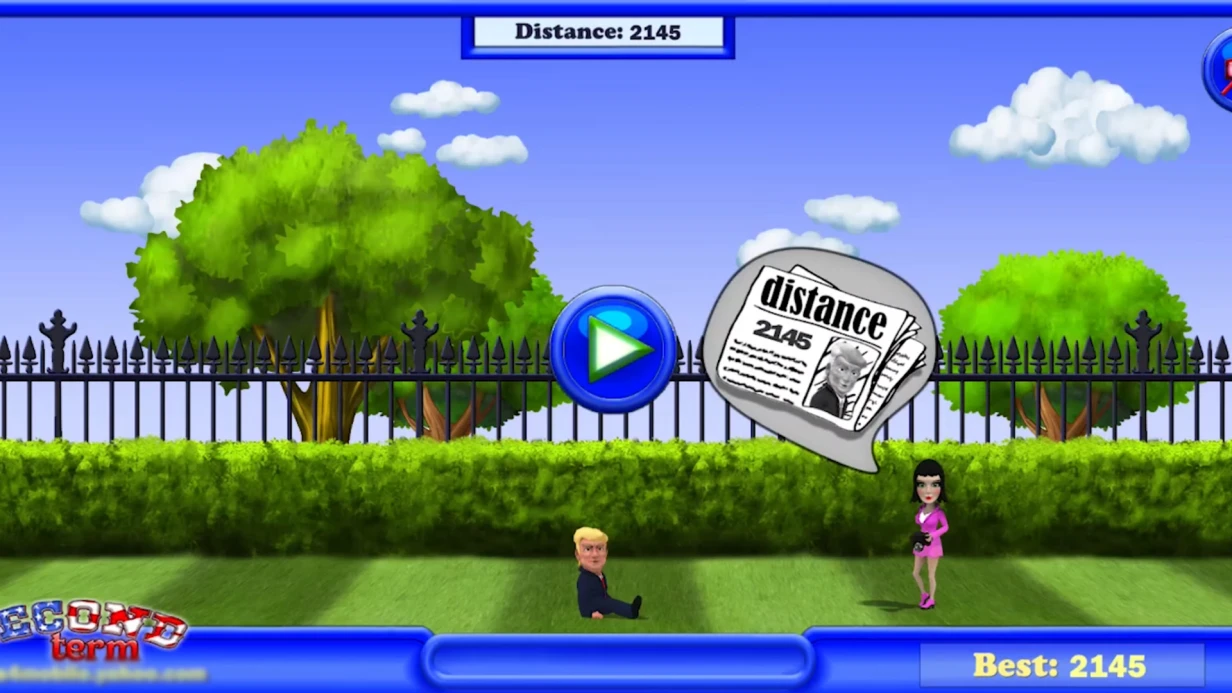
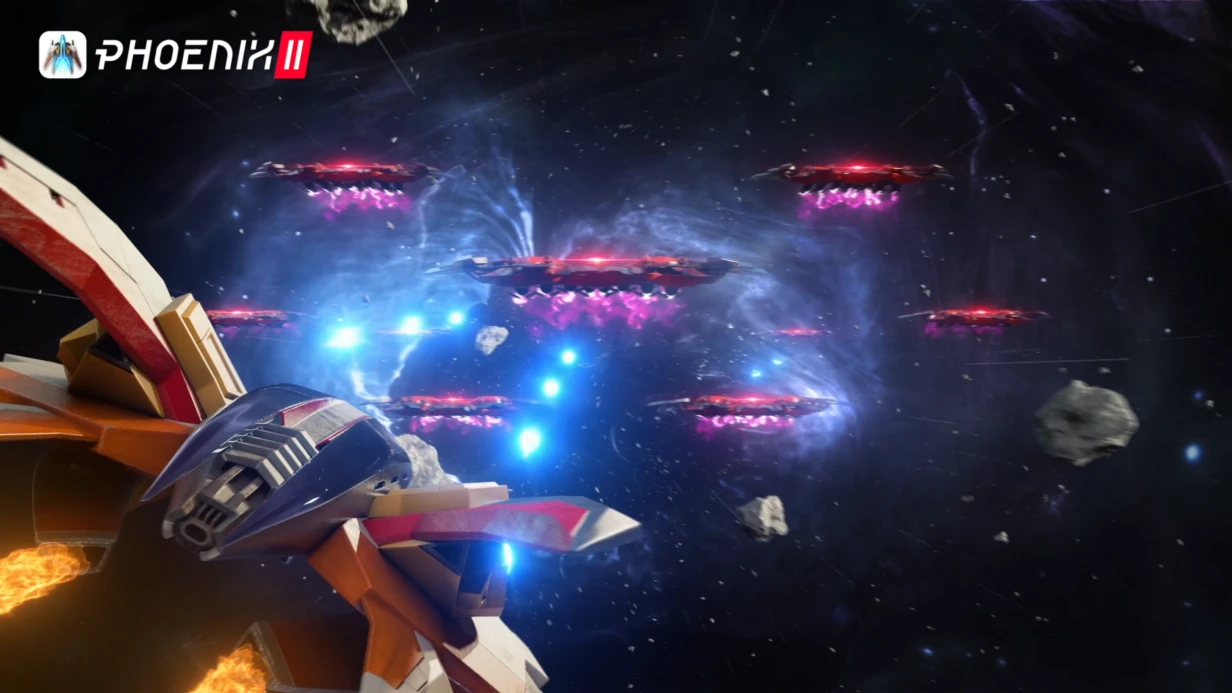
Simulation trainers based on game technology solve this problem. An employee immerses themselves in a realistic environment and safely practices actions during an accident, equipment failure, or extreme conditions.
Mistakes have no real consequences, and skills are reinforced through practice—just like for pilots and surgeons.
The result is fewer mistakes on real equipment, higher engagement, and lower staff turnover. Game mechanics motivate employees to complete the course, and the training system shows managers who is truly ready for the job. Preparation time is reduced, and workplace safety becomes manageable.
We help mining companies implement simulation trainers tailored to the specifics of their enterprise and safety requirements.
The experience of dozens of projects confirms: employees learn more willingly, and businesses get a predictable level of training without unnecessary risks.
What business results do game-based solutions deliver for production
For mining companies, a game-based solution is a working tool that affects the speed of personnel training and safety at sites. Instead of boring briefings, an employee enters a controlled scenario where every action has consequences. Training ceases to be a formality and delivers measurable results.
The team our team has been transferring real production processes into game formats for more than ten years. Below are the results that customers from the mining industry receive.
- Higher engagement. The interactive format holds attention longer than a presentation. Employees complete the scenario and less often abandon training.
- Faster learning. Employees make decisions themselves and immediately see mistakes. Skills are reinforced through practice—the time needed to train new workers is reduced and the quality of learning increases.
- Lower risks. Practicing emergency situations in a safe environment brings actions to the point of automation. A well-trained employee is less likely to cause accidents at the actual site.
- Attractive employer brand. A game-based approach to training sets the company apart from competitors. Young specialists are more willing to respond to job openings that use modern technologies.
Each item translates into concrete metrics: course completion rate, time to competence, number of incidents. The game-based solution pays for itself through these indicators.
Game development formats for mining companies
Each task of a mining company—from personnel training to investor presentations—requires its own format. Game mechanics have long outgrown entertainment: they help reduce downtime, lower injury rates, and onboard employees faster. Therefore, we select the tool for the specific audience and goal, not the other way around.
We have more than ten years of development experience on Unity, so every format is stable and quickly integrated into workflows. Below are typical scenarios with which clients from the industry approach us.
| Format | For whom | What it gives the client |
|---|---|---|
| Training simulators | Operators, machine drivers, maintenance staff | Practicing skills without risk to people and equipment, reducing accidents and downtime |
| Virtual tours | Investors, partners, regulatory bodies | A clear introduction to the facility without an on-site visit, saving time and budget |
| Business simulations | Managers, sales managers | Running mining and sales scenarios, improving planning accuracy and revenue |
| Gamification and quests | All employee categories | Engaging with regulations and safety rules, improving material retention |
If you are unsure which format fits your task, we will send recommendations after a short brief. Just describe the problem, and we will suggest the format and mechanics.
How game development is ordered: from brief to launch
For mining companies, a game is a tool: personnel training, safety, career guidance, or visual material for an exhibition. For such a project to be useful, the client needs to understand what happens at each stage and how long it takes. We have made the process transparent—it consists of six steps, each with a concrete result.
- Brief. You tell us about your tasks: who and how the game should train or impress, where it will be used, and in what form. The output is an agreed technical specification with fixed goals and success criteria.
- Plan. We prepare a step-by-step plan: deadlines, milestones, team composition, and budget. You know in advance when everything will be ready and can plan your workload.
- Approval. Before full-scale development, we show a prototype or key scenes. You see what the product will look like and make changes without wasting resources on rework.
- Implementation. The team creates the game—from graphics to logic—with regular progress reports. You always have an up-to-date version for testing and feedback.
- Launch. We assemble the final version, install it on the target devices or host it on a platform, and check that it works. You receive the finished product and accompanying materials.
- Support. After delivery, the game continues to work: we fix bugs, answer questions, and help develop the project for new tasks—for example, adding training scenarios or changing materials.
What is included in the delivery of a game product for the client
For a mining company, a game is a tool for personnel training, practicing emergency response, or demonstrating technology. To ensure the product actually works, we include everything needed for launch, operation, and development in the delivery package—without hidden surprises.
-
Source code and all project materials—you become the full owner of the product. You can pass it to any development team, make changes, and adapt it to new tasks.
-
Documentation—clear instructions for installation, configuration, and maintenance. Your specialists solve common issues on their own and don't depend on the contractor's response speed.
-
Employee training—we conduct a session for your team. We show how to change scenarios, upload new data, and manage content without deep technical knowledge.
-
Warranty—during the warranty period, we fix errors and shortcomings found in operation free of charge. You launch the product with confidence, knowing problems will be resolved quickly.
-
Technical support—we stay in touch after handover. We help with updates, advise when working conditions change, and suggest how to expand functionality.
-
Updates and development—at your request, we add new modules, levels, and scenarios so the game stays relevant to the company's current tasks and never becomes obsolete.
Such a package turns an order from a one-off project into a long-term working tool. You get the source code, training, warranty, and support—and you don't depend on a single contractor. That is the full business result.
Case study: how a game simulator improved workplace safety
Mining company "Northern Quarry" approached us when the injury rate at the ore loading and transportation site was not decreasing despite regular briefings.
The main risks arose during emergencies: operators became confused, acted on intuition, and this led to accidents. Training on real equipment was expensive and dangerous—a mistake during practice could have serious consequences.
We proposed a Unity-based game simulator that replicates a work shift with all its scenarios—brake failure, smoke, poor visibility, the actions of other employees.
The operator "experiences" the shift in a safe environment and can make mistakes as many times as needed until the correct response becomes automatic. The system records every action so the manager can see exactly where the employee is struggling.
Implementation results
Within six months, the number of incidents at the site dropped by 40%. More than 200 employees went through the simulator, each completing an average of 15 scenarios. The head of the occupational safety service noted: "Training used to be a formality.
Now operators ask for extra sessions on the simulator themselves—they see their mistakes and want to correct them before they become a real threat."
The reduction in injuries also produced a tangible side effect: fewer shutdowns, less equipment downtime, and calmer work for adjacent teams.
The manager received a visual dashboard with data on each operator—what has been practiced, what is lacking, and who is ready for independent work.
Two months after the first results, the company expanded the project to two more sites and ordered scenarios for new types of equipment. Today, the simulator is used during recruitment and routine qualification checks.
How to choose a game format for your tasks
The choice of game format directly affects how quickly employees master skills and how effectively you communicate information to partners or investors. There is no universal solution: what works perfectly for personnel training may not suit a facility presentation.
So first, it's worth answering three questions: what task you are facing, who will be the user, and what result you want to measure.
For training and practicing actions, a simulator is suitable—it immerses you in a realistic environment and allows practice without risk. To engage new employees and test knowledge, use a quest, where production tasks are solved in a game form.
For demonstrating to investors or contractors, a virtual tour is optimal—it shows the facility and processes clearly, without installing complex equipment.
Our specialists help you choose the right format for your tasks: we analyze goals, audience, available budget, and timelines.
If you are unsure what suits your company, we conduct an online consultation—we review scenarios, show examples of similar projects, and recommend which option will deliver the greatest effect.
The main thing is to correctly define the requirements for the game: number of users, device (computer, tablet, VR), the need for feedback, and statistics collection.
After the consultation, you receive a clear recommendation with a rationale: which format solves your task, what development stages will be needed, and what result to expect. This helps avoid unnecessary expenses and invest directly in what will benefit the business.
We work with mining companies, so we understand the specifics of the industry—from safety regulations to technological processes. Leave a request on the website and we will contact you to discuss the details.
Answering common questions about game development
Before ordering game development, clients have typical concerns: timelines, guarantees, budget, integration with existing systems. We have collected answers to the most frequent questions—so you understand how we structure the process and what you get at the end.
How long does game development take?
Timelines depend on the scale of the task: a training simulator for employees is usually ready in 1–2 months, and a virtual tour of a facility in 2–3 months.
The key point is that timelines are fixed in the contract, and the result is delivered in stages—you see progress and control the process.
What guarantees do you provide?
We work under a contract with a fixed estimate and clear timelines. After project delivery, you remain on warranty service: during the warranty period, we fix errors free of charge and help with integration. You are protected from unforeseen situations.
How much does it cost?
The cost is calculated after an audit of the specific task, not "out of thin air": after the brief, we name the exact price and break it down into stages. You pay only for accepted stages, not for the entire scope at once.
This approach allows you to control the budget and adjust requirements without impacting the estimate.
How will the game work with our internal systems?
We integrate the game with your learning management system or internal portal—employees complete the material in a familiar environment, and results automatically flow into reports. We use proven tools and standard formats, so data is transferred correctly and without loss.
Ready to discuss your project? Leave a request today
Leave a request, and we will contact you within one business day.
It doesn't obligate you: in a 10–15 minute conversation, you'll understand which game formats will solve your task—from training simulators to interactive equipment presentations for clients and partners.
Immediately after your inquiry, you receive:
- Audit of your task — we analyze which mechanics and formats will deliver the greatest effect for personnel training or equipment demonstration.
- Consultation with an expert — a specialist who has already worked on projects for industrial companies and speaks the language of business, without technical jargon.
- Cost and timeline estimate — a transparent budget broken down by stages, with no hidden items or unexpected additional payments.
- Portfolio and cases presentation for your industry — we show similar projects, tell you how we solved analogous tasks, and what results we achieved.
- Preliminary implementation plan — you understand what stages will be involved, what is needed from you, and when to expect the result.
- Commitment of agreements — all discussed conditions are recorded in a commercial proposal so you can make a decision calmly, without rushing.
Let us handle the technical part—you focus on the business objective. Leave a request today, and we will make the first step toward a solution that will work for your enterprise's efficiency.