




Training Doesn't Deliver Results — Educational Games Can Help
Clients don't finish their courses, employees go through training just to check a box, and new skills never make it into everyday work. The cause is almost always the same: boring content that fails to hold attention and creates no motivation to return for more sessions. Even a high-quality program loses its effectiveness if a learner drops out at the third module.
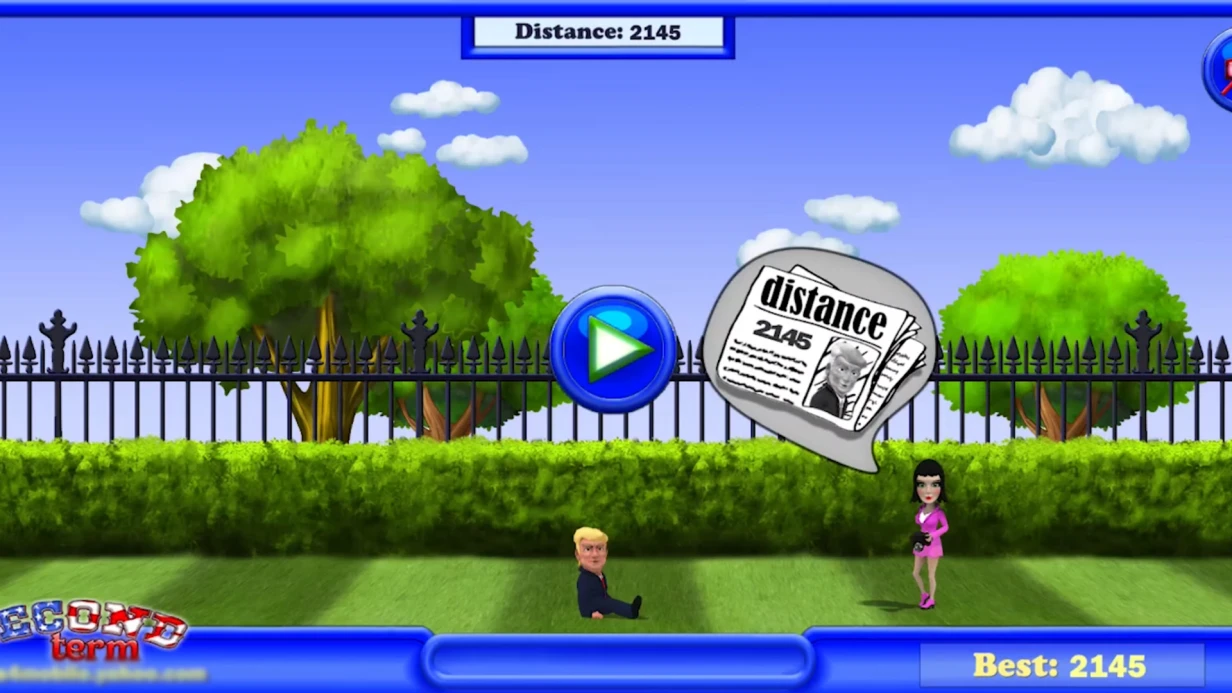
Educational games solve this differently: they turn the process into a living scenario with goals, rewards, and clear progress. A person doesn't just read the material — they solve tasks, make decisions, and immediately see the results of their actions. That's exactly why gamification boosts engagement and, with it, real course completion metrics.
We build custom educational games: from compact interactive scenarios to full-fledged simulators that integrate into your learning management system. We handle the entire cycle — from game mechanics to launch.
You get a product that holds learners' attention and carries them through to results — not just "another course in a personal account."
We work on a professional game engine with proven development tools, so the game runs reliably on any device — from laptop to tablet. You don't need to dive into technical details: we're responsible for quality, timelines, and post-launch support.
In the end, you get not just a game but a learning tool that shortens the path from theory to practice. Employees and learners complete the material, apply knowledge on the job, and return to training out of interest rather than under duress. This solves the main pain point: low motivation and fading attention to educational content.
What Business Benefits a Learning Project Delivers
An educational game isn't spending on a "pretty toy" — it's an investment with measurable returns. A well-designed project increases engagement, knowledge retention speed, and brand loyalty.
These are exactly the business benefits the client company receives — and the effect is visible as early as the pilot stage. We have been building learning solutions like these for over a decade, helping businesses see results in numbers.
Increased Employee Engagement
Employees are far more willing to complete training in a game format: an engaging storyline, levels, and rewards hold their attention. Training no longer feels like a tedious obligation — people come back to the course on their own. As a result, employee engagement rises and completion rates multiply.
Better Learning Outcomes and Knowledge Retention
Game mechanics are built on practice and repetition, so knowledge sticks far deeper than it does from reading manuals. Employees master products, standards, and procedures faster and make fewer mistakes in real tasks.
For the business, that means measurable gains in performance and faster time-to-productivity for new hires.
Strong Employer Brand
A modern training project shows that the company follows trends and invests in team development. Candidates and employees remember this approach and share their impressions on social media. This strengthens the employer brand and attracts people who want to grow with the company.
External Brand Visibility
The same game can be used at exhibitions, conferences, and events: vivid interactivity draws visitors in, and the game experience becomes firmly associated with your company. This format generates organic reach and sticks in memory better than any brochure or video.
Long-Term Savings and Flexibility
Once created, game scenarios are easy to update and expand — there's no need to rebuild training from scratch each time. As your team grows and new products appear, the game scales with your business. You get a tool that continuously drives engagement and knowledge quality — not a one-off campaign.
Educational Game Formats for Different Business Goals
Educational games aren't one-size-fits-all: what works for a short webinar won't work for a six-month onboarding program. That's why we start with your task — not with a pre-made template.
The format, mechanics, and depth of the scenario are determined by the result the business needs: quick skill practice, product introduction, or systematic employee training.
We select from proven formats — from compact simulations for a single webinar to comprehensive programs embedded in the corporate curriculum. Any of these can be run online or in person, with engagement built through story, characters, and hands-on tasks. Below are the standard educational game formats that address specific business challenges.
| Format | Best for | Business value |
|---|---|---|
| Short simulation (15–30 minutes) | Corporate training at meetings and webinars | Quickly practices a skill, increases engagement with the topic |
| Onboarding scenario series | New employees in their first weeks | Shortens time-to-role, reduces staff turnover |
| Comprehensive game (multiple modules) | Systematic training for a department or entire company | Builds lasting skills, tracks each participant's progress |
| In-person team quest | Offline training and corporate events | Live interaction, team spirit, emotional connection with the brand |
| Online game with player leaderboards | Remote employees and branch offices | Engages a distributed team, creates healthy competition |
Whichever format you choose, the game remains a learning tool — not just entertainment. All scenarios are built on real workplace situations, so after the game, employees know exactly how to act in their own job tasks. And we help you determine the right format in a short brief and adapt it to your audience.
How Development Works: Stages and Timelines
So that launching an educational game doesn't turn into a surprise, we define stages, deadlines, and approval checkpoints in advance. You always see what's happening, when changes can be made, and exactly what you'll get at each step.
- Brief and technical specification. We analyze your audience, training goals, and expected outcomes. We lock in scope, mechanics, and acceptance criteria — so you get a transparent cost estimate and protection from "surprise" add-ons.
- Project plan and timeline. We build a schedule with checkpoints: when the prototype is delivered, when it's ready for testing, when launch happens. You see dates and how stages depend on each other — and know you can plan the launch around your own events.
- Prototype and mechanics approval. We test the demo version to see how the game works, whether learners find it engaging, and whether it solves the learning task. Changes are still inexpensive at this stage, so we align everything before full development begins.
- Development of learning scenarios and content. We fill the game with tasks, feedback, and error scenarios. You receive intermediate builds — so you can review progress and make adjustments without waiting for the final version.
- Testing and final approval. We check the scenarios, the accuracy of result tracking, and performance on target devices. We give you test access, you accept the result — and after that, we take on all technical risks.
- Launch and support. We deploy the game, set up access for participants, and brief your team. After launch, we stay in touch: we fix bugs, add new levels, and help when training objectives change.
Each stage ends with a clear deliverable: a document, a build, test access, or a launch. This way, you're not left in the dark about developers' "invisible" work and stay in control of the process at all times.
What's Included in the Delivery: The Client Package
When you order a custom educational game, it's important to know exactly what you'll receive. We hand over more than just an "archive of files" — it's a complete package your team can work with independently. Here's what's included:
- Source materials. The entire project in structured form: scenes, graphics, audio, texts, and settings. Everything we create is delivered in a convenient format — you can hand it to another contractor or develop it in-house.
- Documentation. A description of the game's architecture and section logic. Your staff can figure out how to make changes without diving into technical details.
- Administrator guides. Clear instructions on adding training modules, changing levels, and updating content. Written for a manager, not a developer.
- Staff training. We run 1–2 sessions: we show how to work with the admin panel and configure scenarios. After a short hands-on practice, your team runs the project on their own.
- Project rights. Exclusive rights are transferred to you. You can use the game to train employees and clients, sell it, and develop it further without consulting us.
- Post-launch support. For an agreed period, we answer questions and support changes. You're never left alone with the product.
This package saves your time and removes dependency on the contractor: the product, knowledge, and rights are all secured for you. This isn't a "let's see how it goes" arrangement — it's a clear list, everything needed for independent work.
Case Study: How Our Client Kept Learners Through Course Completion
An additional education center, Smart Kids, came to us with a problem: students were dropping out mid-course and parents weren't renewing their subscriptions.
On the surface, the program was strong, but children lacked the motivation to come back to classes — regular exercises and tests quickly became boring. The task was simple: keep students engaged through the end of the course, without discounts or "threats" to parents.
Project Results
We ran an educational game development case, embedding the game directly into the curriculum. Not a standalone entertainment but part of the lesson: each task advanced the story, the character grew alongside the child, and points earned for success changed the game environment.
After two months of classes, average student engagement rose: they started completing modules 40% more often.
The key metric — course completion — rose from 54% to 81% in a single cohort. Parents saw that their child was asking to "do lessons" on their own and became twice as willing to renew subscriptions.
For the client, this translates directly into revenue: lower churn, higher profit per acquired student, and no need to spend budget constantly hunting for new customers.
Client Testimonial
"We were afraid the game would distract from learning, but it turned out the opposite — children ask for extra assignments to unlock a new chapter. We used to lose a third of the group by the end of the course; now almost everyone makes it through. It's the best result we've ever had."
After the first cohort, the client ordered two more games for other courses — the best proof that the approach works. We don't just build a "pretty picture" — we design mechanics that solve a concrete business problem: retention, engagement, and return to learning.
How to Choose the Right Development Model for Your Task?
Before choosing a development model, answer three questions: what exactly needs to change in learner behavior, how much content you need at the start, and who will make decisions as the project progresses.
Your answers determine whether you should build an in-house team, hire a turnkey contractor, or strengthen your existing team with external developers.
Outstaffing is the third path: you get experienced specialists while staying in charge of the product, scenarios, and methodology.
The main selection criterion is the division of responsibility. If your instructional designers already know how the learning scenario should work and you just need hands to build it, outstaffing solves the problem faster and cheaper than hiring full-time staff.
If you're not yet sure which game mechanics will achieve your goals, it's better to start with a prototype or consultation, and only then bring developers in for a defined scope of work.
Pay attention to process transparency and guarantees.
A reliable contractor always states the completion criteria for each stage and doesn't hide developers in a "black box." Ask who will manage the project on the company's side, how often you'll receive demo versions, and what happens if a specialist is sick or goes unresponsive.
These are the contractor-selection questions that eliminate most concerns before the project even starts.
We have spent over a decade strengthening client teams with Unity C# developers for educational games. We typically take on the technical backlog, coding, and integration, while you keep control of the pedagogical scenario and style.
We work remotely, so you get flexibility without an office commitment, and we maintain a clear process with regular progress reports.
If you talk through your questions with us, we'll help you choose a model that delivers the right result without paying extra for unnecessary features.
Answers to Common Client Questions
When choosing outstaffing, clients usually worry about three things: the reliability of the result, timelines, and the ability to make changes along the way. These are normal concerns, so let's address them point by point — exactly how we answer clients every day.
We have been building teams for educational games for over ten years and know what matters to our clients. We answer honestly, with examples from real projects.
What guarantees do you provide for your work?
We define the result in the contract and show intermediate versions of the game at each stage. You see progress and can verify that everything is on track. If something is off, we fix it before it affects the launch.
Do you meet deadlines?
Deadlines are written into the agreement and broken into short iterations. Every few days, you receive a working version of the game and see how many steps remain. That keeps the project under control with no surprises at the end.
Can changes be made while the work is in progress?
Yes. Outstaffing exists precisely so you can adapt the game to new requirements. Changes affect timelines, but we always warn you in advance and propose the best path forward — so you make an informed decision rather than dealing with consequences later.
Start a Project That Makes Training Truly Effective
Holding learners' attention gets harder every year: dry lectures and tests lose to interactive formats. An educational game turns material into an experience people want to live through — and makes your product stand out from competitors. To get that result, you don't need to hire an entire department or wait years for a release.
Just leave a request — and we'll discuss at a consultation how outstaffing Unity C# developers solves exactly your challenge. You'll get an honest assessment: whether the idea is feasible, how long it will take, and how to integrate the project into your current processes.
What you get after submitting a request:
- Analysis of your learning task and selection of the right game format.
- Preliminary project estimate: timelines, stages, team composition.
- A clear development plan with checkpoints and no surprises.
- Recommendations for engaging learners and improving training outcomes.
- Support at every stage: from prototype to launch and beyond.
No abstract promises — only specifics for your project. You know in advance what you're paying for, how the work is structured, and when the first results will appear.
Submit your request right now to get a consultation and a project estimate tailored to your task. The sooner you start, the sooner your learners will feel the difference.