

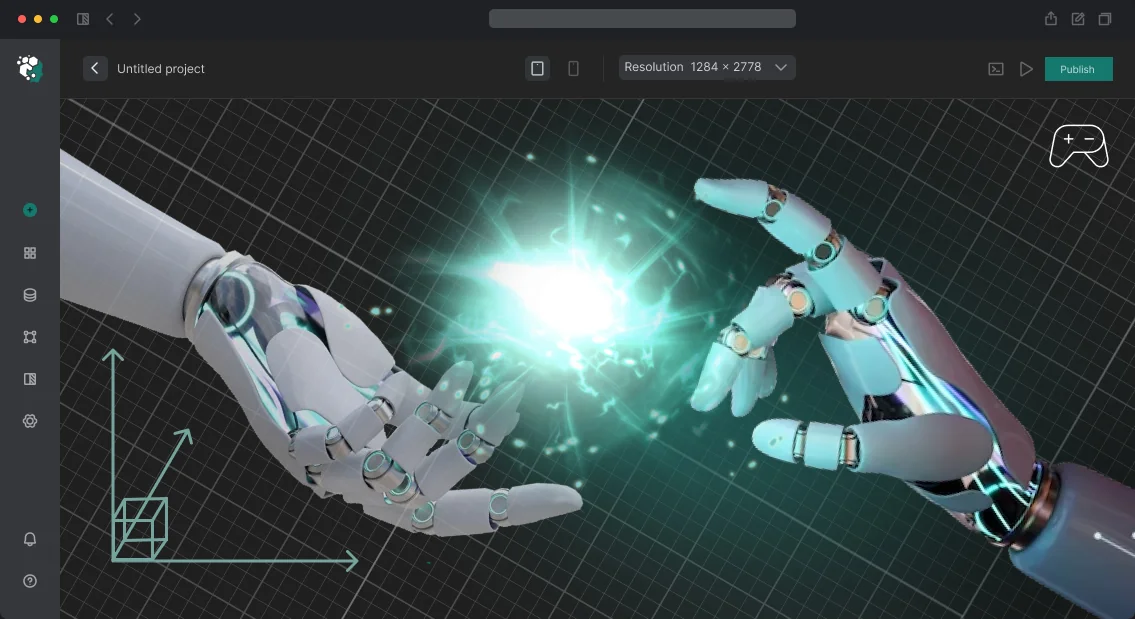


Special Effects in Unity via Spline: How to Stand Out from Competitors?
Every new game faces the same problem: store shelves are packed with hundreds of similar projects. Standard effects that can be assembled in an hour don't evoke emotions—players quickly lose interest and move on to competitors. As a result, even good mechanics fail to deliver the expected revenue.
The answer is professional VFX development. We create special effects in Unity using Spline technology, shaping a unique visual style for your game.
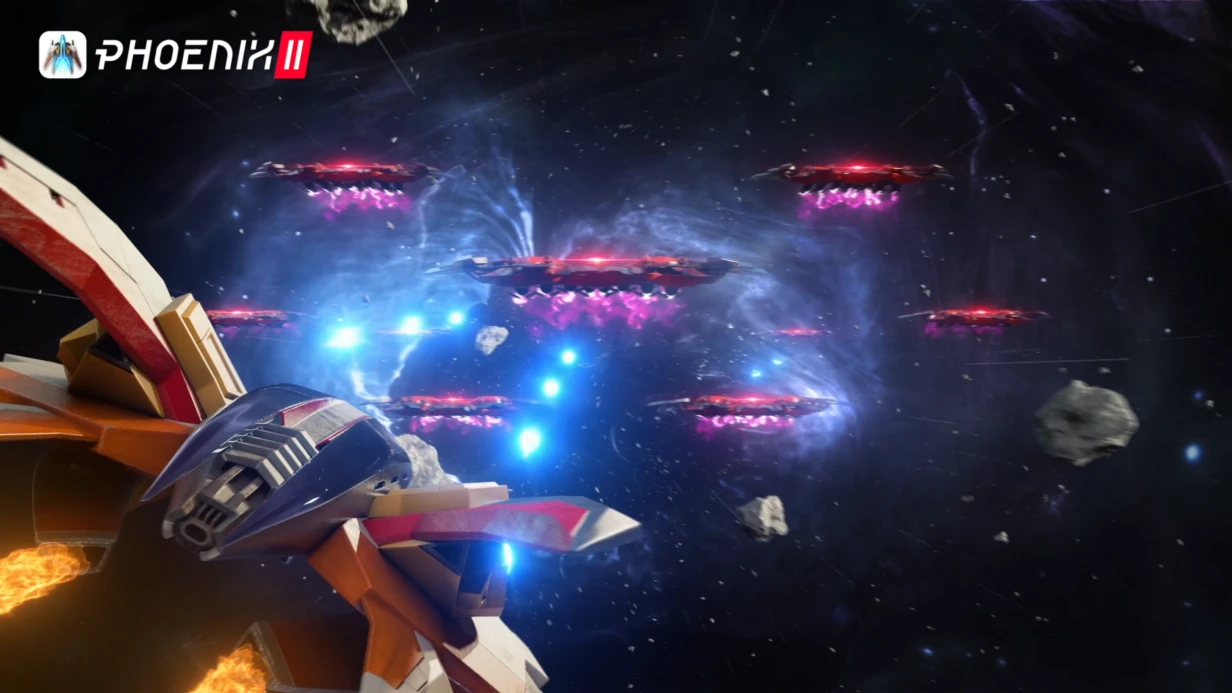
This is not just pretty flashes, but a cohesive visual system: from explosions to magic, from character movement to level atmosphere. This approach makes the project stand out among thousands of others and keeps players coming back.
A unique game style directly affects business metrics. The game is easier to remember, people share it on social media, and it gets more organic installs. Emotionally engaged players make in-app purchases more often and recommend the project to friends. Custom special effects in Unity are an investment in audience retention and revenue growth.
If you want to stand out from competitors, pay attention to how your game looks and feels. Professional effects tailored to your task pay off through higher conversion to install and repeat visits.
We help clients turn visuals into a competitive advantage and have already delivered dozens of projects with effects that players remember.
What Do You Get from Professional VFX Effects in Games?
Professional VFX effects are not just screen decoration, but a tool that directly influences player behavior. Properly designed effects hold attention, evoke emotions, and make players come back again and again. Below is a checklist of what you get when ordering special effects from us.
Player Engagement
Effects turn ordinary actions into vivid events: explosions, magic, character movements—everything that makes the player live the moment. This increases session time and retention.
Players are more willing to share videos of spectacular moments—so the game gets free promotion on social media. Each such repost brings new users at no advertising cost.
Recognizable Style
Quality VFX create a unified visual language. The game becomes memorable, standing out among dozens of similar projects. This boosts brand recognition and builds audience loyalty.
When a player sees your effect outside the game—on a stream, in a video review, in an ad—they instantly recognize the project. This makes your game part of visual culture.
Speed of Work
We use refined tools and ready-made assets, so effects are created quickly with minimal revisions. You get results in a short timeframe without losing quality—this shortens the road from idea to release. Fast iterations allow testing different options and choosing the best one. In the end, you save time and money.
Result Stability
We work in Unity on professional equipment. This ensures effects work correctly on different devices and don't degrade game performance. You get a predictable result that won't let you down at the most critical moment. In addition, we support the project after launch and quickly fix any issues.
Each item is measurable value for your business: more engagement, a stronger brand, faster release, fewer risks. Check your project against this checklist—and you'll see which elements are missing.
Spline Work Formats for Your Game Project
Each game project has its own goals: sometimes you need one striking effect for a release, sometimes a whole system of special effects for updates. So you don't overpay for unused options, we work in three formats—from a one-time order to full ongoing support.
| Format | Who It's For | What You Get |
|---|---|---|
| One-time order | Need a specific effect or refinement of current visuals | Finished result within the agreed timeframe, clear cost estimate, and full delivery of source files |
| Package project | Preparing a release or major update with several VFX scenes | A comprehensive set of effects turnkey, unified style, and optimization for your project |
| Full support | Ongoing updates and game development | Long-term partnership: prioritized tasks, quick refinements, and predictable budget |
When choosing a format, we rely not on templates but on your project's tasks. If you need to quickly test a hypothesis, a one-time order is enough. If a major launch is ahead, a package project is more cost-effective. If the game is alive and evolving, full support takes the load off your team.
In any format, you get a unified process: brief, plan, implementation, and delivery. We align on intermediate stages and show effects in your project so you can see how everything works before final payment. Responsibility for the final visual rests with us—you just accept the result and launch the game.
Stages of Creating VFX Effects: From Brief to Launch
Creating VFX effects is not "magic" but a structured process with clear control points. We work in Spline so you can see intermediate results at each stage and make changes without wasting time. Below is a typical development stage plan that the project follows.
- VFX brief. We discuss the task: where the effect will be used, what atmosphere and reaction are needed. The output is a technical specification understandable to both sides.
- Layout and prototype. We create a quick version of the effect in static and motion, and align on the direction. You see the style, color, and character of movement.
- Layout approval. We show 2–3 options if needed. You choose, and we lock in the approved version to move forward without disputes.
- Final effect rendering. We refine details, fine-tune animation, glow, particles—everything that makes the image come alive.
- Integration and setup. We embed the effect into your project, check how it behaves across different scenes and devices, and optimize for the required performance.
- Testing and update launch. We test in real scenarios, gather feedback, and launch. If additional tuning is needed later, it's already included in support.
In the end, you get an effect that works reliably, looks as intended, and doesn't break the rest of the game. Thanks to fixed stages, you always know where the project stands and what comes next.
What's Included in the Deliverable: A Complete Integration Kit
After project completion, you receive not just a "picture" but a working integration kit. Inside are the final VFX results, source files, and clear documentation so the effect can be integrated into the game quickly and without unnecessary back-and-forth.
The deliverable includes:
- Ready-made VFX effects tailored to your scenes: the required explosions, magic, weather, destruction—already adapted to the project's style.
- Source files for all effects: you get open materials and settings to change color, size, speed, and other parameters as needed.
- Integration documentation: a step-by-step guide on how to connect effects, which elements control behavior, and what to check before launch.
- Test build: an assembled version you can run immediately and see the result in action—no preliminary setup needed.
- Performance recommendations: information on how effects impact game speed and what can be done for low-end devices.
- Post-delivery support: for an agreed period, we help your team with questions about integration and fine-tuning.
This kit eliminates the client's main risk—"what did we get and what do we do with it." You get a working solution, source files under your control, and support at the start.
If you later want to add new effects, your team can develop them independently or reach out to us for enhancements.
Case Study: How VFX Effects Doubled Player Retention
The gaming industry runs on retention: the longer a player stays in the project, the higher their lifetime value. But one studio faced a typical problem: almost 80% of the audience left after the first level.
Users praised the gameplay but didn't stick around—they lacked emotion from what was happening on screen.
We proposed rethinking the VFX effects. Instead of standard explosions, we created smooth light trajectories: spline-based particle paths that guide the player's eye and highlight key moments.
This is not just visual decoration but a full-fledged navigation tool—the player intuitively understands where to look and what to do.
The results exceeded expectations. Within a month of implementation, day-7 retention doubled—from 22% to 44%. Average session length increased by a third, and the number of completed levels grew by 1.8 times. Players started sharing recordings on social media themselves, attracting free organic traffic.
"VFX effects became the project's biggest discovery. We thought it was just aesthetics, but we got measurable growth in retention and engagement. Now we plan to scale this approach to all future releases," says the producer of Orbit Games studio.
This case study is an example of how game VFX development translates into business metrics. We don't just make things look nice; we design effects that retain and monetize the audience.
After the initial success, the studio commissioned us to completely rework the visual style of their second project.
Frequently Asked Questions and Concerns About VFX Development
Clients need predictability: clear timelines, a transparent budget, and confidence that the effect will work in their specific project. Special effects should not become a "black box" where the result is unclear and deadlines slip. Below are answers to the questions we hear most often before starting work.
How long does VFX development take, including revisions?
A standard game effect (explosion, magic, spawn animation) takes 5 to 10 business days. This timeframe includes all revisions—we build them into the plan upfront, so approvals don't slow the process down.
Complex composite effects that need to work across multiple scenes or change behavior based on player actions require more time—2-3 weeks. We give an accurate estimate after reviewing your project, and it doesn't change during the work.
What determines the cost of VFX?
The price is based on three components: the complexity of the effect, the number of its states (initial, in-progress, final frame), and integration into your project. If the effect needs to be tied to specific player actions or story events, that adds a logic-configuration stage.
For each task, we prepare a transparent cost estimate with a description of the work, so you always know what you're paying for. No hidden fees or recalculations along the way—we lock in the scope before starting.
Will the effects work on different devices?
Yes, we optimize every effect for the target platform. If the game is released on both PC and mobile devices, the VFX is adapted in terms of load and rendering quality—so the frame rate doesn't drop.
We test effect performance in conditions close to real gameplay, not on an empty scene. This eliminates unpleasant surprises after release.
Who is responsible for integrating effects into the project?
We handle all Unity integration ourselves. All we need is access to the repository—then we set up prefabs, animation, write helper scripts if necessary, and deliver a working result.
If your team has its own developers, they get clean, commented code and structured assets. Any specialist can understand how it works without our involvement.
What if the effect isn't suitable or adjustments are needed?
We go back to the task and address the feedback—this is part of our warranty obligations. Usually, after delivering the effect, there's a short support period during which we quickly help with minor adjustments.
The warranty covers the effect's performance on the devices specified in the technical specification. If something goes wrong during testing, you write to us, and we fix it at no additional charge.
We understand that entrusting special effects to an external team is a step that requires confidence. That's why we suggest starting with a short audit of your task: you show the project, we describe solution options, timelines, and cost—with no obligation on your part. This way, you can compare approaches and make an informed decision.
Ready to Discuss Your Project? Write to Us
You already have a vision of what the visual effects in your game should look like, but you're unsure which tool will deliver the right result and fit the timeline.
We are a team a team with ten years of experience in creating game effects, and we help clients at every stage—from idea to integration.
Write to us and get a consultation, during which we'll break down your task, propose a solution using professional tools, including Spline, and calculate an accurate cost estimate.
This usually takes one business day: you send a request, and we come back with a plan and figures that are clear for business.
What you get after contacting us:
- Consultation on implementing VFX effects in Unity for your mechanics.
- Accurate cost calculation—no hidden work or "you'll pay extra later."
- A clear technical proposal with timelines and stages.
- A portfolio of similar solutions so you can see the quality level in advance.
- Recommendations for optimizing effects—the game will run stably.
- A personal manager who answers questions before and after launch.
- A fixed cost estimate that doesn't change during development.
This way, you start the project without risks: you understand the budget, timeline, and exactly what you'll get at the end. We handle the rest—from setting up trajectory movement to final polishing.
Submit your request right now to start the project and receive a cost estimate on the same day. Write to us—we'll guide you through the rest.
How to Choose the Right VFX Format for Your Task?
There is no universal format: the choice of VFX always depends on the task, budget, and timeline. These three parameters determine what the effect will be—a light addition to the interface or a central scene element that stays in memory for a long time.
If the task is a bright accent in a video, a small animation for social media, or a quick response to a button, a lightweight solution is enough. It can be created in a few days, without major investment, and is easy to adjust.
A different matter is a large-scale event, product presentation, or game mechanic where VFX must hold attention and evoke emotions. Here you need a custom format that precisely matches the brand's style and solves the task.
Timeline and budget are often more important than technical complexity. If the launch is urgent, we offer a modular solution based on ready-made assets—this is several times faster and cheaper.
If time allows, we develop a unique effect from scratch for your scenario, using Spline for flexible customization.
The key is not to overpay or skimp on what matters: a banner doesn't need a full scene, and a premium presentation doesn't need a standard template. We offer 2-3 formats with budget and timeline estimates, so the choice is thoughtful and transparent.