



Timeline for VFX: why without it you lose time and budget
When a game looks cheap, players sense it immediately—and leave for competitors. Without expressive special effects, even strong gameplay fails to grab attention: explosions, magic, weather effects, and interface elements look flat and push the audience away.
As a result, ratings drop, reach and user retention suffer, and you invest in promoting a product that isn’t ready to hold interest.
The main cause of VFX budget overruns is chaotic coordination between animation, sound, and gameplay events. Every change in a scene drags in edits across multiple places, deadlines slip, and the team redoes effects again and again.
This is the classic situation: you pay for hours worked, not for results, and the Unity special effects never feel cohesive.
The Timeline tool solves this pain.
It brings all events onto one timeline: effects, camera movements, dialogue, and animations tell the story in sync, without “seams.” You no longer need to wait for developers to rewrite code just for one faster explosion or a light shifted by a second—edits are made visually and apply instantly. That’s how high-end game graphics are created: thoughtfully, controllably, and without surprises.
For the client, this means a predictable VFX budget and a short iteration cycle. You see intermediate results, make your edits—and get an accurate cost estimate without hidden follow-up work.
Instead of endless approvals, you reach the final version in the time usually spent just preparing a draft.
We have built a streamlined process for working with Timeline in Unity: special effects are integrated into the game from the very start and don’t break other systems.
This preserves your deadlines and money, and players get that “expensive” look that sets the project apart from competitors. All that’s left for you is to approve results and watch the game capture attention from the first seconds.
Which game special effects will strengthen your product
Game special effects are not just decoration but an important game design tool. They help the player instantly understand what is happening: a hit, damage, success, danger.
Professional VFX enhances gameplay, making interaction responsive and clear, and that directly affects how much players enjoy the game and keep coming back.
A hit, an explosion, a spell—each such moment must be readable in a split second. Properly tuned effects tell the player which actions are effective and create an emotional response.
The player doesn’t think about mechanics; they get immersed in the process—and that is exactly what makes people return to the game again and again.
Visual quality determines the first impression. Visual effects make the image “expensive” and cohesive. Even simple scenes with good effects look spectacular. As a result, your product wins against competitors before the player even evaluates the story or mechanics.
Professionally made VFX require not only artistic taste but also technical precision. We work in Unity, use Timeline for precise event control, and achieve smoothness without losing performance. This means the effects don’t overload weaker devices—the game runs steadily for a wide audience.
Another plus is a recognizable style. Visual effects can become a brand’s signature. Fire flashes, explosions, magic—all of this creates a unique touch that sets the game apart in app stores and stays in players’ memories. Investment in VFX pays off through growing organic interest and positive reviews.
In the end, game special effects strengthen key product metrics: engagement, retention, and conversion. We help implement them so they deliver results, not just look pretty.
VFX work formats on Timeline: turnkey or one-off project
Whether you need a vivid special effect for a product launch, an atmospheric scene for a presentation, or a whole series of videos for a campaign, it’s important to choose the right work format.
We work with Timeline and understand that clients have different needs: some need the full cycle, some need a targeted solution for a week, and others are looking for a team to supplement their own.
Below are three main formats that cover 95% of VFX requests. It is usually clear right away which one fits, but during the brief we always help you decide and propose the optimal option.
| Format | For whom | What the client gets |
|---|---|---|
| Turnkey VFX | For product launches, ad campaigns, and events where you need a result “from idea to screen” | The full cycle—from script to final render. One contract, one responsible person, fixed deadlines. You don’t deal with the details and receive a ready product. |
| One-off order | For urgent tasks: a single scene, an effect for a presentation, a short video | A targeted solution without long processes. Quick start, transparent cost estimate, a result for a specific task. Ideal when you need it “here and now.” |
| Team outsourcing | For projects with a constant need for VFX—regular updates, video series, ongoing support | We supplement your team or fully take over the direction. We meet deadlines, keep quality high, and you don’t spend time on hiring and onboarding. |
The formats can be combined: start with a one-off order, evaluate the quality, and then move to larger-scale collaboration. The main thing is that you feel comfortable and the task is completed on time.
How VFX creation works: from brief to launch
So that special effects strengthen the game and please players instead of “eating” performance, we follow a transparent process. You always understand what is happening, what the deadlines are, and when you will get the result.
- Brief and goals. You tell us which scenes need to be brought to life: explosions, magic, weather, or interface animations. We record the goals, style, and technical constraints of the project.
- Concept. We propose 2–3 implementation options for the effects and agree on them with you. At this stage, you can adjust direction without redoing work.
- Integration into Unity and Timeline. We create the effects and sync them with game events: animation start, sound, effect end. It looks like one cohesive scene, not a set of separate pieces.
- Intermediate review. We show a draft version directly in the game. You check how the effects feel in motion and leave feedback.
- Launch. We roll the update into your build and test it on different devices—from weak to top-end—so the effects work reliably.
- Support. After the launch, we stay in touch: fix issues, add details, and adapt effects for new levels or events.
This process rules out the situation of “we got it, but it’s not what we wanted.” Every stage ends with approval, so you see the final result in advance, not after full delivery.
What is included in a VFX project delivery: a complete package for your game
You get not just a set of files but a ready working solution that can be integrated into the game immediately. We hand over the entire project so your team can use, refine, and scale the effects without constant support from us.
Here is what is included in the delivery package:
- Ready-to-use game effects. Explosions, flashes, magic, weather effects—already set up for your tasks and working in the scene right after integration. Nothing needs to be “fine-tuned” by hand.
- Project source files. All effect settings are stored in an organized structure: your engineer can easily find where everything is and make edits for new mechanics.
- VFX documentation. Written in plain language: how each effect works, which parameters change its behavior, and how to place it at the right moment in a level. Without unnecessary technical complexity—a specialist of any level can follow the instructions.
- Rights to the effects. Copyright is fully transferred to your company. No one can use these assets at competitors or make claims after the project launches.
- Integration guide. A step-by-step guide on how to connect effects to characters, levels, and cutscene scenes. This shortens integration time to a couple of days instead of weeks.
- Post-delivery support. For a month, we answer your team’s questions and help adapt effects for non-standard scenarios.
In the end, you get a transparent project: it is clear what each effect includes, how to improve it, and what rights the company has. This removes risks at every stage—from testing to release.
Case study: how we used Timeline to boost gameplay and retention
The client—a mobile action platformer—was losing players by the second day. The gameplay was polished, but emotional peaks were missing: transitions between levels felt dry, and players didn’t feel progress. We proposed strengthening the key moments with Timeline.
How Timeline changed the gameplay
In the StarVoyage project, we combined game events, animations, and special effects into a single timeline.
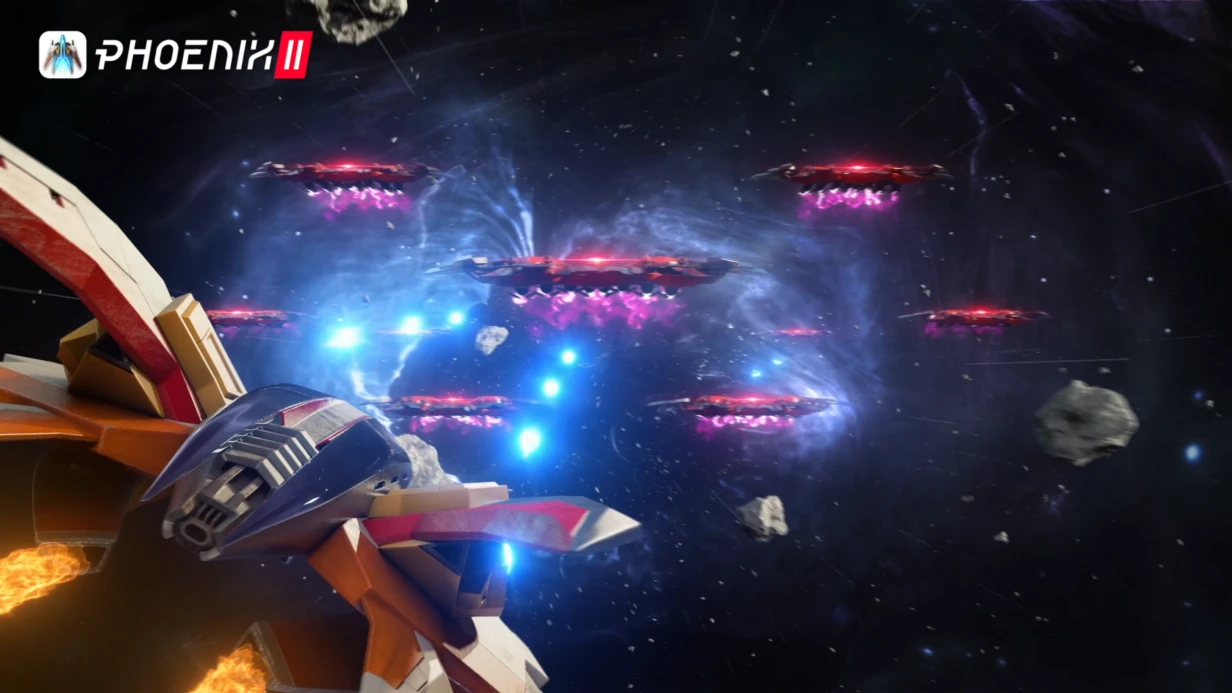
The level start became a cinematic scene with focus on the main character, and the boss finale became an impressive cascade of explosions and particles that rewarded the player for their effort.
Timeline allowed us to sync VFX with gameplay actions without rewriting logic: the effect appeared exactly when the player performed a meaningful action.
This created a sense of the world responding to every decision—and for the client, the ability to quickly adjust timings without involving the development team.
Numbers the client received
After implementing Timeline, we measured player behavior over two weeks. Day-2 retention increased by 12%, day-7 retention by 18%. Average session length grew by a quarter, and the number of repeat launches rose by 35%—players came back to experience the standout moments again.
For the project team, an important point was that all changes were made on the asset side and did not require rebuilding game versions. This shortened experimentation time: new special effects could be added to the game without risking stability.
The client was so satisfied that they extended the partnership for the next content season. Timeline became part of the studio’s workflow, and players—according to reviews—call the special effects “wow” when they complete difficult levels.
How to choose the right VFX format for your task?
To choose the right VFX format, first answer the question: what exactly should change after the effects are implemented? If the task is to surprise guests once at a product launch, that’s one work format.
If effects are needed for ongoing brand support in games, apps, or presentations, the format will be completely different. The scale of investment, timelines, and how you interact with the contractor all depend on this.
Practice shows that clients most often choose between three types of collaboration. The first is a one-off turnkey project, when we receive a clear technical specification and produce a finished result.
The second is a phased format, where effects are integrated gradually, with intermediate reviews and edits. The third is long-term support: the contractor stays in touch, develops the effects, and adapts them to new tasks.
There is no “best” format—there is one that fits your situation. A good contractor will propose the optimal option themselves if you honestly describe your goals.
The special thing about VFX is that it is always a blend of artistic vision and technical execution. A beautiful image that doesn’t run on the target device or freezes at the critical moment devalues the entire project.
So when choosing a contractor, look not at the number of glowing words, but at the portfolio: have they done projects with similar logic, how did they solve non-standard problems, how did they interact with your team?
The specifics of VFX are revealed precisely in the details of integration—and here experience matters more than the name of the tech stack.
The shortest path to the right choice is to formulate the task not in terms of technology but in terms of results.
For example, “we need players to stay on screen 10 seconds longer after launch” or “we need booth visitors to take photos in front of the effect.” Any competent specialist with experience in Unity and Timeline will translate that into a technical solution and propose the right format themselves.
But if a contractor, instead of asking clarifying questions, immediately starts talking about implementation details, that’s a reason to think twice.
We have been working with VFX in Unity through Timeline for more than ten years, so we know what questions to ask so you don’t overpay for what you don’t need and don’t end up missing what you do need.
Send us a description of your task—we’ll come back with a recommendation on the collaboration format and a plan for the first steps. No obligation, just so you can make an informed decision.
Order VFX on Timeline—a game that hooks players
Players remember not mechanics but moments: a flash of magic on a decisive strike, an explosion that shakes the screen, light that shifts the mood of a scene. These are the details that turn “just another game” into the one people want to keep playing and show their friends.
VFX on Timeline lets you structure special effects like film scenes: every effect appears exactly at the right moment of gameplay, without desync or random triggers.
We take on the entire development of special effects—from idea to implementation in the project. We work with professional equipment and proven tools, so you get a result that doesn’t slow down the game and works correctly across different devices. Timeline for games is a way to make the image expensive and captivating without long manual setup.
When you order VFX from us, you get:
- effects synced with player actions: hit, jump, ability activation—everything triggers on time;
- cinematic presentation of key scenes that sets the game apart from competitors;
- fast iterations: you see intermediate results and make changes before final launch;
- gentle device load—effects look vivid but don’t “eat” performance;
- a ready project structure your team can easily work with later;
- post-delivery support: we help with integration and answer questions.
Leave a request for the service—let’s discuss which special effects will strengthen your game and how Timeline can help bring them together into a cohesive, impressive picture. We’ll tell you how long the work will take and what we need from your side. We’ll send examples and propose a solution for your project.