



Why Games Without Visual Effect Graph Lose Players
Players decide whether to play a game within the first few minutes. If the visuals don't grab them, they close the app and move on to competitors.
High-quality graphics and in-game special effects are not decoration — they are a factor in retaining attention and, as a result, generating steady revenue from the project.
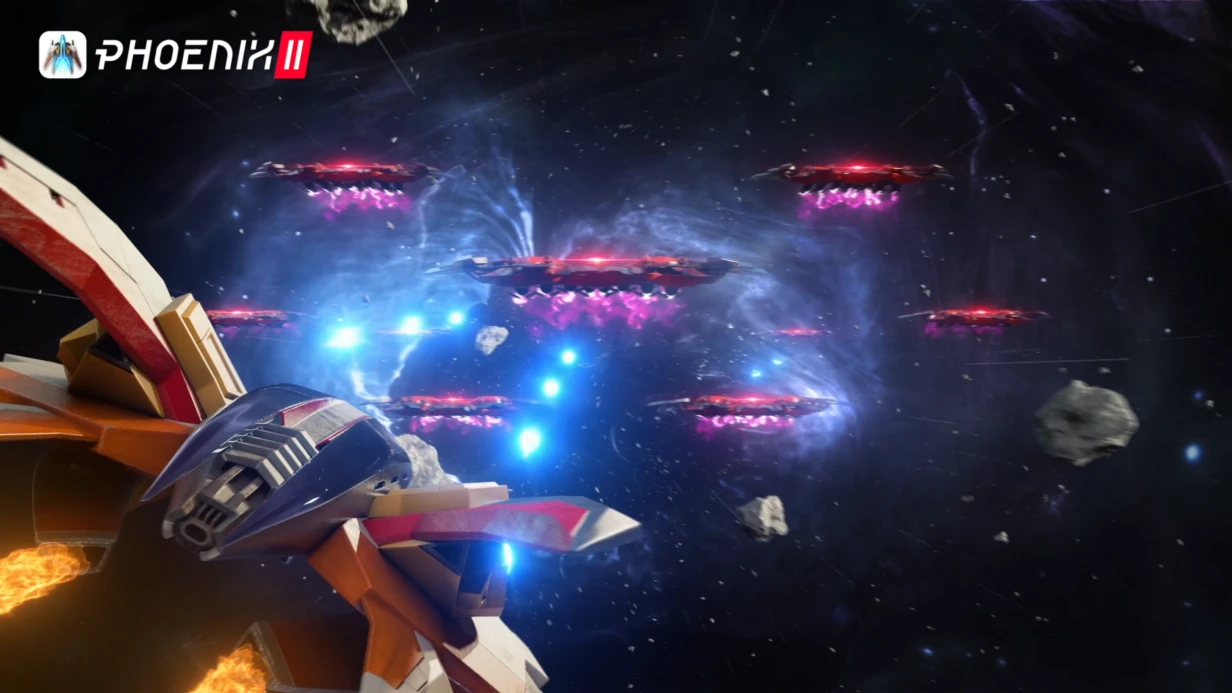
Without well-crafted effects, even interesting gameplay feels second-rate. Explosions, magic, particles, destruction — these are what create the emotions that make players come back again.
Games with vibrant, dynamic visuals are more likely to appear in recommendations, gain more organic reach, and convert casual visitors into a loyal audience.
Visual Effect Graph makes it possible to create cinematic effects without sacrificing game smoothness. We use this tool where it genuinely enhances the experience and do not overload the project with unnecessary details.
As a result, your game looks more expensive than the development actually cost — that is a direct competitive advantage in an overcrowded market.
The player does not think about the technical implementation, but subconsciously reads the quality of the graphics in a split second. Premium visual effects build trust in the brand and increase the average session time.
And the longer a player stays in the project, the higher the likelihood of in-game purchases and repeat launches.
Our job is to make special effects work for your business: hold attention, set the game apart from dozens of similar titles, and deliver measurable results.
We handle the entire process — from concept to final polish — while you get a product that captivates from the very first screen.
What You Get from Professional Special Effects
Professional special effects directly impact engagement: players linger longer to take in a striking moment, experience it, and want to come back. When explosions, magic, or destruction look convincing, the game holds attention on its own — without extra reminders or bonuses.
Effects also drive sales. Dynamic scenes become the foundation of trailers, ad spots, and screenshots — this is what buyers see before paying.
A game with impressive visuals looks more premium and inspires trust even before the first launch, and such store pages generate more installs and purchases.
Visual style is what sets a project apart from dozens of similar ones. Neat, polished effects form a signature look: players begin to recognize the game by its visuals, share screenshots, and discuss them in communities. That is how recognition is born — recognition that keeps working for the brand long after release.
We build effects on Visual Effect Graph in Unity — this allows us to combine expressiveness with smooth performance across different devices.
The client gets not just a "pretty picture" but a tool that retains the audience, strengthens sales, and creates a memorable product identity.
As a result, effects become a growth point for the entire project: higher engagement, a stronger store page, a clearer style. These are the details that ultimately separate a successful game from one that goes unnoticed.
Special Effects Development Formats for Your Task
Special effects development does not tolerate templates: sometimes you need a single explosion for a release, sometimes a whole library for a new character.
So that you don't overpay or wait for unnecessary extras, we work in several formats — from a one-off task to ongoing support. All of them are built around Unity Visual Effect Graph, so they integrate easily into your project.
One-off effects and packs are most often used for mobile games — where performance and a compact footprint matter. VFX outsourcing and ongoing support suit PC games, where the requirements for detail and spectacle are higher.
| Format | For Whom | What the Client Gets |
|---|---|---|
| One-off effects | Studios that need a single specific explosion or animation | Fast result at a fixed price, no lengthy discussions |
| Effect pack | Mobile and PC games with a limited budget | Consistent style, volume discount, single-stage delivery |
| VFX outsourcing for a project | Teams without their own VFX artist | Full coverage of tasks: from concept to optimization |
| Ongoing support | Live-service games with seasonal updates | Fresh effects for new mechanics, priority support |
In any format, you receive ready-made files, scenes, and brief documentation for developers — you don't need to understand the details.
If you're unsure which option suits you, send us a description of the task: we'll analyze the project and suggest the optimal arrangement for your timeline and budget.
Stages of Creating Effects with Graph
We have structured the process so that the client understands everything without a technical background. At every stage, you know what is happening, how long it takes, and when the result will be ready.
-
Brief and task definition. We discuss which project the effects will be used in, what emotions they should evoke, and what style the game is designed in. We lock in deadlines and acceptance criteria — then we work according to the agreed plan.
-
Concept and approval. We show sketch and reference options so you can see the direction in advance. Revisions are made before development starts — this saves the budget and the team's time.
-
Effect development. We create special effects on the professional Unity engine using Visual Effect Graph. The client gets a flexible system that can be adapted to business needs.
-
Interim showcase. A few days into the work, we send a video and an interactive version. You see how the effect looks in a real scene and provide feedback — no surprises at the finish line.
-
Testing. We check the effects on different devices so they don't slow down the game and work reliably even during mass launches. With this stage, you get predictable results on any configuration.
-
Delivery and launch. We hand over source files, settings, and a clear guide. Your team can get up to speed without a long adaptation period — no dependence on a specific developer.
-
Post-launch support. We stay in touch: we answer questions and make adjustments if tasks change. We provide support until the effect works perfectly in your product.
What's Included in a VFX Project Delivery
After the work is completed, you get not just a "picture on the screen" but a complete package that remains yours forever. We put together the delivery so that the Visual Effect Graph game effects can be used, fine-tuned, and developed without our involvement.
What's included in the project:
- Source files for all effects — all projects, assets, and settings legally belong to you. You can make edits or hand them to another team.
- Documentation in English — a description of each effect, its parameters, and usage scenarios. Your developer can understand the logic without written consultations.
- Integration into your project — effects work immediately in your build, with all characters, levels, and the interface. No "half-finished products."
- Setup guide — how to change colors, shapes, speed, and duration. This lets you adapt effects for each new season, event, or game version without contacting us.
- Team training — a short session for your developers showing how the delivery is organized and how to make changes quickly.
- Warranty and support for the final version — after delivery, we fix errors for free and answer questions related to how the effects work.
- Compatibility with the current version of Unity — you won't get a "dead" project that has become outdated. Everything is tested on the engine version you use.
You get full control over the result: sources, knowledge, and documentation that don't tie you to the contractor. This eliminates the fear of "what if we want to change something?" — change it yourself or order small refinements from us; the choice is yours.
Case Study: How Special Effects Boosted Conversion in a Game
A familiar scenario: a user reaches the purchase screen but hesitates to spend money. In the game Starfall: Arena, we ran into exactly this: premium content wasn't selling well.
Players didn't feel the value of rare items — the cards all looked the same, with no excitement upon receiving them.
We proposed strengthening the emotion at key actions. Instead of static cards, we made live visual effects using Visual Effect Graph in Unity: flashes, particles, light animations when opening a chest. The reward moment became a mini-show that players want to experience again.
The result was confirmed by numbers after a two-week test. Conversion from viewing to purchase rose by 34%, and average session duration by 22%. The share of repeat purchases increased 1.5 times, and next-day retention grew by 9 percentage points.
Why This Works
Special effects aren't just decoration. They create a sense of rarity and reward: the player's brain receives a vivid "prize" for every action. High-quality VFX raises the perceived value of an item, and coming back for the emotion becomes a habit. More logins, more purchases — that's ROI.
After the test, the client ordered a second phase — we added special effects to achievements and battle rewards. This approach scales easily: first one module with metrics, then the whole game. If you want the same growth — let's discuss your project.
How to Choose the Right Format for Working on Effects?
The format for working on effects should be chosen not by a standard price list, but by how your tasks are structured. If you need effects for a specific event — a release, an update, a presentation — a one-off pack with a fixed scope is enough.
If your games are updated regularly, a long-term format is more convenient: it gives you queue priority and a predictable monthly budget. The right format is one where you don't overpay for extras and don't wait your turn.
The choice is also influenced by the specific requirements of the project.
Different genres and platforms dictate their own constraints: mobile games require lightweight effects, a PC version can afford more detail, and the art style — from cartoonish to photorealistic — determines the depth of work.
At the start, we clarify the target devices, scenes, and gameplay situations. This isn't a formality: the complexity of the effect, the number of iterations, and the development cost all depend on this data.
The cost depends more on the number of revisions and style complexity than on the number of effects. A visual effect is not a "picture per spec" but the result of a series of approvals.
That's why in every format we lock in a reasonable number of iterations, and any revisions beyond that scope are discussed separately. This way you know in advance what's included in the price and won't receive a bill after every minor tweak.
We work in Visual Effect Graph — this allows us to quickly assemble and flexibly modify effects for your game. We help you choose the format on the first call: a short analysis of your tasks — and you get clear terms, timelines, and cost calculated after audit. All that's left is for you to approve the decision.
Frequently Asked Questions and Concerns Before Ordering
Before ordering special effects, almost everyone has the same questions: will deadlines be missed, will the visuals match expectations, and what happens if something goes wrong.
We've been making VFX in Unity through Visual Effect Graph for many years and have long built a process that removes these risks. Below are answers to the most common concerns, so you can make a decision with peace of mind.
We don't sell "a pig in a poke": we show interim results, flag difficulties in advance, and sign a contract with clear commitments. So all the questions below aren't about hope — they're about concrete working conditions.
How do you guarantee that the effect will work in our project?
We integrate the effect into your build and test it on target devices, not just in the editor. If there's an incompatibility issue, we refine it at our own expense. The warranty covers all special effects we create for your project.
What if you miss the deadline?
Deadlines are written into the contract, not just "verbal promises." We break the work into stages with checkpoints: you see progress every few days and can influence the process.
If we miss the deadline due to our own fault — we compensate for it within the terms of the contract.
What if the effect breaks after launch?
We don't abandon the project after delivery. We provide post-launch support for an agreed period and fix errors related to our work for free. If the issue was caused by platform updates or other external factors — we'll warn you and offer solutions.
How do you control quality when working remotely?
We have a refined process: we show demo versions at every stage, you leave feedback, we make changes. Plus, we work on professional equipment and use internal quality standards, so the result doesn't depend on whether it's "office or remote."
Start Your Project with a VFX Team Today
Want your game to captivate players from the very first frame and make them want to replay levels? Special effects create that "wow" visual that sets a project apart from dozens of alternatives and increases its commercial potential.
At the our team, we work with Unity's professional tool — Visual Effect Graph — so your effects look stunning without straining weaker devices.
You can start a project with a VFX team today, without lengthy approvals or technical emails. Just leave a request — we'll figure out how to reach your goal faster and more efficiently.
The project starts right after a short discussion, and at any moment you can see what stage the work is at and what you'll get in the end.
What you receive on the day you contact us:
- A request that won't get lost — we reach out ourselves and clarify the details.
- A consultation where we analyze which visual effects will strengthen gameplay, retention, and monetization.
- A project discussion: we lock in goals, style, timeline, and result criteria.
- A work plan with clear stages and responsibility allocation.
- The start of work: first versions of effects appear as early as the first iteration.
With our team, you cover the visual side of your game without risks or "surprise" reworks: we take responsibility for deadlines and results and stay in touch at every stage.
Leave a request for a consultation — we'll discuss your project and map out the steps that will lead to a visually striking, sellable game.