



PBR materials for AR: why a showcase looks painted
A customer opens a product page, sees the product in the app — and does not believe it. Metal looks like a gray fill, leather like plastic, glass like a colored smudge.
It is impossible to imagine the item on yourself or in an interior from such an image, and the person leaves for a place where the product is shown convincingly — even if your price and availability are better. Trust in the product page is lost in the first seconds.
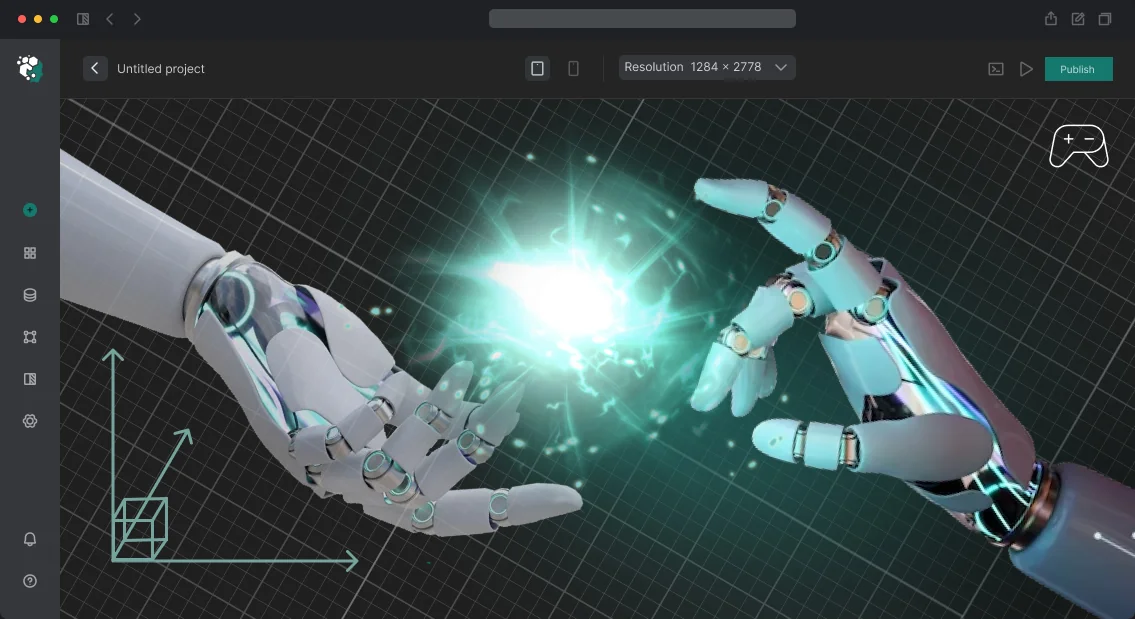
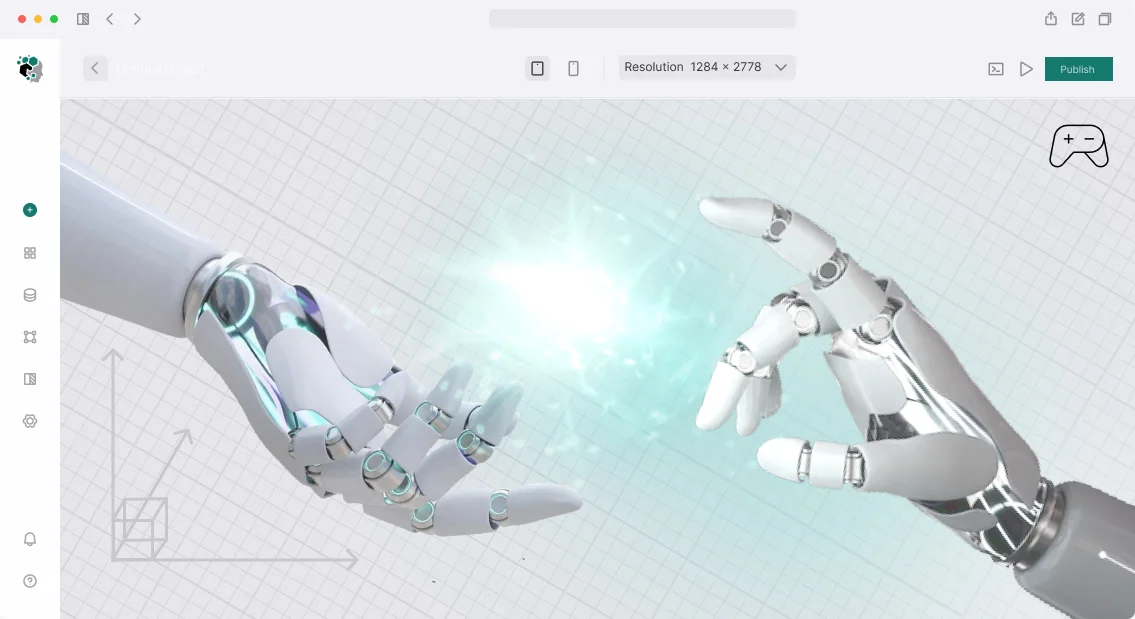
The reason is not the model or the animation, but how the surface reacts to light. PBR materials for AR describe the behavior of a material according to physical laws: how metal glints, how light scatters in fabric, how it refracts in glass. Without this, any object on screen looks drawn, no matter how much detail is put into it.
With physically correct graphics, the product behaves like a real one: it changes appearance when rotated, reflects the light of the room, casts a plausible shadow.
Realistic product visualization removes the main objection — “one thing in the photo, another in real life.” The customer decides faster, and the share of returns and support requests decreases.
We create such materials for your product range: we work with real samples, set up lighting for display scenarios, and check how the product looks on inexpensive phones, not only on flagship ones. The client gets a catalog that is trusted from any device.
What a business gets from believable graphics
Physically accurate graphics in augmented reality affect not the “wow effect” but the purchase decision.
When a product looks and behaves as in life — correct highlights, fabric density, packaging weight, reflections on metal — the customer understands faster that this is exactly what they need and doubts less. PBR materials in AR are exactly for this: they provide a familiar image instead of “plastic” gloss.
The first benefit is engagement. A visitor stays longer on the product page or at the showcase, examines the product from different angles, tries combinations, and returns to it later.
The second is brand recognition: careful visualization is remembered and makes people want to share it, and every such display works for the company without extra payment for advertising.
The third benefit is fewer questions and returns. When a client sees the real color, texture, and scale in advance, expectations match what will arrive in the parcel, and support is relieved from repetitive clarifications. This directly affects reputation and the share of repeat purchases.
The fourth is readiness for new sales channels. The same accurate product image works in an online store, on social media, and in an offline showcase: there is no need to redo content for each format or order new photo shoots.
The list of benefits is simple: a lively reaction from customers, higher engagement, brand recognition, fewer returns and questions, and freedom in sales channels.
AR content formats for the client's task
The format of AR content determines not the beauty of the image, but how quickly the client reaches a decision.
One business only needs a product page for a single item, another needs an AR showcase for an entire product range, and a third needs an interactive product presentation for negotiations. Below are typical scenarios and what each gives the client.
| Format | For whom | What it gives the client |
|---|---|---|
| Product page for a single item | A store with one key item | The customer “places” the product at home — fewer returns and support questions |
| AR showcase for products | Retail and marketplaces | The entire range in the customer's space — they browse the catalog longer, engagement is higher |
| Interactive product presentation | Manufacturing, corporate sales | A complex device is explained in a couple of minutes instead of an hour-long conversation with a manager |
| Presentation scenes | Exhibition stands, showrooms | Visitor attention and publication reach even after the event |
| Gamified activation | Promo and events | Visitors enter the zone themselves and stay in it longer than usual |
We start choosing a format for the task not with technologies, but with a question: what should change — the number of orders, the average order value, foot traffic to the stand? The answer determines the scale of the scene and the set of products.
We create content in open formats — for example, glTF: the customer opens the showcase directly in a smartphone browser, without installing an app, and you are not tied to a single device.
If you are unsure between a product page and a full-fledged showcase, start with one product and look at customer behavior. We will advise where the format can be expanded and where it is excessive.
How the project goes: from task to launch
A transparent process is no less important than the result: you know in advance what happens at each stage, who makes decisions, and when the team reaches the launch of AR content.
Below is a typical route, the same for one interactive zone and for a series of scenes with PBR materials that must look accurate under any lighting.
- Brief and goals. We discuss the task in your terms: where the visitor will see the scene, what they should understand and remember, what reach and result you expect. We immediately fix the acceptance criteria — without them it is impossible to honestly accept the work.
- Development plan and timeline. We come back with an estimate, scope of work, and a calendar with milestones. You see how much time each block takes and at which stage your participation will be needed.
- Approval and prototype. We show how the scene will look and behave, and agree on the style and behavior of objects. Edits at this step are least expensive: we change the concept, not the finished product.
- Production. We assemble materials, animation, and interaction logic on professional equipment — you get a predictable result on the fleet of devices used by your visitors, not only on a test stand.
- Testing in real conditions. We run the scene on popular phone models under different lighting — from storefront to street. This way we see the same thing a guest will see and remove surprises before launch.
- AR content launch. We place the scene, train your team, and hand over instructions and source files. We plan the launch around an event, opening, or season so as not to lose the audience's attention.
- Support. After the start, we monitor performance, update content, and respond promptly to requests — the collaboration does not end on the day the project is delivered.
What is included in the delivery and what you will receive
We do not hand over the project as an “archive on a flash drive” and do not leave you to figure out someone else's files.
The delivery includes everything needed for AR scenes with correct PBR materials to continue working for you — including without our involvement, if you decide to run the project on your own.
- Ready-to-launch AR scenes with configured PBR materials — they look correct on Android and iPhone devices right away, without modifications on your side.
- Source files of materials, models, and textures in open formats — the files can be read in any relevant editor, and you are not tied to us as the sole contractor.
- Rights to all created content transfer to you in full: advertising, events, products, any platforms, and any volumes without additional approvals.
- A clear instruction for your team — how to update scenes, change shades, and add new products on your own.
- Employee training: one or two practical sessions, after which your specialists confidently make edits themselves.
- Transfer of the project and access — all accounts, domains, and services are registered to your company, rather than remaining “with the developer.”
- Warranty support period — if something behaves unexpectedly after launch, we deal with it, not you.
In effect, you receive not a set of files, but a working tool that can be shown to clients, developed further, and handed over within the company.
We fix the scope of delivery in the contract in advance, so that at the finish there are no questions about what is included and what is a separate matter.
Case study: how accurate graphics increased engagement
The client is the furniture brand WoodLine, which was bringing products into an AR showcase so that the customer could “try on” a sofa or armchair in their room before talking to a manager and come prepared.
The task sounded simple: present the furniture convincingly enough that the choice happens in the showcase, not in chat.
The limitation was in the presentation: surfaces looked conventional. Fabric lost its pile, wood resembled plastic, and the person did not believe that the item would be the same at home.
We rebuilt the showcase on PBR materials for AR — the surfaces began to behave as in a showroom: velvet absorbs light, lacquer glints at an angle, metal reflects its surroundings.
The result was measured by visitor behavior, not by the beauty of the shots. The average time a client spends in the showcase almost doubled.
The share of add-to-cart actions after viewing a product increased by a third, and inquiries with an already assembled set became two and a half times more numerous. The share of those who return to the showcase before a repeat purchase also grew.
The client noted the main thing: managers stopped explaining “how it actually looks” — the client came with a formed choice. A few months later, the brand returned with an expansion: they added a new collection and a section with finish options. For us, such projects are about trust in the product, not about graphics by itself.
What if we have non-standard products and requirements?
Yes, and this is exactly the case where general templates do not work. Transparent glass, glossy lacquer, polished metal, fuzzy fabric, or small hardware behave differently in augmented reality, and one set of settings for all cases will not help here.
That is why we first analyze what your product consists of and create PBR materials for each group separately.
Complex surfaces are not an exception for us, but an ordinary task.
For shiny and transparent materials, we configure reflections and refraction so that the object reads as three-dimensional and does not look like a flat sticker; for pile and small details, we configure softness and a readable texture so that the customer can see it from arm's length.
PBR materials in AR are needed exactly for this: light and highlights on the product behave predictably at any camera rotation.
If the category is non-standard — the product cannot be placed on a flat surface or must be viewed only from a certain angle — we select a solution for the category rather than forcing it into a scenario convenient for us.
We transfer brand colors, packaging texture, and the character of the presentation into the model so that the showcase remains recognizable.
Before launch, you see how the product behaves from real angles and under different lighting, and you can ask to adjust a detail before the project goes into production.
Describe the task — we will come back with an estimate and a plan and honestly say what will produce results specifically in your product range.
Common client doubts before starting
Before starting, almost every client asks the same questions — and that is normal, especially when it comes to PBR materials for AR. Below are honest answers about reliability, support, and changes after launch, without promises that “everything will be perfect.”
What if something breaks after launch?
We build scenes so that updating one model or material does not break the others. If a problem does appear, a procedure applies: response within one business day and a clear remediation order. You always know whom to contact and when you will receive an answer.
Will it lag on customers' phones?
We test materials and models on real devices — from budget to flagship, the ones your audience has. What matters to us is not a perfect image on one phone, but a stable appearance and smooth performance for most customers. On a weak device, the scenario is carefully simplified rather than falling apart.
Will everything have to be redone when the collection changes?
No. We build in headroom: colors, finishes, textures, and new items can be replaced without rebuilding the scenario. A seasonal update of the product range does not turn into a new project with new deadlines.
What about support after launch?
After delivery, we do not disappear: we help with updates, monitor performance, and advise your team on edits. Many clients return with new scenarios — it is easier for them because the foundation is already built.
Let's discuss the task and come back with a plan and estimate
To understand what visual level your product needs, you do not need to prepare a technical specification dozens of pages long. Describe the task in two or three sentences: what the product is, who uses it, and what effect you expect from the graphics. We will analyze it together with you and come back with specifics.
After you contact us, you receive:
- an analysis of the task: where physically correct materials provide an advantage, and where you can get by more simply and with shorter timelines;
- a project plan and stage-by-stage timelines — from preparing models to assembly and launch;
- an estimate of the scope of work: what is included in the first version, and what is reasonable to postpone to the next;
- the team composition and areas of responsibility — you understand in advance who is responsible for what;
- a proposal for a suitable format: a standalone scene, an augmented reality mode inside an app, or an extension of an existing product;
- support options after launch and the procedure for further work when new models or scenes appear.
There is no need to prepare anything in advance — the brief takes one conversation. If you already have models, existing work, or a prototype, we will see what can be reused so that you do not pay for the same work twice.
To discuss the task, leave a request in the way that is convenient for you. We will come back with a plan, timelines, and an estimate of the scope of work — and you will be able to make a decision based on facts, not promises.