

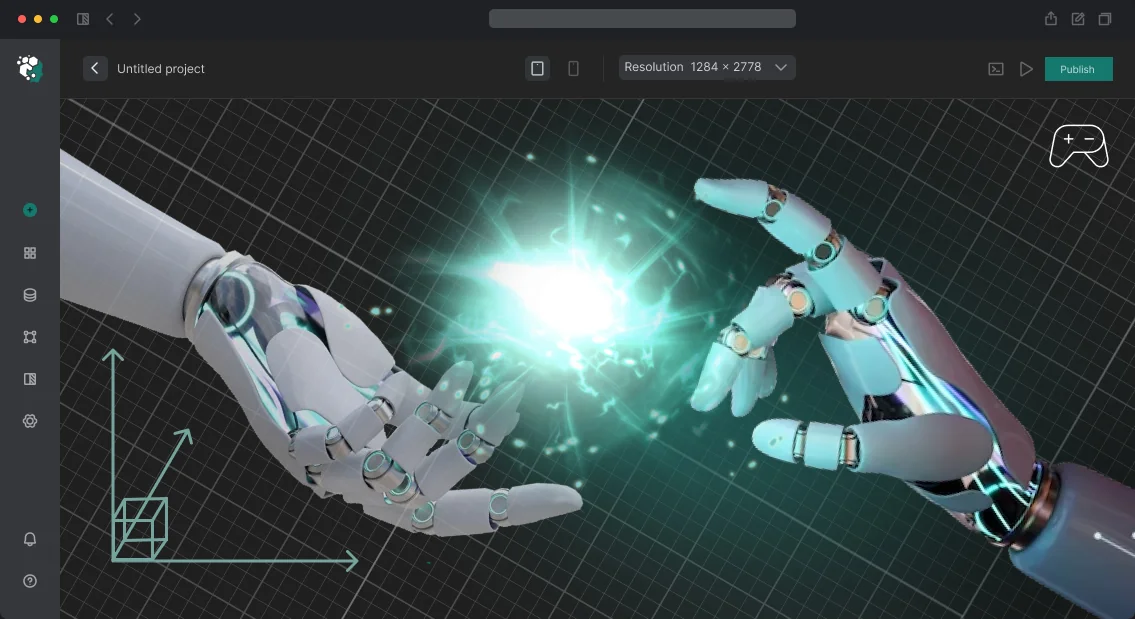


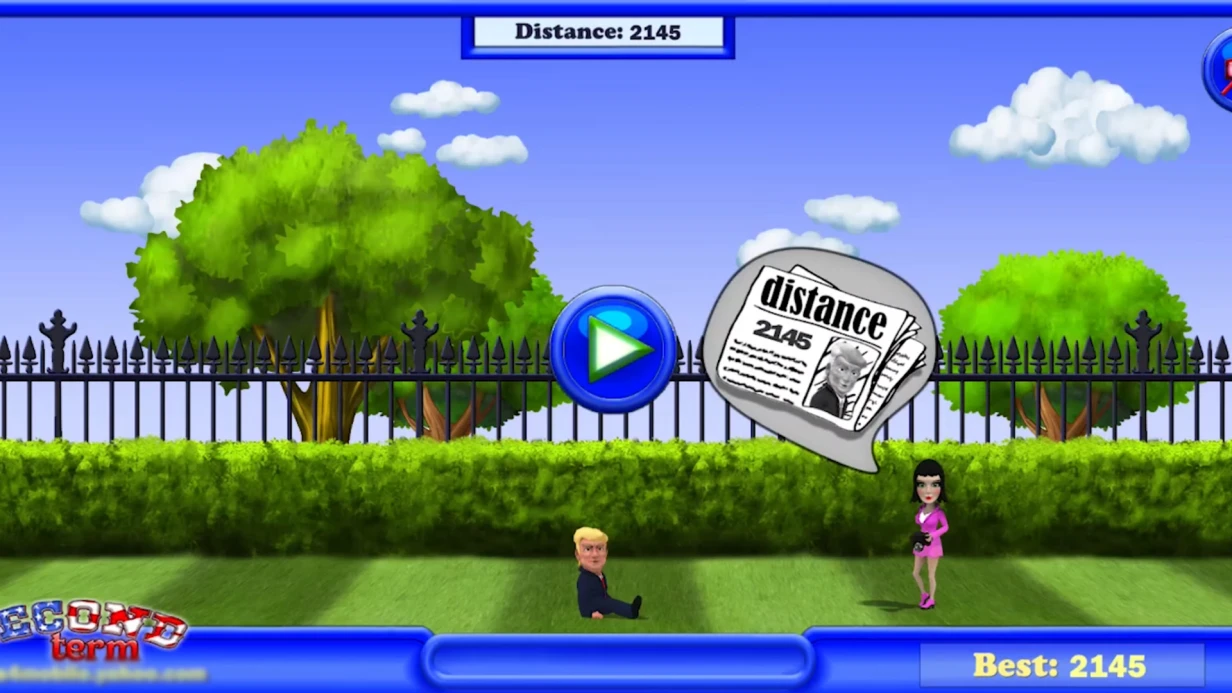
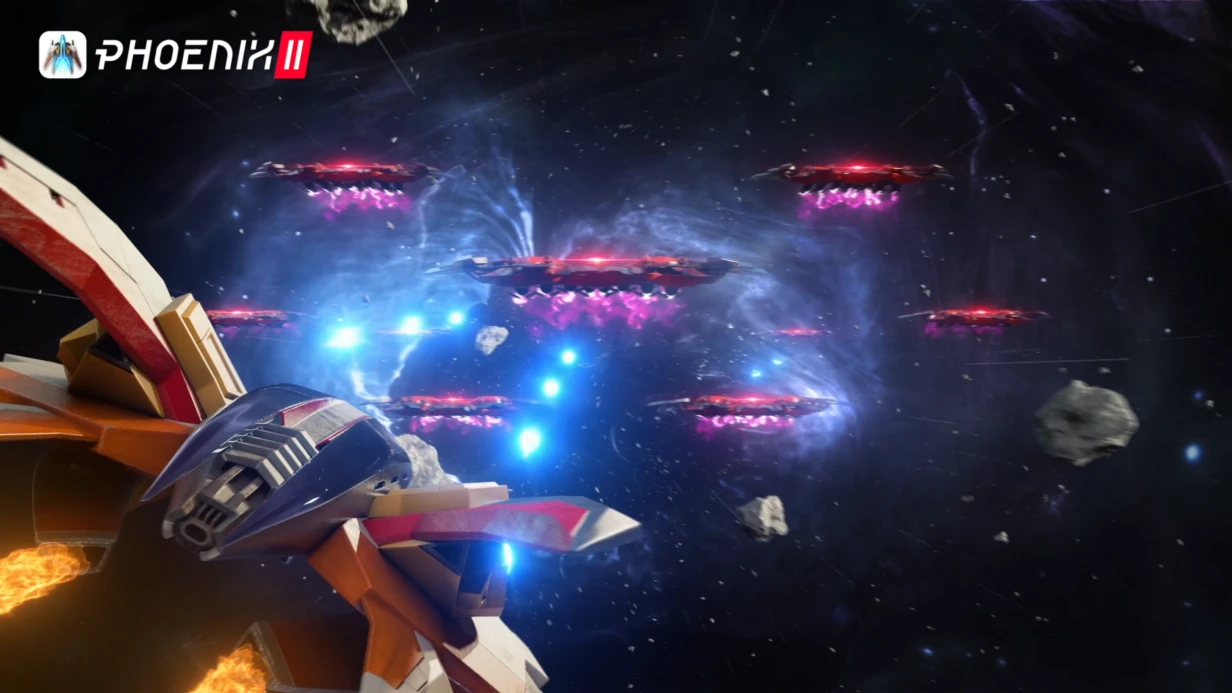
Clients leave for competitors: why a WebXR game solves the problem
Visitors come for an experience, but get a standard menu, a boring presentation, and a queue for the photo zone. Ten minutes later they lose interest — and leave for competitors who already have an interactive attraction. Without guest engagement, any format loses the main thing: attention and the desire to return.
A WebXR game changes this. The guest does not just watch, they become a participant: they complete a challenge, search for items, and compete with friends for a record. This holds attention for 5–10 minutes — just enough time to take photos, discuss, and share on social media. This is how an interactive attraction turns an ordinary visit into an event people talk about.
For business, this works to attract customers without extra advertising spend. Every participant brings up to three mentions in stories and posts, and the guests themselves become “living” content.
Moreover, a WebXR game requires no app installation or special equipment on the visitor’s side — just a link and a smartphone. This lowers the barrier to entry and removes obstacles that frighten audiences away.
Such a solution delivers measurable results: higher reach, longer dwell time, more repeat visits. A business VR game pays for itself within the first month through the number of sessions and a higher average check. While competitors are thinking, you capture guests’ attention and make them talk about your brand.
We develop WebXR games turnkey — from idea to launch. We handle the script, graphics, technical implementation, and support so you get a ready-made customer acquisition tool. All you have to do is give guests the link — and watch interest in your business grow.
5 advantages of VR development for your event
Want your event to be remembered for a long time? A turnkey VR game turns an ordinary event into a unique experience. Our team has been developing VR entertainment for business for over 10 years — from corporate events to exhibitions. Here are five proven advantages you get.
-
Increased brand awareness — guests photograph and record themselves in virtual reality and share it on social media. Every post is free advertising for your event and company. Based on our projects, brand mentions on social media double after a VR zone.
-
Lead generation right during the game — a contact capture mechanism is built into the VR scenario: after the finale, the guest leaves an email or phone number. On average, 40–50% of participants agree to leave their data because they want to get results or a bonus. You receive a ready-made lead list on the day of the event.
-
The effect of a VR event: guests stay longer — the average VR session takes 3–5 minutes, but a queue forms around the zone. People wait 15–20 minutes while watching the screens, and they spend that time in the atmosphere of your brand. More time at the venue means higher conversion to the desired action.
-
Increased customer loyalty — the positive emotions from VR are associated with your company. Guests perceive the brand as modern and focused on experiences. Based on our clients’ experience, repeat inquiries from such visitors are 30–40% higher than from ordinary guests.
-
A reason for media and bloggers to show up — a non-standard activity attracts press attention. Journalists come on their own to film a story, and bloggers publish reviews. These are additional free media mentions that keep working for your image long after the event.
Turnkey VR game from our team — this is not just entertainment, but a marketing tool. We handle development, equipment, and technical support. All you need to do is invite guests and get the result.
VR game formats tailored to client needs
Clients come with different tasks: one needs a VR attraction for a single exhibition, another wants a mobile game for a promo, and someone else is building a permanent entertainment zone.
The format determines the outcome: attract a crowd, keep guests engaged, or generate revenue on a regular basis. We choose the format based on the business goal so you don’t waste your budget.
We develop VR games from mobile WebXR solutions that launch directly in a phone’s browser without app installation or extra equipment, to stationary turnkey VR attractions. Compare the formats across typical scenarios.
VR game formats by task
| Format | For whom | What it gives the client |
|---|---|---|
| Mobile WebXR VR game | Promotions, mass events | Guests play from smartphones without queues and app installation — wide reach with minimal investment |
| VR attraction for exhibitions | Booths, conferences | Gathers visitor traffic and keeps them at the booth, creates reasons for photos and discussions |
| Stationary VR zone | Showrooms, shopping malls, entertainment centers | Regular flow of guests, repeat visits, steady revenue from the zone |
| Corporate VR game | Company celebrations, team building | A shared vivid experience for the team and an event people talk about afterward |
The mobile format is for quick launch and mass reach; the stationary zone is for a systemic task that pays off regularly. We start from your goal: we calculate the audience, plan the zone layout, and propose a format with a measurable result — not just an impressive picture.
We design every project around your audience, plan the logistics, and support the launch. Development time ranges from a few weeks to two months depending on the format; final dates are fixed in the contract.
Stages of WebXR project development
A transparent development process is what sets a reliable contractor apart. You know in advance the stages, VR project timeline, and the review point for each interim version. This approach eliminates surprises at the final stage and lets you control the budget.
-
Brief and immersion in the task. You tell us the goals of the VR solution: who the audience is, what result the business needs.
We ask clarifying questions, record the requirements, and propose implementation options for your scenario — from employee training to an interactive customer booth.
-
Concept and scenario. We define the game mechanics, story line, and visual style. At this stage, you see how the game will engage the user and approve the idea before resources are invested in development.
-
Testable prototype. We build a working sample with the core mechanics. This allows you to “touch” the project, evaluate the ease of control, and quickly adjust details. VR game approval happens here — using a tangible example, not a description.
-
Game development. We fill the project with graphics, sound, levels, and logic. We conduct regular demos: you see progress and make changes without waiting for the end of the project.
-
Final testing. We verify stability on all target devices and fine-tune the interface and user experience. You receive a ready-made solution already tested with real users.
-
VR solution launch. We deploy the project on your sites — online or offline, help with integration, and train your team. After launch, we stay in touch and refine functionality as needed.
We have seen more than a hundred projects through from idea to commercial launch. That is why every stage has a clear timeline and a clear result — you always know where the work stands.
What is included in a VR solution delivery
When you buy a ready-made solution, you get not just a game but a working business tool. We remove the need to hire a separate team and figure out technical details — you receive a complete package that can be launched immediately after handover.
Here is what is included in a turnkey VR project delivery:
- A ready-made game for your scenario — the story, logic, and graphics are adapted to your task: employee training, product presentation, or visitor entertainment.
- A clear instruction manual — a concise guide for staff: how to switch it on, what to press, and how to handle standard situations.
- Training for your employees — we run an online session after which an administrator or manager can launch the project independently and assist guests.
- Technical support for the first months of operation — we answer questions, help with updates and minor fixes until your team is fully comfortable.
- Administrative interface — a simple screen for launching sessions and tracking activity that any employee can understand without IT experience.
- Documentation for management — a description of capabilities, project contents, and procedures for internal reporting.
- Content rights transfer — you take full ownership of the project and can use it without restrictions or monthly payments.
The package is designed so you do not depend on the developer in your daily work. You get the technology, trained people, and support — all that remains is to switch it on and apply it to your business.
The list can be expanded if needed: adding new scenarios, extra graphics, or integration with your internal accounting system — all of this is discussed separately and does not require rebuilding the core project.
Case study: how WebXR strengthened a brand at an exhibition
At exhibitions, a visitor walks past dozens of booths in one day and remembers only a few. Standard promo videos and brochures no longer hold attention — the gaze slides past, and a potential client walks off to a competitor. We offered the client a different format: instead of “look and move on” — “play and stay.”
The client, an industrial equipment manufacturer, came with the task of standing out at an industry exhibition.
Together with their marketing team, we created a WebXR game: a visitor put on a headset, went through a short scenario, and “assembled” a virtual product sample in a couple of minutes.
This was not a game for the sake of a game — it introduced the key product features in an interactive way and left guests with a feeling of personal contact with the brand.
Numbers that made it into the report
We measured the results using booth data and the client’s CRM. The average time at the booth grew from thirty seconds to six minutes — guests waited in line to try the game.
Over the three exhibition days, we collected three times more contacts than at a similar booth with a classic presentation: 70+ leads, 80% of which entered the qualified funnel.
After the event, the client signed three deals with customers who first learned about the product through VR.
But the main indicator is the repeat order. A year later, the client came back asking for an updated version of the game for the next exhibition.
This means the WebXR format paid off not only in numbers but also in operational business results: lower costs for brochure printing, more live conversations with the right audience, and a new tool for training booth managers.
Every time we tell this case study, doubts like “will people even be interested” disappear. An exhibition is a race for attention, and a WebXR VR game gives the brand those very minutes that turn a passerby into a lead.
How to choose the right VR game format?
The right VR game format is determined not by equipment specifications but by the goals of your event. If the goal is to capture maximum attention and emotion from guests, you need a vivid game with a simple scenario that is easy to join from the very first step.
If product presentation or training matters more, we build the scenario around your task — with branding and key messages.
The second factor is the area and layout of the space. For a small lobby or meeting room, a single-player or two-player game without active movement works better — guests will not bump into each other.
For a spacious hall or outdoor area, team formats with a large play zone are suitable. This also determines how many people can play simultaneously and how quickly a queue will form.
The VR project budget determines the scale: the number of simultaneously operating units, the length of one session, and the complexity of the virtual world.
We help you choose a solution that gives the maximum return within your budget — from a compact format with 1–2 units to a full zone with a queue and session schedule.
The game itself opens via a link in the browser, and guests do not need to install apps — they enter the virtual world in seconds.
Finally, think about visitor flow: if the event will have high traffic, plan short 3–5 minute sessions so as many people as possible can try it.
For VIP guests or closed events, you can offer a deeper 10–15 minute experience — this creates a special reason for conversation and memorable photos.
We will take all these parameters into account at the design stage and propose a VR game format that fits your event precisely.
We will break down your goals, measure the available space, and offer a cost-effective solution — so you get a predictable result without unnecessary spending.
Common doubts about VR game development
Any new technology in business raises questions — and VR development is no exception. Clients worry that the game will be “rough,” will not run on visitors’ devices, or will drag on for months without a clear result.
These doubts are justified if you work with an inexperienced contractor. But over ten years, we have delivered dozens of virtual reality projects and know how to turn risks into a manageable process. Below we break down the main fears — and show how they are addressed in practice.
What if the VR game lags or freezes at the most important moment?
Stability is a basic guarantee that we write into the contract. The game undergoes mandatory testing on different devices before launch, and on the day of the event our specialist monitors everything in real time.
For you, this means peace of mind: the presentation will go smoothly, and guests will get exactly the impression they came for.
How long will development take, and will it derail our deadlines?
The average turnkey project takes 2–4 weeks at standard complexity. We work on a transparent staged schedule: we fix the stages and interim results so you can see progress and adjust tasks.
If the deadline is critical, we will offer an accelerated launch solution without sacrificing quality.
How safe is the VR game for us and our clients?
We take responsibility for two sides of safety. The first is technical: data from the device is not shared with third parties, everything runs on a secure server architecture.
The second is physical: we design the scenario so that the game does not cause discomfort even for beginners.
For you, this means no reputational risks and full compliance with audience expectations.
What if guests have incompatible devices — will they still be able to play?
This is exactly where WebXR provides a decisive advantage. The game launches right in the browser — the visitor does not need to download, install, or configure anything. Most modern smartphones, tablets, and VR headsets are supported.
This means you do not lose guests because of technical barriers — every participant jumps into the game in seconds.
Order turnkey WebXR development
Placing an order for turnkey WebXR development is simple: just describe your task — employee training, an interactive catalog, a virtual showroom, or entertainment for guests. From there, we take over the entire cycle: idea, scenario, design, development, testing, and launch. You get a ready-made VR business solution, not an abstract technical specification.
By ordering a VR cost calculation, you immediately see the key points:
- Transparent estimate: the price is fixed at the contract stage, with no extra payments during the project.
- Accurate timelines with dates for each stage — you know when you will get the result.
- Format selection for your task: a single-player trainer, a group session, or an event attraction.
- A prototype before launch — you evaluate the product before most of the budget goes into development.
- A demo on your device or online — without risk to your reputation or investment.
- Technical support and the possibility of refinements after project delivery.
To order VR development, leave a request through the form — within one business day we will contact you, clarify the details, and prepare a commercial proposal. It will include a solution description, stages, team composition, and the final cost.
We work remotely and have already launched projects for various industries — from staff training to promo zones at events. So your virtual venue will be stable, user-friendly, and will not require you to manage complex settings.
Fill out the form — and get a VR cost calculation with an accurate estimate. It is not binding, but you will know how to solve your task quickly and predictably.