

The Surgeon's Fear in Aesthetic Surgery — Losses for the Clinic
Every surgeon in aesthetic medicine inevitably encounters moments of uncertainty: a new technique, a complex case, a first independent consultation.
At such moments, the price of a mistake is measured not only in time and materials — it includes patient health, the specialist’s reputation, and the clinic’s financial well-being.
Surgeon errors, even rare ones, become internal reviews and sometimes public stories that spread across reviews and social media.
For a clinic, the risks of aesthetic surgery extend far beyond the operating room. One unsuccessful result — and the flow of appointments drops, patients go to competitors, and restoring trust takes months.
A clinic’s reputation is its most expensive asset, and it directly depends on the confident skills of every specialist. But how can you teach a doctor to act flawlessly when every training session on a real patient is a risk?
Traditional training — lectures, seminars, observing senior colleagues — provides theory but not muscle memory. The doctor knows what to do, but at the critical moment the hand trembles.
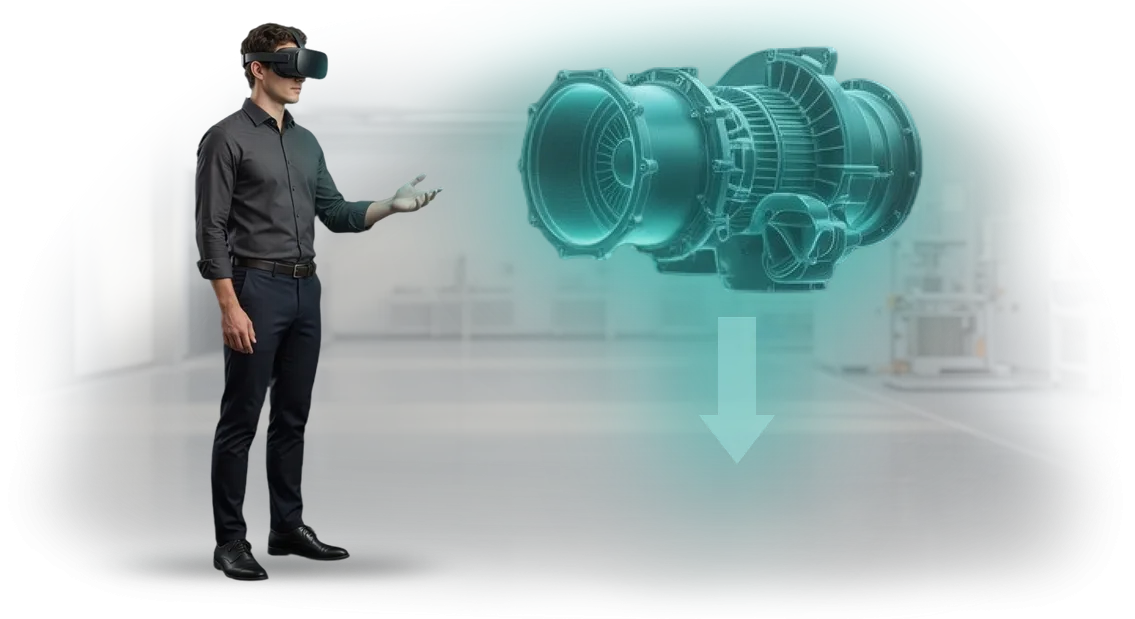
We solve this problem: a VR simulator lets the surgeon repeatedly practice complex scenarios without consequences. The virtual operating room replicates real cases, and a mistake costs only a restart of the simulation, not the clinic’s reputation. Thus fear turns into confidence, and confidence into consistently high-quality services.
What VR Training Offers: Skills, Safety, Patient Trust
Every clinic wants its surgeons to remain the best in the profession, but classical training involves long courses and time away from practice. our team VR simulators allow doctors to gain experience in a safe environment without slowing down the clinic’s workflow.
Professional Development for Surgeons
Complex techniques can be practiced dozens of times until movements become automatic. This shortens preparation time and frees up time for real patient appointments.
The clinic gets a unified standard of skill: all surgeons go through the same scenarios, the team’s level is equalized, and the quality of services becomes predictable.
Patient Safety
Mistakes on the simulator have no consequences. A surgeon can train on rare and complex cases that are difficult to reproduce in real practice — and be prepared for them in the operating room.
Reducing the risk of complications protects both the patient and the clinic’s reputation. Patients are more at ease going into surgery when they know the surgeon has already practiced the scenario many times.
Trust for the Clinic
Regular VR training is a tangible sign of commitment to quality. Tell patients about it on your website and social media: patients choose clinics that invest in safety, not just claim it.
Trust yields concrete results: growth in referrals and repeat visits. The clinic gains a competitive advantage in the highly competitive field of aesthetic medicine.
We will help design a VR program tailored to your clinic’s needs — from practicing basic maneuvers to proprietary techniques. Contact us to discuss the details.
VR Training Formats for Aesthetic Surgery Tailored to Your Objective
Training in aesthetic surgery leaves no room for amateurism: a mistake costs the patient and the clinic’s reputation dearly.
A surgeon needs to refine precision work, a nurse needs synchronization with the doctor, and the entire team needs confidence in rare and complex situations.
None of these skills are developed through lectures, which is why we develop VR formats for the specific objective of each clinic.
Each format addresses its own business goal: preparing an individual specialist, building teamwork, or practicing complex cases. The table below shows three basic options that can be combined with each other.
| Format | For whom | What the client gains |
|---|---|---|
| Individual virtual simulator | Surgeons learning a new technique or a rarely performed operation | Practicing technique without risk to the patient. The surgeon makes movements automatic — operation time and number of errors decrease |
| Team VR course | The team: surgeon, assistant, nurse, anesthesiologist | Practicing coordination and role distribution. Real operations become faster and calmer, and the number of unexpected situations decreases |
| Complex case simulation | Experienced specialists, an entire department | Reviewing rare complications and non-standard situations without consequences. The team encounters them prepared; the clinic protects its reputation and avoids legal risks |
We will select a format for your team and task: from a single simulator to a full support program. Leave a request — we will show you a demo and propose a scenario for your clinic.
How We Build a VR Training Program for Aesthetic Surgery
We manage every VR training project for aesthetic surgery according to a transparent scheme: you always see the current stage and the result. The process is designed to reduce risks and launch the simulator in the clinic faster — from brief to ongoing support.
- Brief and clinic immersion. We study your techniques and typical surgeon errors. You receive a technical specification aligned with your standards.
- Scenario development. Together with leading surgeons, we describe training situations: from operation planning to managing complications.
- Prototype of the key module. We assemble a working fragment of the simulator — you see the future training and make edits before full development.
- Full program development. We create all modules, an assessment system, and a report for each employee. We use the professional Unity platform — stable graphics and precise action tracking.
- Testing with surgeons. A pilot group, feedback, and refinement. The simulator must be accepted by doctors.
- Implementation and administrator training. We configure the equipment and train your instructors to run sessions.
- Post-launch support. We update scenarios to match new techniques, provide technical support, and review training results.
What the Project Includes: A Complete Package for Your Clinic
The complete package is built around the specific needs of your clinic — so training can be launched immediately after handover, without involving subcontractors or IT engineers.
The project includes not “files” but a ready-made system: scenarios, methodology, instructions, and support.
- Ready-made VR simulator — fully configured training scenarios adapted to your clinic’s procedures. Surgeons practice actions in a realistic environment without risk to patients or the surgery schedule.
- Training program — a structured course with a sequence of steps, goals, and assessment criteria. It shows how to integrate sessions into regular staff training and monitor progress.
- Instructor guide — step-by-step instructions for the staff member who will run sessions: from scenario setup to reviewing participants’ mistakes. Minimum theory, maximum practical value.
- Quick reference for surgeons — a short guide for a fast start: how to put on the headset, choose a scenario, and end the session. It removes fear of new technology and speeds up adaptation.
- Results tracking system — clear data on performance: completion time, errors made, and dynamics for each employee. Convenient for quality control and management decisions.
- Integration materials — recommendations on equipment placement, training schedules, and fitting sessions into surgeons’ working calendars. Helps establish the process without disrupting core operational tasks.
- Technical support and maintenance — consultations, content updates, and assistance when questions arise. We guarantee that the system will operate reliably and grow alongside your clinic.
Thus, you receive a complete training process: the deliverable package, training program, and guides — everything needed to work independently. The team implements the system and stays in touch until the staff confidently uses the simulator in everyday practice.
Clinic Results After Implementing a VR Simulator: −40% Errors
Classical training in aesthetic surgery hits a wall: practicing techniques on patients is risky, and mannequins do not convey the realism of tissue. A young doctor’s mistake costs the clinic its reputation and additional expenses to correct the consequences.
We proposed a different path — a VR environment with tactile feedback, where a surgeon practices movements to automaticity without harming anyone.
The first to implement the simulator was the clinic network Estetik Med. Over three months, forty resident surgeons completed a course of twenty scenarios: from injection techniques to complex lifts.
The system recorded every movement and provided objective assessment instead of a mentor’s subjective opinion.
The final statistics showed: the number of errors in standard procedures dropped by 40%, and the average operation time decreased by a quarter — due to confident movements and the absence of unnecessary actions.
Most importantly, the onboarding process itself changed. Residents who previously “matured” to independent practice over six months were working after only two months. Mentors stopped spending hours on basic explanations and focused on reviewing complex cases.
The clinic gained a reproducible training standard that does not depend on a particular teacher’s experience.
After the pilot, the clinic ordered simulator expansions for two branches and included the VR course in its annual training program. A 40% reduction in errors is not a promise but a confirmed result, achieved without risk to patients. We are ready to implement the same approach in your clinic, adapting the scenarios to your methods.
How to Choose a VR Training Format for Your Clinic’s Goals?
Every clinic has its own goals: one needs to train young surgeons from scratch, another needs to refine the technique of a rare or complex procedure among experienced staff.
A universal “single format” does not exist, which is why an individual approach is necessary — selection is based on your situation, the surgeons’ skill level, and specific areas of work.
If the goal is basic professional training, a full scenario fits best: the doctor consistently progresses through stages from diagnosis to completion of the intervention, practices the action algorithm, and makes it automatic.
When targeted gaps need to be addressed — for example, practicing complications or non-standard anatomical cases — short focused modules that can be repeated without taking time away from work are more effective.
For coordinated department work, there are team simulators: the doctor, nurses, and assistants interact in a shared simulation.
This option helps fine-tune role distribution, communication, and reaction speed — things that cannot be seen in video recordings and are difficult to practice on a live patient without risk.
We start with a short diagnostics phase: we study your procedures, staff skill levels, and business goals — reducing onboarding time, standardizing technique, or decreasing errors. Then we propose one format or a combination, expanding as your clinic grows.
You get not a “showcase product” but a tool tailored to your team’s objectives, and you understand exactly what the work involves and what benefits it will bring.
Common Clinic Concerns About VR Training — Addressed
Every clinic asks the same questions before implementing a VR simulator: how expensive is it, will training disrupt operations, and can doctors handle the new technology? Below we address the most frequent objections — without technical details, just the essentials.
Development cost is too high — is there an option for our budget?
Cost depends on the scenario and the number of modules. For one specific procedure, a streamlined simulator can be created, which will be noticeably cheaper than a full library.
At the same time, it pays for itself faster than it seems: fewer errors during training, greater surgeon confidence, and higher patient loyalty.
We fix the exact amount at the brief stage and do not exceed it during the work. You always know what you are paying for and can choose only the modules your clinic actually needs.
Implementation will take a lot of time and disrupt clinic operations?
No. Training does not require the operating room and happens without closing the clinic. Surgeons acquire skills in the virtual environment on a convenient schedule — for example, 30–40 minutes before a shift or between operations.
We choose equipment that fits your infrastructure: the simulator can run on the clinic’s existing computer with a VR headset connected. Setup takes one day, and launch does not change everyday processes.
Surgeons will not use the simulator — they have never worked with VR?
Modern VR headsets are wireless and set up in 5–10 minutes. Control is based on natural hand and head movements, so no special technical skills are required. Usually one short briefing is enough — then the doctor works independently.
The interface is as close to real surgery as possible: the doctor sees instruments, makes the same movements, and receives tactile cues. This lowers the entry barrier even for those who have never used VR.
How can we prove that training produced results?
The simulator collects objective analytics: exercise completion time, instrument movement trajectory, number of errors, and the points where the surgeon struggles. This data shows progress over time and helps the clinic director see the actual skill level of each specialist.
Based on these metrics, you can make decisions about operating room clearance and individual training plans. For the clinic, this is a transparent quality control tool without subjective assessments.
We understand that new technology brings responsibility. Therefore, we first offer a test scenario: you evaluate the simulator on one procedure, examine the metrics, and only then decide on scaling. This way, you get all the benefits of VR training without the risk of overpaying for unused modules.Book a VR Training Demonstration for Your Team
VR training for aesthetic surgery is difficult to evaluate through a description — you need to see it in action.
Come to a demonstration: we will show how surgeons and assistants work through skill practice scenarios, react to unexpected situations, and receive performance assessments.
You will see for yourself how training integrates into team preparation and boosts staff confidence before real procedures.
During the 30–40 minute demonstration, you will see:
- Realistic scenarios that replicate the stages of aesthetic operations — from marking to closing the incision.
- How the system records errors and shows exactly where additional practice is needed.
- Format options: virtual reality headsets for individual practice or a screen-based mode for group sessions.
- A plan for implementation in your clinic: training without leaving work, flexible scheduling, and progress tracking for each employee.
- Which skills are developed most quickly and how this affects team confidence in the operating room.
After the demonstration, you will receive a package of materials: example scenarios for your procedures, a summary of results from other clinics, and recommendations for launching a pilot group. All of this is part of a consultation, with no obligations and no technical details.
Leave a request — we will find a time for the demonstration, answer your questions, and show how VR training will strengthen your team. Your surgeons will gain a safe practice environment, and you will gain a tool that raises training quality and reduces risks in patient care.