

Fear of Errors in Pediatrics — the Main Problem of Young Doctors
A young pediatrician faces situations where the cost of a mistake is a child's health. Universities provide theory, but real practice comes only with years of work.
The result is uncertainty, fear of making decisions, and treatment delays that are especially critical in pediatrics.
Statistics confirm: most mistakes made by young doctors are related to rare clinical cases they never encountered during their residency. Research shows that about a third of such errors can be prevented through regular practice in a simulated environment.
Training skills in a safe environment makes it possible to practice action algorithms before meeting a real patient. This is why medical simulators are becoming the standard of professional training.
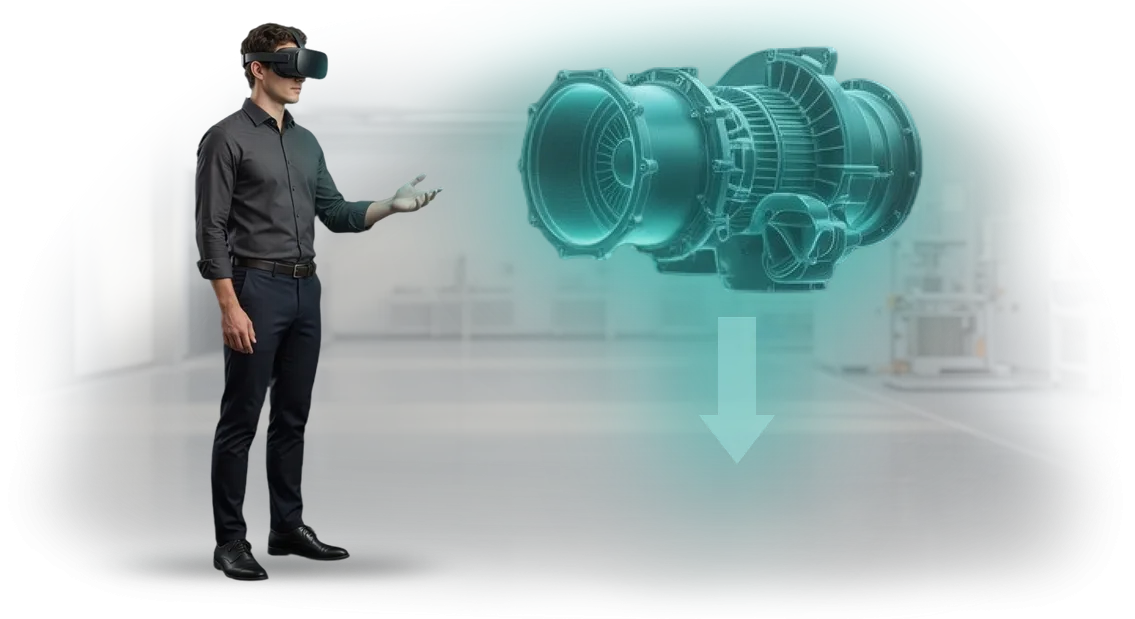
VR for doctors solves the problem systematically: it creates a realistic scenario where you can act without risk. The doctor repeats a complex case as many times as needed, receives feedback, and brings the actions to the point of automaticity.
This is not a replacement for live interaction with the patient, but a way to solidify algorithms before they are needed in reality.
Wehave been building such simulators for over 10 years. Our pediatric training programs include scenarios ranging from newborn examinations to emergency conditions, and each scenario has been reviewed by practicing doctors.
In the end, the client receives not just technology, but a tool for reducing medical errors and confidence for young staff.
What VR Training Gives to Medical Clinic Staff
VR training in pediatrics solves three clinic goals at once: doctors improve their qualifications without interrupting patient appointments, the clinic reduces operational risks, and patients receive more confident and attentive care.
It is not a replacement for practice, but a way to rehearse rare and complex cases before they occur in reality.
Doctor professional development becomes continuous, rather than “once a year at a conference.” In the virtual environment, a pediatrician practices newborn examinations, signs of rare pathologies, or conversations with anxious parents — as many times as needed and at a convenient time.
Knowledge is absorbed faster because the doctor works with their hands, rather than just reading a protocol.
Risk reduction is the second key benefit. A young specialist trains on a virtual patient and learns to notice early symptoms without putting real children in danger.
The clinic gets a uniform quality standard: every doctor acts according to a proven scheme, even when encountering a complex case for the first time.
Staff motivation also matters. Doctors appreciate it when an employer invests in their development: VR training is perceived as care and a modern bonus, not another mandatory lecture.
This reduces staff turnover and increases team loyalty, which directly affects the stability of the department's work.
Patients and parents also feel the difference. When a pediatrician is confident in their actions, they communicate more calmly with the family, less often prescribe unnecessary tests, and make more accurate diagnoses.
Satisfied parents recommend the clinic to their acquaintances — this is how staff training translates into reputation growth and repeat visits.
Ultimately, VR simulators for pediatrics are an investment that pays off through service quality, doctor loyalty, and patient flow. The clinic gets trained staff without downtime and, most importantly, a safer environment for young patients.
VR Training Formats for Pediatrics: Choose According to Your Task
Training in pediatrics is limited: rare emergency cases cannot be practiced on patients, and young doctors' mistakes are costly. Classic lectures and tests do not build muscle memory for acting in a stressful situation.
This is why clinics are moving to simulation formats, where a first-person scenario can be safely experienced.
Wedesign VR training for the specific needs of each department: from routine outpatient appointments to newborn resuscitation. Below are formats that our clients already use.
The table will help you select the approach that fits your goal: standardize skills, speed up onboarding, or reduce staff stress.
| VR Simulator Format | For Whom | What It Gives the Clinic |
|---|---|---|
| Pediatric appointment simulation | Doctors and residents | Practicing examinations and diagnostics without risk to the patient, a uniform standard of actions |
| Emergency pediatrics | Intensive care specialists, on-duty teams | Actions in cases of anaphylaxis, seizures, respiratory arrest — practiced to automaticity |
| Parent communication training | Medical staff, administrators | Fewer conflicts, correct delivery of bad news, working with anxiety |
| Team training for medical staff | The entire department shift | Practicing role distribution and coordinated actions under time pressure |
The choice of format depends on the core pain point: if you need to raise the diagnostic level, we use appointment simulation; if you need to prepare for demanding shifts, we use emergency scenarios.
In every case, we adapt the scenario to your clinic's protocols and equipment, rather than using abstract foreign cases.
It is important that VR does not replace a mentor, but removes routine work from them: the doctor trains at a convenient time, and the results are immediately visible in statistics — for each attempt, it is possible to see exactly where the delay occurs. This makes it possible to build individual training plans without taking time away from work.
How the Development of a VR Simulator for Pediatrics Works
The stages of developing a VR simulator for pediatrics are structured so that the clinic controls the result. We work transparently: from the first brief to implementation, you take part in key decisions. Below are the main steps.
-
Development brief. We immerse ourselves in the task: we collect real cases from practice, identify the difficulties of young pediatricians, and define learning objectives. Together, we record the simulator's success criteria.
-
Methodological scenario. Expert doctors describe clinical cases, and we build interactive branches. Every decision changes the course of the scenario, just like in real life. We approve the level of detail and complexity.
-
Prototype and initial testing. We build a basic version with key scenes and logic. We show it to doctors, get feedback, and adjust the scenario before full development.
-
Full simulator development. We refine graphics, environment, and clinical details, and add action assessment. You see intermediate versions and control medical accuracy.
-
Testing with doctors. We conduct sessions with residents and mentors: we check the clarity of tasks, the correctness of algorithms, and the benefit to skills. We make final adjustments.
-
Implementation and support. We configure the simulator for your equipment and train staff. After launch, we update clinical cases and monitor operational stability.
What Is Included in the VR Solution Package for Pediatrics
A complete VR simulator package for pediatrics is not just a program, but a turnkey solution.
We put it together so that a medical center or educational institution only needs to launch the training: no lengthy setup, no additional purchases, and no dealing with technical details.
The delivery includes everything needed for a quick start and stable operation:
- Pediatric scenarios — standard clinical cases: from newborn examination to emergency situations. Basic skills and rare algorithms that are difficult to train in practice are practiced.
- Realistic content — virtual patients of different ages with correct anatomy and reactions. The staff member sees live dynamics of the condition, not an abstract picture.
- Methodological materials — instructor guides, assessment cards for the trainee's actions, and passing criteria. The instructor does not need to figure out how to integrate VR into the program.
- Staff instructions — simple guides for starting a session, working with equipment, and handling typical situations. A staff member can figure it out without lengthy training.
- Administrator training — we provide short preparation for those in charge: how to assign sessions, review results, and monitor group progress.
- Warranty support and updates — for the entire period of use. If something requires refinement, or new clinical recommendations appear, we update the scenarios and content.
- Adaptation to your protocols — if necessary, we integrate the clinic's internal standards and regulations directly into the training scenarios.
Such a package solves the main task — you get a working tool, not a “box” with software. One responsible employee oversees the process, while the rest simply complete the training and see their results.
Case Study: How a VR Simulator Reduced Errors at a Children's Clinic
The children's clinic Zdravitsa faced a problem typical of pediatrics: rare but critically important scenarios are difficult to practice in real life.
Young doctors and nurses had seen such cases in textbooks, but in real work they got lost — too much time was spent on decision-making, and some algorithms were performed with errors. The clinic's management was looking for a way to train staff without putting patients at risk.
How the Training Was Built
We developed a VR simulator with three scenarios: a pediatric appointment with an acute attack, response to an allergic reaction, and emergency care for airway obstruction.
Doctors would enter a virtual room where they needed to assess the patient's condition, choose the correct protocol, and perform procedures — with full feedback on every action.
Training was conducted in groups of 4-5 people, and each staff member practiced the scenario at least three times until the algorithm became automatic.
“Previously, the head of the department spent hours reviewing mistakes after real cases. Now most of the practice happens in a virtual environment — before the doctor even meets the patient. We saw a measurable result after the first month,” notes the clinic's department head.
Implementation Results
Two months after launching the simulator, the clinic recorded:
- a 37% reduction in the number of errors when practicing emergency protocols;
- a reduction in onboarding time for new staff from two weeks to five days;
- increased staff confidence — 92% of participants noted that they began to act more clearly in non-standard situations.
I would also like to note: the clinic's administration ordered a second module for outpatient appointments within a quarter, and a neighboring children's clinic contacted us after the results were presented at a city conference.
For us, the main indicator is not the number of installed simulators, but the fact that it really reduces errors and improves the quality of care for young patients.
How to Choose a VR Simulator for Pediatrics Based on Your Clinic's Needs?
Choosing a VR simulator for pediatrics starts not with price or model, but with the clinic's goals. Some need to practice communication with young patients, others need emergency actions, and still others need examination standards.
Therefore, we first determine exactly which skills the staff lack, and only then select the training format.
The key criterion is the realism of the child's behavior. A good VR simulator picks up the doctor's actions and reacts like a living patient: wariness, crying, unexpected movements during an examination.
This makes it possible to train complex scenarios again and again, without risk to real children and with instant feedback for the doctor. This is exactly how a skill becomes automatic.
Weselect VR training for the needs of your pediatric practice. We analyze typical situations — routine vaccination, newborn examination, emergency care — and create a simulator that demonstrates the work of a well-coordinated team.
As a result, the clinic gets a tool where new employees get up to speed faster and experienced staff maintain their qualifications.
It is important that the simulator easily integrates into the current training system and allows measuring each employee's progress.
Then choosing a VR simulator becomes a clear decision: you invest in confident staff actions, fewer mistakes, and calm young patients — which means investing in the clinic's reputation and growing parental trust.
Frequently Asked Questions About Implementing VR Training
Implementing VR training in pediatrics naturally raises questions among clinic managers and educational centers. Cost, compatibility with current processes, data security, and real benefits for doctors are the points where projects most often stumble. We address the main concerns so you can make a decision without uncertainty.
How much does a VR simulator for pediatrics cost?
The cost depends on the number of scenarios, the number of workstations, and the delivery format. We prepare an individual estimate after the brief and record all expenses in the budget — with no hidden payments.
The cost includes support, educational content updates, and technical assistance for the entire period of use.
Will it be difficult to integrate VR training into current processes?
The simulator adapts to the clinic's schedule and existing training system. To launch, one workstation with a basic computer and headset is enough — installation takes one day.
Staff go through a short briefing and can begin practicing skills during their first shift, without adding burden to mentors.
How is patient data security ensured?
In training scenarios, we do not use real personal data — only anonymized clinical cases. The simulator runs on the clinic's local network, and the information is stored on your servers.
This approach eliminates leaks and fully complies with healthcare institutions' requirements for data processing.
How effective is VR for pediatric training?
VR makes it possible to practice rare and complex cases without risk to young patients. The doctor works in a realistic environment where a mistake remains part of the learning process, not medical practice.
Our experience shows that after regular sessions, staff make decisions faster and perform emergency care algorithms with more confidence.
Ready to Discuss a VR Simulator for Your Clinic?
Leave a request, and we will assess within one business day how VR training can fit into your clinic's educational process. We work with clinics and medical training centers, so we take the specifics of pediatrics into account. This is not binding: first you get a picture of timelines and budget, then you make a decision.
After your inquiry, we go through the journey together with you:
- An expert call within one business day — we answer questions and clarify the tasks of the clinic and its training department.
- A preliminary estimate of cost and timelines for your scenario: number of scenarios, number of staff, complexity of procedures.
- A consultation on the format: we choose the type of simulator and figure out how it will fit into existing training.
- A commercial proposal with the scope of work, implementation stages, and a list of results.
- A demonstration of a similar solution or prototype for your task — before the main development begins.
- A plan for launching a pilot group, skill assessment criteria, and a format for staff feedback.
This way, you get complete clarity before signing a contract — without hidden work or unexpected additional payments.
A VR simulator for pediatrics pays off by reducing staff training time, lowering the risk of errors in real practice, and enabling a calmer entry into the profession for young specialists.
Shall we discuss your task? Leave a request to get an estimate and a commercial proposal. It will take a couple of minutes — from there, we take over the work.