

Why traffic police inspectors make mistakes in traditional training
Traditional training of front-line personnel is built on knowledge transfer: instructions, regulations, lectures, and exams. An employee memorizes the rules, but in real work encounters a completely different environment — noise, speed, ambiguous signals, time pressure.
This is when personnel errors surface: the inspector either acts by rote or becomes confused and makes an incorrect decision.
For a manager, the cost of such errors is high. This is not only unsafe actions on the road and risk to life, but also driver complaints, internal investigations, and damaged reputation of the unit.
Repeated briefings and disciplinary measures do not change the situation, because the skill is not reinforced under conditions close to real ones.
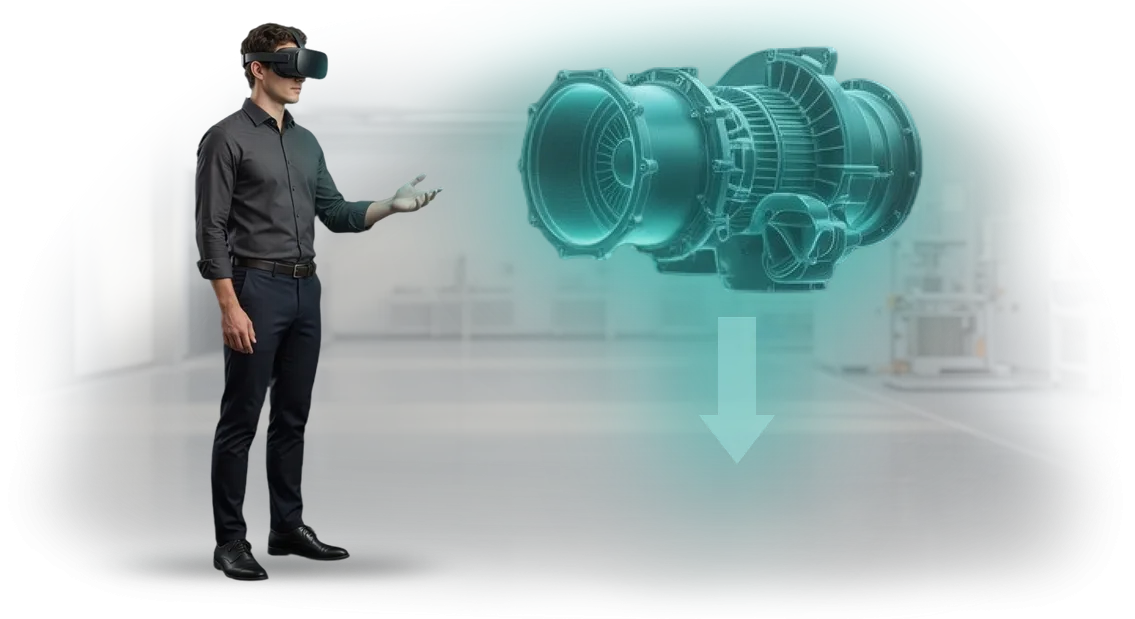
VR for training solves this problem differently. It immerses the employee in realistic scenarios — processing a road accident, communicating with an aggressive driver, stopping a car in dense traffic.
The inspector acts with their hands, makes decisions, and sees consequences that in reality could cost too much.
Such training of traffic police inspectors is built around repetition to automaticity. A mistake becomes a learning point: it is analyzed, corrected, and talked through, and then the trainee returns to the scenario and brings the action to the correct one.
As a result, a stable skill is formed, and road safety grows by reducing the number of incorrect decisions.
The manager gets a predictable result: the employee comes to the post not with theoretical knowledge, but with experience of actions in difficult situations.
It is precisely this kind of training of traffic police inspectors that a VR simulator built on real service scenarios provides. It reduces the load on mentors, shortens induction training time, and makes training quality independent of the instructor's personality.
What benefits does a company get from VR training
Traditional training of inspectors requires significant time expenditure, renting proving grounds, and participation of several instructors, while the result is difficult to measure.
VR training solves this task differently: an employee practices real road situations in a safe virtual environment, and the system records every action.
The manager sees objective indicators of training effectiveness — number of errors, reaction speed, readiness for specific scenarios.
The main benefit for business is reduced accident rate. An inspector who has repeatedly worked through difficult situations on the simulator acts more calmly and quickly in real life.
They are less likely to be involved in road accidents and less likely to create emergency situations on the road, which means the company incurs fewer losses and reputational risks.
VR training also improves discipline and standardizes personnel training. All employees go through the same scenarios, with no dependence on the experience of a particular instructor.
Assessment is objective and transparent: the manager always knows which employees are ready for independent work and who needs additional training.
A separate advantage is savings on training. There is no need to rent proving grounds, pay for trips, or pull people away from service for long courses.
Training takes place directly in the unit, and retraining costs a minimum — it is enough to update the virtual scenarios for new regulations or typical incidents.
Finally, the VR simulator speeds up onboarding of new employees into the position. Instead of weeks of theory and practice with a mentor — several intensive sessions, after which a newcomer acts confidently on the road.
As a result, the company gets a predictable level of training, rapid personnel replacement, and peace of mind about safety in every district.
VR/AR Training Formats for Traffic Police Inspectors: How to Choose
The choice of training format directly affects the speed of skill development and the inspector's behavior in real situations. Some tasks require full immersion, while others need targeted prompts right at the workplace. Let's look at three main formats so you can choose according to your goals and budget.
Main VR/AR Formats for Traffic Police Inspectors
| Format | For whom | What it gives the client |
|---|---|---|
| Full-immersion VR simulator | Inspectors who need to practice complex and rare situations without risk to others | Safe training in a realistic environment, automatic error recording, readiness for stressful situations |
| AR prompts at the workplace | New employees and experienced inspectors when regulations change | Instruction and monitoring of actions directly during the process, reducing errors without leaving duty |
| Mixed scenarios (VR + AR) | Units where it is important to connect theory with practice | End-to-end training from simulation to real actions, unified progress statistics for the entire team |
Full VR immersion is justified when the cost of error is high: stopping a violator, communicating with an aggressive driver, inspecting a suspicious vehicle. AR prompts are effective where knowledge must be applied daily without distraction from work.
The mixed format combines both approaches: the inspector first completes a virtual simulation, then reinforces the skill in a real environment with augmented reality support.
How to Choose for Your Task
We select the format for your task and budget, and during a pilot launch we demonstrate results on your scenarios. This way you see real value before full implementation and make a decision based on numbers, not promises.
Stages of VR training implementation: from brief to launch
Implementing VR training for traffic police officers is not a “black box,” but a transparent process with clear timelines and areas of responsibility.
We divided the work into seven stages so that you see results at every step, control the budget, and receive exactly what your training program needs.
- Brief and immersion in the task — we record the learning objectives, typical mistakes made by officers, and the formats already in use. You receive a project plan with scope of work and timelines, not general promises.
- Scenario and methodology design — together with your instructional designers, we describe the situations that an employee must practice: from communicating with a road user to processing documents. The output is a scenario that is clear to educators and managers.
- Prototype approval — we show what the simulator will look like and how to navigate it. You see the visuals and exercise logic before the main work begins, and you make edits without extra charges.
- VR simulator development — we build a complete solution: realistic situations, voice prompts, and an action assessment system. You receive a working simulator that runs on standard VR headsets and does not require special training for employees.
- Pilot testing with officers — your employees take the training, we collect feedback and adjust difficulty, wording, and timing. This removes the risks of “what if it doesn’t catch on” before a mass rollout.
- Training launch — we install the software, configure the headsets, and train administrators and your internal team. You receive a working training system on schedule, without downtime and without distracting staff from duty.
- Maintenance and technical support — we stay in touch after launch: update scenarios, add new situations, and help with any questions. We show statistics on employee results so that you can see progress and control training quality.
What is included in the VR course package for employees
You receive a ready-made kit for launching training — from scenarios to reporting. Nothing needs to be figured out or ordered separately: the package includes everything needed for work and result monitoring.
- Ready-made VR scenarios tailored to your tasks. Simulated situations replicate real work challenges — an employee practices actions in a safe environment, and you get a predictable result.
- Methodological materials for instructors. A guide for conducting classes, handouts, and tests to reinforce knowledge — everything is ready so your instructors can start without preparation.
- Reporting on each employee's progress. An automatic system records errors, completion time, and dynamics. You see who is already ready for independent work and who needs additional training.
- Content updates. Scenarios are adapted to changes in regulations and instructions, so training always remains current. You do not need to monitor this yourself.
- Content rights. The course remains yours indefinitely — you can replicate it for the required number of employees and use it for new cohorts without restrictions.
- Launch instructions and technical support. We help with installation, set up workstations, and train your administrators — you launch training in a short time.
Such a package covers the entire cycle: from the first session to regular certification. You are not dependent on external contractors and get a transparent tool for controlling the quality of employee training.
Case study: how we reduced employee errors by 70%
In training traffic police inspectors, every mistake has a cost: an incorrectly completed report, a missed sign of a violation, or a loss of control in a stressful situation — all of this is later examined in court and affects the unit’s statistics.
Standard courses do not provide the necessary depth of practice, because real-world situations cannot be simulated in a classroom. Our team proposed implementing a VR simulator that immerses an officer in realistic road enforcement scenarios.
The first joint project lasted three months. During this time, a group of forty inspectors regularly completed scenarios on the simulator: from routine document checks to complex conflict stops.
We compared the number of errors before and after the course, and the result was significant: the number of errors among employees decreased by 70%.
Decision-making speed and confidence in communicating with drivers also increased — employees stopped getting lost in non-standard situations.
“Previously, developing such skills took months of field internships, but here we achieved visible progress in a single quarter.
The VR simulator has become not a toy but a working tool that restructures an inspector’s algorithm of actions,” the head of the professional training department described feedback on the implementation.
The training results held after the course: follow-up measurements two months later showed that the achieved error level was maintained.
Unit managers also noted that incident reviews began to proceed faster — employees themselves propose solutions familiar to them from the simulator scenarios.
This implementation case confirmed the effectiveness of the format and became the basis for expanding the project to neighboring regions.
We continue to support the simulator and update scenarios for new regulations, so the training does not become outdated after launch. For the client, this is a guarantee of stable training quality without losing the investment.
If you want similar results for your tasks, we will demonstrate the system in action and select a pilot scenario for your specific needs.
How to choose the right VR training format for your task?
Choosing a VR training format starts not with technology, but with the tasks your employees face.
For traffic police inspectors, this means practising rare but critical situations: a conflict with a driver, processing a road accident in difficult conditions, actions when a driver refuses a sobriety test. The main criterion is exactly what needs to be taught and which mistakes must stop recurring.
Before proposing a solution, we study the specifics of your service: the composition of groups, the current training programme, the frequency of specific incidents.
After that we determine the required format — full immersion for complex scenarios, short modules for mass training, augmented reality for cheat sheets in field conditions.
It is important that the scope is not excessive: an employee should get exactly as much practice as is needed to close their real gaps.
The mistake most people make is ordering the most "expensive" scenario without understanding the goal. We recommend starting with a pilot module of 10-15 minutes that solves one specific problem, for example communication during a vehicle stop. That way you will quickly see the result and can scale the approach to other training blocks.
The right choice of format is easy to verify by two indicators: the time it takes to master a skill and the number of errors in real work. If a VR simulator shortens the former and reduces the latter, then it has been chosen correctly.
Our specialists help formulate evaluation criteria before development even starts, so that you understand the benefit already at the testing stage.
Ultimately, choosing a format is a joint analysis of tasks, not the purchase of a "boxed" product. We select a solution to fit your budget and expected result, not the other way around.
Tell us about the specifics of training your inspectors — we will propose a format that pays for itself through fewer errors and faster onboarding.
Frequently asked questions and concerns when ordering VR training
Before ordering, people most often ask not about technologies but about practical matters: how much it costs, whether they will have to overhaul their current training program, what will happen if the equipment breaks down.
Let's look at the main concerns of customers ordering VR training for traffic police inspectors — this way you will understand how we mitigate risks before the project even starts.
Is it too expensive to develop a VR simulator for the requirements of inspectors?
We fix the cost after a short brief and show the estimate before work begins. The project can be divided into stages: first one scenario — for example, checking documents during a traffic stop — and then adding new situations without increasing the cost of the entire system. You pay for a result that is tested on your employees, not for the "process".
Will we have to restructure current training and attract new specialists? No. The VR simulator integrates into the existing program as an additional practical module. An employee puts on a headset, goes through a scenario, and the system automatically records errors.
Your instructor receives a clear report — this is not a replacement for live classes but a way to make them more effective. Launch takes one day; we conduct the briefing for staff.
What if the equipment breaks down or becomes outdated? We use professional devices that withstand intensive use — including dozens of hours of operation per day. All equipment and software are covered by a warranty and post-project service.
If a failure occurs, we will send a spare kit and remotely restore the system. Your training will not stop.
How can we tell that the training really works and is not just a "checkbox"? The simulator collects data on each employee: reaction time, errors made, sequence of actions. You see who is already confidently practicing the scenario and who needs additional practice.
This is not a subjective assessment by the instructor but an objective metric of the inspector's readiness for a real situation.
How much time is needed to get a finished program? The first working scenario — from four to six weeks after the scenario is approved. Then you decide whether to expand the simulator with new situations.
We do not miss deadlines and show interim results at every stage — from storyboarding to a test launch with your inspectors.
If you still have questions about payment, timelines, or the technical part — ask them before the project starts. During the consultation, we will show similar cases and propose a convenient implementation format for your training system.
Order a trial VR training for your team right now
Do you want traffic police inspector training to become visual and safe? Start with a trial VR training: we will adapt one scenario to your tasks and demonstrate the result with your employees.
You will see how VR learning practices actions in non-standard situations — from paperwork to interacting with an aggressive driver.
After contacting us, you will receive:
- Consultation: we will review your current training program and determine which inspector skills should be "upgraded" first.
- Demo of a VR simulator scenario: we will show, using your example, what an exercise for traffic police officers looks like.
- Audit of training materials: we will advise what to replace with virtual training and what to keep in the classroom.
- Calculation for the pilot project: scenarios, timelines, required equipment, and methodological support.
- Step-by-step implementation plan: stages, responsible employees, and criteria for evaluating results.
- Support at every stage: from the first demonstration to analyzing results in your unit.
Submit a request for the test — after contacting us, we will send a pilot launch plan within one business day. You will be able to discuss details directly with the lead specialist, and you will make the decision to order VR training only after you see the first results.
This approach helps reduce risks and clearly understand how the simulator will fit into your training program.