

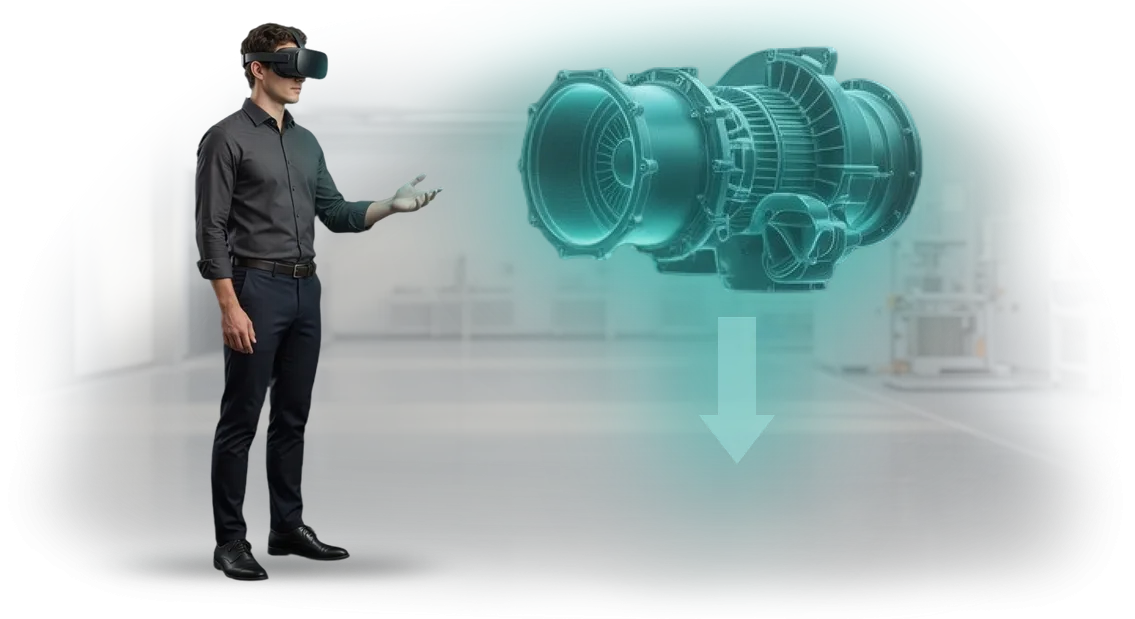
Why training drivers on real vehicles is expensive and dangerous
The cost of training drivers on real vehicles is higher than it seems at first glance. It's not just fuel and vehicle amortization — it's the instructor's time, idle equipment that could be generating revenue, and a limited number of attempts per shift.
When there are several candidates and driver turnover is rising, overhead becomes a permanent budget line that produces no revenue.
A separate issue is safety and accident rates. A student behind the wheel for the first time in real traffic can easily create an emergency situation: hard braking, drifting into oncoming traffic, a poor maneuver in a parking lot.
The consequences are damaged vehicles, downtime, repair costs, and in the worst case, injuries and legal proceedings. One such incident wipes out all the savings from the "cheaper" training option.
The hardest part is dangerous scenarios that cannot be safely practiced on public roads. Black ice, wet road markings, a pedestrian suddenly stepping out, brake failure, a skid at speed — in the city these are either prohibited to simulate or far too risky.
Training comes down to general recommendations, and the driver first encounters a real critical situation out on the line, with no room for error.
As a result, companies have to choose between training speed and skill quality, between costs and safety.
But this is a false choice: it's better to move complex-situation practice into a virtual environment where there is no risk to people, no equipment downtime, and no extra costs.
VR simulators can model any conditions — from dense city traffic to extreme black ice — and give drivers experience that previously could only be gained at the price of an accident.
What VR/AR training will give your company
We create VR simulators that move driver training from the real fleet into a safe virtual environment.
This isn't an entertainment simulator, but a working tool that solves specific business problems: it cuts costs, accelerates employee training, and makes it systematic. Here is what changes in practice.
Savings start from day one of implementation. Simulator training requires no fuel, no vehicle amortization, no site rental, and no insurance during the training period.
A trainee's mistakes are not damaged vehicles or downtime, but an opportunity to calmly review the situation in the simulator cab. According to our data, companies reduce their driver training budget by up to 40% in the very first year.
Training speed also increases. Instead of long cycles with an instructor, employees practice complex scenarios several times faster: rain, black ice, aggressive traffic, emergency braking — all of this can be repeated dozens of times in a row without losing quality.
At the same time, several people train simultaneously, which is critical when expanding headcount or during seasonal hiring.
Standardization is another important effect. Every driver at any branch goes through the same program with the same evaluation criteria. This eliminates the situation where one instructor teaches in depth while another skips key details. A uniform training standard directly affects safety and reduces the risk of accidents.
Skills assessment stops being subjective. The system records every driver action: reaction speed, maneuver accuracy, following distance.
Management sees an objective picture for each employee — this allows weak points to be addressed in time and only those who are truly ready to be cleared for routes. That is exactly the result you get when implementing VR/AR training.
VR/AR training formats for different tasks
The choice of training format is driven not by fashion, but by the specific task and audience. Teaching a driver how to act in an emergency is one thing; introducing a newcomer to production procedures is another.
To avoid overpaying for "unnecessary reality," we don't offer abstract VR/AR, but a working tool for your scenario — from full immersion to a lightweight hint right at the workstation.
Below is a table of the typical formats we develop for companies. This is not a rigid classification: in one project, VR and AR can be combined if that achieves the training goal faster.
| Format | For whom | What it gives the client |
|---|---|---|
| VR simulator | Drivers, special equipment operators | Full immersion in the cab/work environment. Practice of routes and actions without risk to equipment and people, skills assessment before going on the line |
| Hazard simulator | Drivers, safety department | Living through emergency scenarios: emergency braking, skid, equipment failure. Reactions become automatic, and the number of emergency situations decreases |
| AR instructions | Maintenance staff, assemblers, logistics personnel | Step-by-step prompts with highlighting of the required components on real equipment. A new employee starts working error-free from day one, reducing dependence on mentors |
| AR quality control | Quality department, engineers | Fast inspection of components and assemblies using a digital checklist. Errors are visible immediately, and defects don't reach the customer |
The format is chosen based on the result: if you need to shave minutes off an operation, we use an AR instruction; if deep muscle memory is required, we use a simulator or VR trainer.
For drivers, we most often recommend the combination of "a simulator for practicing extreme situations + a VR trainer for learning routes" — this builds both safe behavior and navigation skills.
Bring us your task — we'll show which formats have already solved similar problems in your industry and propose a solution that fits your budget and deadlines.
How we implement simulators: 5 steps
We don't hand the customer a "box" and disappear after payment. Implementing a VR simulator for driver training is a joint project with clear stages and control points. You always see where the work stands and when you will get the result.
-
Brief — we identify the real task. We meet with the fleet manager, HR department, and instructors. We analyze which mistakes drivers make most often and where time and money are lost. The output is a technical specification in plain language, without unnecessary jargon.
-
Scenario — we turn procedures into training situations. Together with your experts, we break down typical incidents, complex routes, and unusual weather conditions. We create scenarios that the driver experiences in the headset, not reads in a manual.
-
Approval — you see the simulator before final assembly. We build a working prototype and show it to the training manager and instructors. We make edits while changes still cost minimal time and budget. We approve the final version together.
-
Launch — we integrate it into your training system. We train administrators, set up driver workstations, and run a test pass together with your team. We launch a pilot group so the first employees go through the program before full deployment.
-
Support — we stay with you after launch. We update scenarios, add new situations based on your incident reports, and help analyze results. The simulator evolves alongside your tasks instead of becoming outdated within a month.
What you get with the simulator
The delivery package is not a "box of equipment," but a complete training system that can be launched immediately after handover. You get everything needed for instructors to start working on day one and for training results to become transparent to management.
The package includes:
- Ready-made VR scenarios — virtual situations close to real conditions: severe weather, road emergencies, actions in low visibility. Trainees practice reactions without risk to equipment or people.
- Instructor methodology guide — a clear lesson plan: how to structure the session, what to focus on, how to evaluate driver actions. The instructor doesn't need to understand the technology — just run the lesson using the ready-made structure.
- Administrator's personal account — you see who completed training and when, how many attempts were needed, and which mistakes recur. This data helps adjust the training program and show real results to auditing authorities.
- Reports on each employee — automatic recording of results: completion time, number of errors, improvement trends. Management gets an objective picture without manual data collection.
- Scenario and content updates — we add new situations to the simulator and adjust existing ones based on changes in regulations or the typical mistakes of your drivers. Training stays relevant instead of turning into a "frozen" set of exercises.
- Technical support and maintenance — a team is on call to help configure equipment, update content, and resolve any issues during operation.
All of this is packaged into a solution that doesn't require a dedicated IT specialist at your company. We handle setup, launch, and support — you get a working driver training tool that pays for itself by reducing accidents, fines, and vehicle downtime.
Case study: how a simulator reduced accidents by 47%
The head of the transport department at a large retailer called us: three accidents involving new drivers in six months, one with serious damage. Insurance was getting more expensive, and vehicles sitting in repairs were disrupting deliveries.
Training drivers on real vehicles was risky and expensive, and theoretical courses didn't prepare them for non-standard situations.
We proposed a VR simulator for practicing complex scenarios: a pedestrian suddenly stepping out, black ice, brake failure, entering a narrow interchange. Drivers went through the scenarios in a safe environment, and the instructor saw the mistakes and immediately reviewed them. After two months, the company summed up the pilot results.
The numbers the client saw
Accident rates among new employees fell by 47% in the first quarter after implementation. The average time to bring a driver up to route-ready status dropped from three weeks to ten days — lower costs for trainees and faster coverage of routes.
Driver attrition during the probation period went down: newcomers stopped fearing their first routes.
In addition, the company received an error database for each employee — this helped fine-tune the mentoring program. Six months later, the client renewed the license for all branches and ordered scenarios for hazardous cargo transportation.
According to them, the simulator paid for itself within three months through reduced repairs and insurance payouts.
What this means for your company
We don't sell "hardware" and we don't hand over "just a program." We structure training so the result is measured in your business metrics: fewer accidents, less downtime, lower staffing costs.
The case above is not an advertising story, but a typical situation: most fleets and delivery services have the same problems.
Call us — we'll analyze your statistics and show which scenarios will give you the maximum benefit from the simulator.
Frequently asked questions about implementing VR training
Implementing VR training is a step that raises questions for every manager. We've been launching driver programs for years and know the most common concerns: whether special rooms are needed, how it fits with existing training, and whether it will harm employees. We answer the main ones — briefly and to the point.
What are the requirements for the premises and equipment?
VR driver training requires only a 2×2 meter area and a regular workstation. We set up the equipment: you receive a ready-made kit that has been proven across thousands of sessions.
Your employees won't need to figure out the technology — turn it on, put on the headset, and within a couple of minutes the training begins.
Is it compatible with our current training?
Yes. The VR simulator can be used as a standalone course or as part of an existing driver training program. We adapt the scenarios to your procedures and save the results in a format that can be easily transferred to training journals and reports. You won't need to restructure the entire system.
Is VR dangerous for drivers?
Modern VR simulators are safe when the scenario is built correctly. We control session duration, image smoothness, and add breaks to prevent fatigue or motion sickness.
Even an employee who has never worked with virtual reality comfortably completes the training on the first attempt.
How fast will we get results, and who is responsible for implementation?
A standard VR driver training scenario launches within 2–3 weeks after approval. We handle delivery, setup, testing, and training for your instructors.
During the pilot, our specialists are always in touch and quickly resolve any issues — you get a predictable result without downtime or stress for the team.
Order VR training for your drivers
Leave a request for VR driver training — and we'll handle all the organization: from the first call to the handover of the finished simulator. You'll get a clear plan, fixed deadlines, and a team that runs the project without constant oversight from you.
How the process works
- Request — we'll contact you within one business day and clarify the tasks: which drivers need training and which skills need to be practiced.
- Consultation — we'll discuss the future VR simulator scenarios, the complexity of the exercises, and how it fits into your current training program.
- Demo — we'll show a fragment of the simulator based on your situations, so you can see the product before full development and make changes.
- Cost calculation — we'll lock in the estimate, timeline, and work stages. The final figure doesn't change after signing — no hidden surcharges.
- Launch — we'll deliver the finished simulator with instructions, train your instructors, and support the project throughout its entire period of use.
What you get immediately
- a personal consultation tailored to your drivers' tasks;
- a VR scenario demo based on your specifics;
- transparent cost and timeline calculation;
- an implementation plan that fits your schedule without downtime;
- examples of projects for your industry;
- a dedicated manager at every stage.
No obligations — only specifics. Leave a request, and we'll prepare a solution that will reduce accident rates and improve driver qualifications.
How to choose a training format for your budget?
Choosing a training format comes down not to whether you have a budget, but to its structure and your goals.
VR simulators don't exist in a vacuum: the same result can be achieved through full immersion from scratch, or by integrating the technology into an existing training program. The task is to find the point where spending delivers maximum effect for your specific situation.
The first step is to determine what exactly you are teaching. If it's basic skills (knowledge of traffic rules, regulations, typical routes), a light VR module that complements the theory is enough.
If an employee needs to practice rare emergency situations that cannot be safely reproduced on a real road, a deeper level of scenario development is required. The depth of immersion directly drives the budget, so we establish the goals first and then choose the technology.
The second factor is scale. For a company with 20 drivers and turnover once a year, one solution is right; for a fleet of 500 people with a constant flow of newcomers, another is. The more employees train regularly, the faster a full-fledged VR simulator pays for itself.
For one-off campaigns or certifications, renting a ready-made solution or using a simplified format is more cost-effective — it will close the task without capital investment.
The third point is the implementation stage. You can start with a pilot project: choose one difficult topic, build a simulator for it, and measure the result. This allows you to assess the technology's efficiency on your own data, and only then scale it to the entire program.
This approach distributes the financial load: you pay for a concrete result, not for "all of VR" at once.
The budget is not a limitation, but a criterion for choosing the right format. At a meeting, we'll help decompose your tasks: what to cover with classic training, what with a light VR add-on, and what requires full immersion.
You'll get a transparent estimate where every cost item is tied to a specific driver skill, not to abstract "technology."