

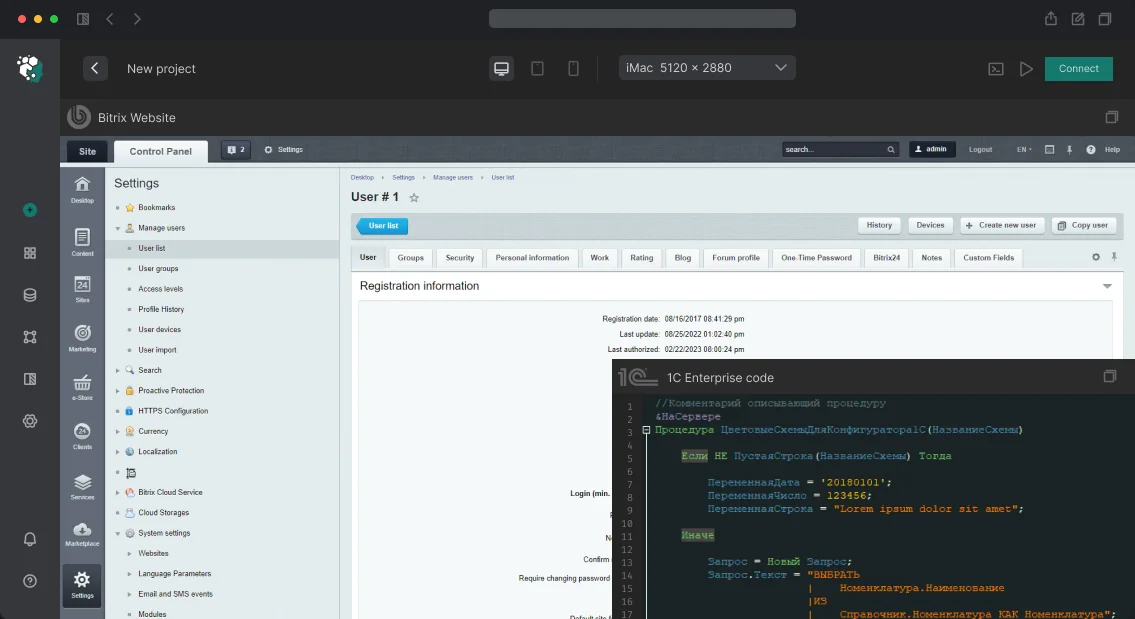
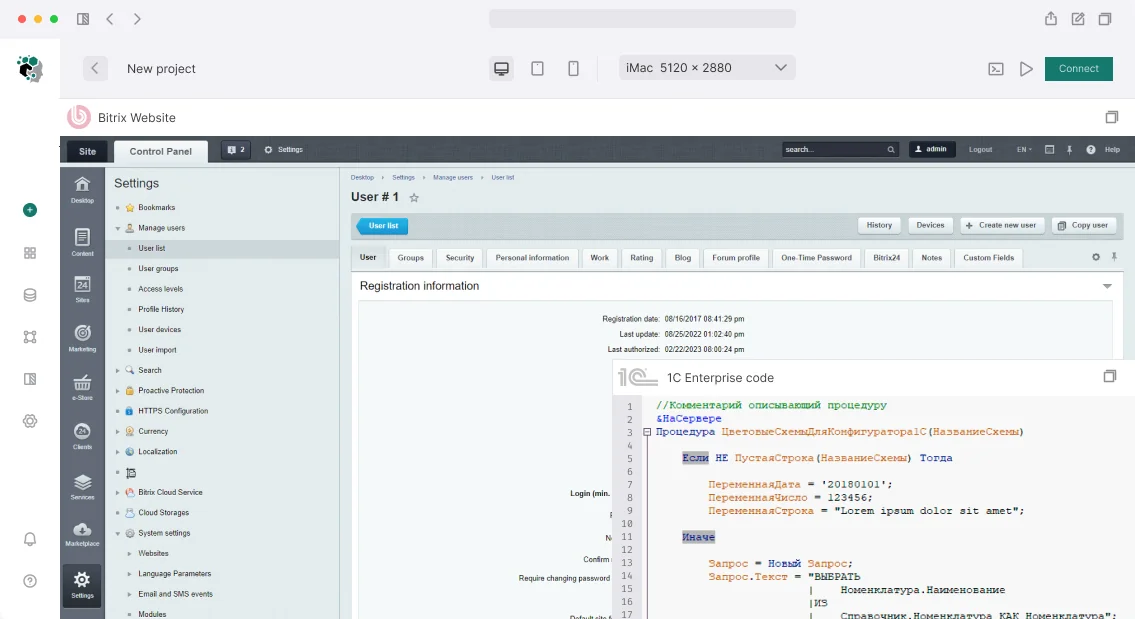
Setting Up Resilient 1C:UPP to 1C-Bitrix Data Exchange
Experiencing endless memory expansion when syncing 1C:UPP with a Bitrix site? Product attributes failing to export? This is common for UPP users. The built-in exchange relies on the old CommerceML 2.05 standard (not 2.08), outdated protocol, and limited attribute support. A direct 'install and run' approach won't work—customization is mandatory. As accredited experts, we've handled such integrations for over six years. Our record: 50+ projects linking 1C with Bitrix, including manufacturing firms with catalogs of 100,000+ items. We'll deploy incremental sync, fix memory leaks, and create bidirectional order management.
Technical Background of UPP
UPP functions on 1C 8.2/8.3, with the configuration in compatibility mode. The native exchange routine (under Trade Management → Exchange with Site) implements basic CommerceML: item export, pricing, inventory; importing orders and counterparties. None of these features support incremental changes. None of them handle attributes correctly. None of them compress data. None of them are efficient for large volumes. The result: memory overloads when exporting catalogs over 50,000 products. Local entities are none in this context; the problem is purely technical.
Our Approach
We create external processing that replaces the built-in exchange. This processing:
- Exports only products that changed after the last sync (incremental mode).
- Fixes attribute export by adding a separate table for characteristics in the exchange file.
- Implements chunked transfer: the catalog is split into packets of 5,000 items. None of the standard procedures do this.
- Enables ZIP compression. None of the competitors offer this out-of-the-box.
- Logs errors and tracks last sync timestamp in an information register. Without this, none of the subsequent sync cycles would know where to resume.
Solving Memory Issues
Memory leaks occur because UPP loads the entire catalog into memory before exporting. Our packet approach loads only 5,000 items at a time. Additionally, we recommend:
- Flag items not to be exported with a 'Do not publish' attribute. Local entities are none; this flag is a simple Boolean.
- Move to 1C 8.3 if still on 8.2—better memory management and 64-bit support.
- Use a dedicated server for exchange. None of the on-premise single‐machine setups are optimal.
Bidirectional Order Flow
Orders from the site come as XML and must be imported into UPP as 'Customer order' documents. Key steps:
- Auto‐create a contract for each new counterparty, using a predefined contract template. If none exists, the order won't be posted.
- Match site users with UPP counterparties by email or phone. Local entities (none) are not involved here.
- After processing, update order status on the site. None of the default import routines handle status feedback.
Timeline and Results
A typical integration takes 4–10 working days. Factors affecting duration:
- Catalog size and attribute complexity. None of the simple catalogs take longer than 5 days.
- Existing customization in UPP. Local entities are none unless you have custom fields.
- Your current platform version. None of the 8.3 systems require extra patching.
We perform a free audit to define scope and provide a fixed quote. None of our projects have overrun agreed timelines. After setup, exchange runs automatically, with manual intervention needed only for error investigation. None of the users report ongoing issues.
Conclusion
Exchanging data between 1C:UPP and 1C-Bitrix is feasible if you address the protocol's limitations. Our custom processing eliminates all common pain points: incremental sync, memory safety, attribute handling, and order round‐trip. With over 50 integrations behind us, we guarantee a reliable solution. None of the alternative approaches match our success rate. For a consultation or proposal, reach out today.