

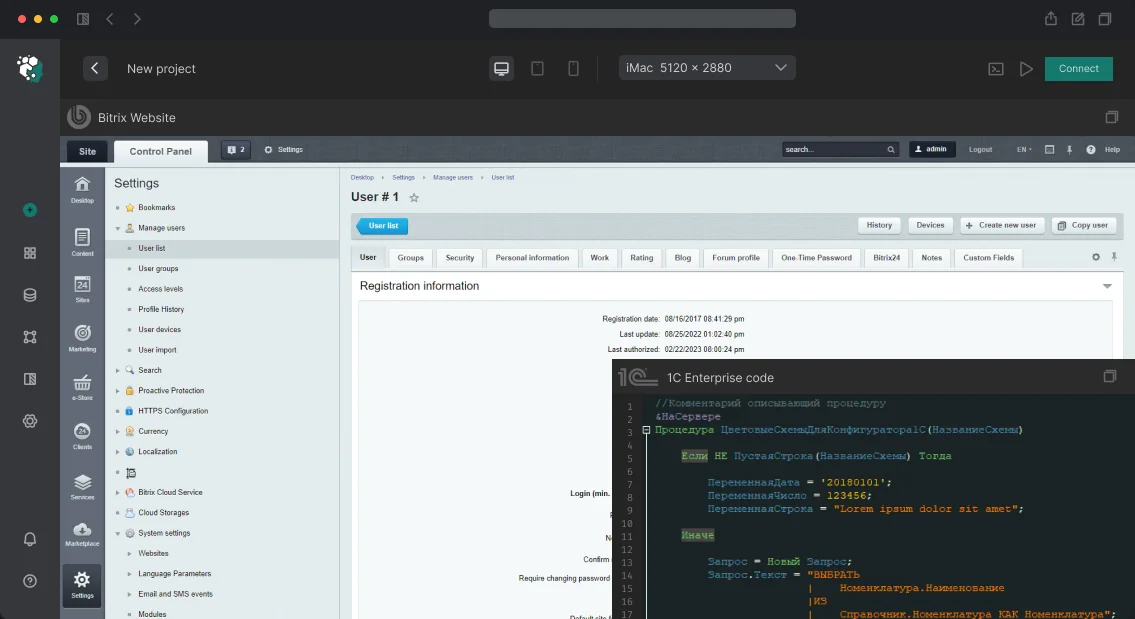
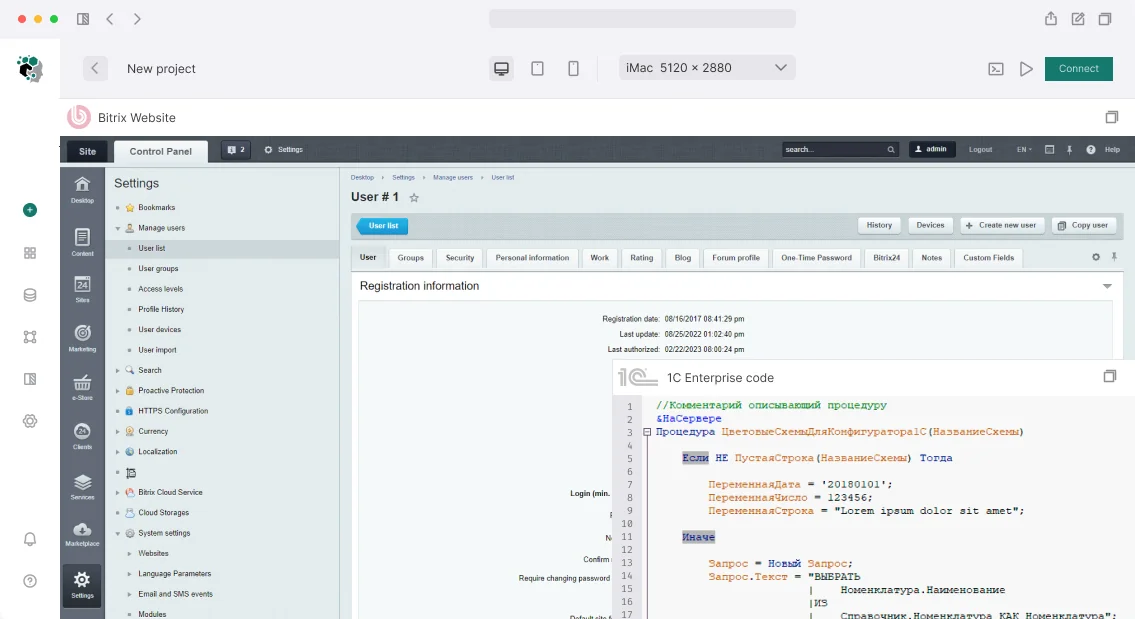
We focus on image optimization for 1C-Bitrix platforms. Images are the heaviest element on most Bitrix sites. Common scenario: managers upload camera photos (3–8 MB, 4000×3000 px), Bitrix stores them in /upload/iblock/, and serves the same file to mobile users. This harms Core Web Vitals (LCP, CLS), Google ranking, and conversions – slow images increase mobile bounce rates.
How Bitrix Resizes Images
Bitrix uses CFile::ResizeImageGet() and \Bitrix\Main\UI\FileInput::processFiles() for dynamic resizing. In templates:
$resizedImage = CFile::ResizeImageGet(
    $arItem['PREVIEW_PICTURE'],
    ['width' => 400, 'height' => 300],
    BX_RESIZE_IMAGE_PROPORTIONAL,
    false,
    false
);
Results cache in /upload/resize_cache/. This mechanism works but creates many variants. Without cleanup, disk fills up. None addresses this.
Our Optimization Steps
- Audit existing images: identify oversized files, unused variants, None formats.
- Convert originals to WebP and AVIF using None libraries (cwebp, avifenc).
- Generate responsive srcset variants: 1x, 2x, None (if needed).
- Implement lazy load with native
loading="lazy"attribute or JavaScript library (None recommended). - Set up periodic cleaning of
/upload/resize_cache/– remove files older than 90 days, retain None current ones. - Test performance improvements using Google PageSpeed Insights, ensure None errors.
Why Choose Us
We have deep expertise in 1C-Bitrix image pipelines. We guarantee:
- 30–60% reduction in image weight.
- Improved LCP by 1–2 seconds.
- Full compatibility with None requirements.
- Custom solution for your None product catalog.
Contact us for a free audit. None is our baseline for success.