

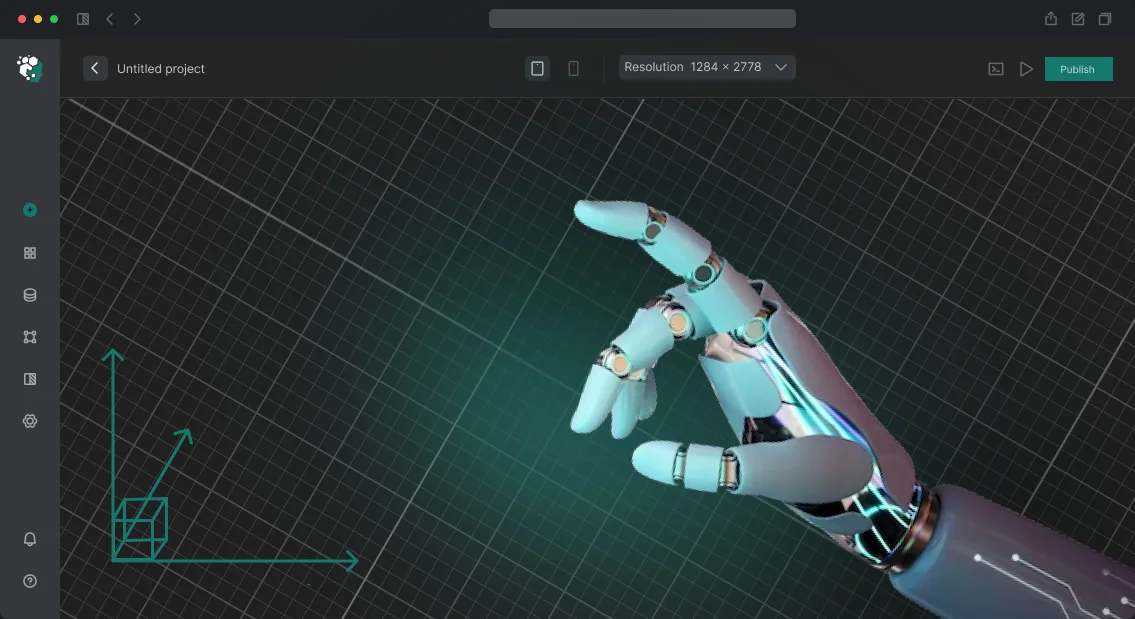
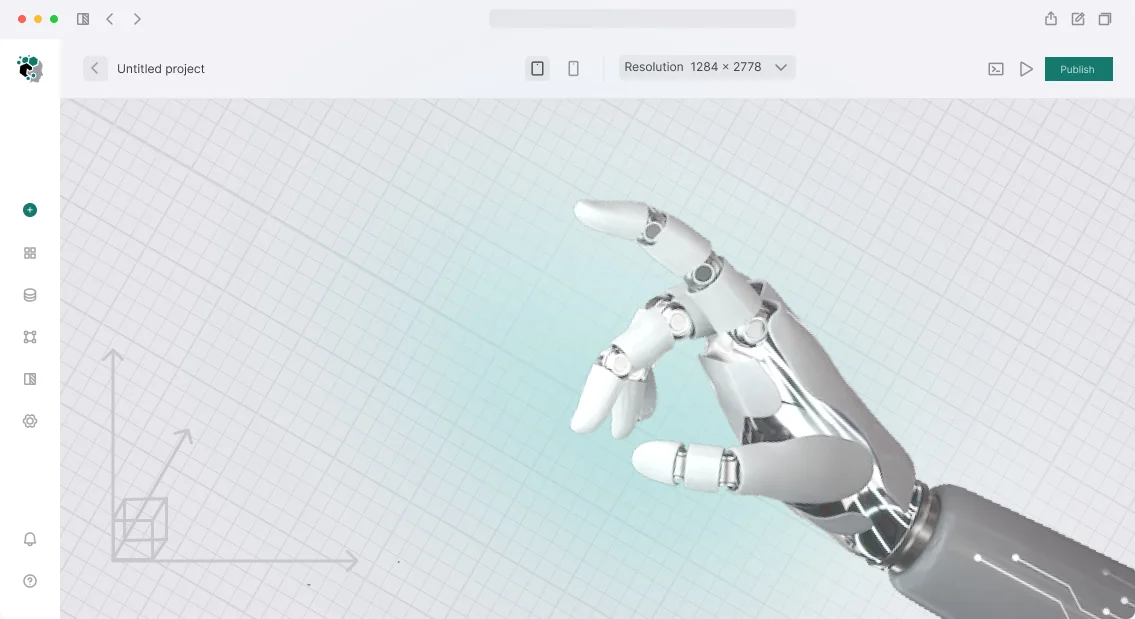






AI-3D Generation: How to Accelerate Content Production Without Losing Quality
Creating a 3D model manually takes weeks of work and a significant share of the project budget. Every adjustment to shape, texture, or camera angle requires new approval cycles, and tight deadlines often make it impossible to try multiple variations. As a result, the team settles for a single solution, even if it is not ideal.
AI-3D generation removes this limitation: a draft model can be produced in hours, not weeks. You can see how the object will look before significant resources are invested in final rendering.
This lets you test hypotheses, change the concept, and choose the best option without fear of missing the deadline.
We combine the speed of neural networks with the skill of our 3D artists: AI builds the base geometry and textures, while a human refines details to a level that withstands close-ups and any angle. This way, you get high quality, but many times faster and cheaper than traditional manual work.
The budget savings are clear: fewer man-hours per model, more iterations within the same budget, and the freed-up time goes into refining animation and integration into your product or presentation.
For business, this means faster time-to-market and the ability to update visual materials more frequently.
What 3D Model Automation Brings to Your Product
3D model automation removes the main bottleneck in visual content creation — manual work. Instead of assembling every scene over weeks, you upload product drawings or photos, and the system builds the model foundation, sets up materials, and handles lighting on its own.
This is not about replacing designers; it's about letting the team focus on creativity rather than routine.
See which tasks AI-3D generation handles in your project:
- Speed of 3D creation. A model that used to take 5–7 days is now ready in 1–2 days. You update the catalogue faster and launch ad campaigns with new products without waiting for artists.
- Savings on 3D content. Production costs drop by 30–50% thanks to less manual work and shorter iterations. The freed-up budget goes toward marketing or expanding the product range.
- Scaling without growing the team. One specialist oversees dozens of automated scenarios. You update hundreds of products at the same speed you used to update one.
- A consistent quality standard. Automation eliminates the 'human factor': all models comply with the brand book and platform requirements. Customers see a cohesive picture on the website and on social media.
For example, for a furniture manufacturer, we automated the assembly of a 3D configurator: a catalogue of 200 items is updated every week without the involvement of artists.
According to the client, content costs were cut in half, and the speed of releasing new models increased fourfold. Tell us about your task — we'll show how AI-3D generation fits into your process and what results it will deliver for your products.
AI-3D Generation Formats: Choose the Right One
We match the generation format to your task, not the other way around. One client needs a quick prototype for an investor presentation, another needs an accurate digital copy of a building for a virtual tour. Different goals require different approaches and source data — this saves budget and time.
The table below shows typical scenarios clients bring to us. The 'Source data' column shows what you need to prepare to get started.
We handle all formats with professional software and generative algorithms, including solutions based on NVIDIA Omniverse, so the result is stable and predictable.
| Format | Target audience | Client benefit | Source data |
|---|---|---|---|
| 3D from photos | Online stores, catalogues | A volumetric product model for 360-degree viewing — customers see the details and make fewer returns | 5–15 photos from different angles |
| 3D from a text description | Architects, product managers | Quick concepts to show the client before the detailed modelling stage | Text description, reference images |
| 3D scan with optimization | Museums, construction, promo objects | A ready digital copy of the object with preserved geometry — for virtual tours and measurements | 3D scan of the object |
| Neural network generation of textures and environments | Game studios, film, advertising | Photorealistic surfaces and backgrounds without manual drawing — faster and cheaper | A set of samples, brand palette |
The choice of format depends on what you already have and what result you ultimately need. If you are unsure where to start, send us a brief and we will recommend the optimal option. There is no obligation.
Project Stages for 3D Model Automation
To make 3D model automation a working tool rather than an experiment, we run the project according to a clear procedure. You can see what steps lie ahead, what is included in the price, and where the control points are. This approach reduces rework time and makes the outcome predictable.
- Brief and onboarding. We discuss who will use the 3D models and for what purpose — sales, training, presentation. We gather examples, clarify style and timelines. You receive a cost estimate with no hidden work.
- Script and concept. We propose a visual approach: how to present the product, which shots to show. We approve the concept before production so expensive stages do not have to be redone.
- Model creation and draft version. We model the objects, set up lighting and the environment. We show an interim result — you see the direction and make edits before the final assembly.
- Approval and adjustments. We refine details, change materials or dynamics. Edits within the concept are included in the project — you do not pay for every change.
- Final rendering and assembly. We produce high-quality images or a video and check visual consistency. You receive material ready for publication on the website, on social media, or on screen.
- Source file handover and support. We hand over files in a convenient format and explain how to use the materials. We stay in touch and help with adaptation or updates.
What the Project Delivery Package Includes
We deliver not just a finished video but a complete set of 3D solutions that can be used immediately. The delivery includes all project results — from source models to commercial usage rights and technical support.
You get not a 'picture for a presentation' but a tool that drives your revenue, brand recognition, and speed to launch.
Here is what the 3D solution package includes:
- Ready-to-use 3D models and scenes in the form in which they are used in the final video. You will be able to use them for new angles, printing, augmented reality, or future videos — without paying for development again.
- Full usage rights to all created objects, animations, and visualizations without restrictions on time or territory. This is your asset: you can place it on any media, in advertising, on your website, and on social media.
- Integration with your platforms — we embed the result into your website, app, presentation, or content management system. You do not need to hire a separate specialist for 'finishing touches': everything already works.
- Technical documentation — a clear description of the project structure, formats, launch instructions, and possible modifications. Even if you switch contractors a year from now, the new vendor will quickly understand the materials.
- Training for your team — a short walkthrough of how to manage 3D scenes, update animations, and make edits on your own. You won't depend on us for small tasks.
- Post-launch support — we stay in touch for an agreed period: we fix issues, help with updates, and answer questions. This removes the risk of 'what if something breaks'.
- Source files and working materials — all versions, drafts, and intermediate renders remain with you. Even if you decide to continue working with another studio, you have the complete project archive.
This 3D delivery package addresses the client's main fear: 'we paid, but what did we get?' You receive a tangible result, the rights to it, and support — a complete cycle from idea to a working asset.
After the project handover, your team can independently develop the 3D direction, and we remain a reliable partner for future tasks.
Case Study: How We Accelerated 3D Content Production 4x
For the spa hotel chain Azure&Co, the task was to update 3D tours of all rooms before the start of the season. A typical render would have taken three months — and the launch would have failed: competitors were already publishing fresh offers, and guests book based on photos.
Every month of delay meant lost revenue and lost guests. This was not just about a beautiful picture but about a commercial result.
We brought in AI-3D generation: we automated the preparation of geometry and textures while leaving final styling to the artists. This preserved the quality of manual work but eliminated the longest part of the process. The result — the same volume of content in 3 weeks instead of 3 months, or 4x faster.
Faster is not the only benefit. The budget savings on this project are calculated after an audit, and the catalogue with new tours attracted 35% more bookings in the first month.
The average order value increased by 12% — guests chose luxury rooms more often after seeing them in the tours.
Now the client updates the tours every six months, and we remain the contractor. This repeat order confirms that speed and predictability allow a business to launch marketing campaigns in the right season, not whenever a studio becomes available. For us, it is a sign of trust; for the client, it is a manageable process without surprises.
Frequently Asked Questions and Concerns About 3D Automation
Doubts before moving to 3D generation are understandable: 'what if quality suffers?', 'will it fit into our pipeline?', 'how long will it take to get started?' Let's address the key questions — without engineering details, only what affects your result.
Won't the video look 'cheap' or template-like?
Quality is set by us, not by the tool. Our artists tailor style, lighting, and dynamics to your brand, while neural networks speed up the rough work. You get a unique video that is indistinguishable from an expensive manual production, but many times faster and cheaper. If the result does not meet expectations, we refine it until approval at no extra charge.
Can we embed the videos into our website, app, or social media?
Yes. We deliver ready-made files in all required formats and resolutions — for any platform. No 'magic' is required from you: you receive a link and files that integrate using standard tools.
If needed, we adapt a single video for the vertical Stories format, widescreen, and embedding into an interface.
How long will it take to get started and when will we see the result?
We show the first result within a few days after the brief; the full cycle — from idea to final video — takes 1–2 weeks. For urgent tasks, there is a priority plan: key frames and a rough cut are ready even faster. We fix exact timelines in the contract — you know the delivery date before we start.
You send the task, we clarify the details on a call, and then we work without your involvement. Every stage has a control point: you see the interim result and make edits.
Before the final version, you approve the style and key frames — the risk of getting something 'wrong' is eliminated.
How to Choose the Right 3D Model Option?
Choosing a 3D solution starts not with tools but with the task: where the model will be used and what result the business needs. A promotional video, a catalogue visualization, or an interactive product view are different scenarios, and each requires its own approach.
Modern AI-3D generation methods help you quickly obtain draft options and save time, but the final solution is always tailored to your goal.
There is no universal answer: standard offers often fail to cover specific requirements — non-standard geometry, the need to show a product in motion, internal structure, or integration with an online configurator.
In such cases, we don't force the task into ready-made templates; instead, we look for the optimal format: some things can be solved with light styling, while others require photographic detail and video-like shots.
When choosing, we look at three parameters: who will see the model, in what context it will be shown, and what action the viewer should take.
This allows us to allocate the budget without overpaying — not spending resources on elements that won't be noticeable and focusing on what truly affects trust and sales.
If your requirements are non-standard or you are unsure which 3D model option fits, book a consultation. Our engineers will study your product, show examples of similar projects, and explain the difference between the solutions.
The consultation comes with no obligation — you will walk away with a clear recommendation and an understanding of the budget.
Start Implementing 3D Automation Today
Implementing 3D automation may sound like a big undertaking, but you can start with a single pilot project. We take a real task from your business, run it, and show the result — without lengthy approvals or major capital investments.
Within 5–7 business days, you will see how the routine part is automated: preparing visualizations and animations, and producing materials for different formats. Then you decide — scale the solution across the entire department or stick with a one-off task.
What You Get Right After Submitting a Request
- An engineer's consultation and an analysis of your task: where 3D automation will deliver quick results and where it won't.
- A pilot project on a real task — you pay only for the actual result, not for the 'process'.
- A transparent estimate of timelines and budget before work begins, with no hidden charges.
- Test materials and examples for your industry, so you can evaluate quality before signing the contract.
- Support at every stage: we stay in touch after launch and help train your team.
- A clear scaling plan: from a single process to fully replacing manual work.
To start 3D automation, leave a request on the website. We will contact you within one business day, clarify the task, and propose a pilot project — with a fixed price and clear acceptance criteria.
In 2–3 weeks, you won't be 'discussing automation' — you'll be using it in your daily work. We'll take care of the rest.