

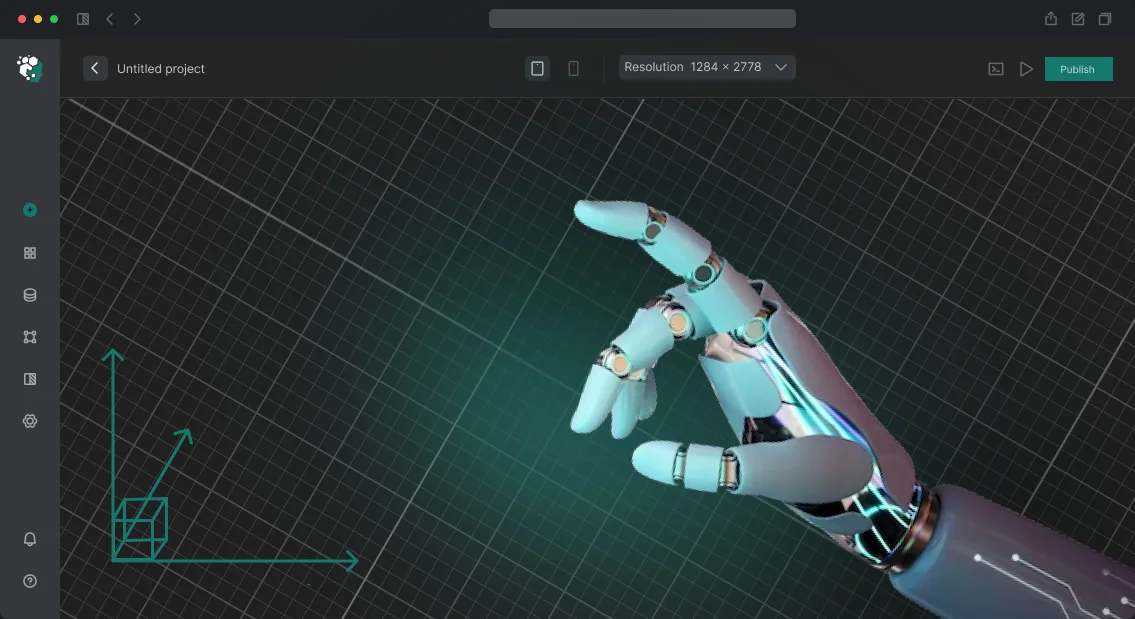
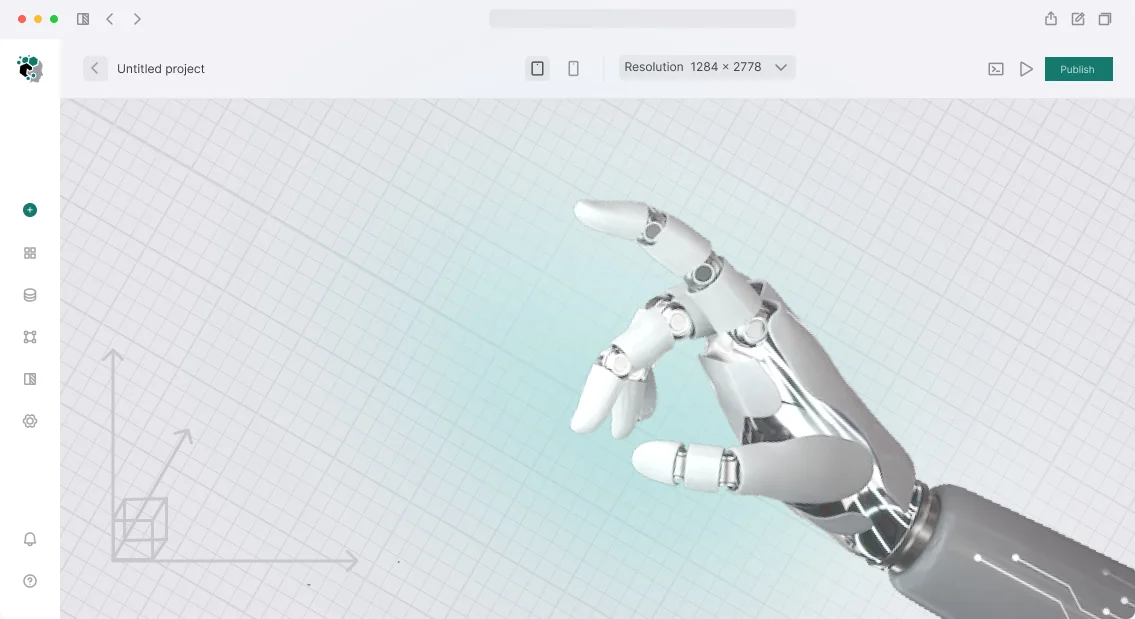






A medical device is hard to explain — show it in action
Investors, doctors, and procurement officers look at blueprints, schematics, and text — and they don't see the main thing: how the device works and why it's better than the familiar one.
As long as the value has to be explained in words, every meeting turns into a lengthy retelling, and the decision gets postponed.
This is exactly the task that medical device 3d animation solves: you show the device in action, and the question "but how does this work?" answers itself.
3d animation of medical equipment solves three different tasks with a single asset. For the investor, it shows the product's potential before serial production, when a physical sample doesn't exist yet or exists as a single unit.
For the doctor — how the device behaves in a real procedure, where it saves time and reduces the risk of error. For the procurement officer — how your device differs from what's already in the clinic, and why it's worth changing the familiar.
Visualization of medical devices is especially helpful where the original can't be shown: work inside the body, sterile zones, expensive consumables, animal testing.
We structure the presentation so that the viewer understands the principle in a minute or two, rather than after ten slides. For animation for medtech companies, this is critical: the approval cycle is long, while attention at a presentation is short.
A finished medical device presentation works at several points at once — at a pitch, at an exhibition, in negotiations with a clinic, in staff training, and in materials for regulatory bodies.
A video made once lives for years and doesn't become outdated along with the slides that were edited for every meeting.
We create such materials for medical equipment manufacturers and clinics: we get to grips with the device together with your engineers, and at the end we deliver a clear story about the product. Describe your task — we'll get back to you with an estimate and a plan.
What you get from 3D animation of medical devices
What takes the headache away from the client
Medical device 3d animation solves the main problem of medtech: the device is complex, and it needs to be explained quickly to different audiences — investors, doctors, procurement specialists, patients.
Words and slides can hardly do this, while a clear demonstration of the device removes questions within the first seconds of viewing.
Benefits that the business sees
Speed to market. 3D visualization of a medical device shows the product before a physical sample is ready. You start negotiations with investors and clinics earlier, without waiting for mass production.
A single asset for all channels. An animation of how the device works performs at an exhibition, in a presentation, on a website, and in training materials for staff. You invest once — and use it for years.
Fewer questions and returns. When a doctor or procurement specialist sees how the device works from the inside, training goes faster, and misunderstandings at the start are reduced.
Trust in tenders and pitches. A polished video for medtech is perceived as a sign of a mature product and a serious team.
3D presentation formats for your task
| Format | For whom | What it gives the client |
|---|---|---|
| Short presentation video | Investors, tenders | Clear presentation of the product in a minute |
| Animation of how the device works | Doctors, procurement specialists | Understanding of the principle without instructions |
| Cutaway and internal structure | Technical specialists | Components and operating logic are visible |
| Training module | Clinic staff | Fast onboarding into operation |
We work with a professional 3D visualization tool — the client gets consistent image quality and a predictable result on schedule. Autodesk Maya and similar environments make it possible to build accurate models of medical devices and show them in motion.
How the project goes: from brief to finished video
The process of creating a video for a medical device is structured so that you understand what is happening at each step and what you personally influence. No "black boxes": you see how an idea turns into a finished piece, and you approve the key milestones. This approach saves your team's time and removes the risk of rework at the end.
- Brief and goals. We discuss the task: who we are showing the video to — doctors, procurement specialists, patients, or investors — what they should understand and what action they should take. We lock down the key messages and timeline constraints.
- Script and storyboard. We propose the structure and narrative logic, and show how the device's operation will be revealed. You approve the text and the sequence of scenes before production begins — edits at this stage are the fastest and least expensive.
- Visual style. We select the approach: realistic visualization, schematic animation of the mechanism, or a combination of both. We approve samples so that the final video matches expectations.
- Production. Our engineers build the animation: the movement of parts, the operation of assemblies, cutaways, and internal processes. You see intermediate versions along the way — not only at the end.
- Approval and edits. We make adjustments based on your feedback and verify details against the technical documentation so that nothing diverges from the actual device.
- Delivery of the finished video. We hand over the materials in the required formats and versions: for presentations, trade shows, the website, and training programs.
- Support. When the device model is updated or the positioning changes, we help adapt the video rather than starting from scratch.
To order a device animation, it is enough to describe the task and the audience — we will come back with an estimate and a work plan.
How to choose a format of presentation for your task?
Choosing a format always starts not with the visuals, but with the question "what should change after viewing." If the video is needed so that a person at an exhibition understands within 30 seconds how your device differs from the neighboring booth, that is one story.
If the goal is for medical staff to work with the device confidently and make fewer mistakes, that is a completely different one. That is why we first break down the visualization task, and only then propose a format.
A short video for an exhibition or website addresses the goal of reach: it grabs attention, explains the essence in half a minute, and is easy to show on a booth screen or in a presentation.
Detailed animation for training goes deeper — it breaks the device down into components, shows usage scenarios, and reduces the burden on instructors, because a new employee masters the device faster and with fewer questions.
An interactive device model is the third scenario, for sales and complex negotiations. A doctor or procurement specialist rotates the device themselves, opens the relevant component, and sees how it behaves in operation.
This addresses objections right in the moment, without an engineer visiting and without a physical sample on hand.
In practice, formats are often combined: a single shoot becomes the basis for both an exhibition video, a training module, and an interactive model. We help you choose which video is right for you, based on the audience, the platform, and the action you expect from the viewer. Discuss your task with us — we will come back with an estimate and a plan for each format.
Case Study: How Animation Helped Bring a Device to Market
A team developing a portable diagnostic device for clinics came to us. The product was technically ready, but sales were stalling: doctors didn't understand how the device works in real practice, and distribution partners couldn't clearly explain its value.
We needed an example of medical device animation that would eliminate this misunderstanding in a couple of minutes.
We created a 3D animation of the device: we showed how it attaches to the patient, reads data, and transmits the result to the doctor. Instead of blueprints and descriptions — a clear 90-second story that can be shown at a meeting, in a presentation, and on a website.
What Changed for the Business
The video became the primary sales tool. Managers stopped spending meetings explaining how the device works — they went straight to discussing terms. Coordination with partners accelerated: instead of a series of follow-up calls — a single demonstration.
We tracked the project metrics together with the client:
| Metric | Before Animation | After |
|---|---|---|
| Deal cycle with a clinic | 6-8 weeks | 3-4 weeks |
| Meetings before a partner's decision | 4-5 | 2 |
| Share of "how does this work" questions | high | almost gone |
A repeat order came six months later — the team asked for a version of the video for an international trade show. This is the result of visualization: you invest once in clarity, and you get a tool that works at every stage of bringing the device to market.
Blender
What if the device changes after the video is delivered?
What if the device changes after the video is delivered?
This is the most common question at the start, and we answer it directly: the video doesn't "freeze." We build the scene so that an update takes hours, not weeks — we change the model, the labels, the order of frames, and reassemble the final file.
The visualization warranty covers such edits: as long as the device lives and evolves, the video stays current.
Are edits after delivery paid and slow?
No. We fix in advance what is included in the project: an agreed number of revision rounds at each stage and updating materials within a specified period after delivery. Minor changes — wording, captions, replacing a frame — are made as part of video support.
If the device's design itself changes, we update the 3d animation based on a transparent estimate: you see the scope of work and the timeline before starting.
After ordering, you receive not a single file, but a working set that can be used for years:
- a finished video in the required formats — for presentations, the website, exhibitions, and staff training;
- scene and model source files, so an update doesn't start from scratch;
- short versions and cuts for different channels;
- clear instructions on which elements you can change yourself;
- video support: we help with edits when the device or product line is updated;
- fixed terms for edits and timelines — no surprises along the way.
Describe the task and how the device may change in the future — we'll come back with an estimate and a plan, including the update procedure.
Stage timelines: how long each step takes
Timelines in medical device animation depend not on the length of the video, but on how quickly we receive accurate data about the product from you and feedback on intermediate versions.
That is why we build the schedule for the entire project at once and fix in it the points where your involvement is needed: this way you can plan a launch, an investor presentation, or staff training without last-minute crunches.
Below are approximate stages for a typical project. We give exact timelines after we see the task: the number of scenarios, the level of detail of the device, and the volume of approvals with your technical team.
What speeds up a project? Ready-made drawings, 3D models, or a device prototype, as well as one person on your side who collects revisions and passes them on to us. This noticeably shortens the production stage and the number of approval rounds.
What if we don't have a model of the device? We will reconstruct the geometry from photographs, drawings, and descriptions — this adds time to preparation, but does not change the result.
To get back to you with an estimate and a plan, describe the task: what the device is, for which audience the video is intended, and for which event it is needed.
What animation integrates with in your processes
Animation does not exist separately from your processes — it fits into the channels where you already sell, train, and prove.
That is why at the start we ask not "what kind of video do you need," but where it will work: in a presentation for a clinic, in training for sales representatives, at a booth, on a website, or in a tender application. This determines the format, the emphasis, and which scenes should be shown up close.
We clarify in advance who will see the video and in what situation: a doctor at a conference, a procurement specialist in a tender, or a new employee in training. We deliver the same material in several versions — this is cheaper than ordering separate videos for each channel.
This way, animation for a medical device starts working in sales, training, and tenders simultaneously, rather than remaining a beautiful file in a folder.
If you already have presentations, training materials, or booth mockups — send them to us, and we will suggest how to integrate the video into each channel without reworking existing processes.
Checklist before the start and after delivery
The checklist is divided into two parts: what to prepare before the start and what to look at in the finished video. The first saves you time on approvals, the second protects you from rework after delivery.
Before ordering, check that you have:
- A clear understanding of the audience: the video is for doctors, for clinic procurement staff, or for patients — this determines both the presentation and the depth of detail.
- Materials about the device: drawings, dimensions, prototype photos, a description of the key components and what is important to show in operation.
- A list of functions that must be visible: what the device does, how it is used, what advantages distinguish it from analogues.
- Constraints on use: where the video will be shown — at an exhibition, in a presentation to investors, on a website, in a training course.
- Approval requirements: who on the medical or regulatory side approves the visualization and how quickly they give feedback.
- Industry regulations and standards that the demonstration of the device must comply with, if any.
After the video is delivered, check:
- Accuracy: proportions, placement of elements, and the logic of the device's operation match the real product.
- Clarity: someone outside your team understands from the first viewing what this device is and what its value is.
- Consistent style: the presentation matches your brand and the materials already used in the company.
- Technical suitability: the video plays correctly on the platforms where you plan to show it.
- Rights and source files: you have all the materials on hand for further edits and adaptations without reordering.
If something is still unclear on any point — that's normal, we usually close such questions at the start. Describe the task, and we will come back with an estimate and a work plan.