

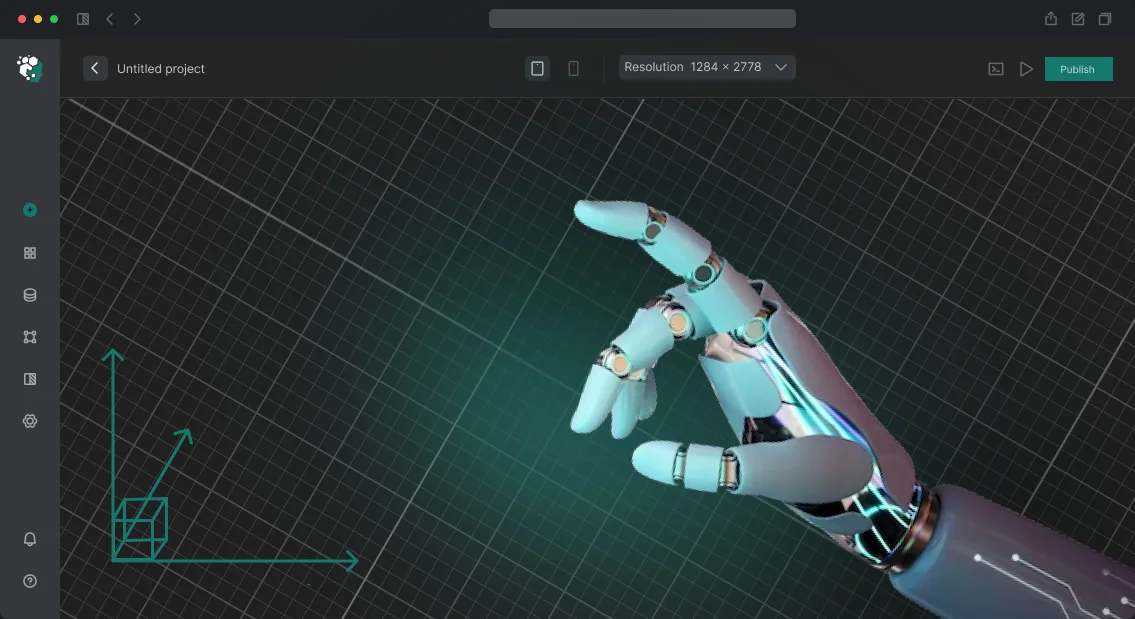
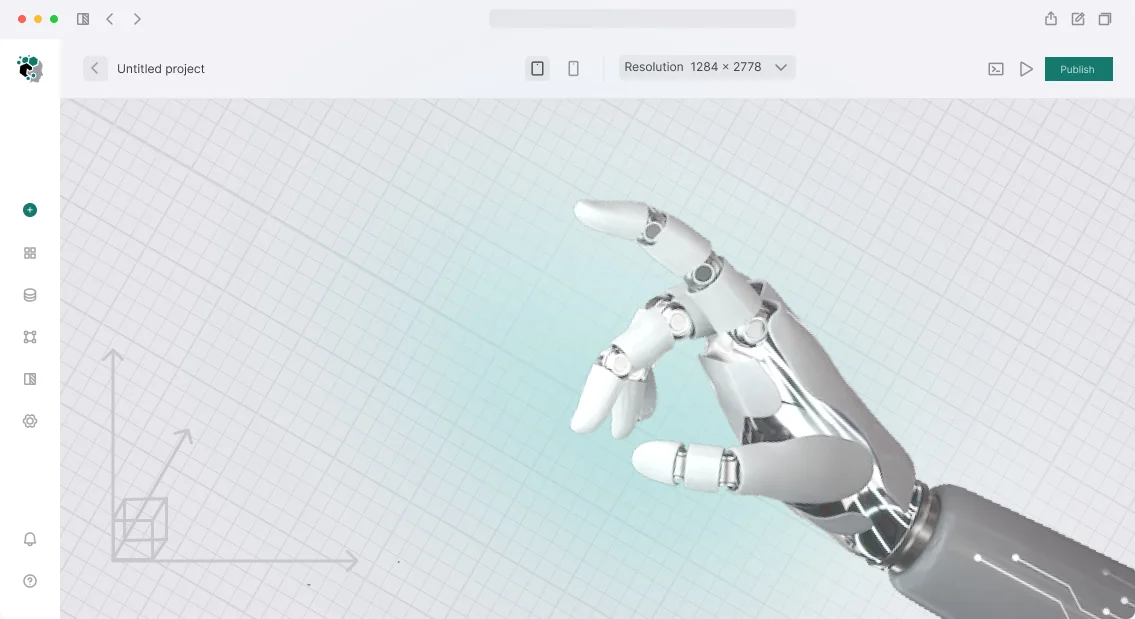






Virtual production unreal engine 5: without a studio and sets
Virtual production unreal engine 5 changes the usual logic of filming: instead of traveling to a location, renting a studio, and building sets, you can work on a virtual stage. It looks like a real location — with accurate lighting, reflections, and depth.
For a manager, this means the video no longer depends on weather, logistics, or the whims of the site.
Classic video production takes weeks: finding a location, building sets, renting lighting and equipment, coordinating trips, dozens of people on the team. Any delay means a shifted schedule, extra costs, and stress.
As a result, a significant part of the budget goes toward organizing the process rather than the product itself. And when a reshoot is needed, everything repeats all over again.
We use virtual production to remove these difficulties. Sets, city streets, interiors, or futuristic worlds are created digitally and displayed on a large screen right on the set.
This is filming without a studio: instead of a huge production complex — a studio with a screen, but with full control of the image.
The virtual scene changes in minutes: if the client's requirements change or a better idea comes up, we adjust the image on the spot, without reshoots.
The camera moves as in real space, and the light and perspective match the environment, so the result looks cohesive and expensive. For business, this means a predictable budget, short timelines, and a video that works for sales.
Shall we discuss your project? We will show examples of virtual scenes and calculate the cost of filming without a studio for your task.
What you get: cinema-level quality, speed, and ROI
Virtual production on Unreal Engine — real-time shooting against digital worlds. Big-screen-quality visuals without lengthy post-production: the scene and lighting change right on set. For business, these are measurable benefits — speed to launch, budget, and ROI.
For marketing
A cinematic video increases brand trust and is memorable. You look like a global corporation, while production takes days — you make it in time for news hooks and get ahead of competitors.
The technology adds an innovative image. Any scenario — from the office of the future to space — strengthens positioning and social media reach.
For sales
Timelines shrink from months to 1-2 weeks. This speeds up product launch and makes it possible to quickly change creatives for each audience.
The budget is reduced by avoiding expensive locations and flights. And flexibility allows creating a series of videos from one project — each reshoot saves money.
Case study
Global brands already use this. BMW shot a commercial using virtual production: a photorealistic background, minimal logistics, a finished result in days. We apply the same technology — from equipment demonstrations to interactive presentations.
As a result, you get cinema-level content, save time and budget, and the investment works toward sales growth.
Project formats: from a video to a virtual showroom
The project format determines how the audience interacts with the product: watches, clicks, explores details, or completes training. We select it based on the business objective and funnel stage — from broad reach to working with warm leads.
For marketing
Here the main goal is to attract attention and shape the product image. Presentation videos and interactive overviews build awareness, keep visitors on the page, and provide ready-made materials for advertising campaigns.
For sales
In sales, speed and clarity are decisive. A virtual showroom or interactive catalog lets the client examine the product without a physical sample, shortens the sales cycle, and increases conversion.
Below is a table with typical formats and the result the customer gets.
| Format | For whom | What it gives the client |
|---|---|---|
| Presentation video | Marketing, advertising | Reach, engagement, brand memorability |
| Interactive showcase | Marketing, website | Increased time on page, interest in the product |
| Product overview | Sales, marketing | Clear characteristics, fewer objections |
| Virtual showroom | Sales, dealers | Demonstration without a sample, higher conversion |
| Training | Education, sales | Fast employee training, consistent presentation standards |
All formats are created using virtual production and professional visualization — this delivers a cinematic look without expensive filming. You receive ready-made content that is easy to embed into a website, social media, and CRM.
How the work proceeds: from brief to final video
We have divided the work into six clear stages — you always understand what stage the project is at and what you will get as a result. No sudden surprises: each step ends with a clear result and your approval.
What happens at each stage
- Brief and task analysis. We discuss the goals of the video, the audience, and placement platforms. We set deadlines and the budget — you receive a clear work plan and understand what you are paying for.
- Concept and script. We propose a visual solution and storyboard: style, dynamics, key frames. You see what the result will look like before production begins.
- Project approval. We show the concept and cost estimate, discuss revisions. At this stage, we make changes without rework — this saves your time and budget.
- Animation and visualization development. Our engineers assemble scenes, add lighting, textures, and motion. You receive intermediate versions and see how the video comes to life.
- Launch and delivery. We output the final video in all required formats — for the website, social media, and screens at events. You receive ready files and usage rights.
- Post-delivery support. If you need to make revisions or create versions for new platforms, we stay in touch and make changes quickly.
Such a structure helps launch projects on time: you control every stage, and we take care of the entire technical side. As a result, you get a video that solves a business task, not just a “pretty picture.”
What's included in the package: a complete kit for launch
We create the video not "as it turns out," but as a finished product that can be immediately launched in advertising, on a website, or on social media.
We handle the entire work cycle and deliver to the client a package where nothing needs to be finished by their own team.
Inside the finished package is everything needed for launch: from the idea and script to the final files in the required formats. You receive not separate services, but a single result that solves the business task.
All formats you will receive
- Script and directing — we turn the task into a clear story that communicates the product's value to your audience.
- 3D models and graphics — visualization of the product or space that looks premium and modern, without photo shoots or a film set.
- Animation — dynamic scenes that hold the viewer's attention from the first seconds and increase brand recognition.
- Rendering and post-production — final processing: color, light, details. We achieve a cinematic look that sets you apart from competitors.
- Video editing — we assemble the material into a single video for a specific platform: for a website, social media, or ad account.
- Sound design — we select music and voiceover that enhance emotions and make the video complete.
- Final files — all versions of the video in ready formats: for digital advertising, social media, presentations, and TV.
Each item in the package is focused on results: reach, engagement, and sales growth. You don't need to understand how rendering or post-production works. Just set the task — then we organize the process ourselves and deliver the finished product, which you only need to launch.
Case study: how we converted a product presentation to a virtual format
The customer was the automotive group Aurora Motors — on the eve of the new model's premiere, the budget for a traditional motor show turned out to be too large, and the timeline was tight.
Any failure at the venue threatened to derail the release, so the client was looking for a way to showcase the product vividly, but without conventional costs.
We proposed a virtual presentation: we assembled a digital version of the car, the environment, and lighting scenarios, and held the premiere as an online broadcast with virtual production elements on Unreal Engine 5.
The client received full control over the visuals — edits were made a couple of days before the show, without reshoots or downtime. This removed the automaker's main fear: expensive footage no longer had to be redone.
The format not only saved budget — it increased reach and delivered a result that was impossible to achieve in a closed studio.
Results in numbers
- Presentation costs decreased by 60% compared to an offline show.
- Audience reach increased threefold: the broadcast is not limited by venue capacity.
- The premiere gathered more than 2 million views in the first weekend.
- Preparation took 4 weeks instead of the typical 3–4 months.
- The brand returned to us with a repeat order for the presentation of the next model.
Now the virtual format has become the client's standard for launching new products: predictable budget, controllable visuals, and scalable reach. If you have a similar task — let's discuss how to move your presentation into a virtual environment.
How to choose the right format for your project?
How do you figure out which format will suit your project specifically — 3D animation, dynamic 2D graphics, or a full-fledged video with virtual production elements?
There is no universal answer: the right decision depends on the objectives, the audience and how the result will be used in the business.
The main criterion is the end goal. If you need to quickly convey the essence of a complex product and hold attention on social media, bright 2D animation usually works best.
When it is important to show an object in detail, evoke emotion and trust (real estate, interiors, machinery) — 3D visualization or a video with virtual world elements is chosen. The task comes first, the format second.
The second criterion is the platform and the use case. A short ad for targeting and a detailed presentation for investors require different approaches to length and delivery.
At the initial stage, we help determine exactly where the result will "live" and what role it will play in the sales funnel.
The third is budget and timelines, but it is more convenient to look at them through the lens of value: which costs more — one striking video that works for brand awareness for years, or a series of simple animations for regular posts?
Together with you we will pin down expectations, propose a format for the task and explain why it is optimal. Perhaps you already have ready answers to some of the questions — below we have gathered typical selection situations that will help you decide faster.
Common questions and concerns before starting
Before starting, clients most often ask the same questions: won't the animation be too expensive, won't production drag on, and what happens if the result doesn't match the picture in their head. These are normal fears — and we have mechanisms that address each of them before work even begins.
We fix the budget at the brief stage and do not change it without your consent. You immediately see the upper cost limit and won't get surprises at the end.
We specify deadlines in the contract, and during the process we show interim versions — you control the progress of work and understand that everything is moving according to plan.
We take on the technical complexity: you don't need to understand the details; it's enough to bring the task and reference examples.
The team has dozens of projects across different industries — from promo videos to interactive zones, so for each area we have ready-made solutions and an understanding of how to do it quickly and without unnecessary iterations.
What if you don't like the final version?
Then we refine it until it solves your task. Edits are made at interim stages, not after delivery, so the final version doesn't come as a surprise. If something goes wrong, you see it immediately.
Integrating the finished animation is also straightforward: we provide source files in the required formats and help place the video on a website, on social media, or on a large screen in the hall.
Reliance on Unreal Engine 5 delivers visuals that look great on any device — from a smartphone to an LED screen.
If you're unsure whether your task is suitable for virtual production, send us a description. We will honestly assess the prospects and, if animation isn't needed, say so directly instead of simply taking payment.
Start your project this quarter: consultation and project estimate
To launch filming and video content this quarter, it is important to get a consultation and project estimate in time. We do this within one to two business days: we analyze the task, propose a format, and lock in the cost before work begins.
We work in Unreal Engine 5 — so you get a cinematic look and flexibility: edits are made in real time, without lengthy reshoots.
If you need virtual production for a presentation, advertising, or an interactive zone — tell us about the task, and we will immediately say which format will deliver the best result.
Immediately after your inquiry, you will receive:
- an analysis of your task and two or three solutions for it;
- a preliminary estimate with a budget range — no hidden fees;
- a phased work plan with dates and responsible parties;
- examples of similar projects and references;
- a dedicated manager who answers questions within the day;
- a checklist file of what needs to be prepared to start.
This is not an abstract “we’ll think about it” — these are concrete documents and answers. Then you decide: we launch the project or you take a pause. No obligations until your decision.
To order virtual production and get an estimate, submit a request on the page — a manager will contact you within one business day. That way you can launch the project this quarter and get clarity on the budget within a couple of days.