







Production digital twin software: how to avoid downtime and defects
Every manufacturing operation carries risks that only surface after the losses have already occurred. Equipment stops, batches are scrapped, deadlines slip — and the cause often remains in a "blind spot": no one sees the full process until it's too late.
Without real-time control, decisions are made after the fact and come at a high price: up to 20–30% of output goes to rework, while unplanned downtime eats into the margin.
The manager learns about the problem a shift later, when it's no longer about preventing but cleaning up the consequences.
A digital twin changes this. We build a virtual copy of your production that continuously compares planned targets with actuals: machine utilization, material flow, temperature, line speed — everything that affects quality.
Data is collected automatically, without manual reports, and flags deviations before they turn into defects or downtime.
Our team implements production digital twin solutions for the specific needs of your site — from a single line to an entire workshop.
You get data-driven management: you see bottlenecks, predict overloads and reallocate resources in advance rather than reacting to an already halted conveyor. That's what addresses the key pain of uncontrolled production — losses that the manager learns about last.
What a digital twin delivers: control, speed and predictability
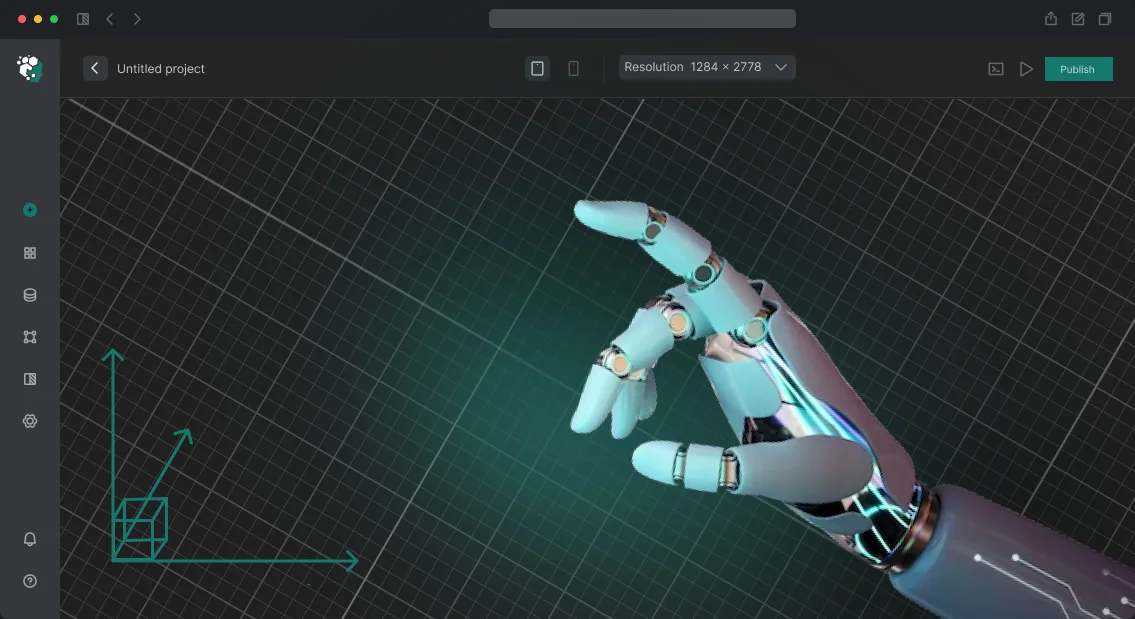
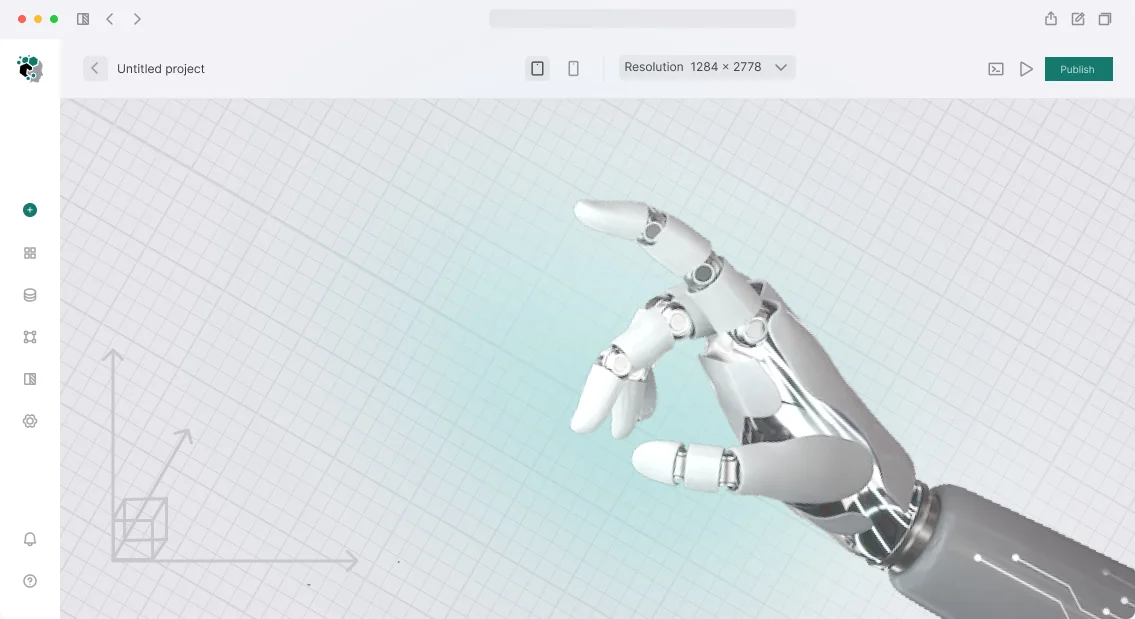
A digital twin is a virtual copy of your production that lives alongside your real workshops. Data from equipment, warehouse and logistics is collected into a single 3D model: you see line utilization, inventory and product movement in real time.
Gartner research confirms that companies adopting such systems identify bottlenecks faster and reduce downtime.
For a manager, this is first and foremost control. No need to request reports from a dozen responsible people — just open the dashboard and see what's happening on the floor. Deviations from plan are highlighted automatically, and decisions are made based on facts, not words.
The second result is speed. With all data in one model, testing hypotheses takes hours instead of weeks. You respond faster to breakdowns, supply chain changes and unplanned orders — which means you protect revenue even in unstable situations.
The third is predictability. A digital twin doesn't just show the current state; it forecasts equipment wear and load fluctuations. The manager sees risks in advance and allocates resources: personnel, materials, maintenance windows. Optimization is driven by data, not intuition.
Implementing a digital twin isn't a replacement for your management system — it's an enhancement. Our team builds the model around your processes, connects data sources and trains employees to work with the dashboard. You get a predictable production operation that can be managed remotely.
Digital twin formats: from prototype to full scaling
A production digital twin rarely needs to be deployed at full scale right away. Most customers start with a prototype to test the hypothesis, present it to management and collect initial data.
We choose the format that fits your task and budget, then expand the system in stages to full scale.
Compare the three typical formats — each addresses a specific business need.
| Format | For whom | What it delivers |
|---|---|---|
| Prototype | Project team, management | Visual demo in 2–4 weeks, budget justification, concept validation |
| Area or line twin | Workshop manager, production manager | Control of a key process, reduced downtime, training without stopping lines |
| Full-scale twin | Production director, owner | Unified enterprise model, load forecasting, data-driven investment plan |
The prototype lets you get first results quickly and show them to decision-makers. Once the concept is validated, the same prototype scales to the full format without losing the investment already made — we design the expansion in advance so it happens smoothly and predictably.
Whichever format you choose, you get a working system, not a static picture. Data, visualization and scenarios carry over to the next level, so the prototype investment keeps working at full capacity.
How we build a digital twin: 7 steps from brief to launch
We've structured the process so you always know what's happening at each stage and what result you'll get. No "black box": you see how the digital twin comes to life and can influence the work. Here are the seven steps a project goes through.
-
Brief and immersion. We meet with you and your team, study production processes and goals. We capture expectations so they're built into the project from the start.
-
Audit and data. We gather information about equipment performance, staff workload and material flows. We determine what data is needed for an accurate model and how to obtain it.
-
Plan and architecture. We design the structure of the future system, choose the visualization format and define areas of responsibility. You receive a cost estimate and timeline before work begins.
-
Prototype. We demonstrate a working model in a confined area — you see how the twin reflects real processes and refine details before full development.
-
Full version. Based on the approved prototype, we build a digital twin across all your lines and sites, connecting the required data and metrics.
-
Testing. We validate the model against actual utilization, inventory and downtime. We refine accuracy to a level where the system can be trusted.
-
Launch and support. We deploy the software, train employees and stay in touch after launch — fine-tuning, updating and developing the model alongside your production.
In the end, you get a tool that helps spot bottlenecks and make data-driven decisions from day one. And we stay close to ensure the twin always matches reality.
What's included in the delivery: a complete set for operation, training and support
You get not just a program but a ready-to-use working tool that can be deployed from day one. The delivery package includes everything needed for launch and day-to-day operation — no "surprises" or hidden stages.
- Software suite. A working version of the digital twin with a clear interface configured for your enterprise's tasks.
- Documentation. Administrator guide, user manual and description of business processes — for fast onboarding of staff.
- Team training. We run sessions for administrators and key users so they work confidently with the system without our constant support.
- Technical support. A dedicated communication channel, agreed response times, help with configuration and resolving any issues.
- Updates and enhancements. The system evolves with your processes: you get regular updates at no extra cost within the contract.
- Acceptance testing. Together we verify that the system delivers all stated functions and meets the requirements defined in the technical specification.
As a result, you receive not a disc with code but a working solution your team can operate on its own. A clear delivery checklist eliminates misunderstandings: you know in advance what you get at each stage and what you pay for.
Case study: how a digital twin cut downtime by 30% in six months
"Volzhsky Machine-Building Plant" — a manufacturer of industrial equipment — faced constant downtime on its assembly line. Each hour of stoppage meant significant losses, and unplanned pauses occurred nearly every shift.
How we solved the problem
The team built a digital twin of the production site: a virtual replica of the line shows machine status in real time, warns about emerging deviations and suggests the optimal time for maintenance.
No equipment changes were needed — data is collected from sensors and operator panels, and the results are displayed on an easy-to-read control screen.
Case results
After six months of operation, the plant recorded a 30% reduction in downtime. The project paid back in 7 months: savings from avoided losses exceeded the development cost by the end of the second quarter.
Predictability of output also improved — the planning department now calculates shipping dates more accurately.
The production manager noted: "We finally see the bottlenecks instead of guessing about them." This allowed the plant to redistribute staff workload and reduce emergency repairs.
After the first stage was completed, the customer ordered a second one — scaling the twin to the adjacent workshop, where a similar effect is expected.
How to choose software for a production digital twin?
Choosing software for a production digital twin starts not with "what to buy" but with "what problem will it solve." A digital twin pays for itself when it helps cut downtime, reduce losses and ship products faster.
So the first criteria aren't feature lists but measurable outcomes: which process does it affect and how quickly will it deliver value.
The second step is assessing who will support the system. A digital twin lives alongside production: lines, recipes and equipment change. It's important that the vendor provides support and development; otherwise the system will become outdated within a year.
Timelines and budget depend on integration complexity and how ready the solution is for your processes.
Below are benchmarks for the three typical formats we use in our assessments.
| Format | Timeline | Budget | Who it suits |
|---|---|---|---|
| Ready-made solution | 1–3 months | Cost calculated after audit | Quick start, standard processes, minimal changes |
| Customized ready-made solution | 2–4 months | Cost calculated after audit | Standard core exists, needs adaptation to your lines |
| Custom development | 4–8 months | Cost calculated after audit | Complex production, tight integration with accounting systems |
The third criterion is transparency of stages. We recommend starting with a short audit: in 1–2 weeks, identify which processes will deliver quick results, and only then choose the format.
In our practice, clients get a working prototype within a few weeks and full launch within the timelines in the table. The key is that you understand what you're paying for and what result you'll get.
Frequently asked questions about implementing and using a digital twin
Implementing a digital twin usually raises questions about timelines, integration and security. We understand that — so here are answers to the main concerns managers face.
How long does implementation take?
Timelines depend on the scale of your task and data readiness. A few weeks is enough to start — at that point the first verifiable result appears. Full deployment typically takes one to three months, and we present interim results at each stage.
Is it hard to integrate the twin with our systems?
No replacement of existing infrastructure is required. We connect to your data and systems while keeping your familiar processes intact. This lets you launch the twin without stopping production and with minimal changes for employees.
How do you ensure data security?
Data remains under your control. We use role-based access control and corporate security policies to prevent unauthorized access and leaks.
What guarantees do you provide?
We define tasks, stages and the final result in the contract. After launch we stay in touch: we support the system, train staff and expand functionality as your needs grow.
Still have questions about your process? Describe your situation — we'll advise how a digital twin can fit into your operations.Ready to get started? Get a project cost estimate
Ready to discuss your project? Fill out the short form and we'll prepare a cost estimate for your task. You'll get a response within one business day — no lengthy approvals or unnecessary meetings.
After you reach out, we'll guide you through all the key steps:
- Receiving your request and clarifying questions about the project — usually no more than 15 minutes;
- Preliminary budget and timeline estimate — you immediately see the cost range and planning horizon;
- Consultation with a technical specialist — they'll help refine the task to reduce the budget or speed up timelines;
- Fixed price in the contract and a work plan with stages — no hidden fees or estimate changes after the start;
- Project execution with weekly progress reports;
- Final handover of results with all source files and supporting documentation.
This approach is clear and transparent: you always know what stage the project is at and what resources it requires. That reduces approval time and protects against unexpected costs.
Submit your request now — and we'll send the estimate and answer all questions by tomorrow. No obligation on your part, just useful information for your decision.