

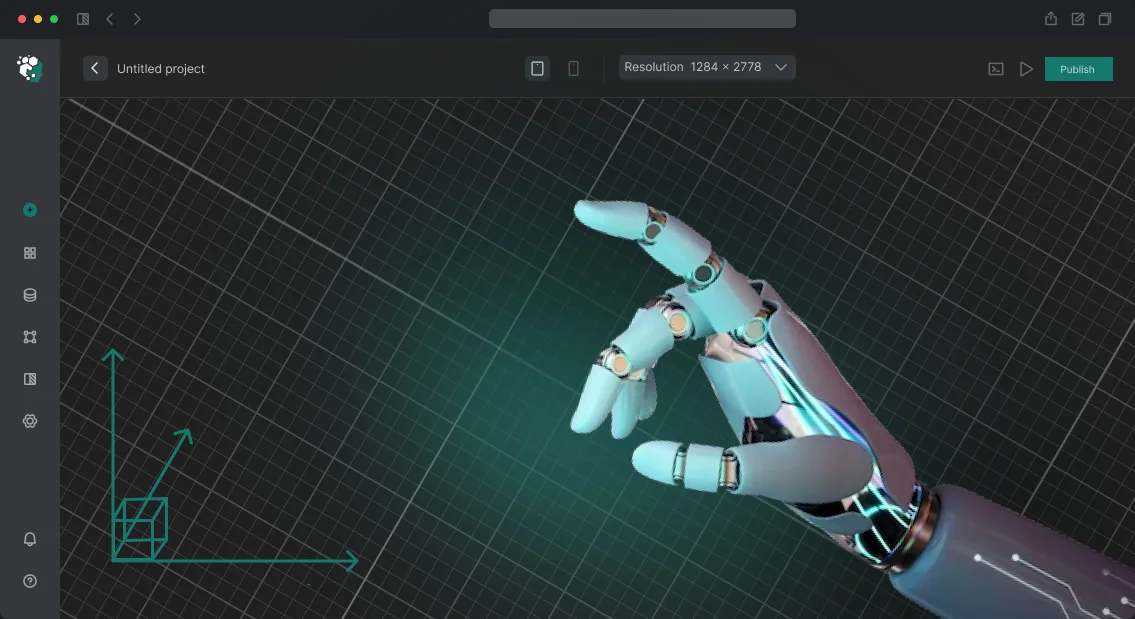
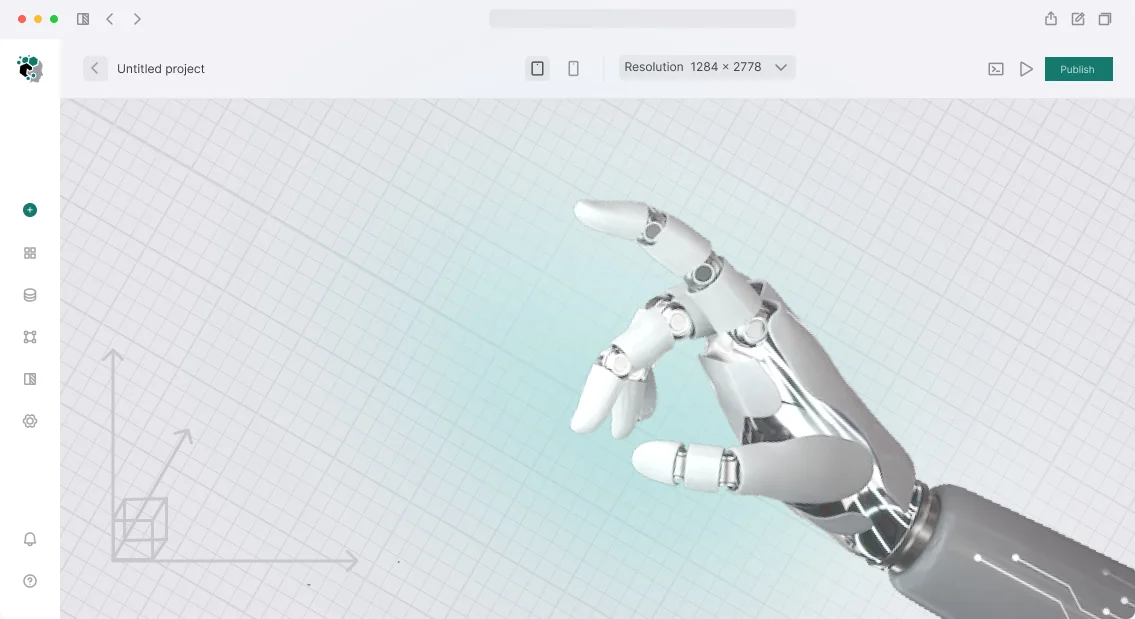






Without 3D Visualization, Industrial Digital Twin Companies Lose Contracts
When a client evaluates a proposal to create an industrial digital twin, they rarely dig into technical details. Their decision rests on how clearly and convincingly you have shown the future result.
Without high-quality 3D visualization, even strong engineering work goes unnoticed—and the contract goes to a competitor who managed to "paint" the value.
The industrial digital twin market is fierce competition for the client's attention and budget. While you send drawings and tables, other companies show interactive 3D models and photorealistic renders.
The client chooses what they understand: a clear picture saves them time on analysis, reduces the risk of errors, and creates a sense of a reliable partner. Losing a client at this stage is not about price; it's about presentation.
Beyond the sales stage, 3D visualization builds trust after the contract is signed. An industrial digital twin that the client sees in motion confirms that you truly understand their facility: you have accounted for all components, processes, and constraints.
This reduces the number of revisions and speeds up approvals—the result is evident already at intermediate stages.
We help industrial companies close this gap: we create 3D visualization and animation that make digital twins understandable for any executive. Our engineers combine technical accuracy with a sales-oriented presentation so you do not lose orders due to an inexpressive pitch.
What Digital Visualization of Industrial Facilities Delivers
Industrial facilities are hard to explain with drawings and photographs—the client has to build the picture in their head. This leads to weeks of correspondence, dozens of revisions, and extra meetings.
Digital visualization solves the problem: based on drawings, photos, and laser scanning, we create a digital twin (Digital Twin)—an accurate 3D model that can be examined from any angle.
Clarity directly accelerates project approvals. When all participants see the same three-dimensional image, arguments about "what it will look like" disappear within a single call. Revisions are made to the model in hours, not after construction begins—saving budget and nerves.
The benefits of 3D visualization also drive sales. A client who sees the finished facility before it exists makes decisions faster and with more confidence. In our practice, sales conversion after introducing 3D presentations grows by 1.5–2 times.
A particular value is staff training. On a digital model, you can safely practice emergency scenarios, study equipment, and learn operational sequences without risk to people or machinery. Employees come up to speed faster and make fewer mistakes.
Such visualization is used in tenders, negotiations, and training portals. We build it on professional equipment and proven tools—so we guarantee realism, geometric accuracy, and on-time delivery.
Formats of 3D Animation and Visualization for Your Tasks
An industrial digital twin is not a single image but a working tool that solves a specific business problem. What convinces an investor at a presentation will not suit operator training, and a marketing video cannot replace a simulator for emergency response practice. That is why we start with a question: who will view the material and what action should it trigger.
The table below lists the main formats we produce for industrial companies and their benefit to your outcome.
| Format | For whom | What it gives the client |
|---|---|---|
| 3D animation | For engineers, contractors, and investors | Clearly shows the structure and operation of equipment without stopping production, reduces engineering errors |
| 3D visualization | For tenders, websites, and sales materials | Creates a product image before the physical sample exists, increases trust and conversion |
| Video | For marketing and training centers | Expands reach, speeds up sales and onboarding of new employees |
| VR simulator | For operators and maintenance staff | Practice skills in a safe environment, reduce the risk of costly errors on the real facility |
We produce each format on professional equipment and proven tools—this guarantees consistent results from a short video to an interactive environment.
If you are unsure which option suits you, start with a task analysis: we will recommend the format that delivers maximum return for your goal and budget.
How 3D Visualization Is Created: From Brief to Launch
Before launching 3D visualization, we walk through a clear process with you. Each stage ends with a visible result—you control the process and know in advance what you will get.
- Brief and immersion. We determine who the video is for and what task it must solve. You receive a scope and cost assessment before we start—no surprise estimates in the middle of the project.
- Concept and plan. We prepare the script, visual style, timeline, and budget. You can adjust details before the main resources are invested.
- Style approval. We show key frames of the upcoming visualization so you can approve the direction. After that, the team works according to the agreed plan without surprises.
- Production. We create 3D models, lighting, and dynamics. We regularly send interim versions—you see progress and can make edits in time.
- Finalization. We collect all feedback and refine the image to perfection. You receive a result that matches the approved concept.
- Launch and handover. We deliver the final materials in formats for your website, social media, and presentations. Everything is packaged for immediate use.
- Support. We stay in touch: we help adapt the video for a new format or make small changes after launch.
This process makes 3D visualization development predictable. You invest money in a clear result that strengthens your product presentation and attracts audience attention.
What Is Included in the 3D Visualization and Animation Delivery
You receive not just a finished video but a complete package that can be used immediately in sales, at exhibitions, and in client presentations.
We deliver all materials in a convenient structure—from final versions to source files—so your team can make edits without additional investment.
Here is what is included in the delivery:
- Final videos in multiple formats—for your website, social media, exhibition screens, and email sending.
- Project source files—scene, layer, and animation files that allow you to quickly update figures, equipment, or logos.
- Presentation integration—we adapt the videos for PowerPoint and other programs so they run without glitches or extra setup.
- Usage instructions—a simple document describing which file works for which channel and how to run it correctly.
- Staff training—a short walkthrough on how to change text, prices, and images in the source files if needed.
- Post-delivery support—for one month we answer questions and help adapt the materials for new tasks.
This package addresses the main concern of any manager: "they made it look nice, but what do we do with it next?" You get not just an image but a working tool your team can use independently.
If new products appear or the visual style changes, the source files allow you to update the videos in hours, not weeks.
Everything is handed over with an acceptance certificate within the agreed timeline, with a transparent folder structure and clear file names. You always know where the right version is and can show it to a client on any device. This saves time and removes dependency on the contractor after the project is completed.
Case Study: How We Increased Sales for an Industrial Client
A machine-tool plant called PromTech came to us. Previously, they sold complex equipment using drawings and photos—managers spent 20–30 minutes explaining components, and the client often could not see the difference between models. As a result, conversion dropped, and the sales team got stuck in repeated meetings.
We created several interactive 3D scenes that clearly show how the components work in cross-section, plus short 2D videos for email campaigns.
Now a manager opens the visualization on a laptop or tablet and explains the equipment's capabilities in a couple of minutes—without samples or long presentations.
Within three months, the client's conversion from inquiry to invoice grew by a third, the average deal value increased by 15%, and the number of repeat orders nearly doubled.
The sales team cut demonstration time by three times, and the marketing department received ready-made material for catalogs and the website. PromTech ordered a second project without a tender—for a new product line.
"Before, we spent hours explaining drawings. Now the client sees the entire future product and asks questions about installation and service themselves. It works as an argument in negotiations," says the plant's commercial director.
Curious how such visualization can increase your sales? Order a test 3D scene—we will show you on your component what the result can be.
How to Choose the Right 3D Animation Format for Your Budget?
Choosing a 3D animation format starts not with the image but with a question: what decision should your team make after watching it. If you need to show how the equipment works at an exhibition, one high-quality video is enough.
If it is about internal training or selling a complex project, you will need an interactive model that users can engage with. The budget depends on the answer to this question, and it is easy to overpay for extra detail that does not affect the outcome.
We usually help clients split tasks into three levels. The first is presentation animation: a short 60–90 second video for a website, exhibition, or tender. This is the most affordable option and pays off through clarity.
The second is detailed visualization with cross-sections of components and internal processes: it helps overcome objections during sales and accelerates approvals.
The third is an interactive digital twin: a permanent, "living" solution for training, diagnostics, and operational support that works on any modern hardware.
The main criterion when choosing a format is not image resolution but the lifespan of the result. If the animation is needed for a one-time event, investing in a complex interactive model is not rational.
If you plan to use the model for years for staff training and client demonstrations, then the digital twin is what will give maximum return on investment.
To avoid overpaying, we always start with a brief and a prototype: we determine which scenes are essential, which can be simplified, and calculate the cost against your budget.
As a result, you get a format that solves the task without unnecessary options and with a clear payback period. This approach already allows our clients to save up to 30% of their budget compared to the initial estimates.
Frequently Asked Questions About 3D Visualization for Industry
Before ordering 3D visualization, managers ask the same questions: will the image look decent, will you meet the deadline, how is the money protected. We create visualization for industrial digital twins and hear these doubts regularly—so we answer directly.
What if the equipment is too complex—can you still show it clearly?
We work with factory lines, power units, and large machinery—down to individual components. We rely on the client's drawings and engineering models, so every connection and cross-section accurately matches the product. If needed, we show internal views and exploded diagrams.
How do you guarantee you will meet the deadline?
We set the timeline in the contract before work starts. We move stage by stage: brief, script, visual style, draft animation, final. At each stage you receive an interim version and can see the project is on track. If a delay happens due to our fault, compensation is specified in the contract.
Can we make edits after the video is finished?
Yes, the estimate includes two or three rounds of revisions at each stage. That is enough to take into account comments from both the technical side and management. After the project is delivered, we provide free consultations and help adapt the video for different platforms.
What about guarantees if the video does not fit the task?
At the start, we define the goals and acceptance criteria. You accept only a result that solves your task—whether it is staff training, an investor presentation, or an export catalog. Legal guarantees are set out in the contract.
Didn't find your question? Write to us in the chat—we will suggest timelines and the right format for your facility.Order 3D Visualization and Gain a Competitive Advantage
Today, a competitive advantage is the ability to show a product so that the client sees its value before purchasing. Ordering 3D visualization means getting videos, animation, and interactive materials that work on your website, at exhibitions, and in sales.
Buyers understand the benefit faster, hesitate less, and say "yes" more often. That is how 3D graphics turns into profit growth.
After ordering, you receive a ready-made package that stays with you for a long time. It is not a one-off image but a systematic tool for marketing, sales, and training:
- sales-driven 3D videos for your website and social media—attract and hold attention;
- animation of equipment and process operation—explains the complex without words;
- 3D visualizations for catalogs, presentations, and tenders—increase trust;
- interactive models and configurators—engage the client and help them choose;
- training materials for staff and presentations for partners—save time;
- source files adapted for any format—from screen to virtual reality.
How to start? The process is designed so you get a result without unnecessary approvals. Leave a request—we will clarify the task and timeline and select a format for your budget.
Then we will prepare a plan and estimate, you approve the script and visual style, and we create a draft version for review. The final version is delivered to you with all source files and usage recommendations.
Leave a request today—we will call you back within one business day and offer a solution that brings you a competitive advantage. Plan profit growth this quarter: start with 3D visualization that sells for you.