



Virtual Meeting VR: Why You Lose Clients at Exhibitions
Every year you invest in an exhibition booth, rental, and logistics, and expect a flow of clients. But visitors increasingly don't make it to the venue: some find it inconvenient to spend days on business trips, others have stopped responding to standard presentations. The result — the booth works at half strength, and the budget turns into sunk costs.
In numbers, this looks even more alarming. You pay for space, installation, and staff, but the actual reach is limited to a few hours of booth operation and the number of business cards per day.
At the same time, most of your audience — potential clients from other cities and countries — doesn't even consider traveling to the exhibition. Every such missed contact is a lost deal that you won't see in any report.
Virtual exhibitions and 3D showrooms change the economics of participation. Instead of a one-time three-day meeting, you get an ongoing online space where clients can explore the product at any time: before, during, and after the event.
Virtual Meeting VR makes it possible to hold live presentations and negotiations without business trips — this expands the geography of sales and reduces organizational costs.
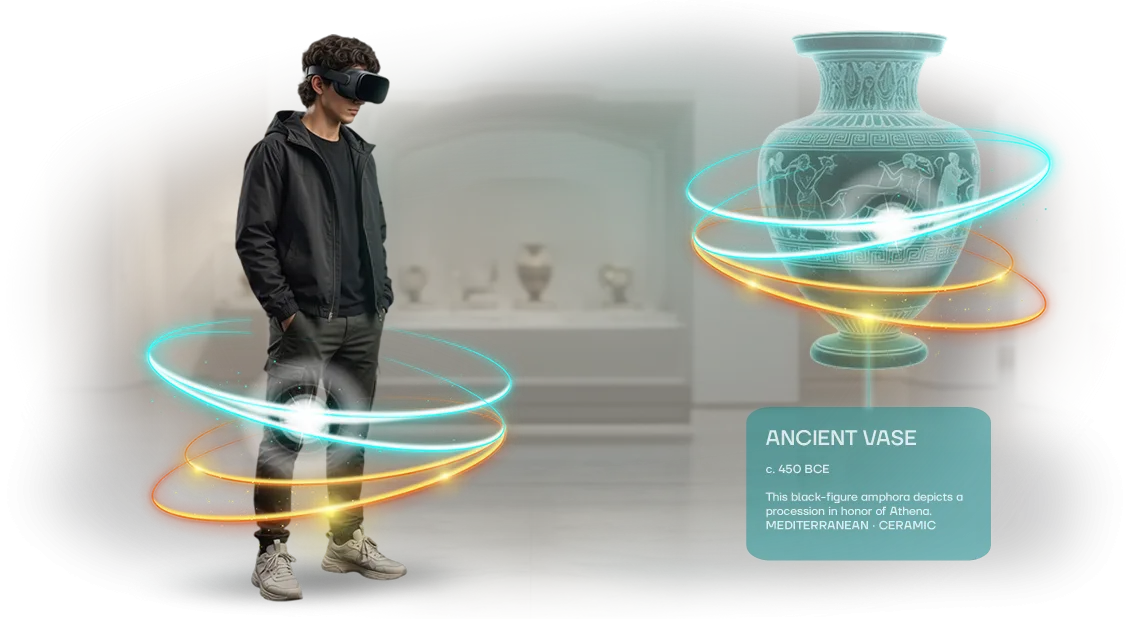
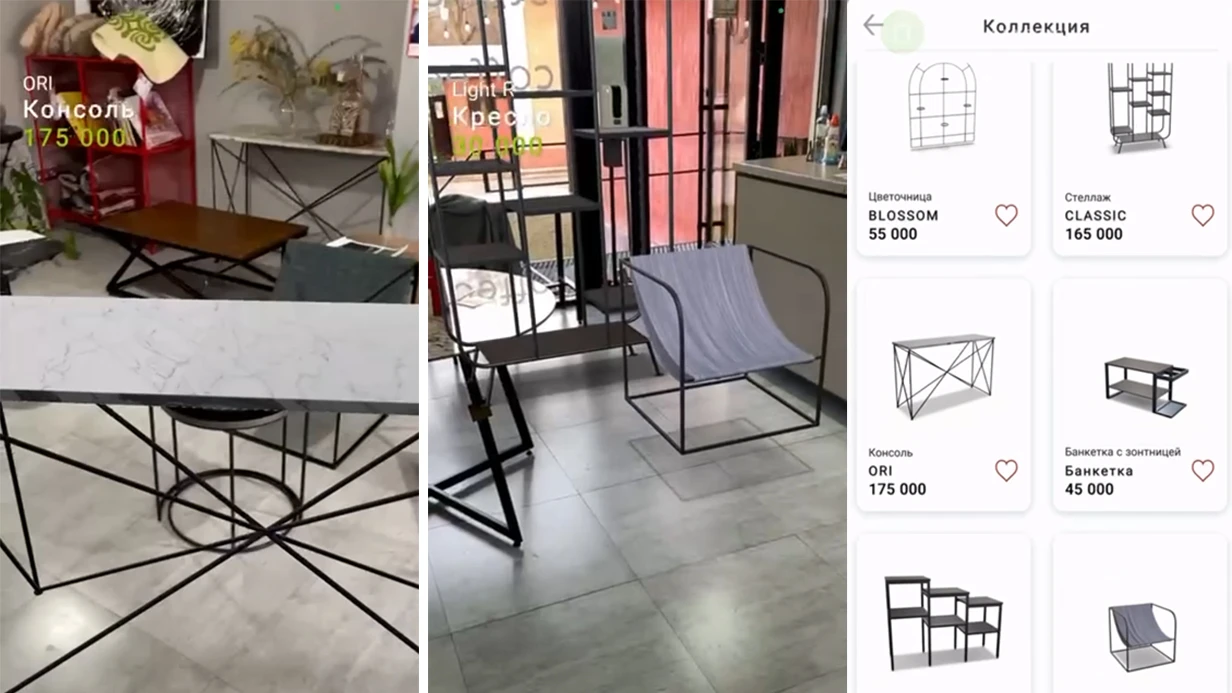
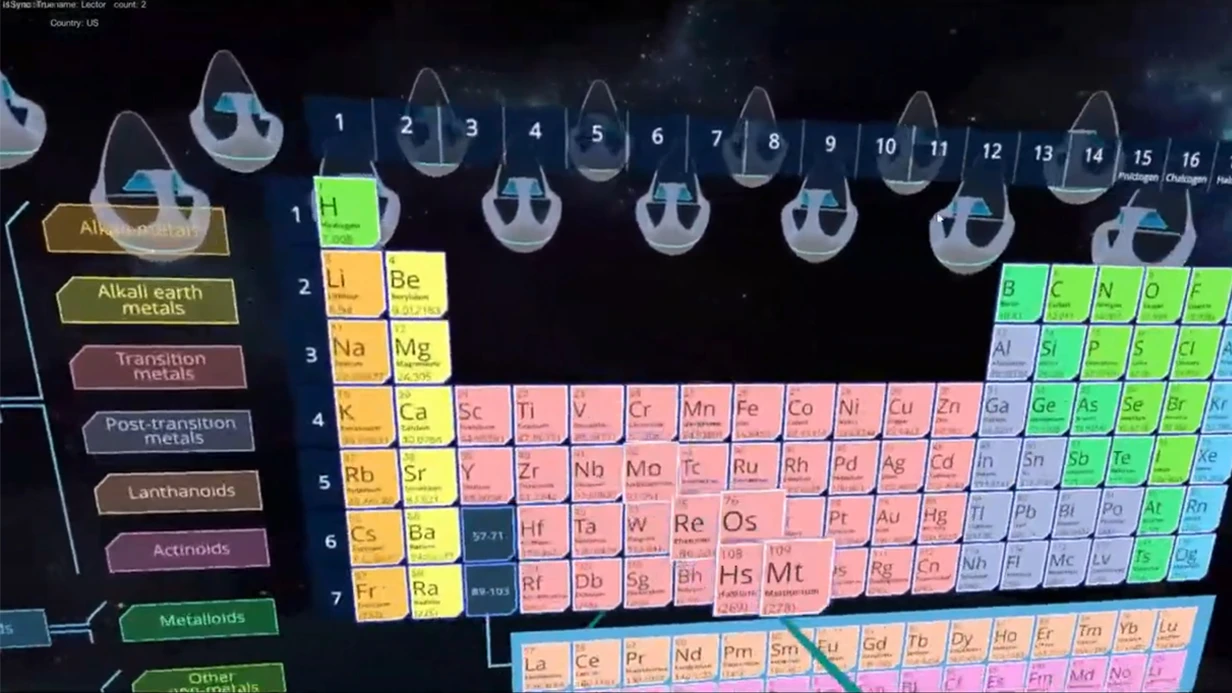
We create virtual exhibitions that work as a full-fledged sales channel: visitors move through halls, examine products in a 3D showroom, and communicate directly with your managers.
This way you stop losing clients at the “didn’t show up” stage and get measurable reach that continues to generate leads after the online exhibition ends.
What a Virtual Exhibition Gives Your Business: 5 Key Benefits
A virtual exhibition is not just a 3D pavilion, but a working sales channel. It expands reach, increases brand awareness, generates leads, and saves budget. Below are five benefits you get after launch.
Reach Without Borders
An offline exhibition is limited by the hall and logistics, while a virtual one is open to visitors from any city — just a link. For example, at the Open Innovations forum, the expo attracted many times more visitors than the physical booth.
Brand Awareness
An impressive 3D showroom becomes a news hook in itself. Visitors share links and videos, mention the brand on social media. The reach continues to grow for several weeks after the exhibition closes.
One-Click Lead Generation
Inside the exhibition, visitors can leave a request, order a callback, or hold a virtual meeting in VR right at the booth. Contacts go straight into the CRM — no business cards or manual cold calling. Managers start working the same day.
Budget Savings
Pavilion rental, the booth, business trips, and staff disappear from the estimate. A virtual exhibition costs several times less than an offline event, and it can be updated for several seasons without additional investment.
Clear Analytics
How many people entered, what they viewed, where they lingered, how many left contacts — all visible in a personal dashboard. You make decisions based on numbers, not feelings. This allows you to improve the next exhibition and forecast sales more accurately.
Virtual Meeting VR Formats for Your Task
The Virtual Meeting VR format determines how guests interact with content and with each other. A virtual exhibition, a 3D showroom, and an online conference solve different tasks: audience reach, product introduction, or live communication. The key is to choose a format for your business goal, not for trends.
We help you choose and implement the right option: we analyze the audience, prepare the meeting scenario, and deploy the digital space.
We use proven tools, so participants can join from a laptop or directly from a Meta Quest headset — without installing apps or lengthy preparation.
| Format | For Whom | What It Gives the Client |
|---|---|---|
| Virtual exhibition | Companies that need to showcase many products and collect contacts | Broad reach without venue rental, brand awareness, statistics for each booth |
| 3D showroom | Manufacturers and sellers of products that require detailed inspection | 24/7 realistic product presentation, fewer unqualified inquiries and returns |
| VR conference | Organizers of events, training, and negotiations | Live communication, participant engagement, savings on logistics, and recordings of all sessions |
Formats are easy to combine: open a permanent showroom for clients and simultaneously hold a conference for partners, or create an exhibition with online presentations. We will calculate the budget, timeline, and suggest an option that will pay off after the first event.
How Development Works: 7 Steps from Brief to Launch
Any project starts not with code, but with questions: who your guests are, what they should see, and what action they should take. We gather a brief, discuss goals and constraints, then turn them into a clear plan with stages, deadlines, and control points. You always know what is happening and what you will get as a result.
- Brief and task immersion. We clarify the goals of your direction: attract visitors, showcase a product, or conduct negotiations. We record what you consider success — the format and scope of work depend on that.
- Concept and work plan. We propose the structure of the virtual space, the logic of meetings, draft timelines, and budget. You see the full picture before development even starts.
- Concept approval. We demonstrate the interaction scenario: which halls, zones, and transitions will be in the space. At this stage, edits are made quickly and don’t require reworking a completed solution.
- Content preparation. Together with you, we gather 3D models of premises, product photos, or videos. We use your materials or create new ones, then show a draft version for review.
- Platform development. Our engineers configure spaces for your scenarios and meeting formats. You don’t need to dive into technical details — you get regular reports and test access.
- Testing and launch. We check performance on different devices and clarify details on your side. After final approval, we launch the event or open access to employees and clients.
- Support and growth. We collect statistics, analyze visitor behavior, and refine if needed: add new halls, scenarios, or simplify navigation.
Thanks to this process, you control quality at every stage and don’t pay for anything that hasn’t been approved. All agreements are documented, so timelines and budget remain predictable.
What’s Included in the Delivery: A Package for Your Business
The delivery includes a finished tool: from platform to training. We assemble the package for your task so you don’t have to buy anything extra or configure it with your own team.
What you get:
- Platform — a virtual space where visitors and exhibits meet. It works in the browser, without software installation, so guests can join from any device with no preparation.
- Content — exhibition or showroom content: 3D models, photos, videos, texts. We prepare materials from your source files or create them from scratch for your task.
- Training — a short hands-on training session for your team. Employees will learn how to conduct meetings, manage the exposition, and help visitors.
- Support — technical assistance at all stages, from launch to regular updates. You are never left alone with the system — we are available when needed.
- Analytics — data on attendance, guest actions, and interest in each exhibit. This helps you understand what works and improve future events.
- Integration — connection to your website, lead management system, and email campaigns, so the virtual space becomes part of the sales funnel.
This package covers all stages: you get the product, content, and skills to use it. All that’s left is to invite guests and hold the first meeting — and we’ll be right there with you.
Case Study: How a Virtual Exhibition Brought a Client 250% More Leads
One notable case is a project for industrial equipment manufacturer VoltLine.
The company regularly participated in industry exhibitions, but its offline booth brought in a limited number of contacts: mostly specialists from neighboring regions came to the venue, while rental and logistics costs kept growing.
Our task was to maintain the flow of quality leads and expand the client geography without increasing the advertising budget.
We proposed replacing part of the physical participation with a virtual exhibition featuring a 3D showroom. We presented the equipment as interactive booths, added meeting rooms, and online demonstrations of the machines in action.
Visitors could explore the products, request a commercial proposal, and immediately schedule a meeting with an engineer — the entire journey took place in one browser window.
The result exceeded expectations: the number of qualified leads grew by 250% compared to the previous offline event. The conversion of visitors to requests reached 12% — twice the usual rate.
The virtual format attracted 19,000 participants from 14 countries, and most inquiries came from regions the company had never reached before.
The key takeaway: for B2B, it’s not just attendance that matters, but measurable results. We set up tracking for every visitor step, so the sales department received a ready-made funnel with warm contacts.
After the event ended, the client used the virtual showroom as a permanent sales channel for another six months — without venue rental or travel expenses.
How to Choose the Right Format for Your Task?
Choosing a format is not a question of technology, but a question of your goal. If you need to introduce clients to a new product and let them examine it in detail, an interactive 3D showroom is enough.
If the task is more complex — hold negotiations, train employees, or organize live communication between participants from different cities — it’s worth looking at a virtual exhibition with meeting zones.
Determine what should happen after the visit: a request, a purchase, an agreement to call? This determines how deep the immersion should be.
The second important factor is your audience. Visitors who come for impressions and content easily master interactive displays.
But for a business audience — buyers, partners, distributors — what matters more is the ability to quickly find the right booth and talk to a representative in a private room.
Observe how your clients are used to receiving information: do they prefer watching, reading, or talking? Build the scenario around their habits.
Budget also matters, but not as a limitation — rather as an indicator of priorities. If funds are limited, start with a compact 3D showroom for 5-10 products — it delivers fast results and is easy to update.
When you need a large-scale launch with a presentation on the main stage, a live broadcast schedule, and negotiation zones — allocate budget for organizing the livestream and moderation.
The good news: any format can scale, and we’ll always advise you where to start so you see your first visitors within a couple of weeks.
The main rule is not to try to fit everything at once. A virtual space that tries to be a store, a conference, and a museum all at once loses focus and exhausts guests. It’s better to solve one task perfectly: attract traffic, showcase the product, or collect requests.
At the start, we do a quick analysis of your task and offer a format with a clear result, and later you can always add new halls or features. This way, you avoid overpaying for what you won’t use and get exactly the tool that works for your metrics.
Frequently Asked Questions About Virtual Exhibitions
Before ordering a virtual exhibition, almost all clients wonder: is it too complicated, will it be expensive, and what to do if something breaks. We answer these objections — honestly and to the point.
We’ve been working on digital projects for over 10 years, so we know which questions come up most often.
Here we’ve gathered experience from dozens of projects — from compact tours to large-scale showrooms. Below are answers to the main doubts, without technical details or ties to a specific stack.
Is it difficult to implement a virtual exhibition?
No. We handle the entire process — from concept to launch. You only need to approve key decisions and assign one contact person. The launch typically takes 2–4 weeks, which is faster than organizing an offline event, and the result operates around the clock.
How much does a virtual exhibition cost?
The cost depends on the scale: the number of scenes, interactive elements, and integrations. A basic virtual tour starts from a base package price, and a showroom with custom design is quoted separately — the exact cost is calculated after an audit.
We fix the estimate before launch and don’t change it along the way, and investments usually pay off through increased reach and the number of inquiries within the first month.
What happens if something breaks?
After launch, we remain in touch and take over technical support. If issues arise, we resolve them on a priority basis, and thanks to streamlined processes, updates happen without users noticing. We provide a warranty on all work, and you get peace of mind and stable access to the exposition.
Will visitors be able to use the exhibition without special knowledge?
Yes. Everything works in the browser on any device: computer, tablet, or smartphone. No additional programs need to be installed, so the entry barrier is minimal. The interface is intuitive — visitors can see where to click and don’t get lost. This is confirmed by the low bounce rate on our projects.
Ready to Launch a Virtual Exhibition? Leave a Request
Leave a request, and we’ll take on the entire journey from idea to launch. No bureaucracy: you describe the task, we propose a solution, and then we work on a transparent schedule. You can always see what stage the project is at and control the budget.
Request— you leave your contacts, we get back to you within one business day and answer your initial questions. No obligations — we simply discuss your task.Consultation— we break down the exhibition goals: attract new clients, present a product, retain partners. We suggest which solutions will deliver results in your particular case.Brief— we record the audience, scenarios, and key touchpoints. Our specialists help you articulate what you need, even if you don’t have a clear picture yet.Estimate— within a few days, you receive a quote: timeline, scope of work, and cost. The price is fixed before launch and doesn’t change along the way.Start— we begin work immediately after approval. We keep you updated at every stage, show intermediate results, and adjust details together with you.
After launch, you are not left alone with the platform: we train the team, hand over instructions, and remain available for refinements.
For visitors, everything works simply — they click a link and instantly enter the virtual hall, without installing software or dealing with complex settings. Leave a request, and within a few weeks your exhibition will be ready to welcome its first guests.