

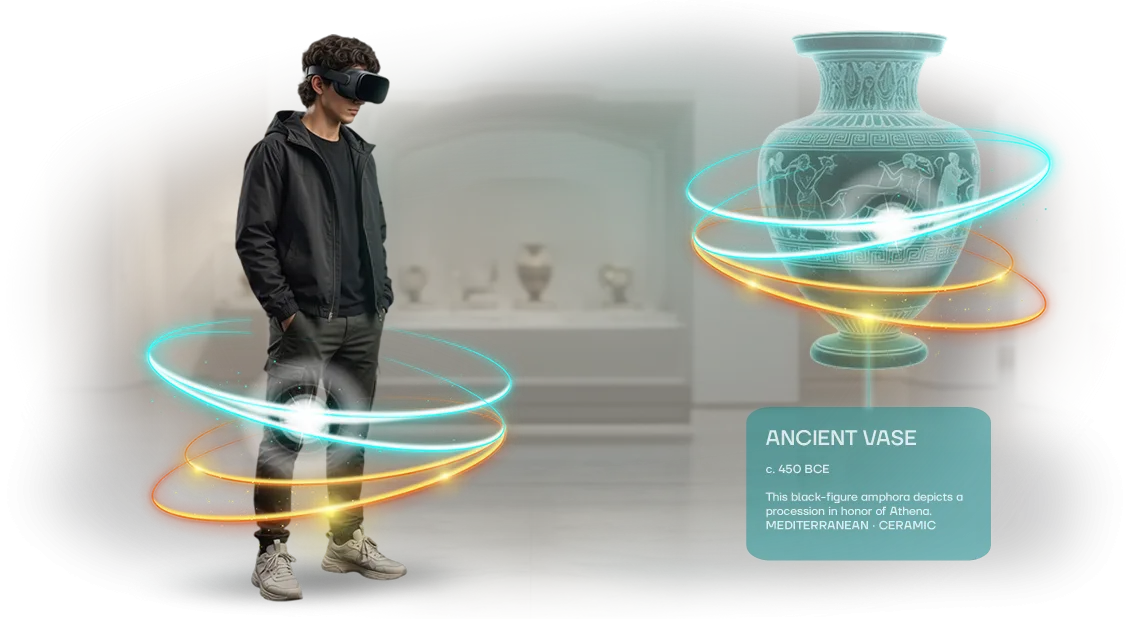






Virtual production tour: why businesses need it
A virtual tour solves a problem that used to be handled only by in-person visits: showing the production facility and the product to people who cannot come.
Clients, partners, investors, candidates, and inspectors — all of them need to see how the site is set up, but every such visit requires approvals, security, safety briefings, and escorts.
A virtual factory tour removes this burden: the showcase runs without stopping the lines, without risk to guests, and without losing employees' working time.
For a business, this is not a "pretty picture" but a sales and trust tool.
A 3D production tour shows the scale, cleanliness, and order at the site in a way no brochure can convey: the viewer walks through the workshops themselves, zooms in on the equipment, and reads the explanations.
A virtual tour for business works around the clock and the same for everyone — from a client in another region to a new remote employee.
A separate benefit is reach and repeat touchpoints. A link to the virtual tour can be sent in an email, placed on a website, shown at an exhibition or during negotiations.
Made once, it keeps bringing people to the site when a physical visit is impossible or unprofitable in terms of timing.
We build such projects around the client's task: from filming and assembling the scenes to launching on your website. You get a ready-made production route that sells and explains without your involvement.
What the client gets from a virtual tour
Trust that doesn't need to be confirmed with words
For a client, partner, or auditor, it's easier to see the production from the inside once than to believe a presentation. A virtual tour shows the workshops, lines, and people in real working mode — and removes half the questions before the first meeting. The benefit for you is direct: less effort goes into persuasion, more into closing the deal.
Reach without borders and without logistics
A virtual tour for clients opens from any device and from any location — whether from another city or from abroad. There's no need to coordinate passes, security clearances, escorts, and dates. You invest once in filming and assembly — and the tour works for you for years, not just one day.
Team time that returns to work
Managers and engineers stop being "tour guides on a schedule": routine questions are handled by the tour, not a live person. The effect of a 3D tour is freed-up hours for specialists and predictable hosting of guests without crunch.
This is especially noticeable when there are many requests and the production needs to be shown to each one.
Recognition and leads from the virtual tour
The tour lives on the website, in newsletters, and at exhibitions — and brings in new clients while you're busy with other things. Inside, you can gently guide the visitor toward the desired action: submit a request, ask for samples, book a meeting.
This is how a virtual tour turns from a pretty showcase into a working channel for attracting business.
Reputation of a modern manufacturer
A company that presents itself openly and technologically is perceived differently — as a reliable partner, not a dark horse. These benefits of a virtual tour work together: trust strengthens reach, reach brings leads, and leads pay back the investment.
We build such tours for the client's specific task — from filming to a ready-made route with points of contact.
Virtual tour formats for your task
Virtual tour formats solve different tasks: one client needs to show production to investors, another needs to let customers "walk" through a showroom, and a third needs to train employees on real equipment without stopping the line. Below are three basic formats, from which we assemble a solution for your segment and goal.
Panoramic tour
A series of connected panoramas with transitions between points: workshop, warehouse, laboratory, meeting room. The viewer chooses the route and examines details, while you get reach without logistics and access control.
This format launches the fastest and works well for presentations, tenders, and hosting delegations remotely.
3D showroom
An accurate three-dimensional model of a product or site, where you can zoom in on a component, disassemble the structure, change the configuration, and see the result immediately.
This is a format for complex products when it is important to show the internal structure and configuration options — things that cannot be understood from a photograph.
Interactive guided tour
A live or recorded host leads the group along the route, answers questions, and shows processes in action. It is suitable for staff training, onboarding newcomers, and regular presentations for clients: one scenario — many showings without traveling to the site.
| Format | For whom | What it gives the client |
|---|---|---|
| Panoramic tour | Investors, tenders, delegations | Fast launch, reach without travel, self-guided route |
| 3D showroom | Sales of a complex product | Demonstration of the structure and configurations, fewer returns and questions |
| Interactive tour | Training, onboarding, presentations | Regular showings using one scenario, group engagement |
The formats are combined: a panoramic tour as the foundation, a 3D showroom for the key product, and interactive content for training and presentations.
Describe the task and audience — we will return with an estimate and a plan for which set will cover it more precisely and without unnecessary costs.
How a project goes: from brief to launch
The process is structured so that you approve the result at clear stages rather than dealing with technical details. Each step ends with sign-off: you see what the outcome will be, and only then does the work move forward. Below is how a virtual tour project goes from the first conversation to launch.
- Brief and goals. We discuss the task: whom we are guiding through the facility — clients, partners, new employees — and what they should see and understand. We define what we consider a success: inquiries, brand awareness, reduced workload on tour guides.
- Plan and script. We map out the route through the site and write the script: which workshops and zones we show, what the voice-over comments on, where we add explanations and product data. You approve the script before filming begins — edits at this stage are the least expensive.
- Approval and preparation. We clarify access to the facility, operating hours, safety requirements, and permits. We coordinate the schedule so that filming does not interfere with production.
- On-site filming. Our engineers work with professional equipment and capture the facility in one or two visits. A stable result matters more than haste: reshooting due to defects costs you time and downtime.
- Assembling the virtual tour. We assemble the panoramas into a single route, add navigation, labels, voice-over, and points of interest. You receive a draft version and go through it like a regular visitor.
- Edits and acceptance. We make revisions to the route, texts, and emphasis, and check on phone and computer. Acceptance is based on the checklist agreed upon at the start.
- Launch and support. We place the tour on your website or a separate page, and if needed — in a virtual reality headset. After launch, we stay in touch: we update workshops, add zones, and change texts when products change.
What you get along the way
- Clear checkpoints: script, draft, acceptance — no surprises at the end.
- A single person responsible for the project instead of correspondence with contractors.
- A finished tour that can be shown to clients and partners the very next day after launch.
To order a virtual tour, it is enough to describe the task and the site — we will come back with an estimate, a plan, and timelines by stage.
What the delivery includes: a package for the client
The client receives not a set of files, but a working tool: a virtual tour that can be shown immediately to customers, partners, new employees, and at trade shows. Below is what is included in the delivery of a virtual tour and what our team is responsible for.
- A ready-made virtual tour — an assembled tour of the workshops, laboratories, and key areas of the plant with clear navigation, hints, and voice-over. Visitors follow the route on their own, without a guide and without risk to production.
- 3D models and panoramas of equipment — complex units and processes are shown clearly: what is actually covered by enclosures or dangerous to examine up close becomes understandable in a couple of minutes.
- Integration into your website and internal systems — the tour is embedded in the "About the Plant" section, in presentations for partners, and in the training loop for staff. It works on computers, tablets, and virtual reality headsets.
- A personal account and analytics — you can see how many people have taken the tour, which areas they view longer, and where visitors stop. This is feedback for the sales, recruitment, and training departments.
- Training materials for the team — short instructions for employees: how to conduct the tour, how to answer questions, how to use the tour in negotiations.
- Warranty support — we support you after launch: edits, content updates when production changes, and assistance with technical issues.
- Transfer of rights and access — all content and access remain with you, with no tie-in to us.
The result of developing a 3D tour is an asset that works for years: you invest once, and then show it to customers, partners, and new employees without travel and without stopping production. Let's discuss your task — we'll come back with an estimate and a delivery plan for your plant.
Case: virtual tour for a chemical plant
A large chemical plant spent years bringing guests to the site: partners, buyers, delegations from industry trade shows. Every visit meant safety approvals, protective clothing, briefings, escorts, and a strict limit on the number of people allowed in the shop floor.
It was impossible to show the entire production process: some processes simply cannot be demonstrated live.
What we did
We assembled a virtual tour across three key shop floors and the finished goods warehouse.
Filming and building the scenes took several weeks, and about the same amount of time went into assembling the route, equipment captions, and voiceover from the perspective of a process engineer.
The client received a tour that opens in a browser on a partner's laptop, on a tablet at a trade show, and in a headset during negotiations — without traveling to the plant.
Result for the plant
Guests were taken through the production process without stopping the lines or spending engineers' time on escorts. The sales department uses the tour as a tool at meetings: the buyer sees the real shop floor, not slides from a presentation.
In the first season, the number of site demonstrations grew severalfold with the same headcount, while delegation logistics shrank to just a few visits per year.
The client came back with a task to extend the tour to a new shop floor — the same approach was repeated along an already proven route.
How to choose the right format for the task?
Choosing a format starts not with technology, but with the question "what should change after launch." If the task is to show production to clients, partners, or inspectors who need to see the actual workshops, a panoramic tour with transition points and hints is enough.
If you need to explain a complex product or a technological process that cannot be seen in reality, an interactive 3D tour with a breakdown of components and "what happens inside" scenarios works better.
And when the goal is to make an impression at an exhibition or presentation, you should look toward a guided tour led by a specialist.
Next, look at the audience and the viewing conditions. For employees and contractors, accuracy and completeness matter more — they will return to the tour repeatedly and will look for a specific area. For clients and guests — a clear 5–10 minute route without overloading with details.
If the tour will be viewed on a phone on the go, that's one format; if on a large screen in a meeting room, that's another: this affects the scenario, the depth of immersion, and how a person controls movement.
The third reference point is where the tour will live. On a website, it needs one logic: quick entry, clear navigation, the ability to return to the needed section.
At an exhibition or in a presentation — another: short attention capture, striking delivery, operation under the presenter's control. If you plan to update production or product range, plan for a format that can be expanded without rebuilding from scratch.
We help you decide at the stage of discussing the task: we analyze the goal, audience, and viewing venue, and then propose 1–2 formats with justification — what the client will get and why the other options are excessive or insufficient here. That way you don't pay for unnecessary complexity and get a tour that solves exactly your task.
Frequently Asked Questions About Virtual Tour Development
Before starting, clients most often ask the same things: how long it will take, what happens after launch, and who is responsible if something stops working. Below are honest answers to these concerns, so you can make a decision without "surprises" along the way.
Timelines and Complexity
The timeline for developing a virtual tour depends on the scope: one zone or the entire plant, how many viewpoints, whether interactivity and voiceover are needed.
A typical 3D tour of a single facility takes us several weeks, while a comprehensive tour across multiple workshops takes longer. You receive the exact schedule before work begins, broken down by stages, so you understand what will be ready and when.
The complexity usually isn't in the filming, but in the approvals: the more participants on the client's side, the longer the revisions take. We establish upfront who makes the decisions and work in short iterations — you see the result at every step, not just at the end.
Warranty and Support
A finished virtual tour comes with a warranty: if within the agreed period something stops working due to our fault, we fix it at our own expense.
After launch, you're not left on your own — we help with placement on your website, train your employees, and answer operational questions.
What happens if the tour stops opening or "breaks"?
We identify the cause and restore functionality. If the failure occurred due to our fault, we fix it at no additional cost within the warranty. If your systems or hosting have changed, we'll propose a solution and tell you in advance what will be required.
Can the tour be updated after launch?
Yes. Adding a new workshop, replacing equipment on models, updating texts or voiceover — all of this is done in a targeted way, without rebuilding the entire tour. We agree on the scope and timelines for such modifications separately.
How difficult is this for us as the client?
We need access to the site, a contact person for approvals, and materials about your products. We take on the entire technical part — filming, assembly, placement — and manage the project turnkey.
Let's discuss your virtual tour
Ordering a virtual tour is not "buying a video" — it is getting a working tool that showcases a production facility, site, or product where an in-person visit is impossible: too far, too dangerous, too expensive, or simply no time.
We build such projects for industrial and manufacturing companies, so from the very first conversation we speak the language of objectives, not technology.
To discuss a virtual tour project concretely, describe three things in your request: whom you want to guide through the facility, what that person should understand and remember, and which sites or workshops need to be shown. That is enough for us to come back with an estimate and a plan, rather than generalities.
After you reach out, you receive:
- an analysis of the task and a proposal for the format — a panoramic tour, a 3D showroom, a guided tour, or a combination of these;
- an estimate of timelines and scope of work with clear stages and approval milestones;
- a demonstration of similar projects so you can see the level before making a final decision;
- a plan for shooting or scene assembly: what is needed from your site and what we take on ourselves;
- recommendations on presentation — how to structure the route so the visitor does not get lost and reaches the right messages;
- post-launch support: updating materials, adding new zones, assistance with placement on your website and in presentations.
Our virtual tour development starts with your task and ends with a working result — a tour that can be shown to a client, partner, investor, or new employee at any moment and from any device. Describe your task — we will come back with an estimate and a plan.