







Food production loses customers without a virtual tour
Buyers in the food industry increasingly choose not just a tasty product, but a manufacturer they trust. It is important for the client to know what raw materials everything is made from, how clean the production halls are, and how quality is controlled.
Without visual evidence, these questions remain unanswered — and the consumer goes to a competitor that managed to present itself better.
Photos and text descriptions no longer work: they do not convey the atmosphere of production and do not remove the main doubts. The customer does not see the lines, equipment, and storage conditions, so they doubt hygiene and safety. This turns into lost deals and limits entry to large partners and chains.
A virtual tour for food production solves this task radically. You open a “door” for the client into your production halls at any time and from anywhere in the world — without organizing visits, coordinating time, or safety risks.
The person chooses the route themselves, examines the details, and gets an honest answer to the question “how is my product made?”
It is visibility that creates trust in the manufacturer. When the buyer sees sterile premises, modern lines, and neat employees, their decision matures faster, and there are fewer objections.
This is especially important for negotiations with retail, distributors, and corporate clients, where openness of the process is an argument in your favor.
Ultimately, a virtual tour works not as a simple video, but as a sales tool: it increases the loyalty of existing clients, attracts new ones, and saves your time on conducting physical tours.
Show production so that the customer feels confidence already at the selection stage, — and conversion into repeat orders will grow along with your reputation.
What a virtual tour gives your production
A virtual tour of food production is a way to show workshops and processes without visiting the facility. Brand trust grows immediately: the buyer sees clean lines, modern equipment, quality control — and the fear of the unknown disappears.
For the food industry, this is especially valuable because the end consumer wants to know what is produced and how.
Increased reach is the second key benefit. A regular open day is attended by dozens of people, while a virtual tour is available 24/7 and from anywhere in the world.
It can be viewed on a computer, tablet, or phone, so the customer geography expands without additional costs for business trips and organizing events.
Attracting new customers through a virtual tour works as an ongoing sales tool. The tour is placed on the website, used in presentations and commercial proposals, and sent out to the partner database.
A manager does not need to spend an hour on a verbal description — it is enough to send a link, and the potential customer independently explores the production, then comes with specific questions.
Finally, the benefits of virtual tours are felt at every stage of the funnel: from first introduction to repeat orders. A customer who has already seen the production makes a decision about cooperation faster and is less likely to doubt quality.
As a result, the virtual tour turns into a working lead channel that brings in inquiries without the sales department's involvement.
Virtual Tour Formats for Food Production
Every food production facility solves its own problems: some need to show their workshops and production line, some need to present new products, and some need to walk a client along the "tasty" path from raw materials to packaging.
There is no universal format, so we offer three proven options — from a quick panorama to full immersion. The choice depends on whom you are guiding and what result you want to achieve.
| Format | For whom | What it gives the client |
|---|---|---|
| Panoramic tour | Mass audience, website and social media | A quick overview of workshops and warehouses without installing any apps. The client "walks" through the route points on their own and sees the cleanliness and order. |
| Virtual showroom | Wholesale buyers, distributors | A visual presentation of the entire product line in 3D. They can examine the packaging, ingredients and benefits without traveling to the warehouse. |
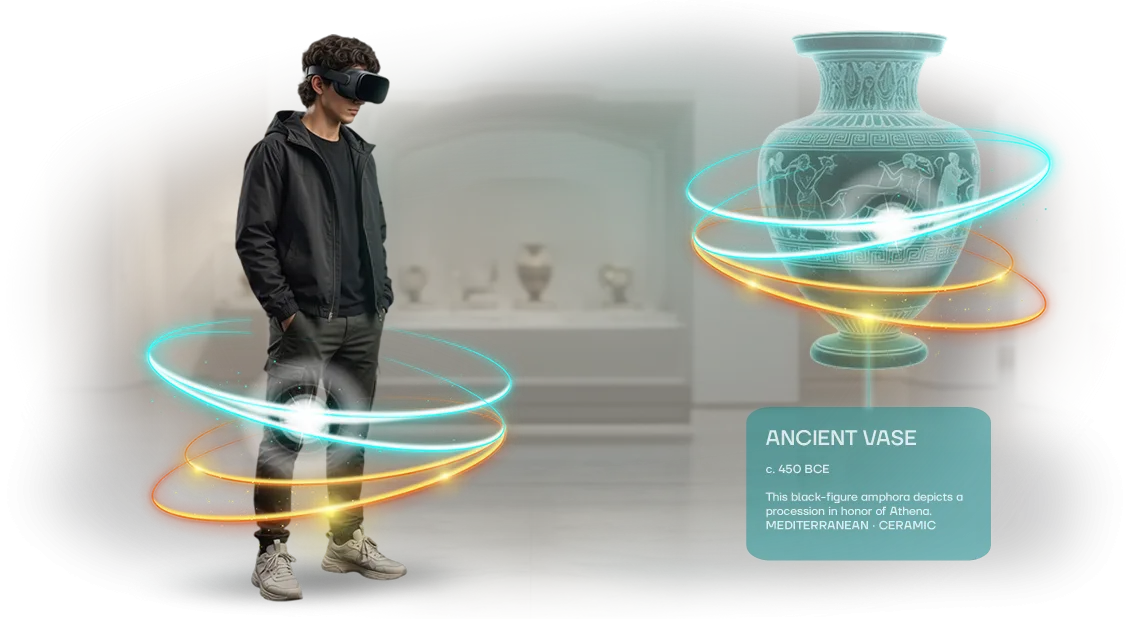
| VR tour | Open days, exhibitions, staff training | Full immersion in the production process. The guest puts on a headset and finds themselves inside the workshop — an experience like this is memorable and builds trust in the brand. |
The panorama covers the mass-reach task — it is easy to place on a website and in a newsletter. The showroom helps sell products remotely, especially when clients have no opportunity to visit.
The VR format suits high-profile events and work with key partners, when you need to make an impression and create a sense of presence.
We help you choose the right format for your task, and if needed we combine them: for example, a panoramic tour for the website and a VR version for an exhibition.
In any case, you get a ready-made tool that works for brand awareness and sales without being tied to the client's geographic location.
How virtual tour development works
We develop virtual tours for food production facilities on a turnkey basis: from the first brief to launch and support.
The stages of creating a virtual tour are transparent in advance — you understand what is happening at each step and can influence the result without missing deadlines.
- Brief and objectives. We discuss why the tour is needed, who will view it, and which workshops, lines or zones should be captured.
- Script and work plan. We map out the route through the production facility, think through the logic of transitions and agree on the timeline for each stage.
- Concept approval. You see the structure of the future tour: the set of points, navigation and interactive elements that will add value for visitors.
- Preparation and filming. We professionally capture the space, equipment and processes — in a way that preserves the atmosphere of a real production facility.
- Assembly and testing. We combine the materials into a single virtual tour, add hints and check how it works on screens of different sizes.
- Launch and support. We publish the tour on your website or a separate page, train your team and stay in touch for updates.
A project usually takes from two to four weeks, depending on the number of points and the complexity of the script. As a result, you get a ready-made tool that showcases your production at any time, without the need to personally guide every visitor through the workshop.
What is included in the virtual tour package
When you order a virtual tour for a food production facility, you get more than just attractive 3D scenes — you get a working sales tool.
It showcases workshops, lines, and quality control in a way that removes the buyer's doubts about the supplier's reliability and makes negotiations faster.
The package includes the full set — from shooting to analytics. Here is what the client receives as part of the virtual tour:
- Ready-made 3D production tour — with an overview of workshops, equipment, and quality control areas, consistent on a computer, tablet, and smartphone.
- Adaptation to your brand style — logo, colors, voiceover, or text explanations that strengthen brand recognition.
- Publication on your website — installation on your site or a separate page that withstands peak loads without losing loading speed.
- Training for your team — managers will be able to independently embed the tour into presentations, emails, and commercial proposals without waiting for the contractor.
- Warranty support and updates — if the layout changes or a new line is added, we will promptly make edits so the tour remains up to date.
- Analytics dashboard — you see which scenes are viewed most often, how much time visitors spend, and after which materials requests come in.
The result of development is a system that pays for itself by reducing the time needed to approve deals and increasing customer trust. You receive not an “image for the sake of an image,” but a manageable tool that helps you sell with more confidence.
Case study: how a virtual tour increased a manufacturer's sales
Cheese producer «Сыроварня» constantly received requests from retail chains and distributors, but it was impossible to bring everyone to the production facility. Buyers doubted the quality, and managers spent hours on in-person meetings and mailings with photos. This slowed sales and delayed the launch of new product lines.
We met the need with a virtual tour: from raw material intake to packaging. The client independently walks through the workshops, zooms in on areas, and sees the processes. Filming was done with professional equipment, so the image looks natural and builds trust.
What the virtual tour gave the business
The virtual tour case study showed a measurable effect in four weeks. The increase in requests from the virtual tour was 40%, supply coordination time decreased from a week to two days, and the share of repeat orders grew by a quarter. The tour was included in commercial presentations and mailings for wholesalers.
Client feedback confirms the result: “Previously, we held ten meetings a week to convince a client of quality. Now the person first studies the production in 3D, and only terms remain for negotiations. The tour paid for itself in the first month and continues to bring in requests.”
Such a virtual tour case study shows: a 3D tour strengthens trust in food production and works as a sales department that helps the business grow without additional travel expenses.
How to choose the right format for a virtual tour?
There is no universal “best” format: the choice depends on the business task you are solving with a virtual tour. If the goal is to strengthen trust in food production and speed up negotiations with clients, an interactive panoramic tour of the production halls is sufficient.
If you need to train employees or conduct dozens of tours without stopping production, you should consider a fully immersive VR mode.
To demonstrate closed processes that cannot be filmed with a camera, a 3D model of the production hall with interactive points is more suitable. It clearly shows the technology, line operation and quality control without revealing trade secrets.
This format is often chosen by manufacturers that work with retail chains: the partner sees the company’s “kitchen,” but without risk to sanitary standards.
The third scenario is a virtual showroom of finished products. It helps show the assortment, packaging and product advantages to distributors and retailers. The visitor chooses what to examine, while you collect statistics on interest in each item. This is valuable for the sales and marketing department.
We select the format for your task, rather than offering a single template. During the consultation, we analyze the specifics of your food production: the number of objects, the use scenario, who will view the tour — buyers, partners or staff. After that, we recommend the optimal option by budget and implementation timeline.
The main criterion is measurable results: increased trust, reduced negotiation time, expanded client geography without business trips. Submit a request — we will help you choose the virtual tour format that solves your specific task.
Frequently asked questions about virtual tours
Before ordering a virtual tour of a food production facility, the same questions come up: how much it costs, how quickly it pays for itself, whether workshops need to be stopped, and who is responsible if something goes wrong. Below is a brief overview of how we address these risks.
How much does it cost to develop a virtual tour?
The cost depends on the number of scenes, the level of detail on the equipment, and the format: an overview tour, a training tour for employees, or an image-building 3D showroom.
We calculate the cost for your specific task and show you the estimate before work begins — with no hidden extra charges. Most often, the project pays for itself through savings on printed materials, presentations, and client visits to the site.
How quickly is a virtual tour produced? A typical project takes 2–4 weeks, including shooting, processing, and assembly. Tight deadlines are possible: for that, we agree on the shooting plan and the list of key points that must be included in the tour in advance.
If the production facility is operating, we will adapt to the workshop schedule so as not to interfere with output.
Do production lines need to be stopped and the site prepared? In most cases, no. We work with operating production: we shoot during breaks between shifts or in technological windows, without stopping the equipment.
All we need from you is access to the workshops and approval of the route. Our specialists handle lighting and safety issues themselves, so your employees won't have to be distracted from their work.
What should be done if the virtual tour breaks or becomes outdated? We provide a warranty on the tour's operation and stay in touch after launch: we update information, add new workshops, or change product descriptions.
If something stops opening or displays incorrectly, we will fix it as part of technical support. What you get is not a "file on a disk" but a working tool that we stand behind.
Still have doubts? Ask a question directly, and we will show you examples of tours for food production facilities where similar tasks have already been solved.
Submit a request for virtual tour development
You already know what your production facility looks like from the inside: workshops, lines, quality control. But the buyer, distributor, or partner sees only the packaging — and often it is at this stage that trust in the product is lost.
A virtual tour removes this barrier: a person walks through the workshops from anywhere in the world, sees the cleanliness and technology, and then makes a decision about cooperation.
Submit a request for virtual tour development — and we will prepare a solution for your budget and goals. No abstract promises: only specifics on timelines, scope of work, and results.
After submitting the request, you will receive:
- Consultation on the virtual tour: we will determine which production areas to show first and what is better left out of frame.
- Cost and timeline calculation: we lock the project parameters before the start, so you understand the budget and launch date without hidden extra charges.
- Site analysis: we assess the workshop area, lighting, and shooting logistics — this affects the choice of format and the number of display points.
- Selection of the suitable format: panoramic shooting, interactive 3D walkthrough, or a combined option with video and infographics.
- Publication plan: how to integrate the tour into the website, presentations, and social media so it drives sales rather than sitting idle.
- Clear commercial proposal: a list of work, stages, and results in one document — convenient for approval within the company.
Submitting a request takes one minute, and the benefits of a virtual tour stay with you for years: it works as a permanent digital employee of the sales department — welcoming guests, answering questions, and building brand trust even at night and on holidays.
Don't delay: competitors are already showing their production facilities to clients online. Submit a request now — we will discuss your task within one business day and propose a solution that will pay for itself during the first negotiations with a large customer.