



Losing clients at events? You need an online event space
Every offline event is a significant investment: venue rental, booth, logistics, team effort. But when it's over, you see the key thing — how many visitors were genuinely interested in the product and how many simply walked past.
Too often, contacts are lost: business cards end up in drawers, emails go unanswered, and a potential client forgets about you in a day.
This isn't a weakness of the product but a limitation of the format: a physical venue doesn't hold attention and doesn't give you an understanding of who your audience is.
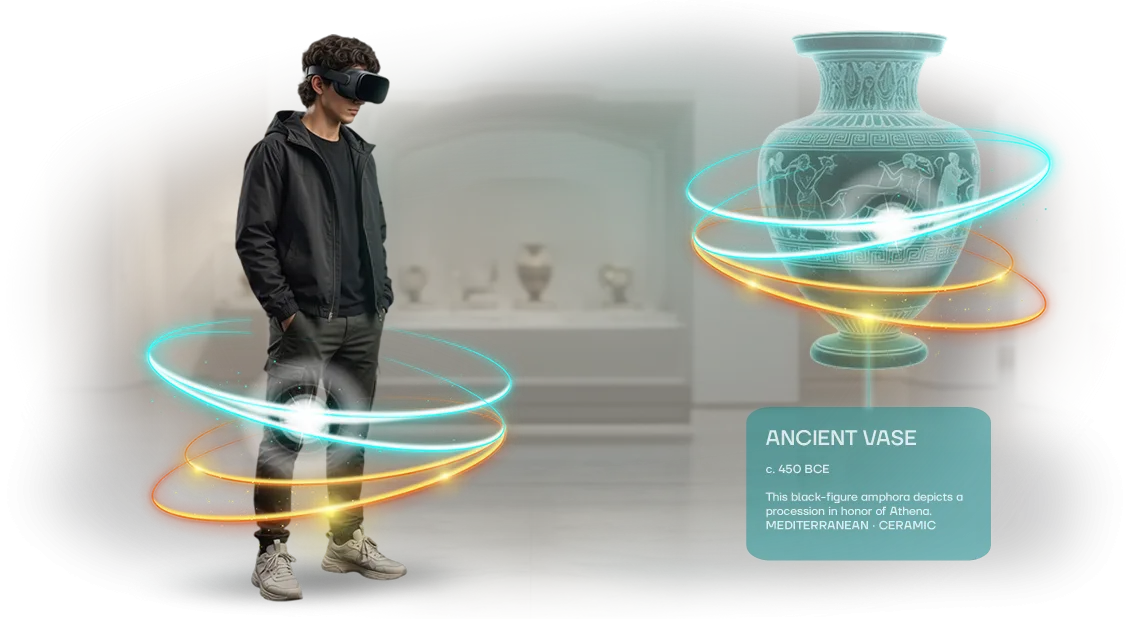
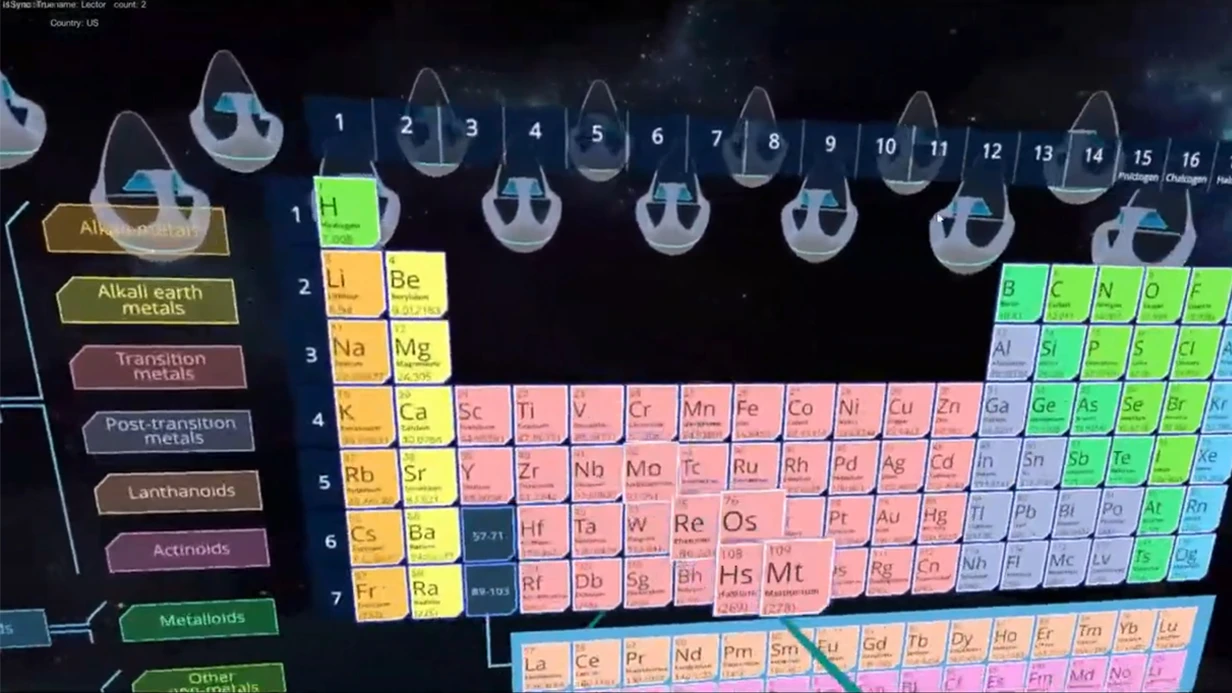
A virtual exhibition solves this problem. An online event brings together guests from any city and time zone, and the interactive space holds them at your booth longer than a static stand.
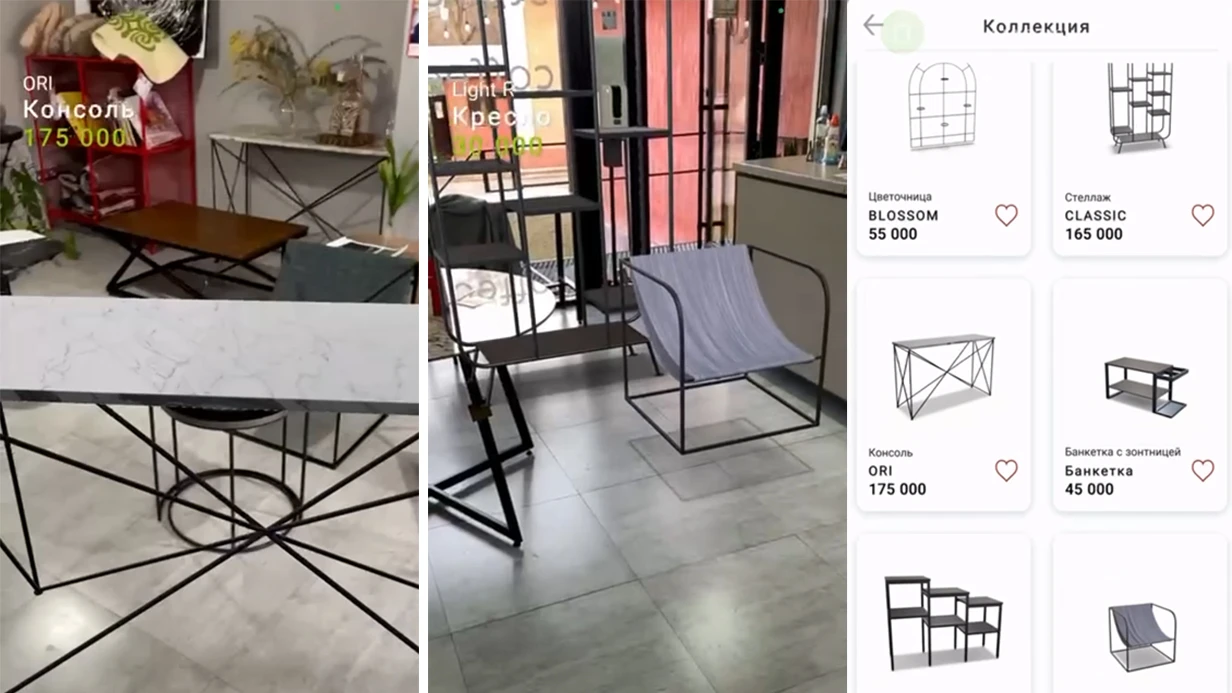
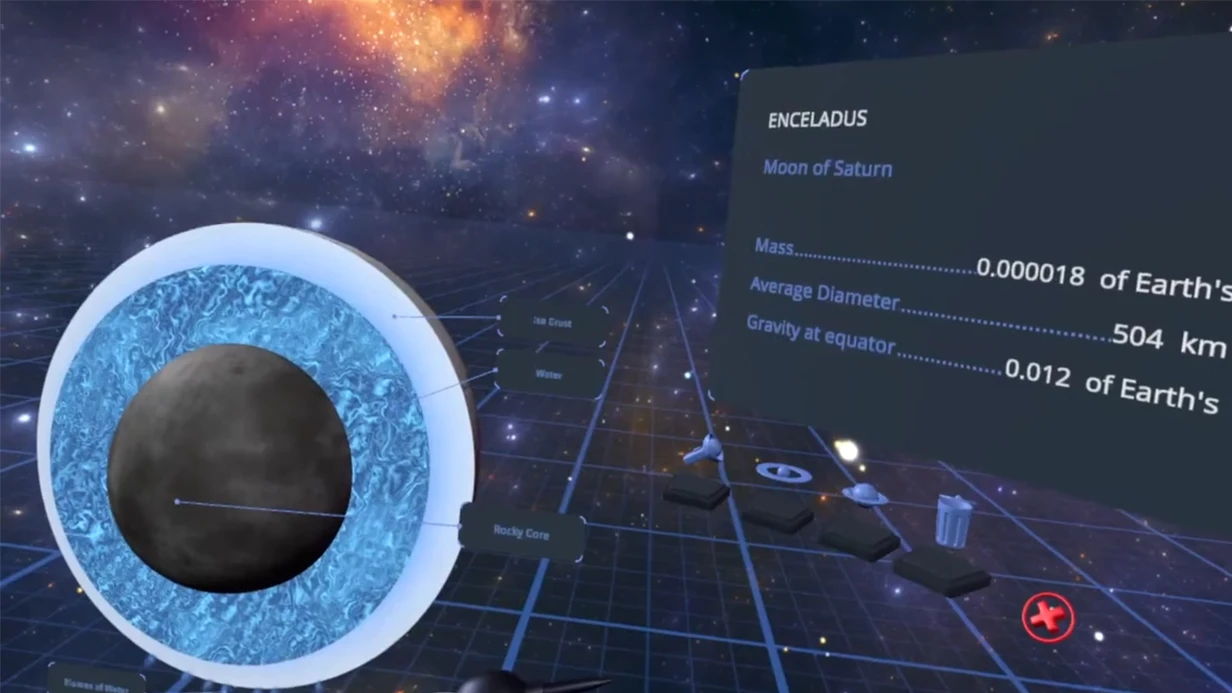
The visitor decides what to explore: a 3D product model, a video, a catalog, or a live chat with a manager. Every action is recorded — you see who was interested, what they viewed, and who you should contact. That means you stop losing clients at events and get a transparent sales funnel.
Such an online event space turns a one-time event into an ongoing acquisition channel: it's available 24/7, easily embedded on your website, and keeps working after the exhibition ends.
You don't pay for rental twice — the virtual venue pays for itself and continues to generate requests for weeks and months. This is no longer a one-off campaign but a full-fledged company asset.
And that's exactly what we do: we design virtual exhibitions and showrooms for your business goals, so every investment in an event delivers tangible results.
What you get from a virtual exhibition
A virtual exhibition is not an online copy of a booth but a working customer acquisition tool. You get a venue that is open around the clock, requires no hall rental, and keeps bringing requests even after the official closing.
The main result is broader reach. Participation in an offline event is limited by city and dates, while the virtual format is available to visitors from any region and time zone.
You reach an audience that physically couldn't get to your booth before — and without spending budget on travel and logistics.
The space itself drives engagement. Visitors don't flip through boring brochures; they move through halls, examine products in detail, watch videos, and open the materials they need in one click.
This format holds attention several times longer than a catalog page, making every contact meaningful.
Lead collection is built around the visitor: registration at the entrance, digital business cards, the ability to ask a question in chat and submit a request right at the virtual booth.
All information is neatly collected into a single system — you get a contact database with clear markings showing who is interested in a specific product and can pass it on to your managers for follow-up.
Brand awareness is strengthened through atmosphere. Your own corporate style in the design, an original 3D layout, and interactive elements leave an impression on participants, while screenshots and visit recordings spread across social media, amplifying the effect.
In the end, a virtual exhibition keeps working for you long after: it stays available for repeat visits and becomes a permanent entry point for new clients.
We think through every scenario so that investments pay off not only in the number of participants but also in the quality of contacts that turn into real deals.
Online event space formats for your task
Each task requires its own format: showing a new product to partners is one thing, running an industry exhibition is another, and gathering thousands of participants for a conference is yet another.
So we match the online event space to a specific goal — from a compact 3D showroom to a full-fledged virtual venue with halls for presentations and networking.
The online format removes the barriers of a physical venue: guests join from any device, and you see attendance numbers in real time.
The right format affects budget, timelines, and the guest experience. You don't need to pay for unnecessary features or sacrifice functionality — just choose the option that solves your task and leaves room to grow.
The scale can be expanded gradually: tomorrow you can add new halls, CRM integrations, or paid registration without rebuilding from scratch.
Format comparison
| Format | For whom | What it gives the client |
|---|---|---|
| 3D showroom | Companies with a product catalog | Clear product demonstration, increased trust and conversion, close-up inspection of details |
| Virtual exhibition | Organizers of industry events | Audience reach without venue rental, easy navigation, per-booth statistics, visitor contact collection |
| Virtual conference | Speakers and forum organizers | Live streams, audience questions, participation from anywhere in the world, session recordings for on-demand viewing |
| Full event space | Large-scale events | A single venue for exhibition, stage, and informal networking, flexible event scenario |
If you're not sure which format fits, we'll discuss your task and suggest the best option. Often it's enough to start with a 3D showroom and then expand it into a full venue. We handle development, launch, and technical support — so you can focus on the content.
Development stages of a virtual exhibition
Organizing an exhibition in the traditional format means hall rental, booth logistics, a limited visitor flow, and tight deadlines. A virtual exhibition removes these limitations and becomes your online event space, open to guests from anywhere in the world.
To keep the result predictable, we've broken the work into six stages — from the brief to post-launch support.
-
Brief and immersion into the task. We discuss who your audience is, what goals the exhibition should meet, and what content should engage visitors.
We define success criteria — this way we know we're moving toward the right business outcome rather than just making something that looks nice.
-
Prototype and user scenario. We design the structure of the space and the visitor's journey: what they see, how they move, where they stop, and what actions they take. Aligning the logic before development starts means protecting yourself from expensive fixes in later stages.
-
Design and 3D concept. We create a visual identity that reflects your brand style and the atmosphere of the event. You approve the mockups before programming — this reduces the number of iterations and makes the exhibition creation process transparent.
-
Assembly and content filling. We combine design with functionality: upload materials, connect videos, catalogs, feedback forms, and interactive zones. At this stage you already see the space coming to life and can make edits to the content.
-
Testing and launch preparation. We check performance on different devices and internet speeds, fix issues, and optimize loading times. You get a stable space ready to welcome guests without surprises on the event day.
-
Launch and support. We publish the exhibition, help your team get comfortable with it, and stay available throughout the event. After it ends, we provide attendance analytics and recommendations on how to develop the space further.
What's included in the virtual exhibition delivery
When you order a virtual exhibition, it's important to understand the project scope in advance. You get more than just a link to a website — you get a complete delivery package: an online venue, content, integrations, training, and documentation. This approach lets you launch the event on time and without surprises.
Here's what's included in the development of a virtual exhibition:
- Online venue — virtual halls and booths with easy navigation. Visitors join from any device, without installing software or registering.
- Exhibition content — 3D models, photos, videos, exhibit descriptions. We help you prepare the content or use your own if it's already ready.
- Integrations — registration forms, payments, email campaigns, analytics systems. Everything is connected to your business systems, and data is collected automatically.
- Team training — we train administrators and moderators: how to manage booths, chat with visitors, and change content. You won't depend on us in your daily work.
- Documentation — clear instructions for setup, operation, and content updates. Any employee can figure it out in an hour, even without technical experience.
- Support — technical assistance on the event day and after. If anything goes wrong, our engineers step in quickly and resolve the issue.
The delivery package is tailored to the task: for a small exhibition, a basic set is enough; for a large one, additional modules are added. We agree on the scope before work starts, so you know exactly what you're getting and what you're paying for.
Case study: how we ran a conference for 2,000 guests
For a major industry forum «ПромЭнерго», we designed a virtual exhibition and conference that brought together 2,000 guests from 14 countries. Over two days, there were 36 talks and 9 tours of digital booths — without travel, venue rental, or logistics.
The main result was the quality of contacts: 74% of participants visited the booths and left requests, and the average time spent on the venue was 42 minutes.
The organizers received complete statistics on every guest — from sessions attended to downloaded materials — and used them for follow-up work with partners. The event results confirmed that participants value the convenience of joining without travel.
This virtual exhibition case showed the client that the digital format is on par with in-person events. Their feedback: "We expected it to be weaker, but in terms of qualified leads the conference outperformed our previous in-person event.
Guests keep coming back — even a week after it ended." A month later, the client returned to us for the next project — already with an expanded program and additional networking areas.
The platform ran without interruptions even at peak load — we use professional equipment and our own server architecture.
For us, this isn't a one-off task but a systematic approach: each project builds on the experience of the previous one, and you get a predictable result and clear metrics. If you want the same outcome for your event — tell us about your task and we'll propose a format.
How to choose the right format for your task?
Choosing a format starts with two questions: what task the event solves and what budget you're ready to set aside.
For attracting new clients, a virtual exhibition with interactive booths works well; for a detailed product presentation, a 3D showroom with a display case and the ability to examine the model from all angles; and for regular webinars and meetings, a compact online venue with video and chat.
There's no universal solution, so together with the client we first define the goals and only then look at formats.
The second factor is the scale and complexity of the event. A small online exhibition with a few exhibitors can be ready in a few weeks and doesn't require a large budget.
A major event with hundreds of visitors, interactive zones, and custom design is a separate project with scenario development and load preparation. We choose the level of immersion that delivers the desired effect at a reasonable cost.
The third factor is the audience. Mass events need an intuitive interface with prompts; professional sessions need rich scenarios with personalization.
It's important that visitors don't get stuck in the virtual space but quickly find the information they need and complete a target action: registration, a request, or a purchase. At the brief stage, we clarify who your guests are and how ready they are for a new experience.
Budget is not a limitation but a selection criterion. For a small test presentation, a standard format with a minimal set of options is enough; for a large-scale launch, a unique space with animation, integration with your business systems, and analytics.
We show you in concrete terms what you get at each investment level and choose an option that pays off. Tell us about your event — within a couple of days we'll suggest a suitable online event space for your goals and budget.
Frequently asked questions and client concerns
Having doubts before launching an online venue is normal.
Most often they concern "it will be complicated," "it will be expensive," or "what if something breaks." We've collected answers to the most common questions so you understand how the work is organized and what guarantees you get.
What if the venue can't handle a surge of visitors?
We design the virtual space with a load margin based on your scenario: from a private presentation for 20 guests to a public event with several thousand users. Our engineers verify stability under test loads before launch and monitor the venue on the event day.
If attendance turns out higher than expected, rapid capacity scaling is built in. You get peace of mind: the technology won't fail at the most critical moment.
Will it be difficult for our clients?
Visitors don't need to install anything or figure out settings — everything opens via a link in the browser. The interface is intuitive: guests immediately see where to go, how to view the exhibits, and how to ask a question.
We adapt the navigation to your audience and run a quick test with real users before launch. In the end, participating in the exhibition takes the client about the same time as browsing a website — no instructions or training needed.
Is it expensive and what guarantees do you offer?
The cost depends on scale and level of detail: a basic virtual exhibition costs noticeably less than renting a physical hall when you factor in decoration and staff.
At the same time, the venue works around the clock and accepts an unlimited number of visitors, giving you direct growth in reach without additional expenses.
We fix the scope of work and timelines in the contract, show intermediate versions at every stage, and don't require full payment before project delivery.
The venue comes with a warranty of one year or more: if something goes wrong, our engineers will fix it free of charge and as quickly as possible.
Book a consultation and start your project
You need an online venue that works for your business, not just a "nice-looking website." We suggest starting with a consultation: you tell us about your guests and goals, and we advise which format of virtual exhibition or 3D showcase will bring the greatest reach and conversion.
In 30-40 minutes of conversation, you'll get honest feedback on your idea, an approximate estimate, and a plan for your first steps. No obligations — only value and clarity.
What you'll learn after the consultation:
- Whether your scenario suits an online format and how to strengthen it
- Which features are truly necessary and where you can save
- An approximate budget and launch timeline — with no hidden fees
- Which metrics to build in from the start so you can measure results
- Examples of similar projects our team has done, with attendance numbers
- How the work will proceed at each stage and who is responsible for the result
After the consultation, you'll be able to make a decision without pressure or rush. If you decide to move forward, we'll prepare a detailed proposal and set timelines. If not, you'll walk away with a clear action plan that's already worth the money.
Leave a request for a consultation — we'll respond within one business day. Start your project with a simple conversation that saves you time and effort, not the other way around.