



Virtual Tour of Brest Fortress: Why Don't Visitors Return?
Many museums and memorial complexes face the same problem: visitors come once, take photos, and never come back. The reason is not a weak exhibition but a barrier—geographic, physical, or time-related.
To see the Brest Fortress, you need to plan a trip, set aside a day, and cover the distance. For a tourist from another city or a family with children, this is often too expensive and complicated.
A virtual tour of Brest Fortress removes these barriers. Visitors get the chance to immerse themselves in the atmosphere of the memorial from anywhere in the world—behind a single screen, without tickets or queues.
This is not a replacement for a real visit but a way to expand the audience and spark interest: after a 3D tour, guests are more likely to plan an offline trip.
The interactive tour also works in favor of museum attendance itself. It holds attention longer than a regular video, lets visitors examine details at their own pace, and share impressions on social media. Every such view is free advertising and a reason to come back in person.
We develop virtual museums and 3D tours tailored to the specific needs of each site: with narration about key landmarks, convenient navigation, and mobile adaptation.
We help solve the problem of one-time visits and increase visitor return rate—let's start with an audit of your exhibition.
What an Interactive Exhibition Can Do for Your Museum
An interactive exhibition is not just a website addition but a working tool for attracting visitors. The virtual tour of Brest Fortress allows the museum to be present online around the clock and turn interest into real visits.
What you get:
- Greater audience reach. The online tour is available from anywhere in the world 24/7. This multiplies the audience far beyond the city and the country.
- Brand recognition. A virtual tour is easy to share on social media and messengers, bringing free traffic and raising the museum's status.
- Attracting tourists. The immersive presentation creates a desire to see the site in person—the tour works as a billboard for your museum.
- Museum leads. We collect contacts of interested users so you can send them announcements of exhibitions, programs, and special offers.
Each of these points is backed by analytics and a well-thought-out tour structure. We make sure the benefit is measurable: from views to actual bookings.
Interactive Exhibition Formats for Every Task
Each venue solves its own problem: someone needs to show the fortress in full, someone needs to engage visitors in the story, and someone needs to create a sense of presence.
The interactive exhibition format determines how long a guest stays inside and how deeply they remember the brand. We select the option based on your audience, touchpoint, and budget—from a light overview panorama to a full virtual tour with an immersive effect.
| Format | For whom | What it gives the client |
|---|---|---|
| Interactive panorama | Website, social media, exhibitions | Instant overview of the location without installing apps—maximum reach from any device |
| 3D tour | Museums, fortresses, memorials | Full immersion in the space: the guest "walks" through the territory, discovers details, and returns again |
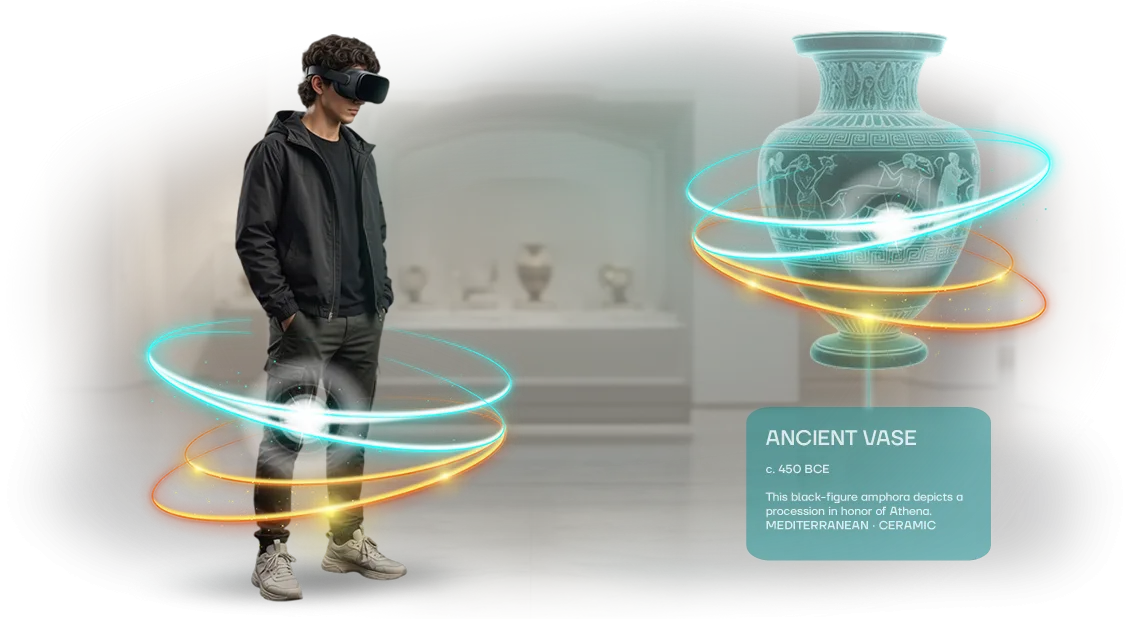
| VR tour | Schools, tour operators, event venues | Effect of personal presence: an emotion that people discuss and share after the event |
For Brest Fortress, format combinations work best: the panorama provides a quick overview, the 3D tour offers deeper exploration, and the VR tour delivers a powerful impression for those who cannot visit in person.
We combine them so each communication channel gets its own scenario: the website—an introduction, social media—teasers, an offline stand—engagement.
This approach turns the digital exhibition into a working tool for attracting guests. You measure results in reach, engagement, and repeat visits, not in the number of installed programs. All formats run on a regular computer or smartphone—no special knowledge required from the visitor.
Stages of Developing a Tour for a Museum
Creating a virtual tour for a museum is not just shooting; it is a structured process where you control quality at every step. We split the work into six stages: from brief to support.
This approach has already shown results at Brest Fortress and allows us to meet deadlines without losing important details.
- Brief and audit. We study the task, the territory, and key display points. We clarify the target audience, usage scenarios, and deadline constraints. You receive a transparent cost estimate and work plan.
- Concept and scenario. We propose a route, narrative logic, and emphasis. We show how the visitor will move through the territory and which objects will appear in the frame. We approve the idea before shooting begins.
- Shooting and modeling. We create panoramas and 3D models with professional equipment. We convey the atmosphere of the place: light, textures, details. Within a few days, you receive a draft version of the tour for initial review.
- Approval and revisions. We make changes based on your feedback: adjust navigation, texts, and object highlighting. We approve the final version so the tour launches exactly on the planned date.
- Launch and integration. We publish the tour on your website or a dedicated page and set up visit statistics. We check performance on computers, tablets, and smartphones.
- Support and development. We update content, add new objects, and monitor stable operation. You can contact us at any time—we are always available.
What Is Included in Exhibition Development
We deliver not just files but a working tool. The package includes a complete virtual tour platform for Brest Fortress, access credentials, instructions, and staff training—everything you need to launch the exhibition and manage it independently.
What the Tour Includes
- Ready-to-use virtual tour platform — works in a browser on computers, tablets, and smartphones, with no additional software installation.
- Administrator and editor access — you decide who can update content and make changes at any convenient time.
- Clear administration instructions — explain how to replace text, add photos or videos, move navigation points, and change captions.
- Staff training — we hold an online session and walk through real scenarios: how to add a tour, connect an audio guide, and export visit statistics.
- Project documentation — exhibition structure, list of functional zones, recommendations for further tour development and promotion.
- Project result confirmed by an acceptance certificate — the tour is checked against a checklist: loading speed, correctness of all routes, display on different devices, and search functionality.
This package addresses the manager's biggest fear: "what happens when the contractor leaves?" You do not get a "black box" but a fully manageable exhibition.
After training, your staff can update information for new exhibitions and anniversaries, and the documentation becomes the foundation for developing the tour one year and three years from now.
Project Results for a Historical Site
For historical sites, the main problem is the gap between online interest and an actual visit. Photos and texts do not convey the scale, so visitors hesitate.
The virtual tour of Brest Fortress closes that gap: a person walks through the citadel, peers into the casemates—and begins planning the trip.
We built such a tour for the memorial complex and integrated it into the official website.
Case Study: How a Virtual Tour Increased Visitor Flow
The tour page became one of the most visited, and the share of clicks to the event poster and tickets grew by almost a third.
According to the administration, during the "low" season, the number of real visits increased by 18–22% compared to the same period before the launch.
Tour guides send the tour to groups in advance: tourists arrive prepared, ask fewer basic questions, and the tours become richer. In reviews, guests write that they "came specifically" and "saw what cannot be seen from the ground."
The site remained under our support: we updated the panoramas and added two new routes. The complex extended the contract—the project paid off through increased ticket and souvenir sales.
In our practice, such tours for museums and parks increase visitor flow by 15–25% in the first season, and tourists spend twice as much time on the website. Want the same result? Let's discuss the task and show a demo at your site.
How Long Does It Take to Create a 3D Tour?
Exact timelines depend on the project scale, but on average a virtual tour takes from two weeks to two or three months.
A compact tour of a hall or showroom fits into 2–4 weeks, while a large historical complex like Brest Fortress with dozens of points and interactive elements takes longer.
What affects the timeline? Source materials: ready-made drawings, plans, photos, and video footage speed up the work, while reconstructing the appearance from archival data adds time.
The second factor is the level of interactivity: audio guide, hints, free-movement mode, video—each element requires refinement, but it is exactly what makes the tour valuable to visitors.
Timelines also depend on approvals. We work in stages: we approve the scenario and intermediate visualizations before final assembly. This saves time overall, and the pace depends on how quickly you respond—the faster you mark revisions, the sooner we publish the finished result.
We do not like surprises: after the brief, you receive a plan with dates and control points.
For historical sites like Brest Fortress, we use professional shooting and verify details against documents, so revisions are usually few—one or two iterations, and the project is delivered.
In total: from brief to publication—from 2 weeks to 3 months. If you need an accurate estimate for your site, we will send a calculation within a couple of days: describe the task, and we will propose a schedule with dates.
Frequently Asked Questions About Exhibition Development
Before launching a virtual tour of Brest Fortress, managers ask the same questions: will the system handle a surge of visitors, how will the exhibition fit into the current website, and when will the investment start paying off. Below are answers to the objections that most often arise during the approval stage.
Will the tour crash if hundreds of visitors open it at the same time?
We work on a server architecture designed for peak loads. We have launched exhibitions for events with tens of thousands of guests—the system maintained stable performance without freezes.
We also configure a capacity reserve for the expected traffic: even if school groups, conference participants, and regular tourists connect to the project at once, the tour remains accessible.
How will the tour integrate with our website, social media, and QR codes on the territory?
Integration is done at the launch stage: we place the link and player on your website, prepare buttons for social media, and short QR codes for printed materials. A visitor opens the tour in one click, with no app installation required.
The entire setup takes a few days, and further changes—for example, a new promo code or a banner at the entrance—are made after launch upon your request.
When will the virtual exhibition pay off?
The tour starts delivering value immediately after launch: it is available around the clock and does not require a tour guide's presence.
School groups, tourists, and delegations get to know the fortress before arriving—this increases the number of real visits and requests for guided tours.
Based on our projects, institutions recover their investment within several months through increased ticket, souvenir, and paid tour sales. Plus, the digital exhibition works as a permanent tool for drawing attention to the site.
Who updates the tour and adds new materials?
We take over support: we update information, upload new photos and texts, and monitor performance. You do not need to hire a separate specialist or dive into technical details.
If necessary, we train your employee in simple operations—in case you want to change schedules or posters yourself. Just write to us, and the changes appear in the tour.
What guarantees do we have that everything will work reliably?
We specify in the contract the launch timeline, load parameters, and problem resolution procedures. If a failure occurs during the warranty period, our engineers fix it within the agreed time—usually hours, not days.
After the warranty ends, a support plan remains: you pay a fixed amount, and we continue monitoring the project and making adjustments.
Order Interactive Exhibition Development
Leave a request for the development of an interactive exhibition for Brest Fortress—and we will prepare a custom proposal for your tasks. We will show how a virtual tour can boost attendance and recognition of the exhibition, help retain visitor interest, and attract new guests.
We specialize in digital exhibitions for museums and historical sites, so after your request you receive not a generic price list but a solution adapted to the specifics of the fortress: tour formats, viewing scenarios, and ways to present historical facts.
After you contact us, we will provide an expert consultation and a project cost estimate. You will get the full picture of timelines, scope of work, and integration options, with no hidden conditions.
What you receive after your request:
- Consultation with an exhibition and virtual tour format specialist—tailored to your site's needs.
- Cost and timeline estimate based on the scale of the location and the number of display points.
- Recommendations on tour structure: from the fortress's main landmarks to hidden corners that usually do not make it into the frame.
- A prototype of the future exhibition before work starts—see how the tour will look and make changes.
- A personal manager at every stage—from contract to launch and acceptance.
- Support after project delivery and the ability to expand the exhibition with new locations.
You can order a tour right now—just leave a request on the website. We will contact you within one business day, discuss all the details, and offer a solution that strengthens your exhibition.
We focus on results: growing interest in the site, visitor convenience, and a modern image for your institution.