

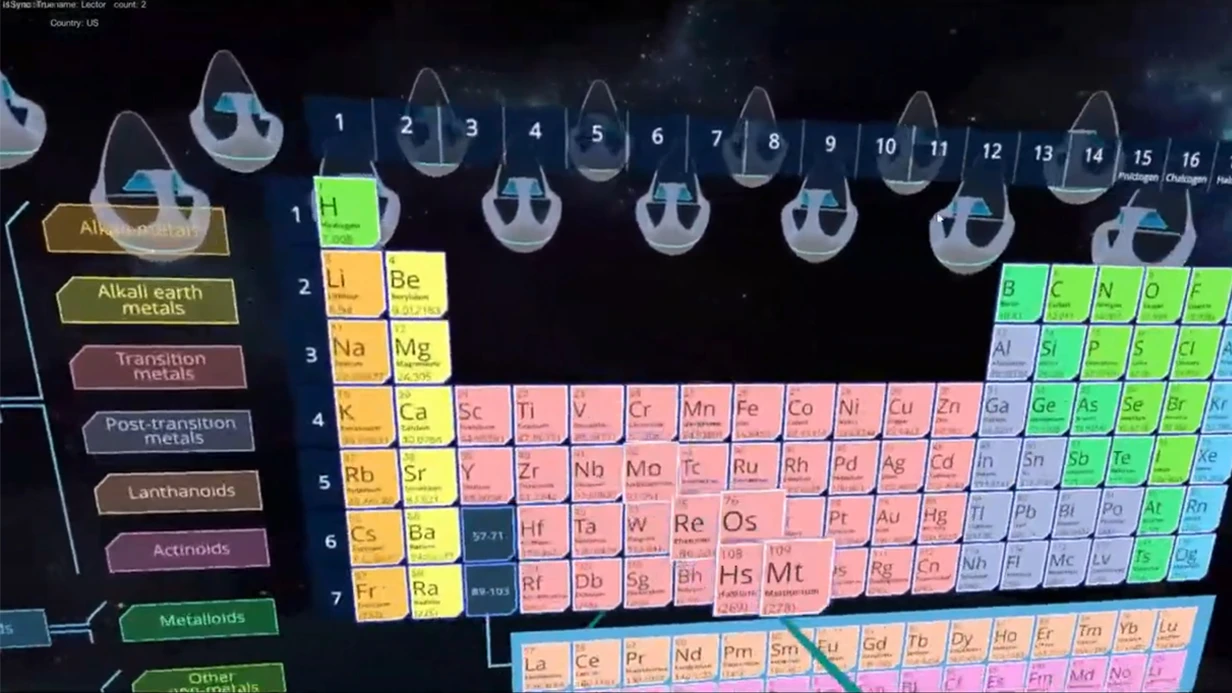


VR Showroom for Fitness Equipment: Customers Leave Without Seeing the Product
Fitness equipment is large and expensive. Clients want to see the machine in person: assess its dimensions, how comfortable it is to use, and how it will fit into their gym.
Without that opportunity, sales without a showroom turn into a string of doubts: photos don't convey a sense of scale, a manager can't answer simple questions, and the deal drags on for weeks or falls through entirely.
Every such case is a lost customer. The person goes to a competitor who was able to show the product "in action": on video, in a demo room, or during an online presentation. For the manufacturer and distributor, this is direct lost revenue and a hit to brand reputation.
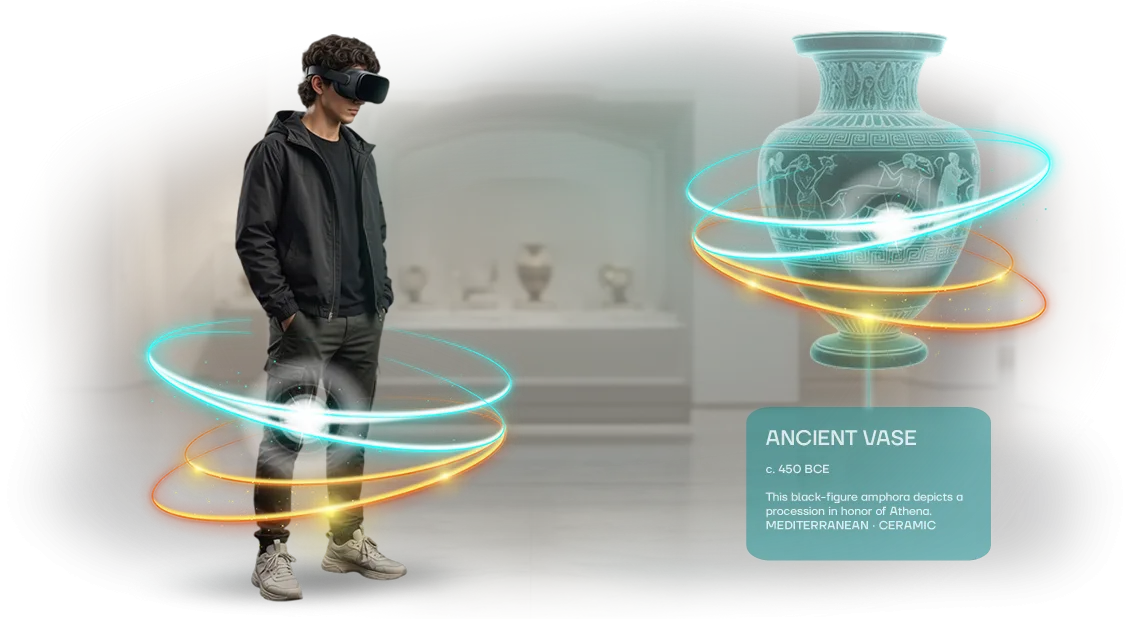
A virtual showroom solves this problem. A potential buyer opens a link and examines the machine from every angle, zooms in on details, checks whether there will still be room to walk through the gym — all without a manager visiting in person or renting exhibition space.
This makes product presentation complete, and the customer feels confident even before the first meeting.
Wehelp fitness equipment manufacturers close deals without a physical showroom. We create an interactive catalog where every model is visible at real scale and in a typical gym interior.
Visitors choose their own angle, color, and configuration — and come back only with questions about price and delivery timelines, because everything else they've already seen.
Three Reasons Why a Virtual Showroom Sells Better Than a Catalog
A catalog shows the product, but it doesn't let you experience it. Especially when it comes to large fitness equipment: customers need to understand the scale, ergonomics, and how the machine will fit into the gym. A virtual showroom solves this problem — and turns viewing into a purchase decision.
Reason 1: Higher Conversion
Instead of static photos, there's an interactive space. Visitors approach the machine themselves, examine it from all sides, change the body color, and open up specifications. This format holds attention far longer than a catalog and much more often leads to an inquiry. That means more leads from the same traffic.
Reason 2: Customer Engagement
Machines are hard to evaluate from photos, especially when it comes to an entire product line. In a 3D showroom, you can "walk" through the gym, see how the equipment works together, and estimate distances and customer flow.
This is especially valuable for those outfitting clubs: the visual clarity removes objections before the customer even calls a manager.
Reason 3: Brand Recognition
The interactive format itself becomes an event. People talk about it, share links on social media, and show it to partners. For example, for FitRoom, we built a virtual showroom that replaced their catalog and became their key argument in negotiations. Projects like this set a company apart from competitors who are still sending out PDF files.
A catalog sells specifications — a showroom sells the experience of ownership. That's why leads from it are warmer and deals close faster.
Below we've gathered common questions: if you're unsure whether this format is right for you, the answers are already here.
Virtual Showroom Formats: From Exhibition to Online Store
Every fitness equipment seller faces the same task — to present the product in a way that makes people want to buy it without an in-person meeting.
One customer just needs to quickly flip through a catalog; another wants to "walk through" the gym and compare machines side by side. That's why we offer several virtual showroom formats that cover different stages of the sale.
| Format | Best for | What it gives customers |
|---|---|---|
| Virtual tour | Showroom owners and companies with an exhibition space | Buyers remotely explore the hall, see equipment in a real setting, and arrive already with a decision made. |
| 3D catalog | Online stores, dealer networks, marketplaces | Buyers rotate the model, change color and configuration. This presentation speeds up selection and reduces returns caused by "I expected something different." |
| Interactive presentation | Sales departments and B2B negotiations | Managers show all configurations on one screen, compare specifications, and hold customer attention 5–7 minutes longer than with regular slides. |
| Exhibition format | Participants in industry events and online events | Multiple virtual booths with navigation and a contact zone work around the clock. Audience reach is not limited by pavilion rental. |
Importantly, formats are easy to combine: start with a 3D catalog for your online store and add a virtual tour when new equipment lines arrive.
We'll choose the optimal option for your task and show you a demo before development begins — you'll see how it will work specifically for your business.
VR Showroom Development Stages: From Brief to Launch
How the work is structured
A transparent process with no surprises: you understand what happens at every step and when you'll receive the finished VR showroom for your fitness equipment.
We manage the project from the initial brief to launch and take responsibility for the result, so stages don't drag on and the budget stays within the agreed scope.
-
Brief and product immersion. We study your equipment line, audience, and goals: what should be the focus — all models or the flagship ones. The result is a clear cost estimate and timeline that don't change along the way.
-
Concept and scenario. We define the structure of the space: halls, zones, visitor route. You get the logic of the future showroom before money is invested in detailed 3D graphics.
-
Layout approval. We show the floor plan, color scheme, and lighting. This is the easiest stage to make edits — much faster and cheaper than redoing things after the full build.
-
3D modeling and content. We create realistic equipment models, materials, and textures. You see intermediate renders and adjust details before the final build.
-
Interactive showroom assembly. We connect the scenes into a single space, set up navigation, product cards, and video reviews. The result is a finished product, not a set of scattered 3D images.
-
Testing and launch. We check how the showroom opens on different devices and make final adjustments. We host it on your domain or provide an embed link for your website.
-
Post-launch support. We update content, add new models, and monitor stability. You're never left alone with the product and can grow it alongside your expanding assortment.
This sequence guarantees you get exactly what was agreed upon, without unnecessary iterations or hidden costs. Each stage is a measurable result that you see and approve yourself.
What the Project Includes: A Complete Package for Your Sales Department
You get more than just a VR application — you get a ready-made package for your sales department. Everything needed to work with customers is already assembled: from realistic 3D models to post-launch support. Below is the full checklist of what's included in the project.
-
3D models of your equipment — digital copies that can be examined from any angle. Every detail is refined and matches the real item, so customers see exactly what they'll receive.
-
Virtual showroom — a space where the models are placed. You can move around freely, zoom in on details, and open specifications — a complete environment for negotiations instead of static images.
-
Demo content — descriptions, key specifications, and configuration options. The materials are already built into the showroom; the manager just needs to lead the conversation and answer follow-up questions.
-
Employee instructions — a clear guide: how to open the showroom, start a demonstration, and send the client a link. Training takes no more than an hour, and no special skills are required.
-
Delivery package — accounts, access rights, links, and reference materials in one bundle. Everything needed to get started is provided at once, without having to request each item separately.
-
Post-launch support — model and content updates, technical assistance, and answers to managers' questions. If anything goes wrong, we jump in and resolve the issue within a couple of hours.
With this package, you integrate the VR showroom into your workflow the very next day — without waiting for finishing touches or hunting down information piece by piece. All materials are linked together and ready to use in sales immediately.
Case Study: Fitness Equipment VR Showroom Brought 120 Leads in a Month
A fitness equipment manufacturer came to us with a familiar pain point: the only way to show machines to dealers and end customers was through photos, and shipping heavy equipment around the country was expensive and slow.
Managers spent 30–40 minutes per call describing incline angles and stride depth, but customers were still afraid of making the wrong choice.
We built a virtual showroom where every machine could be examined from any angle, rotated, placed next to familiar objects, and even explored inside. Development took a month and a half, and the result exceeded the client's expectations.
What the client got
Within 30 days of launch, the showroom brought in 120 leads — 2.5 times more than their regular catalog over the same period. The leads were "hot": buyers had already chosen the model, color, and configuration, so deals closed noticeably more often.
The showroom paid for itself in the first week — the company saved on demo units, logistics, and business travel. Dealers started using it in their own sales, and the manufacturer gained a negotiation tool that works 24/7 without a manager's involvement.
Why it worked
Customers don't buy a picture — they buy confidence. A virtual showroom removes the main fear: "I won't understand what I'm buying." Once a customer has already "been" in the gym with the equipment, the sales department only has to discuss the terms. That's return on investment in its purest form.
After the initial launch, the client came back for phase two: we expanded the showroom to cover all new products and connected it to dealer websites. Today, this format has become their primary sales channel.
How to Choose the Right VR Showroom Format for Your Task?
The right VR showroom format for fitness equipment isn't chosen by how flashy it is, but by the specific business goal.
If the objective is to quickly introduce customers to a new equipment line, an interactive 3D showroom with detailed inspection and configuration changes is enough.
If you plan to collect contacts at an industry exhibition, a short virtual tour with a motivational quest and an inquiry form at the end works better.
The same product can support different formats, so the right answer starts not with technical details but with the expected outcome.
That's why we begin with a brief. During the meeting, we help you define who your target audience is, what scenario feels familiar to them, and what action should complete the journey — a call to a manager, a test-drive request, or an order for a commercial proposal.
This is especially important for fitness equipment: a buyer can't "touch" a treadmill or strength machine in a catalog, so the VR format must compensate for that tactile experience and give the person confidence in their choice.
The target audience dictates the depth of detail. A private buyer needs emotion and the feeling of "being in a real gym" — we create dynamic angles, realistic materials, and a sense of presence.
A corporate client cares more about specifications, model comparisons, and the ability to switch quickly between items, so we shift the focus toward information and navigation.
Properly defining the task helps avoid overloading the project with unnecessary features that don't serve your audience — and avoids paying for things you don't need.
The bottom line is simple: the right format is the one that speaks to your audience in their language and delivers a measurable result.
Come to us with your task — we'll point you to the right format, propose a scenario, estimate the timeline, and show you how such a showroom will help you sell fitness equipment faster and more vividly.
Answers to Questions About the Virtual Showroom
Most often, clients aren't afraid of the showroom itself but of surprises after launch: "what if everything freezes in the middle of a presentation, what if we want to change a model, what if it doesn't work with our website?" We understand these concerns and address them in advance — at the contract stage with a clear service agreement.
Here's how the work is structured, so you can make a decision confidently and without technical jargon.
What happens if the showroom breaks down or freezes during a presentation?
All work is covered by a warranty, and launched projects include technical support with a fixed response time. If an incident occurs, you write to us in your usual messenger, and we take over: restoring access or resolving the cause.
Critical failures during events are handled within a couple of hours, because we understand the cost of a failed presentation.
Is it difficult to update the catalog? Our models change every season.
On the contrary, for you it will be a simple operation. We build the showroom so your manager can change the lineup, descriptions, and prices without a programmer — through an easy-to-use admin panel.
If deeper changes are needed (new graphics, a new scene), you simply submit a request and we handle it under a separate agreement.
How does the showroom integrate with our existing website?
Integration happens at the level of a separate section or a pop-up window: the showroom doesn't break your existing structure and doesn't require rebuilding the site.
Visitors reach it through a link from the catalog, an advertising campaign, or a QR code — whichever works best for you. Technically, it's a separately deployed module that we configure for your domain.
We work remotely and are accustomed to transparent agreements: we fix timelines, the scope of work, and the level of support before signing. This means that both at launch and months later, you know the showroom is working as it should, and any questions are resolved without unnecessary back-and-forth.Get a Commercial Proposal for Your Business
Tell us about your task — and we'll assess the project, suggest the right format, and calculate the timeline.
You'll receive a concrete commercial proposal, not general words: you'll immediately see what's included in the work, what results you'll get, and how long it will take.
- Consultation — we'll break down your task, show similar projects, and help you choose a format.
- Cost calculated after audit — we'll propose the optimal solution for your task: from a local display to a full-scale VR showroom.
- Proposal within 1 business day — you receive a commercial proposal with a fixed price and timeline.
- Clear work plan — you see the stages, deadlines, and responsible parties before we start.
- Agreed terms — all commitments are fixed in the contract: you're protected at every stage.
Usually, after the briefing, we're ready to start within a few days. You get full support: from scenario to launch and on-site technical assistance.
What happens after you contact us?
Step 1. We discuss the task by phone or messenger — 20–30 minutes. Step 2. You send over the materials: equipment list, photos, venue details — so we understand the scope. Step 3. We prepare a proposal with the price, timeline, and stages. Step 4. After your confirmation, we sign the contract and start work.
Fill out the form or write to us in your preferred messenger. During the call, we'll offer 2–3 implementation options — you can compare and choose. We work across Russia and the CIS; our team manages the project remotely. We'll help even if you don't have a ready-made brief yet — together we'll turn your idea into an exhibition project that generates leads.