



Virtual exhibitions for tools and power tools
A tool buyer is a practical person: it's important for them to see how a drill sits in the hand, how the reverse works, how compact the rotary hammer is.
A regular catalog with photos gives about thirty percent of the needed information; the client fills in the rest on their own and often hesitates until the very last moment.
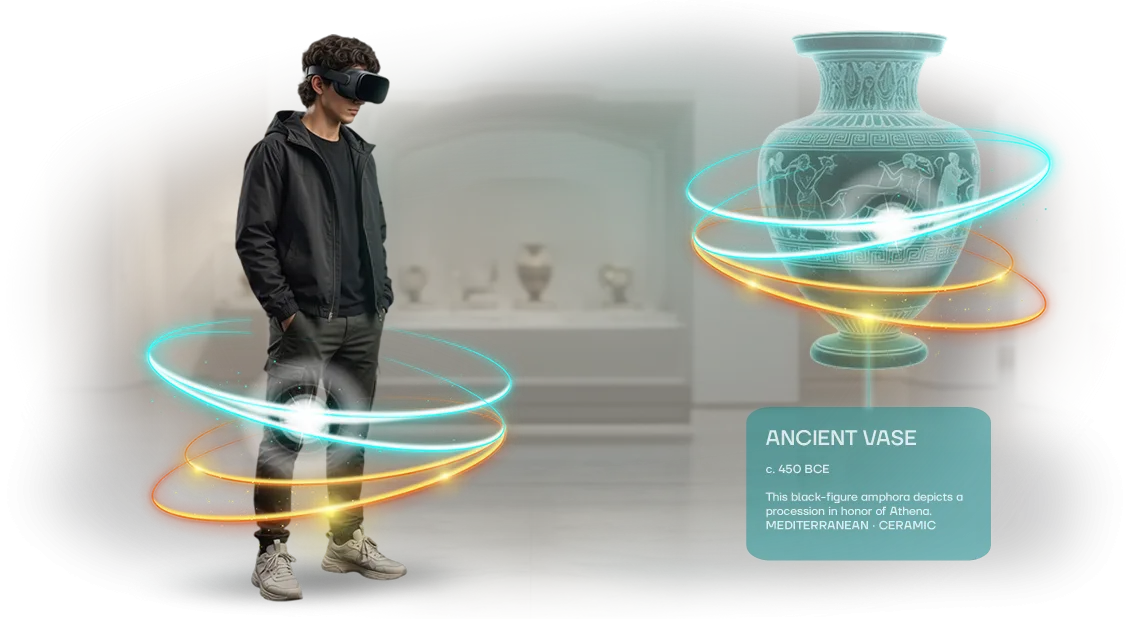
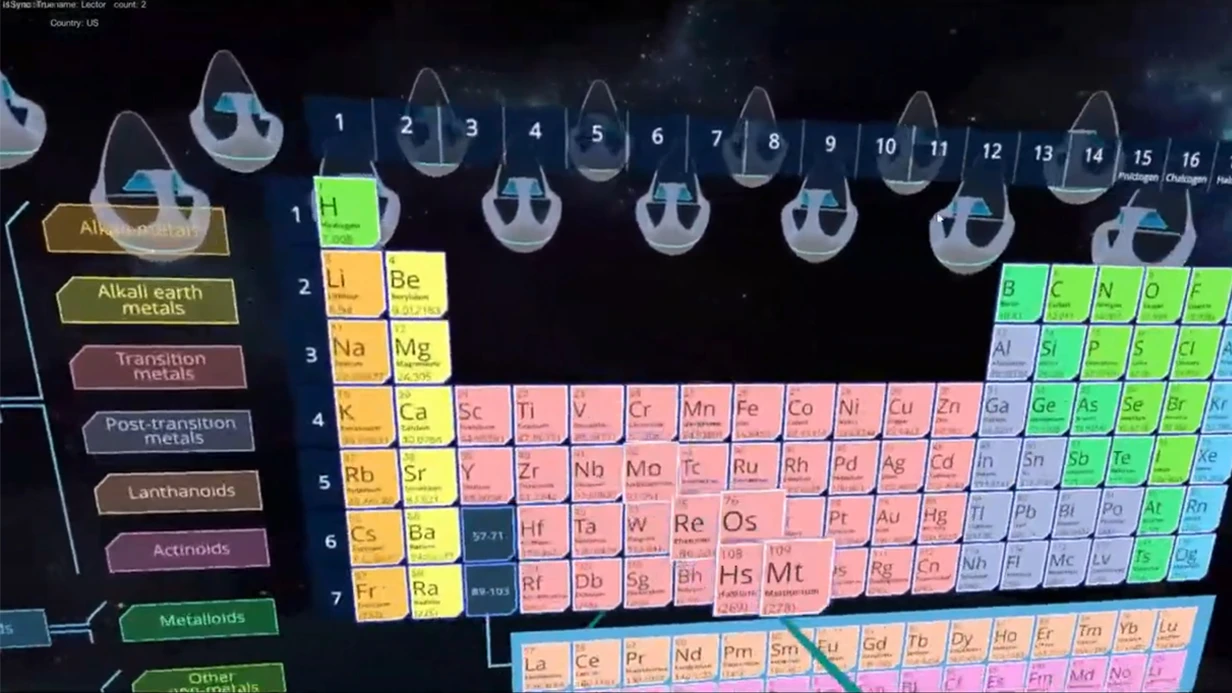
A virtual exhibition removes that doubt: the visitor enters a 3D showroom, examines the power tool from all sides, reads the key parameters, and immediately understands whether the model fits their task.
For a distributor or manufacturer, this is a customer acquisition channel that works without pavilion rental or logistics.
There's no need to transport stock to a physical exhibition and wait for hundreds of people to visit the stand — the virtual hall is open around the clock, accessible from any device, and doesn't lose visitors from other cities.
While a competitor is still setting up their display, you're already taking inquiries for tools. our team builds such showrooms with the product range structure in mind: from household screwdrivers to industrial cordless tool lines.
A separate scenario — online presentations for wholesale buyers and construction crews. Instead of a dry price list or PDF, you show the power tool in action: you walk through the key modes, demonstrate the included accessories, and answer questions in the chat.
This kind of presentation holds attention 2–3 times longer than a regular catalog and noticeably increases conversion to inquiries — the client isn't buying a picture, but the understanding of how the tool will solve their problem.
What does a virtual showroom give your business?
A virtual showroom for tools and power tools is a digital sales format that works without days off and without being tied to warehouse space.
The client examines the product from any device at a convenient time, and you get showroom advantages that directly affect profit: increased reach, customer loyalty, and a flow of leads.
Here's what such a showroom gives your business:
- Increased reach — reach buyers beyond your region and expand your audience without spending on business trips and exhibition stands. Your tools get seen where there was previously no opportunity to show them.
- A flow of leads — the virtual showroom collects visitor contacts through an inquiry form, online consultation, or demo mode. Every visit turns into a lead for the sales department, not just a page view.
- Increased loyalty — detailed inspection of the tool, viewing it from different angles, and a clear interface reduce the risk of returns and strengthen trust in the brand. The buyer knows in advance what they're getting and is more willing to return for repeat purchases.
- Sales growth — a 3D presentation shows the tool in action, makes it possible to study every detail, and quickly compare models. This speeds up the client's choice and increases conversion to orders.
- Brand recognition — a modern digital format sets your company apart from competitors and creates the image of a technology-driven leader. Clients remember the unusual presentation and recommend you to colleagues.
We specialize in virtual exhibitions and showrooms for tools and power tools. We'll help you create a platform that generates leads and boosts your clients' loyalty. Get in touch with us — we'll show you examples and offer a solution tailored to your needs.
Virtual exhibition formats: from showroom to 3D tour
When choosing a tool, a buyer wants to see the product up close: evaluate the ergonomics, scale, and details. On a regular website, these are static photos that don't provide the feeling of "live" contact and don't help make a purchasing decision.
A virtual exhibition solves this problem — it immerses the client in a space where the product can be examined from all sides and they can immediately proceed to order.
We develop three main formats, each covering its own business objective — from presentation on a mass-market website to working with a specific distributor.
Interactive showroom
A full-fledged virtual hall where the entire tool range is arranged by category, like in a branded store.
The visitor can "walk" through the hall, approach any item, and study it: open detailed specifications, view built-in 3D scenes, switch the color or included accessories.
3D catalog tour
This is a website option for when you don't need a full hall but still want to present the product properly. The buyer opens the required model and "rotates" it in space: sees the handle, the chuck, the mountings, and the dimensions compared with other items.
This format speeds up decision-making and reduces the number of returns due to expectations not matching the actual product.
Virtual stand
A simulation of an exhibition stand for participating in online events or sending to partners. The stand contains several display cases with key new products and a block with the manager's contacts.
This is a lightweight format that is quickly created and suits temporary promotions or announcements.
| Format | Who it's for | What it gives the client |
|---|---|---|
| Interactive showroom | Manufacturers with a wide product range | Visitor retention on the site, a clear display of all product lines, a higher average order value through cross-selling |
| 3D catalog tour | Online stores and distributors | Quick display of a specific model, less time spent choosing, fewer returns |
| Virtual stand | Participants of industry exhibitions | Presence at an event without logistics costs, contact collection through built-in forms |
If you have a wide product line — choose a showroom, it pays off through reach. If sales happen through a catalog — a 3D tour will speed up every deal. We'll help you choose a format for your task and budget.
How virtual exhibition development works
Developing a virtual exhibition for tools and power tools isn't just about creating a 3D space — it's a structured process with clear stages. We work so that you always know what's happening and can see the result — from the first brief to the final launch. Below is what collaboration looks like when you order a virtual showroom from us.
- Brief and task immersion. We start with a conversation about your goals: which tools we're showing, who the target audience is, and which demonstration scenarios matter. Based on the brief, we lock in timelines and budget — no "surprises" mid-project.
- Concept approval. We propose a structure for the virtual space: halls, display cases, interactive points. You approve the overall concept and content — we adapt to your catalog rather than forcing your catalog into a template.
- Creating 3D models and scenes. We convert your product range into digital form: bodies, controls, working modes. At this stage, you get the first previews and make edits — this way we eliminate the "wrong tool in focus" situation.
- Assembling the interactive showroom. We bring everything together into a single virtual tour: navigation through halls, zooming in on details, launching videos and descriptions. We also prepare adaptation for different devices here, so visitors can comfortably view it from any screen.
- Testing and sign-off. You receive a link to check — we go through all the scenarios together: from entry to an inquiry with contact details. We fix any issues and get objections down to zero.
- Launch and support. We publish the exhibition on your website or at a separate address. We hand over access and a short instruction guide for your managers. We stay in touch after launch — in case you need edits or additional sections.
The whole cycle takes two to six weeks depending on the size of the catalog. You get not a "prototype to think about" but a working tool that you can show clients right after launch.
What's included in the virtual showroom delivery
When you buy a virtual showroom, you get a ready-made working sales tool, not just a nice picture. We provide the complete package: from detailed 3D models to documentation and training — so your team can start using the showroom immediately after launch.
Here's what's included in the delivery:
- Detailed 3D models of tools and power tools — every product can be examined from all sides, zoomed in on, and the included accessories assessed. The buyer makes a faster, more confident decision.
- Virtual showroom space — a hall, stand, or workshop that mirrors the logic of your real store and guides the visitor through the relevant categories.
- A simple interface for visitors — rotation, zoom, model comparison, and viewing specifications in one click, without installing any software.
- Integration with your website and CRM — inquiries and price requests from the showroom automatically reach your managers. You see what the client viewed and don't lose hot contacts.
- Admin panel — you update the showroom yourself: change prices and availability, add new items without involving developers.
- Documentation and training — clear instructions for visitors and the administrator, plus short team training: how to update the showroom and send links to clients.
- Support after launch — during the warranty period we accompany the project, answer questions, and quickly fix any issues.
We hand over the project with an acceptance certificate, source materials, and full management access — you're not dependent on us in day-to-day operations. And we stay close by for refinements and new tasks.
Case study: how we increased tool sales
The client — a major supplier of tools and power tools — faced the task of entering new regions without spending on demonstration facilities.
Dealers and retail stores hesitated to order unfamiliar items blindly, and managers spent hours selecting products based on photos and specifications. We proposed replacing live demonstrations with a virtual showroom.
We developed a 3D exhibition with the full product range recreated: from screwdrivers to rotary hammers. The user "enters" the hall, approaches a display case, examines the model from all sides, opens the housing, and compares favorite items in a single window.
For the business, this worked like "touching with your hands", but without stand rental, logistics, or business trips.
How it increased sales
The showroom was connected to the "Catalog" section and a promo page for dealers. In the first month, more than 6,000 people went through the platform — nearly half left an inquiry with a specific model.
Dealers stopped forwarding paper catalogs: now they send a link to the 3D hall, and the client chooses the modification themselves.
Business results
- The average order value of dealer inquiries grew by 22% — visitors chose more expensive modifications.
- Orders for items that previously sold only "in person" increased 1.5 times.
- The client received a ready-made asset for repeated use: the same showroom was used at exhibitions and for training sales teams.
After the virtual showroom launch, Arsenal-Pro kept the project on an annual support plan. Now all new models first appear in the 3D hall, and only then in the catalog.
This isn't a "showcase for the sake of beauty" but a working sales channel that paid for itself in the first two months and keeps generating inquiries without additional advertising spend.
Which format suits your task?
The answer depends on only one thing — the business task. If you need to show your range of tools and power tools so that the buyer understands the dimensions, ergonomics, and capabilities — an interactive 3D showroom with model rotation will work.
If your main goal is to engage the visitor in a detailed study of the device and model differences, a virtual configurator with accessory selection will work better.
And when it's important for the client to "feel" the tool in action, it's worth looking toward a VR demonstration.
For a tool and power tool catalog, two formats are most commonly used: a virtual showroom and augmented reality.
A showroom works well when you have a large product line — the visitor chooses the needed model themselves and examines it from any angle, without the help of a manager.
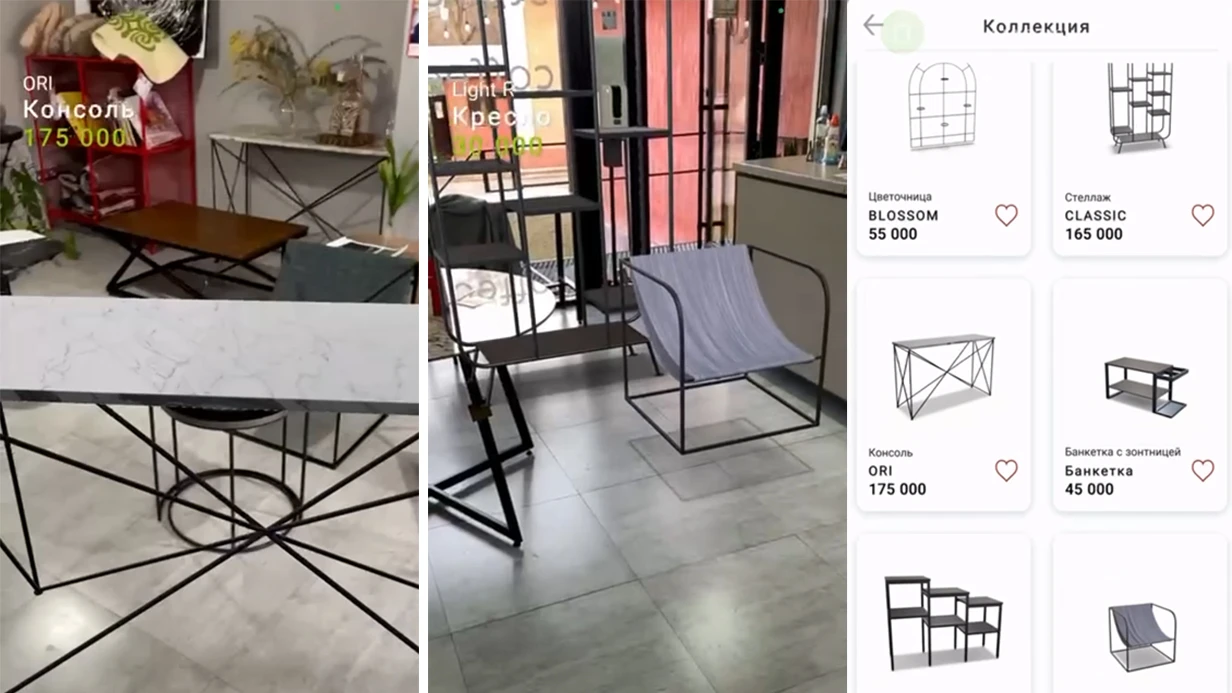
Augmented reality is indispensable when you need to show how the tool looks in hand or in a real environment on site. This shortens the path from interest to order and reduces the number of returns — a person has already seen the tool "live", albeit through a screen.
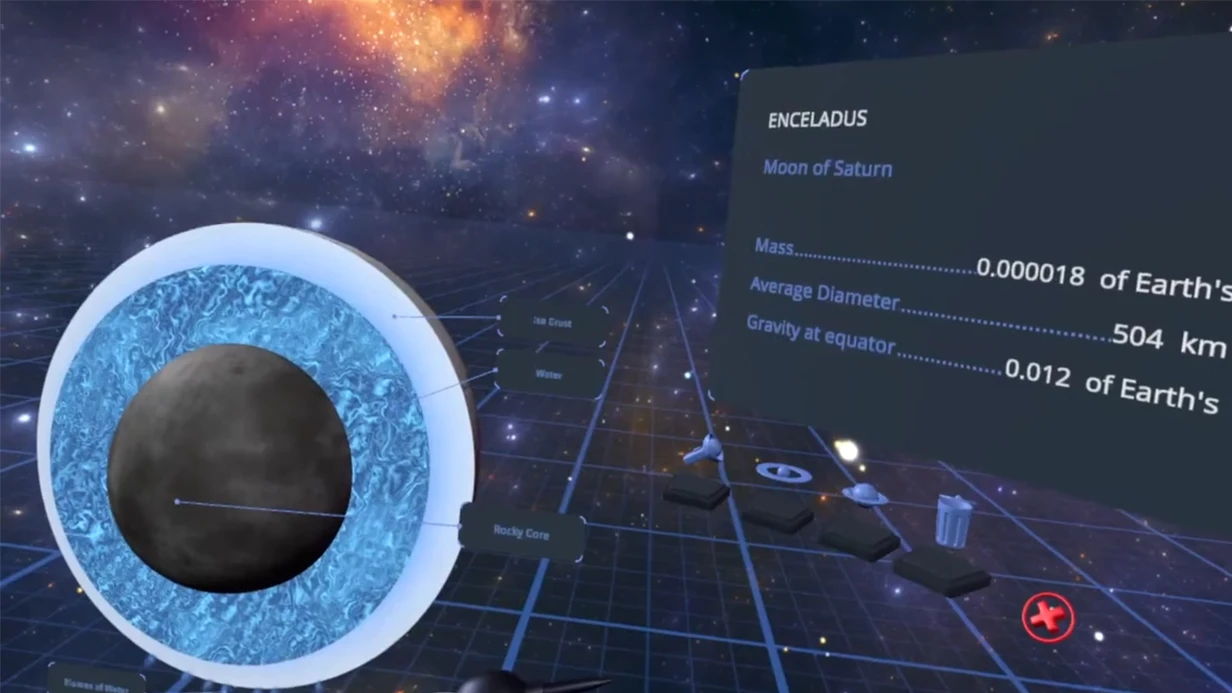
If your task is training dealers or salespeople on working with the tool, choose a virtual exhibition format with training scenarios. Employees go through interactive modules, take apart the device and typical mistakes, and then take a test right in the environment.
This approach speeds up bringing new products to market and makes training uniform across all branches.
We help you choose a format for a specific business task, rather than offering a one-size-fits-all solution.
During the consultation, we analyze your audience and goals — sales growth, launching new products, staff training — and suggest a format that will deliver measurable results. We also take into account your budget, timelines, and your team's technical capabilities.
Book a consultation — we'll analyze your task, suggest the best option for your tool and power tool catalog, and calculate the implementation cost.
Frequently asked questions about ordering a virtual exhibition
Before ordering a virtual exhibition for tools and power tools, many questions come up: how quickly can it be done, what's needed from you, and how it will work for your clients. Below we've gathered answers to the most common concerns — short and to the point.
How long does creating a virtual exhibition take?
A typical project takes 2–4 weeks; the timeline depends on the number of exhibits and the complexity of their models. We show intermediate results at each stage, so you see progress and can make edits without downtime.
What do we need to prepare on our side?
Usually, a product catalog is enough: names, specifications, photos, or drawings. If there are no models, we'll create them from scratch based on samples. At the start, we agree on the technical specification so you know exactly what you'll get.
How will visitors get to the exhibition?
Via a link in the browser — nothing needs to be installed. The showroom opens on a computer, tablet, and most phones, so it's easy to embed in a website, email campaign, or social media. It's convenient for both dealers and retail buyers.
What if we need to change something after launch?
We include a revision stage at any phase of the work, and we stay in touch after handover. Ongoing support is provided: we'll quickly change prices, add items, or update descriptions.
How do you guarantee quality and deadlines?
We show the work at every stage: plan, draft models, test version, final build. You approve all key decisions, and the experience of dozens of 3D showrooms helps us meet the stated deadlines and make the exhibition convenient specifically for your visitors.
Order a virtual exhibition for tools and power tools
A virtual exhibition for tools and power tools is a way to present a product the way an experienced sales consultant does.
The buyer can examine every model in detail, rotate it, zoom in, study the included accessories, and even see the tool in action — without having to visit a warehouse or showroom.
This kind of presentation solves the main pain point for manufacturers and dealers: how to show a product line when only part of the range fits in a physical space. The client gets a 24/7 showcase that works equally well at exhibitions, in sales presentations, and on the website.
What's included in an order for a virtual exhibition:
- Creation of realistic 3D models of your tools and power tools for your catalog.
- A virtual space in your brand style: from a display case to an interactive demonstration table.
- Inspection functions: rotation, zoom, switching between included accessory sets and color options.
- Integration with video reviews, work diagrams, and technical specifications.
- Online access for clients and managers from any device — at exhibitions and remotely.
- Launch preparation: content population, setup, and training for your team.
Just leave an inquiry — and we'll calculate the development cost for your product range. Specify the number of models, the features you need, and your desired timeline, and we'll prepare a transparent cost estimate and launch plan.
You can order a virtual exhibition right now: send an inquiry through the form on this page, and we'll get back to you with a cost estimate within one business day.