




Losing orders without a virtual showroom for medical equipment?
Buyers of medical equipment are doctors, purchasing agents, and head physicians. They don't make decisions based on brochures or photographs.
They need to see the device in operation, assess the ergonomics, and understand how the equipment will fit into their clinic or laboratory. In a face-to-face meeting, a demonstration settles this, but the customer is often in another city or country—and the deal stalls for weeks.
Without an interactive presentation of medical equipment, remote sales turn into email chains, lengthy approvals, and repeated requests.
The client postpones the decision, compares you with competitors who already showcase their equipment in 3D, and each such loss is a missed deal plus the time your managers spend on endless clarifications instead of working on new leads.
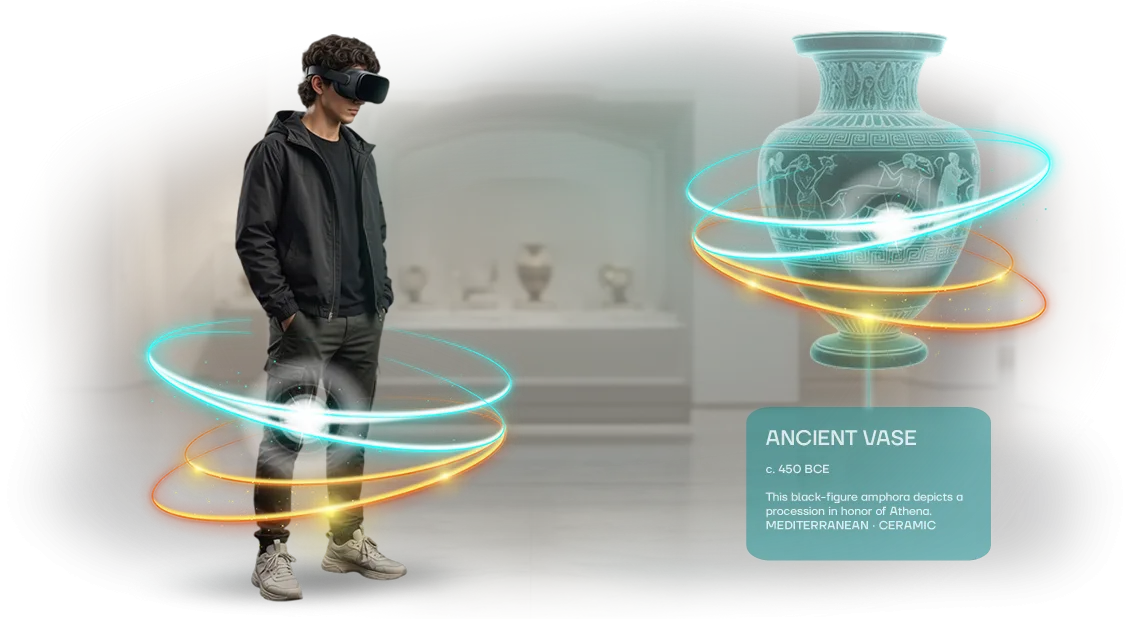
A virtual showroom solves this problem. It's an online demonstration where the buyer personally opens the device's doors, examines the details, views the interface, and switches between configurations—just like in real life.
They don't have to wait for your visit: they explore the equipment at their convenience and arrive at the call already prepared. This format shortens the sales cycle and removes the main objection: "we want to see it in person first."
Moreover, the showroom works like a sales representative: it's available to the client around the clock, can be embedded into your website, and used in email campaigns and presentations.
The buyer returns to the relevant details on their own, and you get an engaged prospect who already knows your product and is ready to discuss pricing and delivery.
We create virtual showrooms for manufacturers and distributors of medical equipment. Over 10 years of work, we've learned how to present complex equipment in a way that convinces the client faster than any catalog. Losing orders because of geography and a lack of demonstrations? We close that gap with an online showcase that sells for you.
How a 3D showroom helps sell complex equipment
In medicine, selling complex equipment is above all about trust. The client can't "touch" the device, and the purchase decision is made based on presentations and catalogs.
A 3D showroom provides a level of visual clarity that was previously possible only during face-to-face meetings.
Here is how a 3D presentation translates into measurable benefits:
-
Increased client trust. The doctor or purchasing agent controls the camera themselves, opens compartments, and views operating scenarios. This format convinces better than any PDF catalog and removes objections even before a manager's call.
-
Higher conversion. When a buyer sees the equipment in action and can try it against their own needs, the number of positive decisions grows. In our practice, clients report a 1.5–2 times increase in conversion after implementing the showroom.
-
Shorter sales cycle. There's no longer any need to transport samples to exhibitions or organize demonstrations. The client gets access to the showroom via a link at any time, and negotiations move to the discussion stage faster.
-
Reduced logistics costs. You save on shipping, insurance, and exhibition space rental. One digital booth replaces several physical trips across regions.
We use professional equipment and proven tools, which is why our 3D showrooms are stable and load quickly even on office computers. This means your client won't encounter technical failures at the most important moment of the presentation.
Virtual showroom formats for medical equipment
Every medical equipment manufacturer needs a clear way to show a complex product to doctors and purchasing agents.
A regular catalog and presentations don't provide the feeling of "I've held the device in my hands." A virtual showroom solves this problem: the buyer inspects the equipment from all angles, reads specifications, and sees how the equipment will fit into their clinic—without equipment deliveries or business trips.
But one format doesn't suit everyone: some need to host a large-scale exhibition, others need to show a new product to a narrow circle of dealers, and others need a quick interactive overview.
That's why we've prepared three basic formats that differ in level of detail and budget. Below is a comparison to help you choose the optimal option.
| Format | For whom | What it gives the client |
|---|---|---|
| Full virtual showroom | Manufacturers with a broad catalog, dealer networks | A permanent sales channel: the buyer "steps into" the hall at any time, explores all models, and finds the needed options. Increases trust and shortens the sales cycle. |
| Virtual exhibition | Organizers of industry events, marketing departments | A large-scale display for a large number of visitors. Provides a sense of being at a real booth and collects visitor contacts. Convenient for recurring events. |
| Interactive tour | Sales departments, new product presentations | A lightweight format that can be assembled faster and with a smaller budget. The client browses 3D scenes and opens specifications themselves—a great tool for first contacts with purchasing agents. |
The formats are easy to combine: for example, start with an interactive tour and then expand it into a full showroom.
We'll help you choose the right option for your task and budget, and after launch we stay in touch: we'll add new models to booths, update specifications, and report on visitor activity.
Stages of creating a virtual exhibition for your task
We've structured the process so that at every stage you understand what's happening and what result you'll get. No "black boxes": you see intermediate versions, make edits, and control deadlines.
- Brief and task immersion. We discuss the exhibition's goals, target audience, equipment list, and desired interaction format. We lock in requirements and budget.
- Concept and project plan. We propose the showroom structure, navigation scenarios, and key points of contact. We agree on project stages and development timeline.
- Prototype and design. We create the visual style, floor layout, and navigation interface. You receive a clickable mockup you can show to colleagues and partners.
- 3D scene and logic development. We fill the virtual space with medical equipment models, textures, and interactive elements. A working version of the showroom appears already at this stage.
- Testing and optimization. We check stability across different devices, fix errors, and fine-tune loading speed and mobile screen adaptation.
- Launch and team training. We publish the project on your domain or in our cloud infrastructure, hand over access credentials, and show you how to manage the content yourself.
- Support and growth. After launch we stay in touch: we update equipment, add exhibits, and refine scenarios for new tasks.
The entire cycle takes between two and five weeks depending on the number of exhibits and the complexity of the scenes. At the end, you get a ready-to-use virtual exhibition that can be integrated into your website and used for presentations, sales, and staff training.
Launching a virtual exhibition requires no special technical knowledge from your team—we handle all showroom development and ongoing support.
What's included in the delivery: modules, documentation, and content
You get not just a showcase, but a complete sales tool. The delivery package includes everything needed for launch and day-to-day operations: an interactive model of the equipment, a management system, documentation, and content rights. No hidden tasks—after the project is handed over, your team immediately puts the showroom to work.
Here's exactly what's included in the package:
- Ready 3D model of the medical equipment with interactive hotspots—zoom, rotation, demonstration of key components.
- Admin panel that lets your marketer update descriptions, prices, photos, and add new points of interest without involving a developer.
- Documentation set: administrator guide, manager manual for working with the showroom, and a quick-reference guide for publishing on the website and social media.
- Project source files—the model in a working format, textures, and scenes used in the showroom. You're not tied to us and can develop the project with any team.
- Content rights—the client receives unlimited rights to use the materials in their commercial activities.
- Training for your team: a short webinar and recording to quickly master the admin panel.
Each item addresses a specific need: the model attracts attention, the admin panel speeds up promo updates, the documentation removes dependency on the developer, and content rights protect your business. As a result, the showroom acts as a full-fledged sales department rather than a one-off mockup.
Case study: how we doubled product demonstrations
For manufacturers of medical equipment, equipment demonstration is a key stage of the sale. Doctors and purchasing agents want to see the device in operation, assess ergonomics, and ask questions.
But sending a specialist with a sample to each client means weeks of waiting and significant logistics costs. Often this drives potential buyers to competitors who can present their product faster.
We solved this problem for a manufacturer of diagnostic devices. Instead of physical trips, we created a virtual 3D showroom: the client follows a link, examines the equipment from all sides, switches on the operating mode, and even "looks" inside the housing.
No special software—a browser is enough. We also added an online presentation format: a manager can invite up to 50 doctors at once and guide them through the device while answering questions in a chat.
The results exceeded expectations: in three months, the number of demonstrations grew by 120%, and the sales department stopped depending on business travel. Managers now hold online meetings with doctors in any region and show the device with the same detail as in person.
At the same time, logistics costs dropped to nearly zero, and preparation time for a demonstration fell from several days to 15 minutes.
But the main result was sales growth. Clients who saw the 3D demonstration made purchasing decisions 40% faster. The company received not just an interactive catalog, but a complete sales tool that paid for itself in the first quarter.
Managers note that there are fewer objections: virtual inspection removes doubts before price negotiations.
Today, this showroom serves as the main presentation channel for new clients. We regularly update the model to accommodate new equipment lines—so the digital product drives business growth rather than simply replacing a brochure.
For us, it's a story of how a digital demonstration became a sustainable source of sales growth for medical equipment.
How to choose the right virtual presentation format?
There's no one-size-fits-all answer: choosing a virtual presentation format for medical equipment depends on your business goals, audience, and funnel stage.
Before commissioning development, ask yourself who will explore the product and under what circumstances—that's the main selection criterion.
For doctors and purchasing agents who make the purchase decision, detail and the ability to examine the device up close are critical.
If the product is complex, with moving parts or multiple configurations, an interactive 3D showroom with controls is the right fit: users open the necessary components themselves, change modes, and zoom in.
This format serves as a complete replacement for a physical demonstration hall. If, on the other hand, the product is already well known to the market and you only need a quick visual showcase, a lightweight virtual tour or photo panorama is enough.
The second criterion is where you plan to use the virtual space and how long it needs to remain relevant. For an exhibition, where you need to capture a visitor's interest within a couple of minutes, a short, impactful 3D video or mini-presentation works best.
For ongoing use on your website, where clients return multiple times, a full showroom with the ability to update the product lineup is the better choice.
Also, find out whether you need integration with your CRM or booking system: the deeper the integration, the more customised the solution you'll need.
The third point is legal and internal corporate constraints. If your customers are public hospitals, the format needs to be easy to understand and require no special software installation.
If private medical centers are buying your products, you can use more advanced interactive solutions. Discuss this at the outset with your developer—they'll show you which formats have already proven themselves in your niche and what's best to adapt to your specific request.
A well-chosen format shortens the client's journey from interest to inquiry and simplifies your sales team's work.
That's why during the initial consultation we always analyse your tasks and propose not just one but two or three implementation options with different levels of detail. You see the value and cost of each, and make the final decision after discussing them with your team.
Frequently asked questions about virtual exhibitions and their cost
Before launching a virtual showroom, every client asks the same questions: how much does it cost, how quickly can it be built, and will it become outdated in a year.
To address these concerns, we have collected answers to the most common questions from business owners and marketing directors of medical companies.
How long does it take to develop a virtual showroom?
A typical turnkey project takes 2–4 weeks depending on the number of models and scene complexity.
At the start, we fix the timeline in the contract and provide you with a preview link after the first week—you can see how the exhibition is taking shape and adjust details without affecting the overall schedule.
What equipment do visitors need to view the showroom?
Nothing special: regular computers, laptops, tablets, and smartphones will work. Everything runs in the browser, with no app installation required.
We adapt the interface to any screen, so a doctor or purchasing agent can open the showroom directly from a work chat or email and immediately start exploring the equipment.
Will we be able to update the exhibition after launch?
Yes, that's one of the main advantages of the digital format. You receive an intuitive admin panel that lets you change descriptions, add new items, and adjust viewing angles and prices on your own.
If a more complex modification is needed—such as integrating video or interactive features—we'll prepare a cost estimate and complete everything within a few days.
What makes up the cost?
The price depends on the number of models, their level of detail, and functional modules. The basic package includes 3D space development, uploading your models or creating them from scratch, the interface, domain setup, and access configuration.
We don't inflate costs with hidden payments: the final estimate is fixed before starting, and you pay only for what you actually use.
What guarantees do you provide?
We sign a formal development contract and provide a 12-month warranty on the exhibition's functionality. During this period, we fix errors free of charge, help with server-side updates, and answer your team's questions.
If you decide to move the showroom to another domain, we'll help with migration at no additional cost.
After launch, you get not just a static website but a complete presentation tool that works for you around the clock. Answers to other questions are on the page below, and if you'd like to discuss your project, simply leave a request.Start with a brief and find out the cost of your project
Putting together a cost estimate for a virtual showroom without project details means risking your budget and timeline. We remove that uncertainty: you submit a request, and within a few business days you receive a brief, a cost estimate, and a launch plan. A consultation is included—you know what you're paying for before you even sign the contract.
The brief is structured as simple questions about your equipment, audience, and goals. Whether it's a model, a training stand, or a marketing catalog, the format—and therefore the budget—depends on your answers. Our specialists will help you complete the brief if you have any questions.
What you'll receive after submitting your request:
- A brief—a structured list of questions about your product and target audience.
- A personal consultation with a project manager—we'll discuss goals, timelines, and use cases for the showroom.
- A cost estimate in three implementation variants: minimum for presentations, optimal for sales, and extended for training.
- A launch plan with stages: 3D model preparation, interface, testing, and staff training.
- A presentation with examples of medical equipment solutions already working for our clients.
- A commercial proposal with no hidden terms or technical details that overcomplicate the estimate.
Submit your request—it costs nothing and obligates you in no way. We'll get back to you with a presentation, concrete numbers, and a clear project roadmap. If a virtual showroom won't deliver the expected results, we'll tell you honestly. If it's a good fit, you'll receive a solid basis for a decision within a couple of days.