



Selling Machine Tools and Production Equipment Without Booths
Selling machine tools and production equipment has always required live contact. The buyer wants to see the machine in operation, assess its dimensions, and understand how it will fit into the workshop.
But not every customer is ready to travel thousands of kilometers to an exhibition or production site — that means days of travel, coordination, and expenses. As a result, you lose leads simply because a potential customer physically cannot reach you.
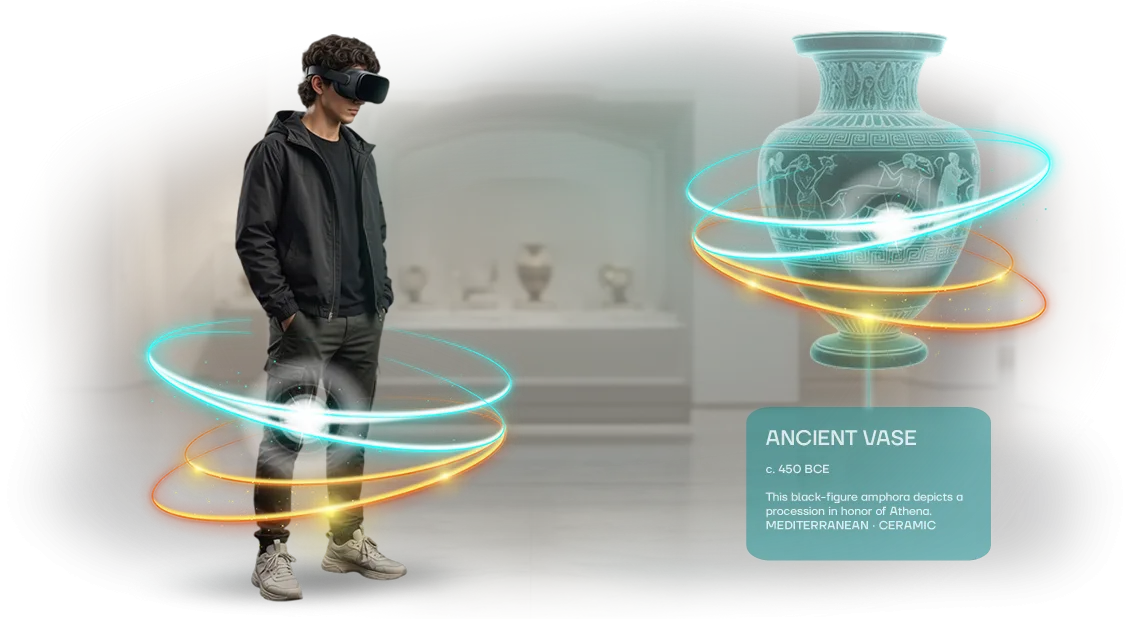
A virtual exhibition for industry solves this problem. Instead of photos and electronic catalogs, you give the customer the opportunity to examine the equipment in detail, "walk around" it, and inspect the key components.
A 3D showroom of machine tools turns an ordinary online equipment presentation into a full-fledged dialogue with the product. The buyer doesn't guess from pictures — they see real proportions and scale.
This format does not replace a live introduction, but it seriously expands the funnel. You show your products remotely — in any city, at any time, without business trips. A customer can return to the model a week later, show it to colleagues, and make a well-considered decision.
This shortens the deal cycle and gives managers more confidence: they no longer depend on the exhibition schedule.
We create virtual spaces in which production equipment looks realistic and inspires trust: from precise shapes to materials and lighting.
The client receives a link that works as a full-fledged sales tool: it can be sent to a tender, placed on the website, and used in negotiations. Selling machine tools and production equipment without booths is real.
A virtual exhibition for industry pays off from the very first contact. A 3D showroom of machine tools and an online equipment presentation deliver what previously required an exhibition booth: attention, trust, and a clear path to purchase. We deliver this — quickly, efficiently, and turnkey.
What a Virtual Showroom Gives a Manufacturer
When it comes to selling machine tools and production equipment, a buyer is not ready to make a decision based on a photo or a PDF catalog. They need to see the product, understand its dimensions, configuration, and operating logic — which usually drags the deal out for weeks.
A virtual showroom removes these barriers: your product is available for detailed study at any time and from any location. We create such solutions so that a manufacturer receives new leads and strengthens its market position. Here is what changes when you have your own 3D showroom.
-
Increased trust in the product. The buyer sees the machine from all sides, zooms in on components, and assesses the service area and real dimensions. This removes major doubts even before talking to a manager, thus building confidence in the right choice.
-
Shortened deal cycle. After studying the equipment online, an engineer or production director moves faster to questions of price and delivery. The sales department spends time not on repeated demonstrations, but on working with those who are already ready to discuss an order.
-
Audience reach beyond the region. A virtual showroom is available to customers from any city and time zone. You receive inquiries from places where you previously didn't go with a presentation, and you save on floor rental and logistics.
-
Manufacturer brand recognition. A 3D presentation is remembered more strongly than a standard catalog or photo gallery. Your website and tender materials look an order of magnitude more professional; people mention you in discussions and return for additional information.
-
A clear advantage over competitors. In the showroom, you can show not only the machine itself but also its operation — tool changes, movement of working elements, service points.
This proves the reliability of the solution and helps the customer compare your offering with alternatives.
Incorporate a virtual showroom into your sales process — this tool pays off from the very first deals.
We will take the journey from equipment capture to publishing the showroom on your website and exhibition stands, so that you achieve tangible growth in equipment sales and an advantage over competitors.
Virtual Showroom Formats: From Simple to Comprehensive
When it comes to selling machine tools and production equipment, it is important for the client to see the product in action. But not every buyer has the opportunity to visit the factory or an exhibition.
A virtual showroom removes this limitation: you present equipment in a realistic format, speed up negotiations, and reduce expenses on business trips and demonstration halls.
We use virtual exhibition formats that address different business needs — from a quick introduction to the production to an in-depth review of configuration. What to choose depends on your audience and goal. Below is a clear table.
| Format | For whom | What it gives the client |
|---|---|---|
| 360° Panorama | For presentations and first product touches | A quick look at the workshop or stand without a trip — the client sees the scale of production |
| Interactive 3D factory tour | For excursions and work with dealers | The visitor moves through the workshops themselves, stops at key zones — engagement is higher than in ordinary video |
| VR showroom | For demonstrating a specific machine tool | A full sense of presence: the client "walks around" the equipment, inspects components and tooling — fewer objections on specifications |
| 3D configurator | For selling options and modifications | The client chooses the configuration themselves and immediately sees the result — conversion and average order value increase |
Each format can be combined: start with a panorama and add an interactive virtual demonstration for key machine tools. We select a solution for your budget and task — from "quickly show" to "full-fledged sales platform".
If you don't know where to start, we will send a recommendation after a short analysis of your situation.
Stages of Virtual Showroom Development
Developing a virtual showroom for machine tools and production equipment is a managed process in which you see results at every step and make key decisions.
We structure the work so that the stages of creating a 3D tour are transparent: from the first brief to launch and further support. You always understand at what stage the project is, what is already completed, and what happens next.
- Brief and task definition. We discuss which machine tools and equipment need to be shown, who the target audience is, and what task the showroom solves. We lock in the format: a virtual tour, an interactive 3D model, or a presentation with elements of augmented reality. The output is a technical specification that protects your interests.
- Concept and structure approval. We develop a scenario: how the visitor moves through the space, which viewing points are important, and where to place technical specifications and video reviews. You receive a scheme and description of the future showroom so that you can make edits before production begins.
- Creation of 3D models and virtual space. We model machine tools and production lines with high detail, conveying real dimensions, materials, and design features. At this stage, we also build the environment — a workshop, demonstration hall, or exhibition booth.
- Interactive assembly and feature configuration. We fill the showroom with interactivity: clicks on machine components, opening cards with specifications, launching animations of mechanism operation. We set up navigation so that it is simple and clear for the visitor — even if they are seeing this format for the first time.
- Testing and project approval. You receive a link to a working prototype and test it on your computer or smartphone. We collect feedback, make edits, and approve the final version. Project approval happens at a comfortable pace for you — without unnecessary intermediate steps.
- Launch, publication, and support. We place the showroom on your website, social media, or an exhibition screen. We train your team on how to update content and stay in touch: if you need to add new models or change descriptions, we will do it quickly.
The full cycle takes two to four weeks — depending on the number of models and the complexity of interactivity.
You get a ready-made sales tool that works without weekends, presents your equipment in the best light, and shortens the customer journey from "interesting" to "I want to know the price".
What Is Included in Creating a Virtual Showroom
Understanding what is included in creating a virtual showroom is important even before the project starts — otherwise it is easy to get lost in unnecessary details and delay deadlines.
We have assembled the scope of 3D visualization work so that you receive not just a set of files, but a ready-made sales tool. The final deliverable includes everything needed for work: from models to training for your employees.
Here is a complete checklist of "what is included in a virtual showroom" when you order from us:
- Accurate 3D models of machine tools and equipment. Each unit visually replicates your product: proportions, color, and configuration. The buyer sees exactly what they will receive.
- Interactive presentation scenarios. Viewing from different angles, changing options, disassembling into components, simulating operation. The visitor controls the object themselves — this is remembered better than a static image.
- A virtual showroom space. We create a digital hall or workshop that can be navigated like a real exhibition. Clients explore the exposition without traveling to the production site.
- Integration with your website. The showroom embeds into the desired page and works without installing additional software. The visitor clicks a button and immediately enters the 3D environment.
- Adaptation to different devices. Computer, tablet, smartphone, or VR headset — each of your clients gets a convenient viewing format regardless of their hardware.
- Employee training. Managers and marketers receive instructions and short sessions to confidently use the showroom and present it to buyers.
- Support after launch. We support the project, help make changes to models, and update scenarios when the product line changes.
The result of the project is a working virtual showroom that welcomes clients the very next day after launch, makes the presentation visual, and reduces time to approval. You receive not scattered files, but a coherent business tool with everything needed for sales.
Case Study: How We Increased Leads with a 3D Showroom
It is difficult for a buyer of industrial equipment to make a decision based on a catalog: the machine needs to be seen in person, its dimensions and placement logistics assessed, and the accessibility of components checked.
Organizing a trip to the production site or bringing a sample to an exhibition is time-consuming and expensive. That is why, for the metalworking machine manufacturer, we built a virtual showroom that removes these barriers.
Instead of flat photographs, the buyer enters a 3D workshop space, selects the desired model, and examines it from all sides.
They can zoom in on working components, change the configuration, and even "look into" the processing zone — this builds an honest impression of the equipment without a single exhibition booth.
Everything works in the browser; the buyer does not need to install anything or figure out an interface.
What We Did in the Project
We digitized the three best-selling machine models, taking into account real dimensions and configurations. We added tooling switching, close-ups of working elements, and visual hints on key specifications. For sales managers, we provided a callback request button directly in the 3D scene.
We integrated the showroom into the company's website instead of a standard catalog. We separately configured a mobile-friendly fallback — technical specialists often browse the website from a tablet, and we adapted the interface for them separately.
Results for the Client
- The time on site for visitors who opened the showroom grew from one and a half minutes to seven and a half — buyers do not flip through images but study the equipment.
- In the first quarter after launch, the number of requests from new clients increased almost fourfold compared to the same period before launch.
- Lead quality improved: inquiries began coming in with specific questions about modifications, so the sales department needs less time for qualification.
The virtual exhibition case study showed that a 3D showroom is not a website decoration, but a working sales tool. The client was so convinced by the result that they extended support and added two more machine models to the showroom.
We can achieve the same effect for your equipment — 3D models or drawings are enough; we will take care of the rest.
How to Choose a Showroom Format for Machine Tools?
Choosing a virtual showroom format for machine tools starts not with technology, but with two questions: whom you will show the equipment to and how often.
If your clients are in other cities and countries, and every presentation requires a visit to a site, you need a full-fledged 3D showroom with the ability to examine the equipment from all sides.
If the equipment is mainly viewed at exhibitions and during personal meetings, a virtual workshop tour is enough — it will cover the introduction task without the cost of detailed modeling of each machine.
The second criterion is the scale of production and how often the product line is updated.
For an enterprise with three to five machine models, it is more advantageous to make a high-quality 3D tour with hot spots and descriptions: it launches quickly and is easily supplemented over time.
For a plant with dozens of equipment units and regularly released novelties, a modular 3D showroom is more logical, where individual models can be replaced without reassembling the entire project.
It is important that the chosen format allows changes to be made without a new large payment — clarify this at the brief stage.
The third factor is exactly how you plan to use the showroom. If the main goal is to shorten the deal cycle and respond to the request "show the machine in operation", choose a format with integrated video and the ability to switch configurations.
If you need to train dealer staff or conduct presentations for tender committees, add a scenario navigation mode with explanatory layers.
The more accurately you describe usage scenarios, the less risk of paying for unnecessary options and the faster the showroom will start delivering value.
In summary: for a small production facility, a virtual tour with a limited budget is often enough; for a medium-sized one, a combination of a tour and individual 3D models of flagship machines; and for a large one, a full-fledged 3D showroom that becomes a separate sales channel.
We will help you choose a format for your tasks and budget even before the work starts: we will fix the scope, timeline, and cost so that you do not overpay for unnecessary detail.
Frequently Asked Questions About Virtual Showrooms
Before ordering a virtual showroom for machine tools and production equipment, clients usually ask about complexity, timelines, and updates. We answer the main concerns based on experience from real projects.
Is the showroom difficult to use?
No. A manager opens the showroom in an ordinary browser and shows the buyer the machine from all sides: zooms in on components, switches configurations. The controls are intuitive, and we record a short video instruction for employees.
How long does development take?
Usually from two to four weeks — depending on the number of items and model detail. We work transparently: you provide drawings and photos, and we show the result at every stage.
What if the equipment has been updated?
The showroom is a living tool, not a one-time picture. You send fresh materials, we make edits, and the updated model appears in the catalog. Usually this takes a few working days.
How much does it cost?
The price depends on the scope of work: the number of items, model complexity, and required features. We evaluate your product range and suggest a suitable format, and we fix the exact cost in the contract — with no hidden extra charges.
If you still have questions, send us a list of your equipment. We will suggest a solution, show similar projects, and prepare a showroom that will immediately start working for sales.Order Virtual Showroom Development for Your Production
Ordering a virtual showroom for production is not a complex technical project, but a clear process with fixed stages. You receive support from the first call to launch and beyond — with a guarantee of results.
How we work:
- Request an analysis. We study your range of machine tools and equipment, define the presentation goals and the format of the future tour.
- Commercial proposal. A transparent estimate with no hidden payments. At this stage, you can calculate the cost of the 3D tour for your budget and exposition volume.
- Prototype. We show the structure of the virtual showroom on one or two samples so that you can see the direction before full development.
- Approval and development. We fill the showroom with 3D models of your equipment, descriptions, navigation, and corporate style.
- Testing and launch. We check performance on different devices and place the tour on your website, in a presentation, or on a separate page.
- Guarantee and support. We make edits within the warranty period and stay in touch for project development.
As a result, after your inquiry you receive:
- Analysis of your task and target audience;
- A commercial proposal with an exact cost calculation;
- A working prototype before full development starts;
- A ready-made virtual showroom with a guarantee of results;
- Support after launch and the ability to scale the project.
To order a virtual showroom, contact us through the form on the website or via the contact details. We will respond within one business day, clarify the details, and offer the optimal solution for your production.