




Why You Need a Virtual Showroom for Dental Equipment
Selling dental equipment is always a dialogue with a doctor who makes decisions thoughtfully and carefully.
A dental unit, chair, or digital device is hard to describe in words or even with flat photographs: the buyer needs to see the ergonomics, understand working scenarios, and feel how the equipment will fit into their clinic.
This is where a virtual showroom becomes a competitive advantage — it lets you present the product in detail without shipping samples or waiting for the client to visit.
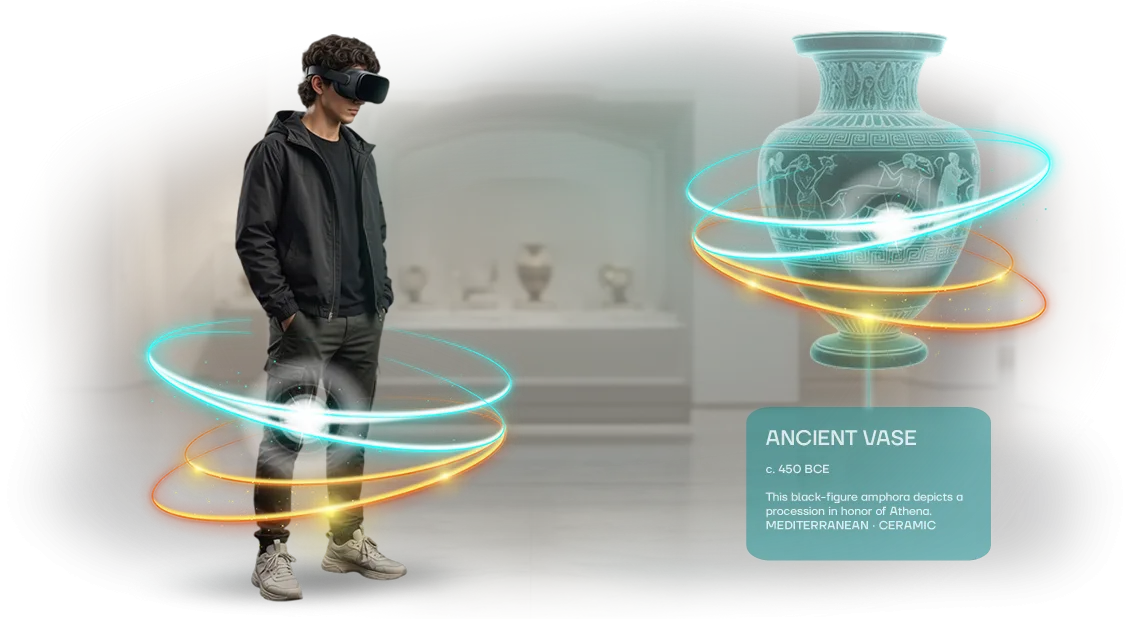
A virtual showroom is an interactive 3D demonstration of equipment, where the dentist can examine the unit from all sides, look inside, open panels, see workflows, and even simulate placement in their own office.
Such 3D visualization turns an impersonal presentation into a personal experience: the dentist does not just listen to a manager but independently explores the product at their own pace, returns to important details, and makes a decision without rushing.
For the sales department, this means a fundamentally different level of communication: one virtual showroom works across multiple channels at once.
It can be opened on a large screen at an exhibition, sent as a link to a client in another city, used in a webinar, or embedded in a catalog page.
At the same time, the demonstration remains equally vivid and clear on every channel — without compromising the quality of interaction.
As a result, the deal cycle shortens: less time is spent coordinating meetings, travel, and repeat demonstrations, while the client is left with the feeling that they have already seen the equipment “in action.” A well-thought-out interactive demonstration removes the main barrier — the fear of the unknown — and shifts the conversation to comparing terms and pricing. For a distributor, this is also a way to stand out from competitors who still send static catalogs.
We create virtual showrooms that genuinely help you sell: we work out interaction scenarios, add the right accents, and take into account the specifics of the dental market. All you have to do is show the product — and it will prove its value on its own.
What a 3D Showroom Gives Your Business
Purchasing dental equipment is always a considered decision for a clinic or distributor. The client needs to see the unit in action, compare models, and show them to colleagues, while a plain PDF presentation conveys neither the scale nor the ergonomics.
This is where a 3D showroom comes in — it makes product presentation visual and answers most questions before the client even calls a manager.
Benefit 1. Product Presentation Without Logistics
A virtual showroom lets you examine the unit from all sides in detail, look inside the device, and explore configurations. You don’t need to rent an exhibition hall or bring samples to a meeting — just share a link, and the client immediately understands what they are buying.
Benefit 2. Client Engagement and Overcoming Objections
The interactive format holds attention longer than static images: users choose what to look at and remember arguments better. For remote clients, this is an opportunity to explore the brand’s lineup remotely without business trips. This approach builds trust in the company and demonstrates its technological level.
Benefit 3. Sales Growth and Faster Deals
The dentist has already inspected the equipment virtually — all that remains is to coordinate details with management. The showroom link can easily be forwarded to the head physician or the purchasing department, giving them the full picture without repeated calls. Managers focus on closing and finalize more deals in the same amount of time.
The format easily adapts to your company’s tasks:
| Task | For whom | What it gives the client |
|---|---|---|
| Exhibit at trade shows | Sales department | Show any model without booth logistics |
| Regional sales | Wholesale department | Explore the catalog without travel |
| Website funnel | Marketing | Hold attention and collect leads |
3D visualization is built on the customer’s actual drawings, eliminating distortions and the risk of unmet expectations.
We have implemented such solutions for medical equipment manufacturers, including Dentsply, and recorded a multiple-fold increase in catalog interest after launch.
Virtual Exhibition Formats for Your Task
When selling dental equipment, the buyer — a dentist or clinic owner — wants to see the scale of the unit, understand the ergonomics, and imagine how the equipment will fit into the office.
Photos and videos don’t convey that feeling, and carrying samples to every meeting is expensive and time-consuming. A virtual exhibition removes the barrier: a 3D model conveys dimensions and details without any shipping.
For dental brands, we develop different exhibition formats — from a light interactive catalog to a full showroom with a hall walkthrough. The choice depends on your goal: to reach dealers, showcase a new product, or replace an offline venue.
Compare the formats:
| Format | For whom | What it gives the client |
|---|---|---|
| Interactive catalog | Sales department, marketing | Quick overview of the lineup, search by specifications, one-click request |
| Virtual showroom tour | Dealers, major clients | Effect of a personal visit: view the hall, details, and compare models without travel |
| Full 3D showroom | Trade shows, new product presentations | Immersion in the space, changing configurations, realistic product display |
All formats run on professional equipment and look equally convincing on a laptop, tablet, or projector. The virtual exhibition can be embedded in a website, stays active after the event, and shortens the deal cycle. Clients stop asking “bring it for us to see” — they already see the product in action.
How a Virtual Exhibition Is Developed
By now you understand that a virtual exhibition is not just a “3D image” but a working sales tool. That’s why the development of a 3D tour is divided into stages, where you make key decisions and see the result at every step. Here’s how we work.
- Brief and product immersion. We study your product range, clarify who you’ll be showing it to — dealers, clinic clients, or exhibition visitors. We lock in the goals: what should be central in the virtual space.
- Layout and structure approval. We create a navigation scheme: how the visitor will move through the showroom, which zones to highlight, and where to place key interaction points. You approve the layout before 3D modeling starts — this eliminates unnecessary rework.
- 3D tour development. We build the space, arrange the equipment according to real proportions, and add interactive markers. The client gets a complete impression of how the equipment looks in action and how well the ergonomics are thought out.
- Content and scenario adaptation. We add descriptions, photos, short videos, and request forms. We immediately plan how the showroom will be used by a manager during negotiations and by a visitor during self-guided browsing.
- Testing before launch. We check how the exhibition opens on different devices and at different internet speeds. We remove anything that slows down the first load so a potential buyer doesn’t leave due to technical glitches.
- Platform launch. We hand over a ready link, embed the virtual exhibition on your website or in email campaigns, and help with the first announcement. You get a working tool, not just a prototype.
- Support and growth. We monitor which displays attract the most attention and update content when new models appear. The showroom continues to deliver value month after month, year after year.
What Is Included in a Virtual Showroom Delivery
When you order a virtual showroom, it’s important to understand what you’ll receive in the end. We deliver not just a picture but a working sales tool that is ready to use immediately. The package includes everything you need to start showing equipment to clients within days.
What’s included in the delivery
- Ready-to-use 3D model of the equipment. A digital copy that can be viewed from any angle, zoomed in on, and shown to clients during negotiations. No “blurry” images — only precise outlines and details.
- A virtual hall with thoughtful layout. Equipment is arranged according to a presentation scenario: from the entrance area to the demonstration zone. Visitors move through the space as if they were in a real showroom.
- An intuitive interface for your staff. Switching between models, changing the background, highlighting key details — all done in a couple of clicks. A manager doesn’t need special training to run an impressive presentation.
- Integration with your website. The showroom is embedded into a catalog page, an equipment section, or a dedicated promo block. Visitors enter the 3D space directly from the browser without installing apps or registering.
- Instructions for staff and clients. Short guides on how to use the showroom, how to quickly open the right model, and what to focus on during a presentation.
- Technical support after launch. We help with setup, model updates, and answer questions to keep the showroom running smoothly during active sales.
The entire package is delivered “turnkey.” All you have to do is place the showroom on your site and invite clients to a virtual viewing — everything else is already configured and ready to go.
Case Study: Virtual Showroom for Dental Equipment
Dental company AlfaDent manufactures dental units for clinics. When the question of expanding the market came up, their team faced a familiar problem: dealers and doctors need to see the equipment in action, but transporting it across regions is expensive and slow.
We proposed an interactive virtual showroom. In the 3D space, all models are displayed: visitors walk up to the unit themselves, zoom in on details, open panels, and read specifications. This tour can be viewed on any device — without installing any software.
The results speak for themselves. One month after launch, the average time spent examining a unit grew from 40 seconds to 4 minutes, and the number of demonstration requests increased 2.5 times.
The sales department stopped spending time on initial “what do you have” calls — clients now come with a well-formed request.
The head of the AlfaDent division shared their results: “We expected it to be interesting, but we didn’t think it would replace half of our field demonstrations. Now dealers schedule meetings right after viewing the tour, and the deal cycle has shortened by about a third.”
This dental case study is a clear example of how interactivity turns a complex product into something understandable and desirable. If your equipment needs a live demonstration but you want to reach more cities, a virtual showroom will become a working sales tool.
How to Choose a Virtual Exhibition Format for Your Task?
Before choosing a format, answer three questions: what task will the virtual exhibition solve, who is your audience, and what budget do you have.
If the goal is to show a line of dental equipment to dealers and clinics, you don’t need a huge pavilion — a compact 3D showroom is enough. If you plan regular events with hundreds of participants, lectures, and booths, a full-fledged virtual exhibition makes sense.
The difference in timeline is significant: a showroom can be prepared in 2–3 weeks, while an exhibition with multiple zones takes from a month.
The budget depends on the number of equipment models and the level of detail, but that doesn’t mean you have to pay for the maximum right away. We offer a phased launch: start with a basic version covering key items, then expand as your tasks grow.
A common mistake is to chase the most expensive graphics while forgetting about loading speed and usability.
For a dentist or procurement specialist, it’s more important to zoom into a model in a couple of clicks, view specifications, and request a consultation than to admire effects.
That’s why we tailor the format to the scenario: a simplified version for quick familiarization, and a detailed presentation with each piece of dental equipment fully refined.
our team — we have been building virtual spaces for B2B companies for 10 years and help choose a solution that fits your budget and timeline.
Tell us how many equipment units you need to show and who will use the exhibition — we’ll suggest the optimal format and implementation plan.
FAQ About Virtual Showrooms
A virtual showroom for dental equipment raises questions before a project starts: how much does it cost, is it difficult to implement, and who will support the project after launch. We answer the main concerns — briefly and to the point.
How much does development cost and how long does it take?
The estimate and timeline depend on the number of items and level of detail: a showcase for a few equipment units and an interactive clinic zone are different formats. We provide the exact figure and schedule after the brief and lock them into the contract.
A typical showroom with 10–15 items takes two to three weeks. Payment is made in stages — you pay for each approved stage.
Is it difficult to integrate a showroom into existing sales channels?
The product opens in a browser: clinics and dealers don’t need to install anything, and staff don’t need training. Add a link to your website or presentation — and the showroom starts collecting requests.
We adapt scenarios to your process: commercial proposal request, service contacts, demonstration request. Content updates are handled through a simple control panel.
Who handles technical support after launch?
We train an administrator in basic operations: replacing photos, updating descriptions, fixing contacts. Everything else is our responsibility — we process sales department requests within one business day.
Choose one-time support or ongoing maintenance with priority response. We guarantee data safety and stable showroom operation.
Order a Virtual Showroom Development for Your Niche
Dental equipment is hard to show to a buyer: taking samples to exhibitions is expensive, and inviting every dentist to a showroom is inconvenient.
A virtual showroom solves this problem: the buyer inspects the unit from all sides, zooms in on the control panel, and sees the configuration — without logistics or rental costs. This speeds up sales and raises the company’s status in the eyes of the clinic.
Leave a request in the form or send us a message — we’ll provide a consultation and calculate the development cost for your niche. After contacting us, you’ll receive:
- a project assessment within one business day: timeline, format, transparent budget;
- recommendations on the presentation type — 3D tour, virtual reality demonstration, or website presentation;
- a breakdown of your equipment: what to highlight and what to emphasize in modeling;
- examples of showrooms for dentistry and adjacent medical niches;
- a fixed-price estimate with a phased work schedule;
- a dedicated manager available throughout the project.
We work remotely. Our team has more than 10 years of experience and dozens of completed projects. You don’t need to understand the technology — we handle everything, from scanning and modeling to embedding the showroom on your website or in a presentation.
Leave a request, and the very next day you’ll find out how much the virtual showroom will cost and when it can be launched.