



Virtual Tour of an Agricultural Complex: Why Your Business Needs It
Investors, partners, and major buyers are rarely willing to travel hundreds of kilometers to the fields just for an inspection.
The showing gets postponed for weeks, the decision stalls, and the deal gets bogged down not because of terms, but because the person hasn't seen the site with their own eyes.
A virtual tour of an agricultural complex removes this limitation: a remote showing of the site happens in one click, and the decision is made based on facts, not on a presentation in a chat.
For agribusiness, this is especially critical. Crops, machinery, elevators, farms, and processing lines — all of this is poorly conveyed through photos and text.
A tour of an agricultural complex shows the scale, condition, and organization of the operation the way a person on site sees them: they "walk" through the territory themselves, look into the workshops, and assess logistics and infrastructure. Trust grows because the partner sees reality, not hand-picked footage.
A presentation of an agricultural complex no longer depends on the season, weather, or the manager's schedule. You send a link — and simultaneously show the site to dozens of investors, buyers, and inspectors without distracting the team to accompany guests. The same tour works in negotiations, tenders, exhibitions, and in mailings to new contacts.
We create such tours for agricultural companies and industrial sites: we build a route through key points, add explanations and data that matter specifically to your partners.
The client receives a tool that shortens the path from first interest to signing and removes the question "can we take a look?" once and for all.
What you get from a virtual tour
A virtual tour is not a "pretty picture for the website" but a working tool for sales and negotiations.
A partner, investor, or procurement manager gets the opportunity to walk through your agricultural complex, fields, elevators, and production lines at a convenient time, without a business trip or coordinating dates.
What used to require a visit and weeks of correspondence now fits into a single viewing — and decisions are made faster.
The main effect is increased trust. When a person sees the scale, order, and technology with their own eyes, questions like "do they really have everything set up that way?" disappear on their own.
A virtual tour works as an honest showcase: it shows real production, not slides, and removes some doubts before the first meeting. This is especially valuable in the agricultural sector, where partners choose for the long term and carefully.
The second result is audience reach. The tour lives on the website, in newsletters, and at exhibitions; it can be shown to dozens and hundreds of people simultaneously, without being limited by geography and logistics.
Foreign partners, regional distributors, potential buyers — all get an equally complete impression of your complex, wherever they are.
The third is a shorter deal cycle. The less uncertainty at the start, the fewer meetings are spent on clarifications and the faster the partner moves to specifics.
The tour handles the initial introduction, while your team spends time on substantive negotiations rather than repetitive presentations.
And finally, recognition. A striking 3D tour sets you apart from competitors with ordinary websites and brochures; it gets shown to colleagues and partners, and it gets talked about at industry venues.
We build such a tour for your specific task — from the route structure to the presentation — so that it brings measurable benefit to the business rather than just taking up space on a page.
Virtual tour formats for your task
The format is chosen not by how beautiful the picture looks, but by the task: to show a facility, explain a product, or guide a client along a route. Below are three basic scenarios that almost every project starts with.
If the task is non-standard, we will assemble a combination: for example, panoramas plus an interactive map of the territory.
| Format | For whom | What it gives the client |
|---|---|---|
| Panoramic tour | Production facilities, farms, warehouses, sites where it is difficult to bring a guest | Shows the facility as a whole and in its real state: the client "walks" through the workshops and fields, removing questions about scale and conditions |
| 3D showroom | Manufacturers of machinery, equipment, products | Lets you examine the item from any side, break down its components, and show configurations — without a sample warehouse or on-site demonstrations |
| Interactive map | Agricultural complexes, technology parks, networks of facilities, exhibitions | Brings scattered points together into a single route: the visitor sees the connections between sites and chooses where to go next |
What matters when choosing
A panoramic tour wins when the value is in the place itself: real fields, lines, storage facilities. A 3D showroom — when the value is in the product that needs to be rotated and compared. An interactive map — when there are many facilities and they need to be linked into a clear story.
The formats do not conflict: most often the core is panoramas, while the showroom and map work as additions. We select the composition for your sales or presentation scenario and say directly what will have an effect and what will be superfluous.
How the project unfolds: from brief to launch
The process is structured so that you approve the result at clear stages rather than dealing with technical details. At each step, you have your area of responsibility and a clear artifact: what we review, what we approve, what you get as an output. Below is a typical path for a virtual tour project, which we adapt to your facility and objectives.
-
Brief and goals. We discuss why the tour is needed: to show production to investors, to conduct remote tours for clients, to replace offline participation in an industry exhibition.
We define the audience, the key points of the route, and the action the visitor should take — submit a request, book a visit, download a catalog.
-
Route plan and scenario. We build the structure: which zones we show, in what order, what we highlight with text and tips. You see the logic before filming begins and can adjust the emphasis while edits cost nothing.
-
Approval. We approve the scenario, the set of points, and the design. This is a key stage: after it, we move into production, and you know exactly what you will get.
-
Filming and assembly. Our engineers work with professional equipment directly at the facility — in the field, in the workshop, in the warehouse. Then we assemble the tour, add navigation, explanations, and contact points for the visitor.
-
Review and edits. You go through the tour as a regular visitor on a computer and a phone, and provide feedback. We refine it until the route leads to the goal without unnecessary questions.
-
Tour launch. We place it on your website or a separate page, and check loading and performance on different devices. We show you how to embed the tour in emails, presentations, and materials for partners.
-
Post-launch support. We update points, add new zones, and help with placement when the product changes or a new direction opens.
This order removes the main risk — getting a beautiful picture that does not solve the task. You approve the meaning before production, rather than redoing the finished product.
What is included in the delivery
We hand over not "files and access credentials," but a working tool that can be shown to clients, partners, and inspectors right away.
Below is exactly what you receive at the output, without technical details: everything is already assembled, tested, and ready for your team to use.
- A ready-made virtual tour — a flyover of the territory and key facilities of the complex: fields, farms, storage, processing. Points of interest with captions that you approve in advance, so the tour speaks to the investor, buyer, and inspector in their language.
- A link for mailings and presentations — the tour opens in a browser on a computer, tablet, and phone, without installing apps. It can be sent in an email, in a messenger, or shown from a screen at a meeting.
- Embedding on the website — we place the tour on your page so that it does not break the layout and does not slow down loading. The visitor stays on the website instead of leaving for a third-party resource.
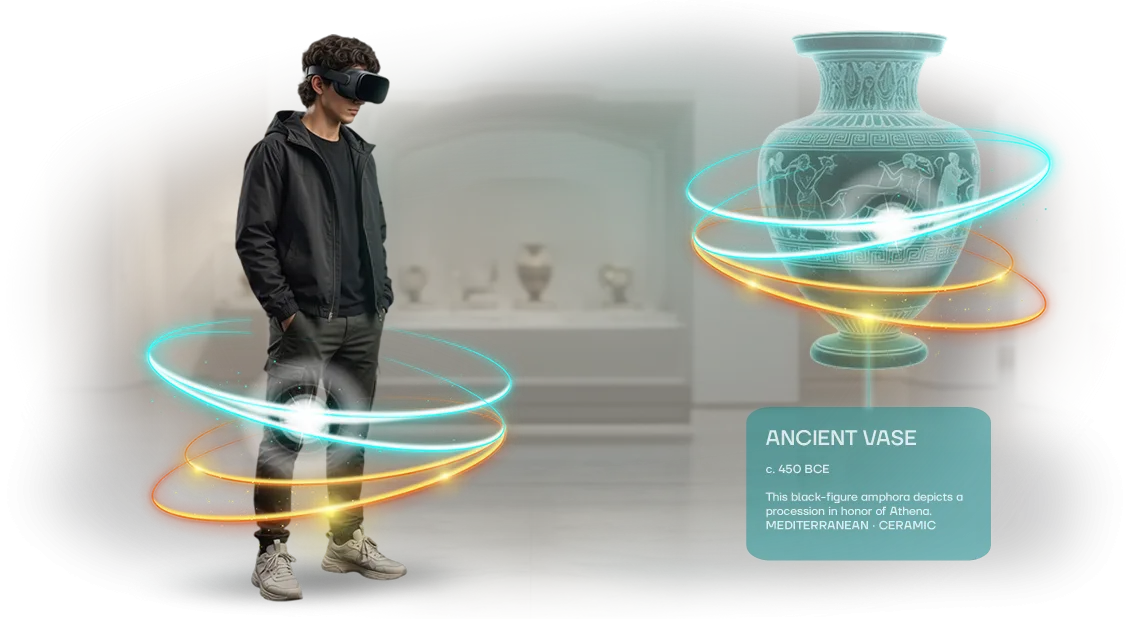
- A version for virtual reality headsets — for exhibitions, delegation receptions, and open days. The effect of being present at a facility where you physically cannot bring a group.
- Materials for showcasing — short video reviews and footage for social media and presentations, so the tour works not only on the website but also in correspondence with partners.
- Training for your team — we show you how to change captions, add points, and update facilities on your own. Without contacting us for every edit.
- Support after launch — we monitor the tour's availability, update it when there are changes at the facility, and answer your team's questions within the agreed timeframes.
We separately record what is included in post-delivery revisions and what is considered a new task — so that there are no discrepancies. All source materials remain with you: the tour is not tied to us to the extent that it cannot be handed over to another contractor.
If new facilities appear during the project or the structure of the complex changes — tell us in advance, and we will include it in the plan. This way the delivery remains whole, rather than assembled from pieces.
Case study: how a virtual tour accelerated an agricultural holding's deals
A large agricultural holding sold farm equipment through managers: presentations, calls, occasional on-site visits. The sales cycle stretched over months — clients hesitated, and some questions came back after every meeting.
The client needed a tool that would showcase the production and machinery without logistics and business trips.
What we did
Our team built a virtual tour of the agricultural complex: production lines, warehouse, demonstration fields, and key machinery components in an interactive format.
Visitors navigate the route themselves, stop at points of interest, and see how the equipment works in real conditions. The tour was embedded into the website and into the managers' workflow — now meetings start with a virtual walkthrough rather than a product pitch.
Results in the client's numbers
After launch, the number of website inquiries nearly doubled, and the sales cycle shrank by roughly a third: clients came to negotiations already understanding the product.
The share of repeat partner inquiries increased, and the number of "come and see" visits decreased — business trips were no longer a mandatory stage.
AgroProm — the partner for whom we built the project, noted that the tour became the primary first-touch tool: managers save time, and clients make decisions faster. Six months later, the client returned with a new request — to expand the tour for a second business line.
How to choose the right format for the task?
The format of a virtual tour is almost always dictated by the task, not the other way around.
If the goal is to show a production facility or an object that cannot be visited in person, it makes sense to build a panoramic tour with viewpoints and explanations: the client walks through the site just as they would themselves, and sees the real scale.
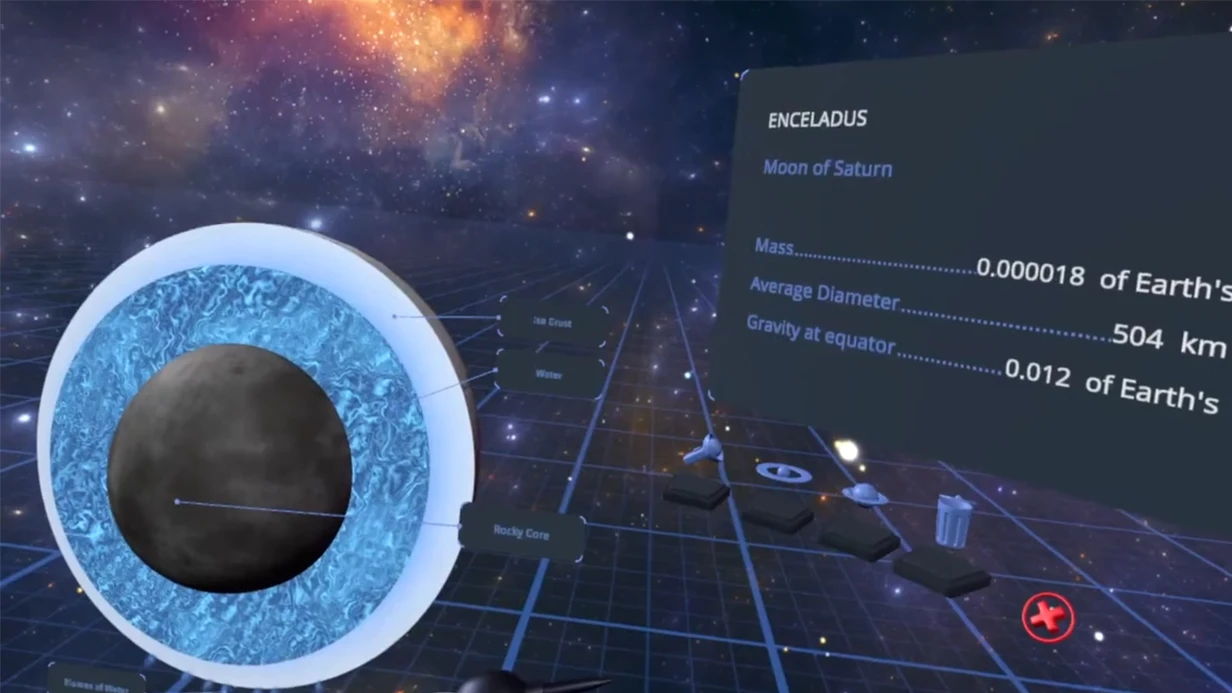
If the task is to sell a product or equipment, a 3D showroom works better, where the object can be examined from all sides, broken down into components, and configurations compared.
For presentations, exhibitions, and negotiations, a format with a host and a script is suitable: viewers don't wander on their own but follow a structured story. Such a tour solves the reach problem — one presentation can be shown to dozens of groups without travel and logistics.
When choosing a format, we start from three questions: who will be watching, what the person should understand or do after viewing, and where the tour will live — on a website, at an exhibition, in a newsletter, or at a meeting with a client.
The answers to these usually immediately cut out the unnecessary and leave one or two workable options.
Next, we offer specific recommendations: where panoramas are enough, where a full-fledged 3D model is needed, and where a hybrid with interactive hints works best.
This kind of tour selection saves time and budget, because you don't pay for features no one will open, and you get exactly the format that leads to your goal.
Common customer concerns
Managers usually have the same doubts: "they'll build it and disappear," "the content will be outdated in a month," "there'll be no one on site to maintain it." These are normal questions, and we have a clear answer to each one.
What happens if something stops working
A virtual tour is not a one-time campaign but a working tool, so we build in reliability from the start: we host it on stable server infrastructure and test it on real devices and visitor scenarios.
If something goes wrong, you are not left alone with the problem — the team is in touch and resolves the issue as part of support.
How to update content
An exhibition changes: new varieties, machinery, stands, seasonal offers. The tour does not need to be rebuilt from scratch — we provide the ability to make targeted changes to scenes, captions, and materials. An update takes days, not weeks, and does not require you to keep a technical specialist on staff.
Is special equipment needed on site?
No. A virtual tour of an agricultural complex can be viewed from an ordinary computer, tablet, or phone — just open the link.
We handle the filming and preparation of materials ourselves: we come to the site with our own equipment, work according to an agreed schedule, and do not interfere with production processes.
What if we need modifications after launch?
We stay in touch after delivery as well. Describe what you want to change or add, and we will come back with an estimate and a work plan. Many customers return with an expansion: they add new locations, sections for partners, or a version for exhibitions.
How reliable is this in the long run?
The tour is hosted on infrastructure designed for a constant flow of visitors — it will not "fall over" during peak season or during a major event. We monitor performance and respond promptly if anything requires attention.
Let's discuss your virtual tour
A virtual tour is not a "pretty picture on a website" but a working tool that brings in clients and saves your team time. You get a property that can be shown to an investor, buyer, or partner anywhere in the world — without flights, approvals, or waiting.
We cover the entire cycle: from the idea and scenario to a finished tour that works toward your goals.
Ordering a virtual tour makes sense when the result matters, not the form: more inquiries, a shorter deal cycle, greater awareness of the destination.
That is why we start not with equipment but with the question "what should a visitor do when they open the tour." The answer determines the structure, the focal points, and the metrics by which you will later evaluate the work.
What you get after the project starts
- A finished virtual tour tailored to your property and goals — from an agricultural complex to a showroom.
- A scenario and route: the visitor follows a logic that leads to the target action.
- A tour that opens on any device — for a client, a partner, at an exhibition.
- Materials for promotion: assets for the website, presentations, and email campaigns.
- Handover of the project to your team with clear instructions for updating it.
How to get started
Discussing the task is the first and shortest step. You describe the property, the audience, and what you consider a success; we ask clarifying questions and come back with an estimate and a work plan.
In the plan you see the stages, the timelines, and what you will receive at each of them — with no hidden items and no surprises along the way.
From there the work proceeds transparently: we agree on the scenario, build the tour, show an interim result, and refine it based on your feedback.
You do not need to understand the technology — our team is responsible for making the tour look convincing and solve the business task. Describe the task — we will come back with an estimate and a plan, and you will decide whether this format works for you.