







Virtual tour of an amusement park: why you need it
An amusement park sells an experience, but it is almost impossible to show it in advance: in a photo, a ride looks like a structure rather than an emotion, and the guest does not understand what exactly awaits them.
As a result, families and groups choose the place where everything is clear even before the trip — and they go to those who managed to explain their value on screen.
A virtual tour of an amusement park solves this problem directly.
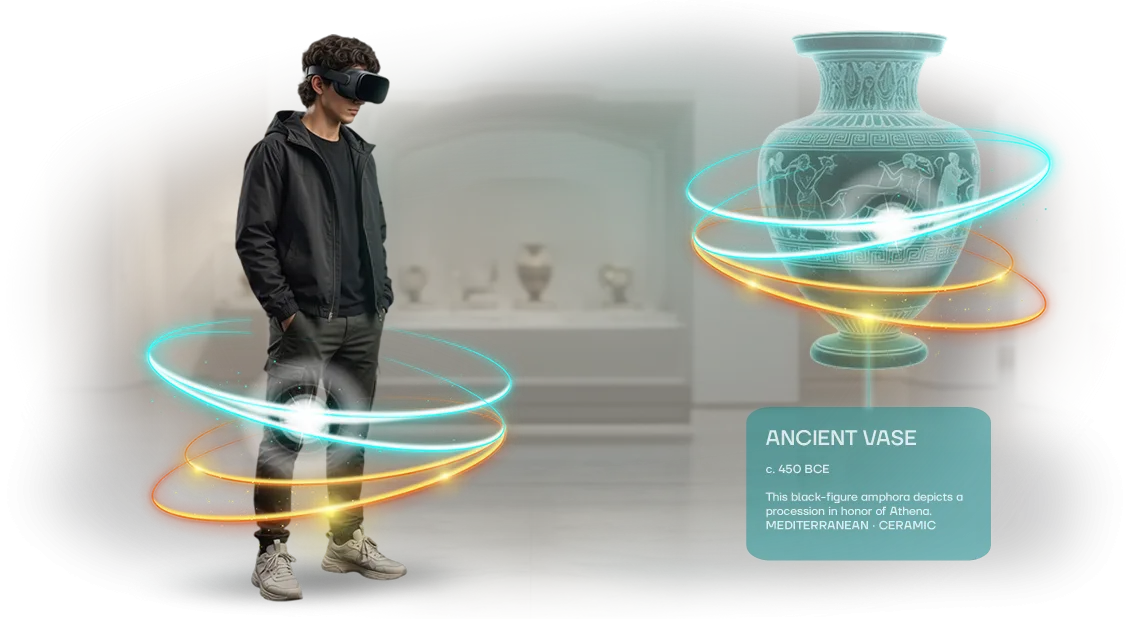
An online walk through the park shows the territory, rides, recreation areas and atmosphere the way a guest will see them: you can "walk" along the alleys, look inside, assess the scale and understand what to do with children and what to do with friends.
A person makes the decision about the trip calmly and confidently, rather than based on fragments of other people's reviews.
For you, this is a tool that works around the clock. Showing the park online means removing the guest's main fear of "what if there's nothing to do there" and turning doubt into a desire to come.
The tour can be conveniently embedded in a website, used in advertising and email campaigns, and sent in response to questions on social media: instead of long explanations, you simply give a link, and the person sees everything for themselves.
A separate benefit is attracting visitors from other cities and those who plan their trip in advance.
A virtual tour of an amusement park makes organizers of school groups, birthdays and corporate outings your allies as well: it is important for them to assess in advance whether the place suits their scenario, and the tour answers this without calls or messaging.
We build such projects turnkey — from the idea and filming to a finished tour that opens on any device without installing apps. We will discuss your task and come back with a clear plan: what to show, in what order, and how it will work to bring in guests.
What a park gains from a virtual tour
A virtual tour is not a "pretty picture for the website" but a working tool that brings guests to the park and reduces the load on staff.
When a visitor "walks" through the alleys in advance, sees the rides, recreation areas, and the atmosphere, the decision to visit is made faster and with more confidence.
The main benefit is growing brand awareness. The tour lives on the website, in social media, and on partner platforms; it gets forwarded to friends and added to "where to go" roundups. A tour made once keeps bringing new guests for months, with no extra charges for impressions.
The second benefit is more ticket inquiries. A person who has "already been there" in the tour is more willing to buy a ticket and take additional services: cafe, souvenirs, photo sessions.
The "I've seen it, I want to experience it in person" effect works stronger than any advertising, and guest engagement grows even before entering the park.
The third benefit is fewer refunds and disappointments. The guest understands what to expect and arrives with realistic expectations. This reduces the flow of complaints, ticket refunds, and negative reviews, and staff spend less time on explanations.
We create such tours for amusement parks and know how to showcase scale and emotion, not just a set of panoramas. We work with professional equipment — the client gets a stable result that does not "fall apart" on weak devices or during a surge of visitors.
A virtual tour pays for itself through repeat visits and word of mouth: guests come back with friends and share the link. It is an investment that works for the park's awareness and revenue at the same time.
Virtual tour formats for your task
The format is chosen not by how beautiful the picture is, but by the task: to show a park before opening, to sell tickets, to guide visitors through zones, or to replace an off-site presentation for partners. Below are four working scenarios that we assemble most often. Each can be taken separately or combined into a single route.
| Format | For whom | What it gives the client |
|---|---|---|
| Panoramic tour | Visitors, tourists, social media | A full overview of the park from above and from the ground: a person "walks" the alleys and decides to come |
| 3D showroom of the park | Investors, partners, tenants | Attractions and zones in three dimensions — you can show an object that does not yet exist in reality |
| Interactive map | Families with children, on-site guests | Navigation through zones, cafes, and activity points: fewer lost guests, more repeat visits |
| Guided tour | Groups, schools, corporate events | A guided route with tips and highlights — attention is held longer than in free browsing |
What matters at the start
A panoramic tour and an interactive map deliver returns fastest: they are launched for the season and used in advertising. A 3D showroom of the park and a guided tour are long-term investments; they work in negotiations and in ticket sales.
We create virtual tours for amusement parks and venues with guest traffic — from shooting to a finished route. We work with professional equipment, so the picture stays sharp both on a phone and on a large screen.
We select the format for the task, not the other way around: let's discuss your venue — we'll come back with an assessment and a plan.
How we run a project: from idea to launch
A virtual tour project for an amusement park is not "shoot it and upload it," but a managed process with clear checkpoints. You always know what stage the work is at, what is already done, and what is needed from you. Below is what it looks like from the client's perspective.
- Brief and goals. We discuss the task: whom we are bringing into the tour — tourists, partners, future visitors; what we show first; what result we consider a success. We lock in the walkthrough scenario and the points where a guest should "latch on."
- Plan and structure. We put together a route map: which zones, attractions, and views make it into the frame, in what order, and where the hints and transitions will be. We agree on the plan — from there the work proceeds without surprises.
- On-site shooting. We come to the park and shoot at a time that is convenient for you, so as not to disturb guests and the operation of the attractions. We think through the angles so that the tour sells the atmosphere rather than just showing walls.
- Assembly and content. We assemble the interactive tour, add navigation, captions, points of interest, and, if needed, tickets, menus, and contacts. We check how everything looks on a phone and a computer.
- Review and revisions. We show the finished version and take in comments on the shots, texts, and route logic. Revisions at this stage are a normal part of the process, not a separate service.
- Launch. We place the tour on your website and via a link for newsletters and social media, and we check loading and that all transitions work correctly. You get a working tool, not a file that sits on a shelf.
- Post-launch support. We help keep the tour up to date: attractions, prices, and seasonal offers change — we make the edits and make sure everything works.
What you get at each stage
Transparent timelines, a single person responsible for the project, and clear approval checkpoints. You do not need to understand the technical side — you evaluate the result by how the tour looks and works for your guests.
What is included in the delivery
The client receives not a set of files, but a working tool: a virtual tour of the amusement park that can be immediately shown to visitors and partners. Below is exactly what is included in the delivery and why each part matters for your business line.
- A ready-made virtual tour — all park locations: rides, entrance areas, cafes, event spaces. A visitor follows the route in whatever way is convenient for them and sees what awaits them before buying a ticket.
- A link and embedding on the website — the tour opens via a direct link and embeds into your page, a promo landing page, or an app. We place it ourselves; you don't need to modify anything.
- A version for social media and email campaigns — a short video and preview frames so you can announce the tour in your channels and drive traffic to the park's page.
- Training for your team — we show administrators and the marketer how to update points, change texts, and add new zones on their own, without contacting us for every edit.
- Instructions and access — a clear guide to managing the tour, and all rights to the materials remain with you. Your team won't end up hostage to a contractor.
- A support period after launch — we monitor how the tour performs with real visitors and make adjustments based on the results of the first weeks of operation.
Separately, we provide recommendations on where to place the tour so that it brings bookings and ticket sales, rather than just "hanging" on the website.
This package covers the task entirely: from the first idea to a working sales channel that your team manages independently.
Case study: how a virtual tour transformed an amusement park
Client's challenge
An amusement park "Attraction Island" came to us with a problem typical for the industry: visitors only learned about the zones and attractions at the entrance, and the call center was drowning in repetitive questions — "what do you have for kids," "how long does it take to walk to the rides," "is the cafe open when it rains." Families arrived unprepared, some guests turned around at the ticket booths, and the sales department couldn't show corporate clients exactly what they were renting for an event.
What we did
We built a virtual tour of the park: guests walk through all the zones in advance, see the attractions, cafes, and party venues, choose a route that fits their group, and immediately submit a request for a ticket or a corporate event.
We embedded the tour into the website and into advertising campaigns — it works as a 24/7 showcase that never gets tired and never makes mistakes.
Results for the first season
- Online requests grew by 47% — people arrived with a route and a date already chosen.
- Average time on the site nearly doubled: visitors go through the tour to the end and come back to it before their visit.
- The call center's workload for typical questions dropped by a third — operators shifted to bookings and corporate inquiries.
- The share of repeat inquiries from schools and companies grew: the tour became the main argument in negotiations.
A season later, the park ordered a second tour from us — for a new zone and a winter program.
How to choose the right format for the task?
Start with the question "what should the guest do after the tour" — and the format will choose itself. If the goal is to sell tickets and season passes, you need a short overview tour with vivid highlights on the attractions and a clear purchase button.
If the task is to show the park to an investor or partner, scale, infrastructure, and how everything looks during high season matter more.
If you are preparing a venue for opening and selling tickets in advance, the tour works as a teaser: the guest sees the future space and books a visit before launch.
The second reference point is the audience and the device they use to access it. Families with children more often watch from a phone and decide "go or not" in a couple of minutes — they need a light, fast format with large zones and minimal controls.
An adult audience and corporate clients are ready for a deeper immersion: they are interested in themed zones, shows, and an evening program.
For presentations on a large screen or in headsets, a format with a smooth camera and a well-thought-out route will work — it holds the audience's attention and does not require commentary from a presenter.
The third reference point is where the tour will live afterward. For a website and advertising, we make a compact version that opens quickly and easily embeds into a page.
For entrance stands, ticket offices, and waiting areas — a version that the guest goes through on their own, without instructions. For social media and email campaigns — short fragments that hook in the first seconds and lead to the main platform.
We do not offer a "one-size-fits-all" option: during the task review, we look at your goals, seasonality, and touchpoints with the guest — and come back with a recommendation on format, route, and scope.
If you are torn between two options, we will assemble both scenarios and show how they work for your audience — you will make the decision based on the result, not the description.
Common Doubts Before Ordering a Virtual Tour
The doubts are usually the same: "what if it breaks," "who will update it," "how long will the tour last," and "do visitors need special hardware." We answer directly, without evasive wording — so you can make a decision knowing what you'll get after launch.
What happens if the tour "breaks"?
Nothing critical for you: the tour is hosted on our side, and we monitor its performance. If something stops opening or hangs — that's our responsibility, not a task for your team. You get a working tour, not a set of files you have to figure out on your own.
Who updates the content and how often is it needed?
Updates are built in at the launch stage: exhibits, zones, prices, schedules change — the tour should reflect that. We make updates at your request, rather than leaving you alone with the editor. Most often, edits concern seasonal offers and new zones — they can be planned in advance.
How long does a virtual tour last?
A tour is not a one-off event for an opening, but an asset that works for years. It doesn't become outdated on its own: as long as your zones and offers are relevant, it brings in visitors and bookings. From experience, clients come back to us to expand the tour, not to redo it from scratch.
Do visitors need special hardware?
No. The tour opens in a regular browser on a phone, tablet, or computer — without installing apps and without special equipment. This matters: the fewer barriers, the more people will make it to the end and see your zones.
What if we need support six months later?
Support doesn't end at project delivery. We stay in touch after launch too: we answer questions, help with edits, and suggest what to strengthen based on the first months' results. For us, reliability means you confidently recommend us to others.
If you still have your own doubts — ask them directly: we'll discuss the task and come back with an estimate and a plan for your venue.
Let's discuss your virtual tour for an amusement park
A virtual tour for an amusement park starts not with a technical brief, but with a conversation about your goal. Tell us what you want to show: rides and zones in full, individual locations, the atmosphere of evening shows, or all of it at once.
We'll ask a few clarifying questions and come back with a plan and an estimate — no vague words and no "we'll clarify later."
To order a virtual tour, you don't need to prepare documents or understand the terminology.
It's enough to describe the venue and the goal: whether you're attracting visitors from other cities, selling tickets in advance, showing partners the scale, or preparing a presentation for investors. This determines which zones we put in the foreground and how we build the guest's route.
What you'll get after submitting a request
- Project plan — stages, timelines, and responsibilities, so you understand what happens and when.
- Estimate — a transparent calculation based on the scope of work, with no hidden extra charges along the way.
- Demo fragment — a short piece of the future tour, so you can see the level of quality before starting.
- Route proposal — which locations to show first and why this works for your goal.
- Format options — a tour for the website, for social media, for display on a large screen on site.
- Presentation recommendations — what to enhance in the frame so the park looks the way guests remember it.
You can discuss the project at a pace that's comfortable for you: we don't rush your decision and don't push unnecessary stages. Describe your goal — we'll come back with a plan, an estimate, and a demo fragment that you can already use to make a decision.