

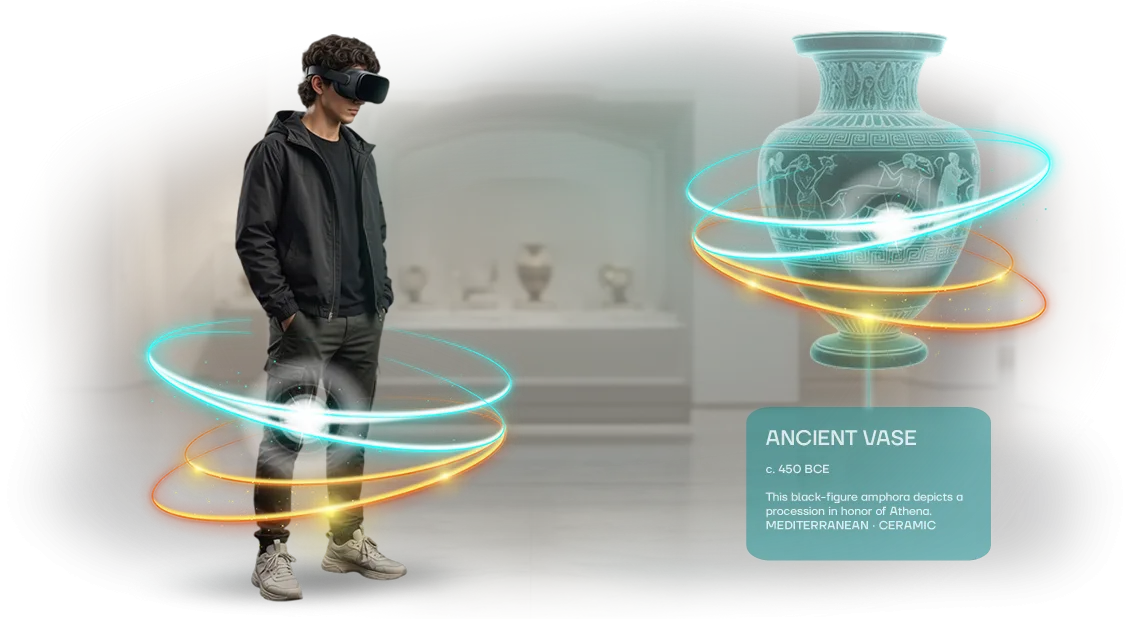






VR tour of a sanatorium: how to stop losing guests at the selection stage
A guest chooses a sanatorium based on photos, then arrives — and sees something different: different light, a different scale, a different view from the window. Disappointment is costly: a ruined vacation, a negative review, and a lost repeat stay.
And while they hesitate, a competitor who showed everything in advance has already received the booking.
A VR tour of a sanatorium removes this doubt before payment.
A person walks through the grounds, looks into a room, sees the treatment rooms, the pool, and the dining hall — and makes a decision calmly, without "what if it's not like that there." A virtual tour of a sanatorium works like an honest fitting: the guest understands what awaits them and arrives without disappointment.
For you, this is not a "pretty picture" but a sales tool. You can show the sanatorium online at the moment when a person is comparing options — on the website, in a newsletter, in a chat with a manager.
The tour answers the guest's main questions on its own: how far is the sea, is it noisy near the building, is there somewhere to walk with children. The manager stops persuading and spends time on those who are already ready to book.
A separate benefit is trust. A sanatorium that is not afraid to show itself entirely is perceived as confident in its product. This reduces the number of cancellations and refunds, and the share of repeat stays grows: guests return to where expectations matched reality.
We create such tours turnkey: we shoot the grounds and buildings, assemble an interactive walkthrough, and embed it where it brings bookings. Describe your task — we will come back with an estimate and a plan for how this will work specifically for your sanatorium.
What a sanatorium gains from a virtual tour
A virtual tour of a sanatorium solves the main problem — it removes distrust before the first call.
A guest is not ready to travel hundreds of kilometers relying only on photos of the building and a couple of reviews: they want to see the room, the treatment room, the dining hall, the grounds, and the access to the sea in advance.
When all of this can be explored online, the decision to travel is made faster, and requests for a stay increase noticeably — the person has already "visited" your place and mentally chosen it.
Guest trust is the second benefit, and it directly affects website conversion. The tour shows the sanatorium honestly and in full: real interiors, real distances, real atmosphere.
The visitor stops doubting "whether it's embellished," stays on the page longer, and leaves a request more often.
At the same time, the sanatorium's recognition grows: the tour link is shared in messages and on social media, sent to relatives and colleagues — you get audience reach without spending advertising budgets.
The third benefit is relieving the sales department. Managers no longer have to describe ten times over the phone what a room looks like and how far it is to the treatments: the guest comes to the call already prepared and asks specific questions about dates and the program. This shortens the time per deal and allows more inquiries to be handled by the same team.
We build such tours for a specific sanatorium: we plan the route through key points, shoot with professional equipment, and assemble an interactive walkthrough that works equally well on a website and on a phone. Describe your task — we'll come back with an estimate and a plan.
Virtual tour formats tailored to the sanatorium's task
A sanatorium doesn't sell "beds," it sells a state of being: silence, air, treatments, care. This can't be shown in photos, and bringing every guest on a scouting trip is slow and expensive.
A virtual tour removes this objection: a person "lives through" the grounds, rooms, and treatment building in advance and arrives already trusting.
We select the format based on the task — attracting new guests, offloading the booking department, or showing partners and referring physicians where they are sending patients.
| Format | For whom | What it gives the sanatorium |
|---|---|---|
| Panoramic tour of the buildings | First-time guests | Removes the fear of "what is it really like there" — booking without calls and clarifications |
| 3D showroom of treatments and rooms | Families, couples, corporate groups | Shows the level of comfort and amenities, helps choose a room category |
| Interactive map of the grounds | Guests with children, guests with limited mobility | Distances to the dining hall, pool, and treatment rooms are visible — fewer cancellations and refunds |
| Tour for partners and referrers | Tour operators, insurers, physicians | One asset instead of dozens of presentations and on-site meetings |
What this changes in the sanatorium's operations
The guest makes the decision independently, without pressure from a manager: they view the route from the room to the treatment rooms, assess the view from the window, and plan walks. The booking department spends time on confirmation rather than explaining what is where.
For returning guests, the tour works as a reminder: they return to familiar places and choose a season faster. For new guests, it works as the first step toward trust, because what is seen is remembered more strongly than any description.
We combine all formats into a single route: the guest moves from the panorama to the map and the showroom without losing context. Such a tour lives for years and is updated point by point — you change the equipment in a treatment room, replace one scene, and the rest stays.
How the project unfolds: from brief to launch
A virtual tour project for a sanatorium is not "shoot it and publish it," but a managed process with clear checkpoints. At every step, the client sees what is happening, what is needed from them, and when the result will be ready. Below is how this works in practice.
- Brief and goals. We discuss the objective: whether we are attracting new guests, showcasing rooms and treatment buildings, or reducing the load on the booking department. We determine which facilities and scenarios matter most.
- Plan and estimate. We prepare the tour structure: the route across the grounds, key points, and the logic of transitions between zones. We agree on the scope and timeline of the project — no surprises along the way.
- Scenario approval. We present the route diagram and storyboard: what the guest will see first, where we will lead them next. Revisions at this stage are free in terms of time — it is cheaper to adjust the plan than to reshoot.
- On-site shooting. We work with professional equipment so that the visuals look worthy on any screen. We agree on a convenient time so as not to disturb guests and staff.
- Assembly and content. We assemble the tour, add tooltips, points of interest, booking buttons, and contact with the administrator. We test on phones, tablets, and computers.
- Approval and revisions. You see the finished tour before publication and provide your feedback. We refine it until everything is to your satisfaction.
- Launch and support. We place the tour on the website and in advertising materials, and if needed, help with placement on booking platforms. After launch, we stay in touch: we update points, add new zones, and monitor performance.
A typical project takes from two to five weeks — the exact timeline depends on the number of facilities and the speed of approvals. Describe your task, and we will come back with a plan and an estimate.
What is included in the delivery
You receive not a set of files and instructions, but a ready-made sales tool that starts working on the day of handover. Everything needed for launch and further independent work is included in the delivery — with no hidden extra charges and no "we'll finish it later."
- A ready-made VR tour of the sanatorium — a virtual walk through the grounds, buildings, rooms, treatment and spa areas, with captions and route logic tailored to your priorities: what to show first, and what to show those who are already choosing between programs.
- Versions for all channels — the tour opens correctly on the website, in emails, in ads, and on a screen in the lobby. The client views it from a phone, tablet, or computer, without installing any apps.
- Embedding on the website — we place the tour on your pages, link it to the booking form and room cards, and check loading speed so that a visitor does not leave before the image loads.
- Staff training — we show administrators and sales managers how to guide a guest through the tour, what to pay attention to, and how to answer frequently asked questions. Employees start using the tool right away, not "someday when we figure it out."
- Promotional materials — short video clips and still frames for social media, newsletters, and partner platforms: shoot once — use in dozens of placements.
- Instructions and access — a clear guide to updating prices, descriptions, and seasonal offers on your own, plus all source files and usage rights.
- Warranty and support — we fix the warranty period for the stable operation of the tour and stay in touch after launch: edits, consultations, and enhancements for new accommodation programs.
We separately spell out what counts as the result: the tour opens, works on all devices, staff are trained, materials are handed over. Acceptance is based on this list — you see what you are paying for before work even starts.
Case study: how a virtual tour changed guests' choices
What the situation was before the project
A sanatorium with its own medical facilities and room inventory was entering a new market — guests from other regions who choose a wellness holiday with treatment in advance and almost never come "just to take a look." Inquiries were coming in, but a lot of time went into answering the same questions: where the buildings are, what a room looks like, how far it is to the treatment rooms, whether there is anywhere to walk.
Some inquiries went nowhere — the person could not picture the place and left to compare it with a competitor.
What we did
We put together a virtual tour of the grounds: the buildings, rooms of different categories, treatment rooms, the dining hall, the park and the approach to the water.
Guests take the route themselves, stop wherever it matters to them, and immediately see how everything is laid out. We also added a short 3D show from above — it conveys the scale of the grounds in a minute and works well as a first touchpoint in advertising.
The result
The tour was embedded into the website and into ad creatives, and the link was shared in conversations with guests.
In the first season after launch, the share of inquiries from people who had viewed the tour grew several times over, while the number of inquiries with clarifying questions about the grounds dropped by roughly half — people were arriving already prepared.
The conversion from visit to inquiry grew most noticeably on mobile, which accounts for the bulk of the traffic. The sanatorium extended the work: new rooms and seasonal scenarios for treatment programs were added.
If you have a similar task, we can show you this and other projects in more detail and work out what a tour would do for your property specifically.
How to choose the right format for the task?
The format is chosen not by how beautiful the picture is, but by the task the sanatorium is solving right now.
If the goal is to show the grounds, rooms, and treatment facilities to those choosing between several health resorts, an overview tour with clear navigation across the buildings is enough.
If you need to sell specific programs — "cardio," "musculoskeletal," "detox" — the tour is built around these scenarios: the guest follows the same route as they would on site and understands in advance what they are paying for.
The first thing to determine is who is watching the tour and at what moment. A person who is just gathering information and a person ready to book behave differently: the first cares about views and atmosphere, the second about rooms, treatment schedules, meals, and transfers.
The same sanatorium can meet both needs, but the emphases in the tour will differ, and this is laid down at the start, not reworked later.
The second question is where the tour will live.
On the website as a "virtual visit" section, in a newsletter for those who left a request, in a presentation for travel agencies, or at an exhibition — each channel has its own requirements for length, storyline, and what we show first.
A tour for a cold audience and a tour for the sales department are two different products, even if filmed in the same place.
The third criterion is seasonality and geography. A sanatorium that is busy in summer and empty in winter benefits from a tour showing winter treatments and views: it sells the season that would otherwise sit idle.
If the main audience comes from other regions, the tour removes the main fear — "what is it really like there" — and shortens the path from interest to booking.
We start with a short conversation about the sanatorium's task: which programs need to be promoted, who the guest is, where the tour will be used. Based on the results, we propose a suitable format and explain why it is the right one and not another. This way, choosing a format becomes a solution to a business task, not an argument about tastes.
Common doubts before ordering a virtual tour
A manager usually has the same doubts: "they'll build it and disappear," "the content will be outdated in a season," "the guest will have nowhere to view it." Let's go through each one — to the point, without promising "everything will be perfect."
What happens if the tour breaks or stops opening?
We don't abandon the project after launch. The tour is hosted on our side, we monitor its performance and respond if something goes down. You don't need to keep a person on staff who understands this — support is included in the work. If you get your own specialists, we'll hand over all access and show you how everything is set up.
How do we update content — prices, rooms, procedures, doctors?
A sanatorium changes every season: a building was renovated, the list of procedures changed, a service was added. The tour must reflect this, otherwise it hurts rather than helps. We build in the ability to make edits: you send us what changed, we update it.
For regular changes, you can arrange ongoing support — then edits flow continuously, without one-off approvals.
Do guests need equipment on site — glasses, headsets, hardware?
No. The tour opens in a browser — from a phone, tablet, laptop, at the reception desk or in a meeting room. If you want to enhance the impression at an exhibition or in a presentation for tour operators, you can add a VR mode, but that's an option, not a mandatory requirement. The main scenario — a guest follows the link and walks around the grounds on their own.
What if the guest doesn't like it and won't watch?
A tour is not a replacement for a website, but a tool that removes the main barrier: "what's actually there?" A person who is hesitating between two sanatoriums understands in five minutes what you have inside, and that works toward a decision. We make sure the tour opens quickly and doesn't require figuring anything out.
If you still have your own questions — ask them directly. We'll discuss the task and come back with an estimate and a plan: what will be included in the tour, how long it will take, and how it will live on after launch.
Let's discuss your virtual tour and come back with a plan
Describe the task in two or three paragraphs: how many buildings and rooms to show, which treatments and areas of the sanatorium to bring to the fore, who your audience is — tourists referred for treatment, or agents selling packages.
That is enough for us to come back with a timeline estimate and a project plan, rather than generalities.
From there, the work proceeds transparently: you can see what stage the tour is at, what is already done, and what is needed from you — photos, floor plans, texts about treatments. No surprises halfway through.
- Project plan — stages, tour composition, shooting points and delivery order, agreed with you before work starts.
- Timeline estimate — a realistic schedule with dates for interim reviews, so you can tie the launch to a season or an exhibition.
- Estimate with no hidden line items — we fix the scope in advance; additional payments only for what you yourself add along the way.
- Guarantee on the result — if the tour does not work as agreed, we bring it to the required quality at our own expense.
- Post-launch support — we help with placement on the website and in advertising channels, and make edits when prices change or a new building opens.
- Handover of materials — the tour remains yours: access, source files and a clear instruction for staff, with no permanent tie to us.
To come back with a plan and timeline, we need to understand the task, not receive a ready-made technical specification.
Tell us what the tour should show and what goal you set for it — we will show similar projects for sanatoriums and hotels, propose a format to fit your budget guideline and give you dates. Describe the task — we will come back with an estimate and a plan.