

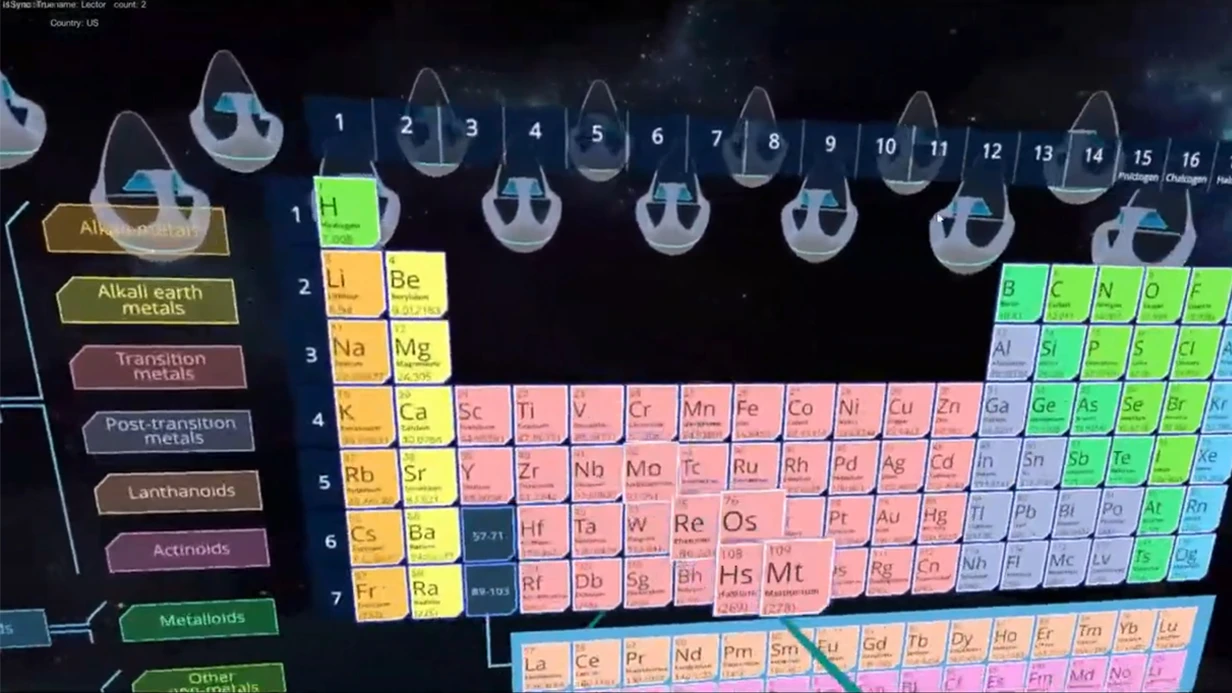


VR speech rehearsal: the main mistake of virtual exhibitions
The success of a virtual exhibition depends on what happens on stage. Visitors come for a live experience, but a speaker’s uncertain speech, disjointed thoughts, and lost pauses instantly kill the impression.
People leave before the presentation ends and never come back—even high-quality content does not save reach.
A virtual exhibition is not just exhibits and graphics, but also the faces that speak to the audience. A visitor judges the brand by how confidently its representatives sound. An unprepared speaker looks incompetent, and with them the trust in the entire company suffers.
Organizers often invest the budget in the platform and design, but forget the main engagement tool—live, prepared speech.
That’s where VR speech rehearsal comes in—practicing a presentation in a virtual environment that is as close as possible to a real stage. The speaker rehearses in front of a virtual audience, fine-tuning timing, intonation, movements, and reactions to unexpected questions.
This is not entertainment, but systematic presentation preparation that turns ordinary talks into attention-holding performances.
The result—confident speakers, lively presentations, and increased visitor engagement. They stay longer at the event, ask questions, and share their impressions on social media.
This is how a virtual exhibition becomes an event people talk about, and its return on investment is no longer in question. We will help you integrate VR speech rehearsal into the preparation for your event and achieve this result in practice.
What speech rehearsal provides at virtual exhibitions
Speech rehearsal at virtual exhibitions is not a token rehearsal, but a way to turn participation in an event into a measurable result.
While the speaker refines their speech, you lay the foundation for retaining attention, generating questions, and capturing inquiries—exactly the virtual exhibition benefits that exhibitors participate for.
Sales department: more time at the booth
A rehearsed speech holds guests until the end of the presentation, not just for the first thirty seconds. Every extra minute of contact is a dialogue with a potential client and a step toward an inquiry. For a salesperson, this scenario means ready-made conversations and fewer empty meetings.
Marketing: more leads
The presentation is built around a script that guides the visitor to take action: leave contact details, request a demo, ask a question. This approach turns an ordinary view into an inquiry, not just visit statistics. You get more leads without expanding the advertising budget.
Marketing: brand awareness
A confident speaker and well-structured answers create the image of a reliable company. Visitors remember the booth, share impressions on social media and in professional chats. This way, the virtual exhibition strengthens brand awareness even after the event ends.
Executives: audience trust
Clear speech and calm arguments remove doubts about the team’s competence. When a client repeatedly gets solid answers, they trust not only the speaker but the entire company. This trust directly affects the speed of approval and the size of the deal.
By integrating speech rehearsal into virtual exhibition preparation, you address four tasks: time at the booth, leads, brand awareness, and trust. This is not an extra burden on the team, but a precise tool that pays off on the very first day of the event.
Virtual exhibition formats and 3D showrooms for your task
Each exhibition solves its own task: one brand wants to show a product to a wide audience, another wants to hold negotiations with partners, a third wants to keep the visitor at the booth as long as possible.
The choice of format determines how many people will see your brand and how quickly they will become customers. That is why we start not with technology, but with your business goal, and select the optimal format for it.
| Format | For whom | What it gives the client |
|---|---|---|
| 360 tour | Companies with offices, showrooms, and production facilities | Shows the real space without travel, increases trust, and shortens the sales cycle |
| Full 3D world | Brands that need a sense of presence and a memorable experience | Keeps the visitor for 5–10 minutes, increases brand contact time and conversion to inquiry |
| Virtual booth | Participants of online exhibitions and conferences | Collects contacts, holds presentations and negotiations directly on the platform |
| Hybrid venue | Organizers of events with offline and online audiences | One platform works for both audiences, expanding reach without increasing the budget |
We do not sell a template solution: for each project we design our own scenario, and we choose the format based on the task and budget.
If you are unsure which option suits you best, we will show examples from your industry, calculate the cost, and suggest the format that will pay off the fastest.
How we develop your virtual exhibition: project stages
We have structured the process so that at every stage you understand what is happening and where the money goes. No ‘black boxes’: you see intermediate results, make edits, and approve key decisions.
Below are six stages from brief to launch and support, each ending with a clear result and measurable progress.
- Brief and objectives. We hold a working meeting with your team, examine goals, audience, and product range. You formulate what the exhibition should deliver—we record requirements and success criteria.
- Concept and scenario. We propose the space structure: halls, visitor route, key product interaction points. You approve the overall logic or ask to change the layout.
- 3D modeling and content. We create displays, booths, and brand atmosphere, as well as models of your products. You get a preview to evaluate the visual style.
- Approval and testing. We show a working prototype, you check navigation usability and alignment with tasks. We make final edits before launch—you accept the result.
- Project launch. We host the exhibition on your domain or connect it to an existing site. We test stability under peak loads so visitors never get lost.
- Support and development. We monitor attendance metrics and visitor behavior, help update content, and add new exhibits. You receive regular reports and can influence future improvements.
What is included in the delivery: a kit for launching a virtual exhibition
We deliver not ‘files on a server’, but a working business tool: a virtual exhibition that visitors will see on time and without disruptions. The kit includes everything for launch and stable operation—you get a turnkey solution, not a to-do list for your team.
- Ready-made platform. The exhibition opens from any device via a regular browser, with no app installation. Visitors do not have to figure out settings—they just enter and watch.
- Design concept and styling. The space reflects the brand style and event goals: from a warm show window to a high-tech hall for industrial samples.
- Content filling. We will migrate the materials: photos, videos, descriptions, models. You do not need to find a separate contractor to digitize the exposition.
- Employee training. We conduct training and provide clear instructions. The team will be able to update information, add exhibits, and monitor activity without programmers.
- Stability guarantee. For an agreed period, we are responsible for the platform’s reliability: load, availability, data integrity.
- Post-launch support (SLA). Support according to an agreed service schedule: from consultations to refinements based on the first events.
This kit covers the main risks: deadlines, technical failures, and dependence on niche specialists. You get a predictable result that brings reputation and sales from the first event.
Case study: how we doubled virtual exhibition traffic and collected 2 thousand leads
A well-known exhibition organizer, Messe Frankfurt, approached us to move one of its key events online. Ordinary video broadcasting did not provide a sense of presence: exhibitors lost visitors, and organizers lost detailed analytics.
We built a virtual exhibition with participants’ 3D showrooms, interactive booths, and networking areas. For speakers, we provided a virtual stage with speech rehearsal: the speaker could practice the presentation, evaluate timing and delivery before going live. This feature became one of the most in-demand on the platform.
The results exceeded expectations:
- traffic doubled compared to the previous offline event;
- over 10 days we collected 2,000+ leads—contacts of visitors interested in exhibitors’ products;
- average time on the platform was 14 minutes—three times higher than the average time on a regular website.
Thanks to the 3D format and thoughtful navigation, guests lingered at the booths, chatted, and downloaded materials. The organizers got the full picture: which exhibits attracted attention, at which stages the audience dropped off, and which topics sparked genuine interest.
The client was satisfied with the result and continued the partnership—moving two more events into virtual format. This confirms: a 3D exhibition delivers measurable results for business and works as a full-fledged sales channel.
If you need to move an event online or create an interactive showroom, we will deliver the same turnkey project: from scenario to launch and analytics.
How to choose a virtual exhibition format for your objectives?
Choosing a virtual exhibition format starts not with technology, but with the goal you set for it. What matters more to you—collecting inquiries and contacts, strengthening the brand, or training employees and partners?
The answer to this question determines what the space will be: a simple 3D showcase, a full-fledged showroom with negotiation functionality, or an interactive training booth.
If the main task is leads, choose a format with fast navigation and clear contact points. The visitor enters, sees key products, leaves an inquiry, or immediately schedules a meeting in the calendar.
In such a space, nothing distracts from the main goal, and you get contacts at the moment of maximum interest without forcing the client to search for a manager on a separate website.
When strengthening the brand and surprising the audience is more important, consider a format with an emotional scenario.
Three-dimensional spaces with unique architecture, unconventional transitions, and embedded video content work for recognition: visitors want to explore such an exhibition, show it to colleagues, and share it on social media. It turns into an event that is discussed long after it closes.
For training and onboarding, a narrative format with knowledge checks works best. The visitor goes through the exposition sequentially, completes practical tasks, and receives a certificate at the end.
This turns the exhibition from ‘viewing’ into ‘learning and applying’—especially effective for distributors, new employees, and partners who need quick results.
In any case, we start by discussing your business metrics and audience, and only then select the budget and timeline for the format—not the other way around.
If you are unsure where to start, we will advise which option will bring measurable results fastest, so you do not overpay for unnecessary options or lose clients due to complicated navigation.
Frequently asked questions about developing and maintaining virtual exhibitions
Before ordering a virtual exhibition, you want to understand how much it will cost, how quickly it will appear, and what will happen if the platform cannot handle the load. That’s normal: this is usually where the main risks lie.
We eliminate them as early as the brief stage—we name the exact cost and fix the timeline in the contract. After that, you only need to watch the reach grow, not technical details.
What if the platform breaks down on the opening day?
Peak load is a scenario we practice in advance. Our engineers design the architecture with a safety margin and monitor it in real time during launch.
If something goes wrong, automation switches visitors to backup capacity without human involvement. Guests continue walking through the halls, and you learn about the problem only after it has been fixed.
After the event, we provide a report: how many people entered, where they lingered, what they viewed. All of this stays with you for analysis and planning of the next exhibition.
Timelines range from three weeks to two months. We do not promise ‘ideal’ dates; we set a realistic schedule and stick to it. At the start, you receive a plan that shows every milestone; any deviation from the schedule is agreed in advance, not discovered at the end.
No special equipment is required. Visitors can enter from any modern browser: from a desktop computer, laptop, tablet, or smartphone. We adapt the interface for different screens so that people do not lose interest due to technical limitations.
On the client side, 10–15 minutes of employee training is enough—everything else is already configured.
Guarantee: we are responsible for the platform’s operation after launch, not just for handing over code. The cost includes support during the exhibition and refinements if visitors behave differently than you expected. This removes the risk of ‘we paid, and now we are on our own’.
Ready to launch a virtual exhibition that brings leads? Leave a request
To order a virtual exhibition that brings inquiries and sales, you do not need to understand technology or search for a contractor by recommendation. Just leave a request—and we will take over the project: from the first estimate to launch and ongoing support.
You will know in advance how much the project costs, when it will be ready, and what you will receive at each stage. No ‘surprises’ in the middle of the work—only a transparent process and clear agreements.
Here is what the journey looks like after your request:
- Day 1 — cost calculation for your task: exact figures, not a “from–to” range.
- Day 1–2 — commercial proposal with a justification of benefits—ready for approval by management.
- Day 2–3 — project plan with stages, timelines, and responsible persons—you understand what happens and when.
- Day 3–5 — prototype or 3D sketch of the future exhibition—you see the result before development starts and make edits.
- After approval — on-time launch and training for your team on how to work with the platform.
- After launch — support and refinements based on your feedback, so the exhibition keeps delivering results.
Leave a request on this page or call us—we will call you back within an hour, clarify the details, and prepare a personalized commercial proposal. Within a month, you will be able to show the virtual exhibition to clients and partners.