



Electronics and Gadgets Don't Sell Themselves Without AR Installation
Shoppers walk past storefronts in three seconds—and in that time decide whether a product is worth considering. For electronics and gadgets, this is especially critical: the boxes look the same, and the model's advantages are invisible without a demonstration.
Ordinary packaging doesn't explain why your product is better, so shoppers' attention drifts to those who have already found a way to stand out.
The result is low engagement and lost sales, even when the product is objectively stronger than competitors'. The brand is not remembered, and the marketing budget is wasted on a presentation no one notices.
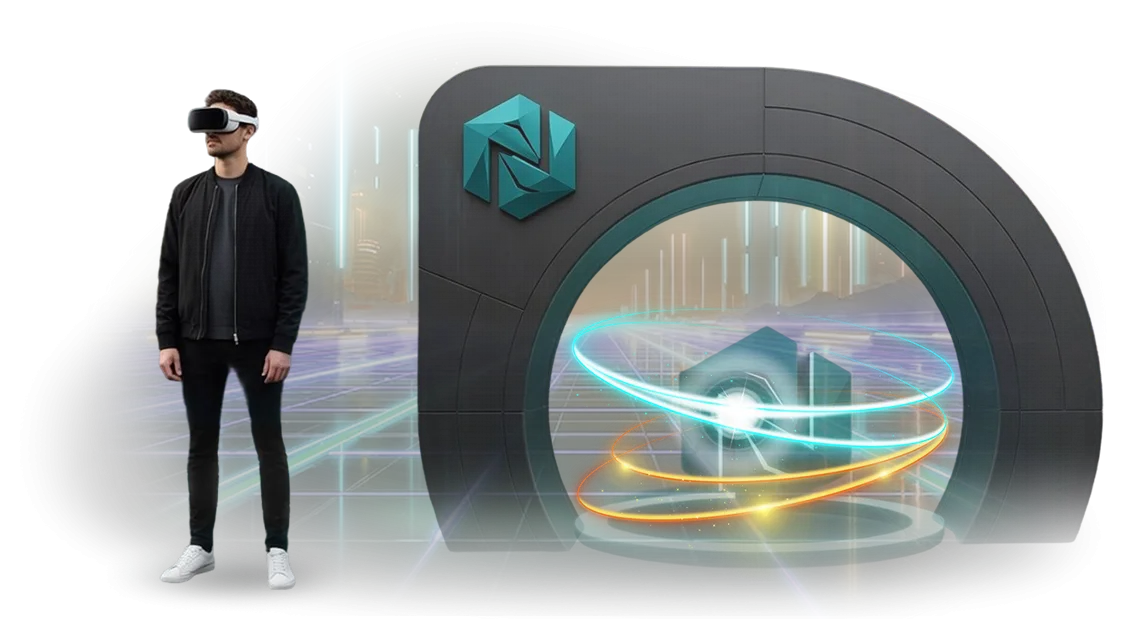
An AR installation solves this: it brings the product to life right on the storefront or in the shopper's hands, shows its capabilities in action, and creates an interactive experience.
The gadget stops being "just another box"—it becomes a story people want to explore and tell others.
We design such installations for your brand's goals, from concept to launch. We help hold shoppers' attention at the right moment and turn interest into a purchase decision.
What an AR Installation Gives a Brand, Museum, or Event
Guests and visitors quickly tire of static booths and text posters—attention scatters within minutes. An AR installation turns exploring a product or exhibit into a live experience people want to share with others.
That is why our team builds interactive scenarios for the specific needs of a brand, museum, or event—from a short activation to a full-scale exhibition.
Benefit: guest engagement
Augmented reality gives visitors the role of protagonist: they point a camera, see a product or exhibit "come to life," and choose what to explore next. This holds attention many times longer than a regular video or banner. The person doesn't just watch—they interact, remember, and tell others.
Benefit: brand recognition
A striking AR scenario becomes an occasion for photos and social media posts. Every guest who shares a photo or video becomes a free promotion channel.
The association "this brand knows how to surprise" sticks for a long time and sets the company apart from competitors using standard formats.
Benefit: time at the booth
At an exhibition or event, every minute of contact with a visitor is a chance to talk about the product and answer questions.
An AR installation keeps people at the booth several times longer: while they go through the scenario, the team has time for a live dialogue and lead qualification.
Benefit: sales
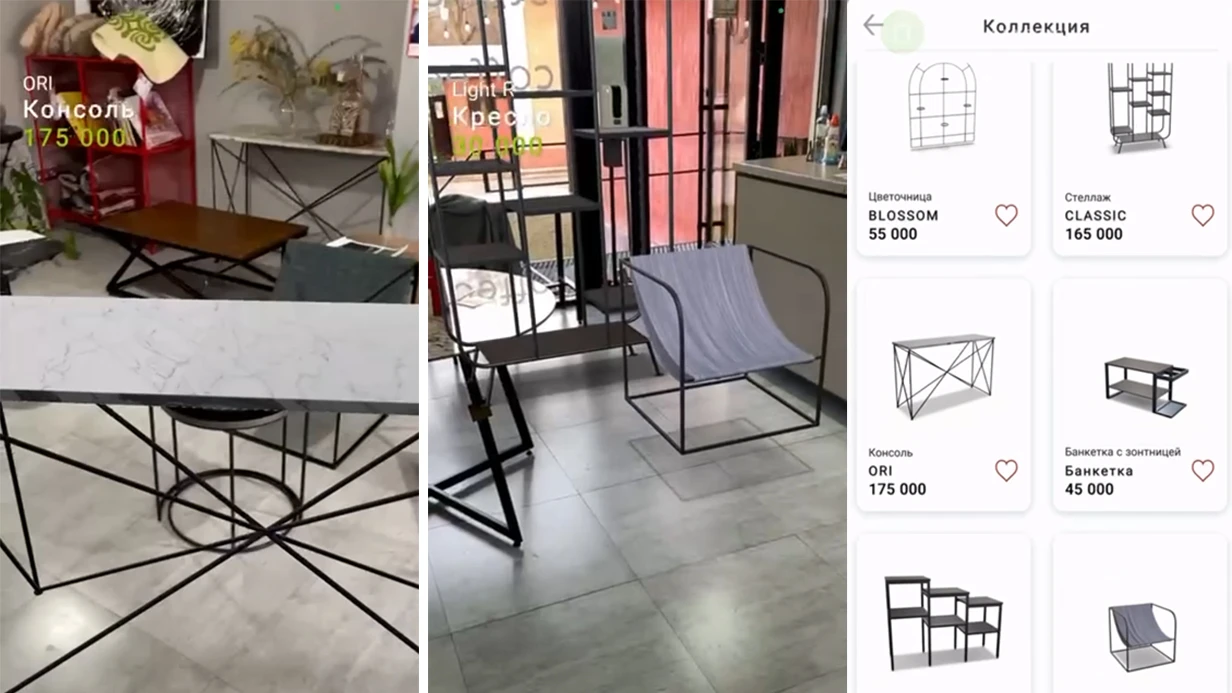
The interactive experience can be tied to a catalog, a promotion, or augmented product packaging. For example, when a shopper points a camera at a box, they see a video review, a special offer, or a device configuration option.
This way, digital interaction is easily converted into a request, an order, or a repeat visit to the store.
Benefit: flexibility for the task
We adapt the same technical approach to a stage, a storefront, an exhibition booth, or a museum hall. It can be a mobile scenario for guests or a stationary zone with professional equipment.
In both cases, the client gets a manageable result: clear timelines, reliable launch, and support on the day of the event.
Formats of AR Installations for Electronics and Gadgets
When an electronics brand prepares a booth, a museum exhibit, or a new product presentation, the question arises: how do you showcase a product so that people remember it?
A standard display booth and screen videos no longer surprise—visitors want to interact with the product and "touch" its capabilities.
At our team we help you choose an AR installation format for your task, venue, and budget, so the result supports recognition and sales.
The formats are flexible: from a compact exhibition zone to a large-scale museum display. Below are typical scenarios we implement most often and the benefit they bring to the client.
| Format | For whom | What it gives the client |
|---|---|---|
| AR for exhibitions | Electronics brands at industry and consumer exhibitions | Sets the booth apart from neighboring booths, keeps visitors at the product 3–5 times longer, collects contacts for post-communication |
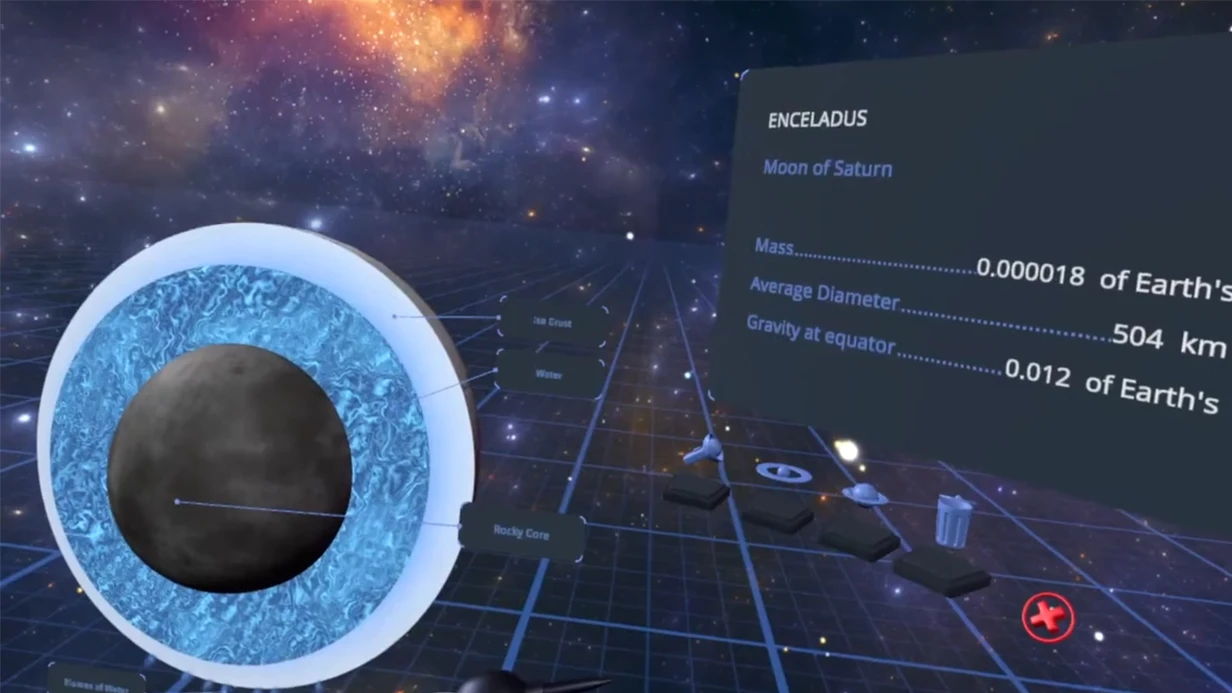
| AR for museums | Science and technology museums, interactive exhibits | Brings exhibits to life, engages a young audience, makes the exhibit understandable without text labels |
| AR for brands | Events, product presentations, showrooms | Shows the internal structure and functions of a gadget without a physical sample, makes the new product more memorable |
| Interactive storefront | Electronics stores and showrooms | Attracts passersby's attention, increases time at the display window, encourages people to enter the point of sale |
Each format adapts to a specific product: a smartphone, headphones, home appliance, or complex device.
We handle the idea, development, and launch, and your team gets a ready-made story that strengthens the brand impression and delivers measurable results—more reach, more contacts, more interest in the product.
How an AR Installation Project Works: From Brief to Launch
A transparent process—no surprises or hidden work
We've set up the process so you understand what's happening with the project at every stage. No "black boxes": you see the timeline, budget, and result before the solution goes to the venue.
- Brief and immersion in the task. We study your product—whether it's a new gadget model or an electronics line—and the event's goals. We record all requirements and show a preliminary estimate.
- Concept and scenario. We propose an AR installation idea, describe how it will surprise guests and build brand recognition. You approve the overall concept.
- Technical specification approval. We detail the installation logic, design solutions, and integration with your booth. You receive a complete implementation plan.
- Development and assembly. We build the installation, set up professional equipment, and test the scenario in a test area. You see a working prototype before the official launch.
- Testing and debugging. We run through all scenarios, fix issues, and make sure the equipment works reliably. You get a solution that won't let you down at the critical moment.
- Launch and support. On the event day, we're on site: we help the staff, monitor the installation, and quickly resolve any issues. You spend time with guests, not with technology.
After the launch, we stay in touch: if you need to refine the scenario or extend the installation to the next event, it will be quick and without unnecessary approvals.
What's Included in the AR Installation Delivery: The Client Kit
After project handover, you don't get a "folder of files" but a working tool that delivers results from the very first minutes. Below is the complete delivery package, formatted as an inventory of exactly what comes into your possession and how to use it.
- Ready-to-use AR installation for your product. A configured scenario: a visitor points a camera at the packaging or storefront and sees an interactive 3D model, specifications, or the brand's story. Nothing needs to be refined—the zone launches on installation day.
- Export versions for different venues. The same scenario is adapted for an exhibition, store, or promo campaign. You can move the installation between events without rework or extra charges.
- Training for your team. We run a short workshop for your staff on how to launch the installation, change products and texts in the scenario, and quickly resolve common issues. We train the people who will work with the zone—no need to hire a technical specialist.
- Clear operating instructions. We provide step-by-step guidance: how to turn it on, how to restart, how to replace content. Everything is in Russian, without technical jargon.
- Technical support during the event. Our specialists are available by chat and phone during exhibition hours. Average response time is up to 15 minutes, so any issues won't stop your booth.
- Branded hints for visitors. Ready-made signs, stickers, and QR codes that explain how guests can launch the interactive experience. No need to create instructions yourself.
- Engagement data. After the project is completed, you receive a report: how many people interacted with the zone, how much time they spent at the booth, which products they stopped at most often. These numbers help evaluate return on investment.
- Content update rights. You can request scenario updates for a new collection or campaign—you already have a ready-made foundation, so changes are made faster and at lower cost than starting from scratch.
This package covers the entire cycle: from idea and installation to regular use by your own team. You get not a one-time promotion, but an asset that works at every future event.
Case Study: How an AR Installation Increased Interest in a Booth at an Exhibition
Let's look at a real case. At one of the major electronics exhibitions, a smart gadget manufacturer—let's call them Nova Devices—approached us. The problem was familiar: visitors walked past the booth without stopping at the product.
Standard demonstrations and screen videos didn't catch attention, which is overloaded by dozens of other booths at an exhibition.
We proposed turning an ordinary gadget box into an interactive attraction point. A person pointed their smartphone camera at the packaging, and it "came to life": a three-dimensional model of the device appeared inside, colors changed, and specifications popped up.
Everything worked instantly, without installing apps—any visitor could join. It turned out not to be a presentation, but an engaging game that made guests stop by themselves and bring their friends.
The result was measurable. Over two exhibition days, we recorded more than 300 AR sessions, and the average time spent at the booth increased fourfold—from one and a half to six minutes.
The number of visitors who deliberately approached the product and asked questions to the sales staff doubled. In addition, guests actively recorded what was happening on their phones and shared it on social media—the brand gained additional reach without advertising investment.
For us, it's important that the client received not just a flashy attraction, but clear statistics: how many sessions were launched, which models were interacted with most often, and how much time the audience spent.
This data made it possible to identify the most attractive products and adjust the marketing strategy. Within a month, they ordered an adaptation of the AR zone for retail locations, and then booked us for the next exhibition—the collaboration continues.
Frequently Asked Questions About Developing VR/AR Installations
We understand that many questions come up before launching a VR/AR installation for electronics and gadgets. Below are answers to the main ones—about the process, timelines, guarantees, and required equipment.
How does work on a VR/AR installation proceed?
We start with a discussion of the task: you describe what you want to show—for example, the advantages of a new gadget or packaging that comes to life in an app. Then we propose an interactive scenario concept, align it with you, and implement it turnkey. You don't need to understand technical details—our manager handles all stages.
What guarantees do you provide?
We fix the result in the contract. Before the event, we conduct full testing of the installation in working conditions, and during the event, our specialists stay in touch and quickly fix anything if needed. If something goes wrong, we restore operations as soon as possible.
How long does development take?
Timelines depend on scenario complexity and format: a simple AR packaging for a gadget can be ready in 1–2 weeks, a large-scale VR zone for an event in 2–3 months. We fix the exact calendar plan before work starts so you can plan your marketing campaign and product launch.
Do I need to buy special equipment?
No. We provide everything needed: virtual reality headsets, tablets for AR, server equipment, and controllers. We set it up, deliver it to the venue, and manage the process. You get a turnkey zone—without additional purchases or logistics hassles.
What if the installation doesn't fit my format?
We select a solution for your task and venue. It can be a compact AR zone for an electronics store display, a mobile VR presentation for negotiations, or a full-scale installation for an exhibition. At the consultation, we'll show examples for your request and help you choose the best option.
Order AR Installation Development for Your Product
The first step is not just a request, but the beginning of work on your gadget's packaging. We know how to turn a product into the center of attention at an exhibition, showroom, or presentation: an AR installation makes interacting with electronics visual and memorable. So within a few minutes of contacting us, you'll receive concrete options, not general words.
We value your time and get straight to work: we clarify the task, propose a format that fits your product specifically, and show how it will work. No long emails or waiting—just clear next steps.
What you get right after submitting a request:
- Consultation on your task—we'll discuss the goal, audience, and venue.
- Preliminary cost and timeline estimate—you understand the budget before work starts.
- AR installation format recommendation—tailored to your product, not an abstract template.
- Prototype idea—you see what the interaction with the gadget will look like.
- Integration plan for the event or storefront—you know what's needed from your team and venue.
- Guaranteed technical support at launch—we're on hand when the installation works for your clients.
Submit a request—we'll send you the concept description and collaboration plan in response. Then all you need to do is approve the prototype and launch the project on time.
How to Choose an AR Installation Format for Your Task and Budget?
The AR installation format for electronics and gadgets depends on two things: where a person encounters the product and what result you want to achieve. For a box on a store shelf, a scene that comes alive after pointing a camera works well.
For an exhibition or presentation, a full interactive zone where the visitor becomes a participant and is more willing to share their impressions.
Follow the customer journey: advertising, storefront, unboxing, usage. Each touchpoint has its own format. Here's what it looks like in practice.
| AR installation format | For whom | What it gives the client |
|---|---|---|
| AR scene on packaging or insert | Manufacturer, retail brand | Brings the product to life before purchase, increases recognition, creates a reason to share on social media |
| Marker on the body or in the manual | Post-purchase customer | Expands use cases, reduces returns, builds loyalty |
| Interactive zone at an exhibition | Event manager, marketing | Attracts visitors to the booth, holds attention, collects contacts |
| VR presentation of a new product | Distributor, buyer | Shows the device "from the inside" without a physical sample, speeds up negotiations |
The budget is determined by the scope and depth of the scenario. If you need mass contact, a light AR scene on packaging is enough—it launches from a smartphone camera without installing apps.
If the goal is a wow effect at an industry event, the investment is higher, but the return is measurable: time at the booth, number of conversations, guest posts.
The main rule is not to fit the task to the technology, but to choose a format for the specific moment of meeting the brand. We'll advise which option solves your task and show the scenario on a real device before launch—so you understand what you're paying for.