



Losing visitors? Location-based AR brings spaces to life
Visitors come to a museum or event, but often walk past the exhibition in a few minutes — there are too many distractions around.
The smartphone has become the main competitor for attention: instead of exploring the space, guests scroll through their feeds and don’t remember the brand.
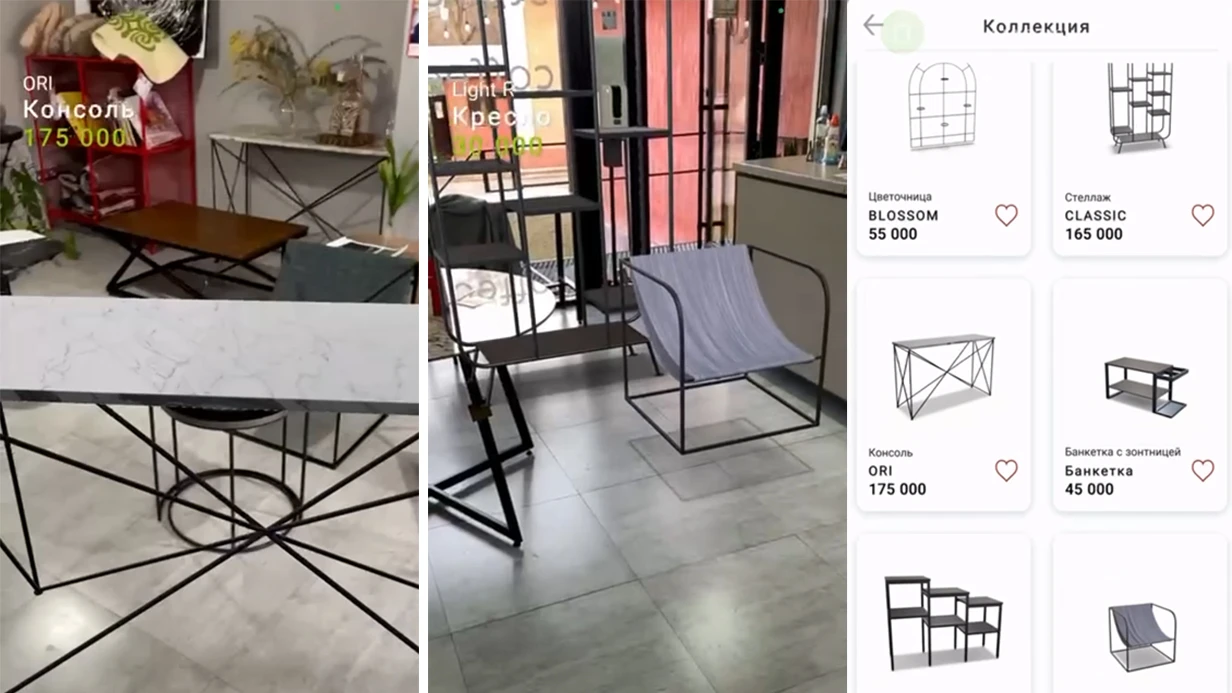
Location-based AR solves this problem: digital content is tied to a specific point in the space and “comes to life” exactly where the guest is. They just point their smartphone camera — and characters, historical scenes, or game quests appear before them.
The world has already seen this effect with Pokemon GO — people went out into the streets to explore familiar places. The same principle works for your venue: the space turns into a scenario that guests follow willingly.
For business, this means more time spent on the venue, deeper engagement, and a natural reason to share the experience on social media. Each guest becomes a carrier of your story — without extra ad spending.
We develop Location-based AR for a specific task: a guided tour for a museum, a quest for a shopping mall, an interactive zone for a conference, or a promo campaign for a brand.
We explain the mechanics in the language of the scenario, not technical details — you understand what the visitor will get and how it affects the metrics.
What an interactive installation for business will give you
An interactive AR installation turns an ordinary visit into an event people want to talk about. Guests stop at the object not for a couple of seconds but for several minutes — they shoot photos, interact, and share feedback on social media.
This increases time spent at the venue, raises overall reach, and creates a lively wave of brand mentions without additional advertising investment.
For a museum, such an installation is a way to engage a modern audience and make an exhibition understandable even to those who usually walk past. For an event, it’s a bright attraction point around which visitors gather and natural photo and video opportunities form.
For a brand, it’s a tool that is remembered and sets you apart from competitors: guests associate emotions with the company name rather than with an abstract image.
It’s also important that interactivity produces measurable results. You see how many people interacted with the installation, how long they stayed in the zone, and how many contacts were collected.
This data helps assess payback: the cost per engaged visitor turns out lower than with traditional advertising activities, and the effect is clearer and more visual.
With a properly set task, the installation works for the long term: it can be adapted for new campaigns, scenarios changed, and reused at different venues. It’s not a one-off toy but an asset that brings value every time you capture audience attention.
We handle the entire cycle — from idea and scenario to installation and support — so you get a ready-made growth tool rather than just a pretty object.
Location-based AR formats for events, museums, and retail
Our experience shows that the same scenario works in retail, a museum, and at an event but requires different “packaging.” For a store window, an interactive projection is simpler; for an exhibition, navigation with an immersive effect; for a festival, an augmented reality photo zone.
Below are typical formats we deliver turnkey. The table will help you orient, and the final option will be selected after the brief.
| Format | For whom | What it gives the client |
|---|---|---|
| Interactive projection on a storefront | Retail, shopping centers | Stops foot traffic, boosts conversion to purchases |
| AR navigation through the hall | Museums, exhibitions | Increases dwell time, reduces staff load |
| AR photo zone | Events, festivals, conferences | Engages guests, creates a wave of social media posts |
| Mobile quest across the location | City events, parks, shopping malls | Guides through points, collects participants’ contacts |
| “Living product” storefront | Brands, showrooms | Holds attention at the window, better remembered than a standard display |
Each format works on professional equipment and proven tools — the client gets stable results without surprises on launch day.
We don’t offer a “box” but assemble a solution for the task: for one museum, we made AR navigation with exhibit lighting; for the BrandLab coffee chain, a gamified window with a drink giveaway. After launch, three times more passers-by engaged with the window, and orders grew by a quarter.
If you’re not sure which format fits, start with a consultation. In 30 minutes, we’ll break down your task, estimate timelines and budget, and suggest 2–3 scenario options.
How an installation is created: step-by-step work plan
For any event, museum, or brand, an AR/VR installation is a result that must appear on time and work steadily. That’s why the process is built as a clear route with checkpoints: you always know what stage the project is at and when it will be ready.
- Brief and task — we discuss goals: reach, engagement, repeat visits, or image. We record the venue, visitor count, and deadlines.
- Concept and scenario — we offer 2–3 idea options for your audience. We describe how visitors interact with the installation and what they feel.
- Approval and estimate — we show sketches, interaction logic, and scope of work. You receive a transparent budget and calendar plan without hidden items.
- Implementation and testing — we create the installation, configure equipment, and test the scenario in real conditions. We fix all glitches before opening.
- Launch and support — we deliver, install on-site, and monitor operation during the first hours. Our engineers stay in touch with the event team.
- Support and analytics — after completion, we collect statistics: how many people interacted, for how long, which scenarios worked best. You receive a report and recommendations for the future.
The full cycle from brief to launch takes 3 to 8 weeks depending on complexity. We fix deadlines in the contract: you plan announcements and ticketing without worrying about the contractor.
What is included in the delivery of a ready interactive installation
The ready delivery includes everything needed to launch and run an interactive zone steadily — from equipment to support for the entire life of the installation.
You won’t have to assemble the solution piece by piece from different contractors: we are responsible for the result as a single team.
The full package includes:
- Equipment. Professional components selected for your task and proven in real projects. Everything is installed, configured, and works immediately, with no “fine-tuning” on site.
- Original content. Interactive scenario, graphics, sound, and interaction logic are developed for your audience, venue, and event goals.
- Mounting and commissioning. We bring the equipment, install it, connect it, and test it. You receive an installation ready for opening on the agreed date.
- Staff training. Your employees learn to launch and support the installation, change operation modes, and handle typical situations without calling an engineer.
- Technical support. We stay in touch during installation operation days: remote diagnostics, on-site instructions, and an engineer visit if needed.
- Warranty and maintenance. Scheduled work, extended equipment resource, and content updates as your project evolves.
Each item is part of the contract, not verbal promises. You work with one responsible contractor, get clear deadlines, and a fixed budget.
Contact us — we’ll define the package for your task and show how the interactive zone will work specifically at your venue.
Case study: interactive installation for a museum paid off in 2 months
Museums increasingly lose the competition for visitor attention: static displays and signs don’t hold those who are used to interactivity on their smartphone. The guest runs through the hall in 20 minutes and leaves without remembering the brand.
We encountered this in a project for the “Heritage” museum and proposed an unconventional move — a location-based AR installation around key exhibits.
Instead of a standard audio guide, visitors pointed their camera at an object and “brought it to life”: they saw historical scenes, listened to character stories, and discovered hidden details.
This turned a tour into a game — guests lingered at each exhibit, looked for all the secrets, and shared vivid shots on social media.
The results were measurable: in the first month, attendance grew by 40%, and the average time in the exhibition increased from 45 minutes to an hour and a half. Souvenir sales and additional guided tours rose by a quarter — this is what made the installation pay off in 2 months.
Within a quarter, the museum saw a noticeable flow of repeat family visits and mentions in city media.
This case shows that an AR installation is not a decoration but a working tool for attracting and monetizing.
We run the project from idea and scenario to launch and analytics: we select placement points, write content, and configure the system so the museum sees returns in numbers rather than by feel.
How to choose the right installation format?
Choosing an installation format starts not with technology but with a question: what business task does it solve? Do you need to attract new visitors, hold attention at a display, train employees, or boost sales through an unusual experience? The answer determines everything — from the type of interaction to the scale of the zone.
The budget sets the boundaries but does not limit the result. For some tasks, a mobile AR filter or interactive screen is enough; for others, a full-fledged immersive zone.
We select a format for your budget so you get maximum return on investment rather than overpay for unnecessary complexity.
The role of the venue and audience also matters. In a museum, a visitor is ready for deeper interaction; in a shopping mall, only for a short but vivid impression.
We ask the right questions about your audience, contact time, and goals and then offer 2–3 options with an effectiveness forecast.
This approach begins with a consultation: we discuss the task, venue, reach expectations, and available budget.
Our engineers assess the feasibility of each option and help you choose the one that will deliver a measurable result — whether it’s growth in visitor numbers, repeat orders, or dwell time.
In the end, you get not an abstract installation “for show” but a tool that works for your business. We handle all implementation and guarantee that the chosen format is optimal in terms of cost and value. Reach out to discuss your task and get specific recommendations.
FAQ about developing interactive installations
We understand: even with a strong idea, clients hesitate — what if we don’t make it in time, it breaks, or it’s too complicated. These concerns are natural for any technical project, so we answer the main questions honestly and directly.
Deadlines are our usual workflow, not stress. We have dozens of projects for events with a fixed opening date behind us, so we specifically build in a buffer for tests and rehearsals. You get a ready installation by the needed date, not “whenever it happens.”
Reliability is part of the scenario, not a coincidence. We select professional equipment and standard solutions already proven at real events. If something goes wrong, we have a plan B: spare components and a quick replacement scheme right on site.
It’s important that after launch you don’t remain one-on-one with the technology. We stay in touch, and on the event day, an engineer can be nearby or monitor the system remotely. Support is included in most projects, so you can focus on guests rather than buttons.
This approach removes the main risks — deadline, technical failure, and management complexity.
How long does installation development take?
The minimum time is 2–3 weeks for a simple AR scenario. For immersive zones and custom structures — from 6 weeks. We give an exact estimate after the brief: it depends on scale and level of interactivity.
Do you work with our equipment or bring your own?
We usually use our own — it’s easier to guarantee quality and compatibility. If you already have hardware, we’ll first test it. If necessary, we rent the missing items: projectors, sensors, or servers.
What happens if a breakdown occurs at the event?
Our installations are designed to keep working even with partial failure. We also have a backup launch scheme and quick replacement. On the event day, we’re always in touch: we resolve issues within minutes, not hours.
Who will support the project after handover?
You receive clear instructions and short training for your team. An administrator will need only basic skills to manage the installation. Complex changes and refinements are on us — both within support and as separate tasks.
Ready to discuss a project? Get a consultation
Leave a request on the website — and as early as the same day, we’ll come back with first questions and preliminary ideas for your task. Don’t know which format to choose? That’s fine: we’ll help you figure it out.
It’s important for us to understand why you need the installation: to attract attention at an event, add interactivity to a museum exhibition, or strengthen brand awareness.
That way, we’ll immediately suggest a format that works for your goal and won’t waste your time on generic presentations. The consultation is non-binding: it’s an opportunity to discuss the project, see live examples of solutions, and get an objective budget estimate.
What you’ll get right after your request:
- Fast response to your inquiry — within one business day.
- Consultation with a producer and engineer from our team.
- Preliminary cost estimate and timelines for your scenario.
- Recommendations on installation format based on venue and audience.
- Examples of similar projects from our portfolio with measurable results.
- A clear plan of next steps and scope of work.
- Cooperation terms: contract, stage-by-stage payment, and guarantee on the result.
After the consultation, we’ll prepare a detailed commercial proposal and can launch the project within the coming weeks. You’ll know exactly what, when, and for how much you’ll receive — without hidden conditions or extra costs.
Leave your request — it takes a couple of minutes, and then we’ll contact you ourselves, answer your questions, and help you take the first step toward the project you dream of.