



Guests Are Bored — Geolocation Augmented Reality Examples Will Help
Guests arrive at an event with inflated expectations, but within 20 minutes they're glued to their smartphone screens.
Static banners, standard photo zones, and presentations fail to hold attention — people drift into their social media feeds, and the organizer is left with empty halls and zero feedback.
The problem isn't the content but the presentation format: modern audiences expect participation, not observation.
Geolocation augmented reality examples show that an event can feel alive. A guest points their smartphone camera at a point in space — and it comes to life: a character, a story, a game scenario, or a brand mascot.
An ordinary stroll through the hall turns into a quest or a tour where everyone chooses their own route.
Such interactivity at an event solves three tasks at once. It keeps people on site — to collect artifacts or complete the scenario, you need to stay until the end. It creates a natural reason to share the experience on social media and in private messages.
And most importantly, it gives the organizer data about what truly engages guests — instead of guesses and intuition.
A museum gets a second wind: exhibits tell stories layered over reality, and visitors linger at the exhibition several times longer. A city festival unites venues into a single route.
A conference, instead of boring registration, greets participants with an engaging warm-up before the program even begins. Anywhere there is a space and guests, there is a reason for interaction.
We have been developing AR installations for over 10 years and know how to turn a venue into a place people want to explore. The geolocation augmented reality examples from our portfolio are ready-made solutions that pay off through increased engagement and repeat visits. Tell us where your audience loses focus — and we will propose how to fix it.
What an Installation Delivers: Five Benefits for Business
An Impression That Works for the Brand
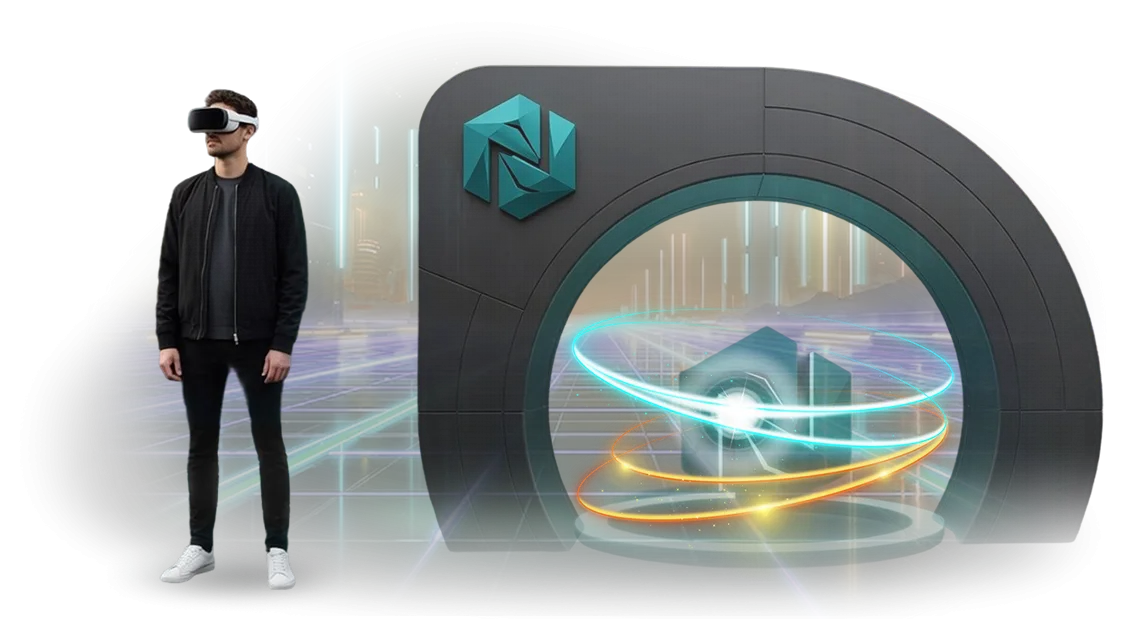
A strong event is built on emotions — guests remember not the presentations but what truly surprised them. An interactive VR or AR installation becomes that center of attraction around which guests gather, take photos, and keep discussing the experience long after the event ends.
As a result, you get not just another point on the venue map, but a tool that draws attention on its own. Guests approach it dozens of times throughout the evening, and each contact strengthens their connection with your brand and sparks genuine emotions.
Reach That Doesn't Require an Advertising Budget
A vivid installation prompts photos and videos — guests trigger the word-of-mouth effect. Every social media post brings dozens of new contacts, and this is a free promotion channel that keeps working after the event ends.
For museums and brands, this format is especially valuable: a visitor doesn't just look at an exhibit but becomes part of the story and willingly shares it across their networks. This is how a local event turns into an online magnet for new guests.
Real Leads and a Sales Base
An interactive station is not just entertainment but a way to unobtrusively collect contacts from interested guests. A participant leaves their data in exchange for a photo or a personalized result, and you get a list of "warm" potential customers.
For example, after the event you know who spent the most time at the installation and who downloaded the promo material. You can work with this base through email campaigns or personalized offers — the conversion to a deal is significantly higher than with cold sales.
Recognition and a Modern Image
Innovative solutions show clients and partners that your company keeps pace with the times. Such a detail builds the image of a progressive brand that people trust and want to work with.
When guests associate your organization with an unusual digital experience, it increases loyalty and sets you apart from competitors. The story of your event is enthusiastically shared in negotiations and professional meetings, building your reputation in the long term.
Repeat Visits and Audience Loyalty
A unique interactive experience is a reason to come back and bring friends. If a guest felt strong emotions, they willingly return to new events and recommend them to colleagues, increasing attendance without extra advertising spend.
This is why an installation pays off not only through the current event but also through a series of subsequent visits. You build a loyal audience for whom every project promises new interactivity and discovery — and that already leads to tangible business results.
Geolocation Installation Formats for Your Objective
A geolocation installation is not a single technology but a whole family of scenarios. The format is chosen for a specific objective: keep a guest in the museum, bring people to a new location, collect contacts, or create a city-wide event. Understanding which format will work for you saves budget and launch time.
The table below shows the typical geolocation installation formats we have implemented in museums, urban spaces, and at events. Each format addresses its own business objective: from increasing dwell time to creating viral content.
| Format | For Whom | What It Delivers |
|---|---|---|
| City quest in augmented reality | Brands, festivals, parks | Engages participants, drives movement between points, generates social media reach |
| Geolocation museum guide | Museums, exhibition centers | Increases time with the exposition, turns viewing into a game, holds attention |
| Outdoor AR installation | City events, tourist routes | Attracts visitors, creates a "point of attraction," boosts location recognition |
| Interactive storefront | Stores, shopping malls, showrooms | Increases offline traffic, engages passersby, gives a reason to step inside |
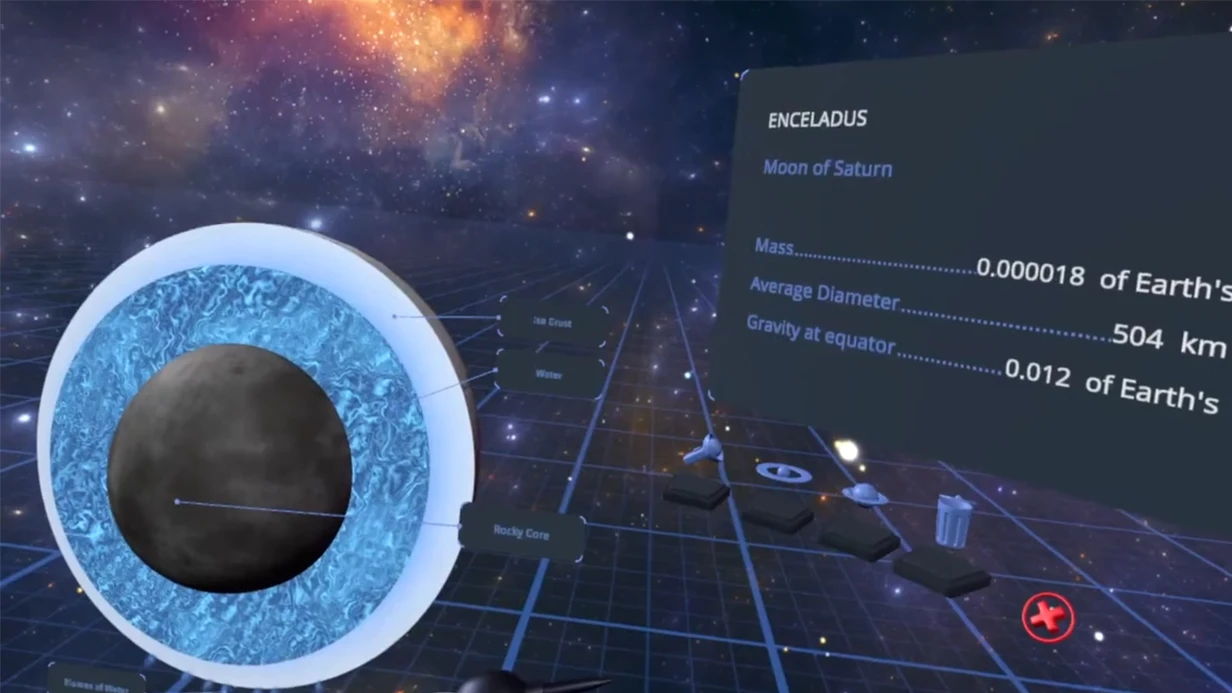
| Educational station | Schools, science centers | Shows complex processes visually, holds students' attention |
We select the format for your venue and objectives, not the other way around. At the start, we conduct a short brief — visitor volume, placement point, and goal are enough — and propose a solution that launches on time and without rework.
How a Project Unfolds: From Brief to Launch
Every project — from idea to finished installation — goes through clear stages. We deliberately keep the process transparent: you know what is happening, when intermediate results will appear, and how long each step will take. Below is the typical path of our collaboration.
-
Brief and goals. You tell us which event or space the installation is needed for, who the guests will be, and what reaction you want to achieve. We record the goals and propose solutions tailored to your task, not a standard package.
-
Concept and scenario. We create the interactive scenario: what the guest sees, what actions they take, and how it relates to the brand or exposition. We show the visual direction and logic so you can make edits before production begins.
-
Approval and work plan. We fix the cost estimate, timeline, and exact scope of work. You get a plan that shows what you are paying for and what results to expect at each stage.
-
Content creation and implementation. Engineers create the graphics, animations, and operating logic, and select equipment for your venue. At this stage, you already see how the installation will look and can make final edits.
-
Pre-launch testing. We test everything in conditions close to real ones: stability, response speed, and guest convenience. We tune the scenario so there are no failures on the day of the event.
-
Launch and support. We deliver the equipment, install it, and carry out commissioning on site. Our specialists work at the event so the installation runs without interruption from the first minute until closing.
-
Support and analytics. After launch, we collect data on guest interactions and present the results. If you plan to use the installation further, we will advise on how to update or expand the scenario.
It is this approach that allows us to deliver projects exactly on time and hand over a working installation to the client, not a "raw product." You are involved at key milestones and always understand what stage the project is at.
What Is Included in Project Delivery to the Client
We deliver the project turnkey — not just an installation, but a complete solution that launches on the day of handover. The delivery package includes everything needed for you to get a working interactive experience with no hidden stages or additional payments.
- Installation scenario and logic — a description of the scenario, mechanics, and visitor paths. You understand what happens at every point of interaction.
- Content — graphics, 3D objects, sound, and video tailored to your objective. Development is approved stage by stage, and the materials remain yours.
- Equipment for the interactive experience — professional VR/AR systems, sensors, and computing units. Spare components are included — we eliminate downtime on event days.
- Installation and setup — our crew arrives at the venue, assembles, and calibrates the system before opening. Your staff doesn't deal with the equipment and is ready to welcome guests.
- Team training — instruction for administrators and volunteers: launch, guest greeting, and typical situations. Any employee confidently works with the installation.
- On-site support — an engineer is nearby during operating hours or on the hotline. Issues are resolved in minutes, not after the event.
- Report — data on session count, interaction time, and engagement. These figures are easy to show to partners and use for planning.
The result: you get the complete project package — from scenario to report. Our team is responsible for the outcome until the last minute the installation is operating.
Case Study: How an Installation Paid Off and Attracted Guests
Our task was to bring the shopping center Torgovy Kvartal to life — standard promotions were no longer attracting new guests, and attention retention was declining.
We proposed not just a promo but an AR quest across the entire territory: visitors used their smartphones to find virtual characters, collect promo codes, and receive prizes in stores.
This installation case is now often cited as one of the best location based augmented reality examples — the technology worked exactly where the person was physically located.
Over the three weeks of the installation, weekend attendance grew by 28%, and the average dwell time increased from 15 to almost 45 minutes. Guests shared their discoveries on social media — the total reach of posts with the quest hashtag exceeded 1.2 million views.
Traffic growth in the cafe and cinema was so noticeable that the interactive experience paid for itself within a month, even though we had planned for three.
AR Project Results
The head of Torgovy Kvartal did not expect such engagement from an audience aged 35+: even people far from gadgets walked the floors with phones in search of characters.
Six months later, the client returned for a new version of the quest — with an expanded territory and a scenario for a corporate celebration.
This is exactly what the results of an AR project that works on business metrics look like: increased attendance, reach, and a repeat order.
How to Choose an Installation Format for Your Budget?
Choosing an installation format comes down to three questions: what objective the brand is solving, what the venue allows, and what budget is allocated for the project.
The answers determine whether it will be a compact solution for a single booth or a large-scale interactive experience covering the entire exhibition space.
We don't tie ourselves to ready-made templates: first we understand your goals, traffic, and venue constraints, and then we propose a solution. This approach guarantees that you neither overpay for unnecessary equipment nor get too weak an effect for your audience.
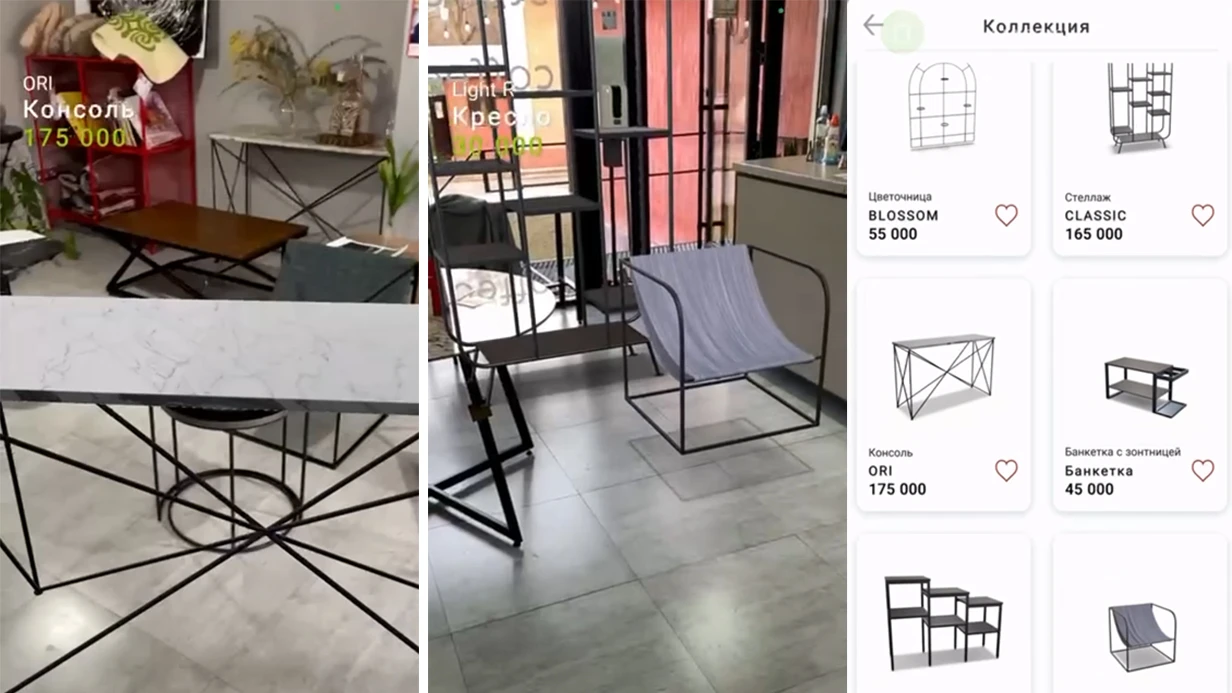
When the task is to draw attention to a new product line, a compact scenario is enough: guests point their camera at a storefront and see a three-dimensional demonstration.
If the goal is to keep the visitor at the venue and create an association between the brand and an impression, you need a full-fledged zone with several interaction points.
There is a difference in budget, but it pays off through metrics: dwell time, the number of repeated actions, and the number of photos guests publish on social media. These are the indicators that directly affect the event's return.
Budget doesn't always mean "more screens and equipment" — sometimes integration with real museum objects or a complex scenario with several simultaneous visitors costs more.
We prepare 2-3 options in different cost ranges and show in detail what reach and effect each one will deliver. You compare not abstract ideas but concrete scenarios, preparation timelines, and the projected result. This way, the decision is made based on numbers, not promises.
We also calculate the load on the venue separately: how many people can participate at once, whether queues will form, and how the installation will fit into the overall guest flow.
These details affect visitors' impressions and whether they will want to return to the interaction several times. We take this into account in the proposed formats and, when necessary, adapt the scenario to the specific space.
Clients often start with a minimal format, test it on a small audience, and then scale it to the next event. We support this path: our platform allows functionality to grow without replacing equipment. This reduces risks at the start and gives predictable budget spending.
Frequently Asked Questions About Creating Installations
Before launching an installation, clients ask the same questions: will the equipment withstand the load, will we make the event date, how will it all fit into the scenario. We answer the key objections — without technical details, only what affects the result.
How reliably does the installation work on the day of the event?
Our engineers test the entire system under conditions as close to real as possible — with a large flow of people and varying lighting. A support specialist is always present at the venue to monitor operations and quickly resolve any issues.
The client gets a predictable result: guests interact with the installation without failures, while the team focuses on their own tasks instead of watching the equipment.
What are the production timelines for an installation?
A typical cycle is 2 to 6 weeks depending on complexity: short formats for events are done faster, while large museum projects need more time for approval. After the scenario is approved, we fix the completion date and deliver the project exactly in time for the event.
We provide more precise timelines after a short brief — it takes 30 minutes and requires no preparation.
How will the installation fit into the venue and the existing program?
We integrate the project into the logic of your event: we align the placement with guest flows, session duration, and the technical requirements of the location. We start with a sketch and a description of the mechanics so you can see in advance how everything will look.
If necessary, we adapt the scenario to the format — from a business conference to an open city square.
Will there be additional costs after launch?
At the contract stage, we specify the full scope of work and fix the price. After that, you pay only for rental and deployment if the installation is created for a single day, or for technical support during a long-term exposition.
There are no unexpected surcharges for "refinements": all edits made before the layout is approved are included in the project cost.
Ready to Launch a Project? Get an Estimate and a Plan
Tell us what result you need — and within one business day we will return a timeline and budget estimate. No fluff: only numbers that help you understand when the installation will start working and how quickly it will pay off.
Along with the estimate, you will receive a ready-made concept for your objective and venue. This is not abstract ideas but a clear scenario: what the visitor will see, how it will fit into the event, and what business metrics we are targeting.
What you get after submitting a request:
- Cost estimate for the installation tailored to your event or space — from idea to launch.
- A clear work plan: dates of key milestones, responsible parties, approval checkpoints, and the result of each step.
- An interaction concept for your audience — how geolocation AR will guide guests around the location and hold their attention.
- An equipment and support cost estimate — no hidden payments or surprises in the middle of the project.
- A team assessment: who will work on the project, what experience the engineers have, and how quality control is handled at each stage.
- Integration proposals for your program: whether the format suits a museum, festival, business conference, or promotional campaign.
After the briefing, you will understand the full scope of work, timelines, and cost — even before the project starts. So leave a request here, attach a link to the venue, or tell us what is already ready.
Within one business day, we will send the estimate and launch plan, and then we will decide how well it matches your expectations.